Archive for the 'Conservation' Category

Invasives: Aquarium Animals and Plants

Friday, January 11th, 2013
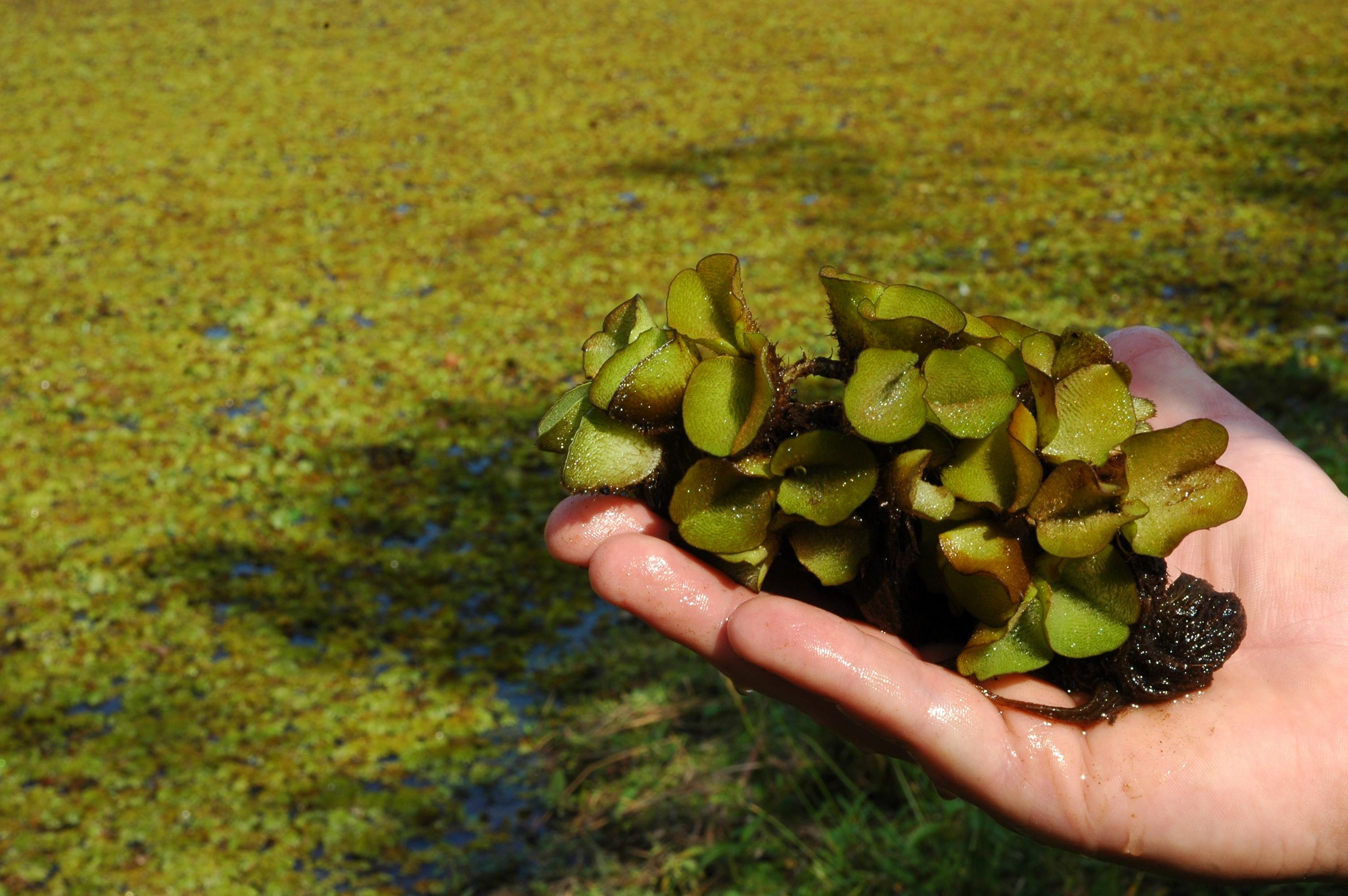
Giant Salvinia photo by Larry Hodge

Giant Salvinia photo by Larry Hodge


This is Passport to Texas

[Nats aquarium] Pet stores like Rivers and Reefs in Austin sell fish and plant species from all over the world.

10—Most of your Tetris species are from South America. Even your average gold-fish comes from China. Some of your Amazon sword plants obviously come from South America from the Amazon River.[ambience trails]

Manager Rachel Pohl says that’s why people should be careful not to dump their aquariums in rivers or lakes or even flush live fish down the toilet.

08—Some of these fish get into our rivers and start eating our fingerlings in our rivers, and it starts unbalancing the native population because they don’t have a predator here.

And it’s not just fish. Parks and Wildlife aquatic habitat biologist Howard Elder says the extremely invasive giant salvinia started out as a decorative aquarium plant… but it didn’t stay there.

09—Giant salvinia was found in a Houston school yard in 1998. It has since been found in 17 public reservoirs.

And it’s not pretty anymore.

10—The plant can produce dense mats that actually block out sunlight and displace native vegetation and fish species as well as many wildlife species.

So, enjoy your aquarium, but if you tire of it, don’t dump your fish and plants…check to see if a pet store will accept unwanted fish or at least tell you where you can take them.

The Wildlife and Sport Fish Restoration program supports our series… For Texas Parks and Wildlife…I’m Cecilia Nasti.

Conservation: Flagler Ranch

Friday, January 4th, 2013

Flagler Ranch


This is Passport to Texas

Flagler Ranch is 36 hundred acres of Texas Hill Country. Since George Matthews purchased it in 1992, he’s used an ecosystem management approach. Before his stewardship, the land had suffered 100 years of abuse.

03—As far as being overgrazed by cattle and sheep and goats.

Louis Scherer III manages Flagler Ranch, which he said, had too many white tail deer.

15—And through MLD3 permits, we have got the whitetails population down to one in twelve per acre. Since we’ve done that and the other management practices, our weight per animal, and antler growth has almost doubled.

Flagler Ranch was a Lone Star Land Steward eco-region award winner for the Edwards Plateau in 2010. Jerry Turrentine is a consulting biologist for the ranch.

17—We’re trying to integrate various techniques into an overall ranch management plan. We’re looking at food plots. We’re going to bring back some rare plants through some plantings. We’re going to do some reintroductions of forbes and grasses…we’re trying to be a learning area for other ranches in the plateau.

Water is vital in any ecosystem, and Joyce Moore with TPWD says Flagler Ranch has done an exemplary job of collecting it.

10—And so what the Flagler ranch has been doing, which is very innovative, is they’ve been placing these spreader dams along these drainages to capture every bit of rain that Mother nature does provide.

Learn about the Lone star Land Stewards Awards on the Texas parks and Wildlife website.

The Wildlife and Sport Fish Restoration program supports our series… For Texas Parks and Wildlife…I’m Cecilia Nasti.
Wildlife: Quail Decline, 2

Thursday, December 27th, 2012

Quail Habitat

Quail Habitat


Passport to Texas with support from the Wildlife and Sport Fish Restoration Program

When it comes to quail, TPW biologist, Robert Perez, says they’ve had it rough. Habitat fragmentation and drought beat them up in Texas. Working with adjacent landowners to manage their properties for quail is helping to address fragmentation – but what about drought?

26— Where it’s dry, what you can do is be proactive. And so you have proactive strategies for drought, which is leaving residual cover; leaving standing grasses; leaving standing vegetation and not mowing it down; shredding it, or putting cattle on it or other livestock that will remove that vegetation. So you have to have something standing there for them, which is difficult to do in a drought. But there are areas that you can protect. And those quail will kind of hole up in those refugia until things turn around.

Thanks to a new grant from the Wildlife Restoration program, Robert Perez says the agency can now monitor the recovery efforts to help these native game birds.

20–By monitoring I mean you need to go in and count how many animals there are on the front end, and then you have your treatment or your improvements. You then continue counting and seeing if there is actual response by that species. So, we just got a grant from the Pittman Robertson Wildlife Restoration Act Fund – a federal grant – to go in and start measuring the impacts of our works at three different locations in the state over the next four years.

And we’ll follow along and report on their progress.

The Wildlife and Sport Fish Restoration Program supports our series and funds diverse conservation programs throughout Texas.

For Texas Parks and Wildlife…I’m Cecilia Nasti

Wildlife: Whooper Watch

Friday, December 21st, 2012

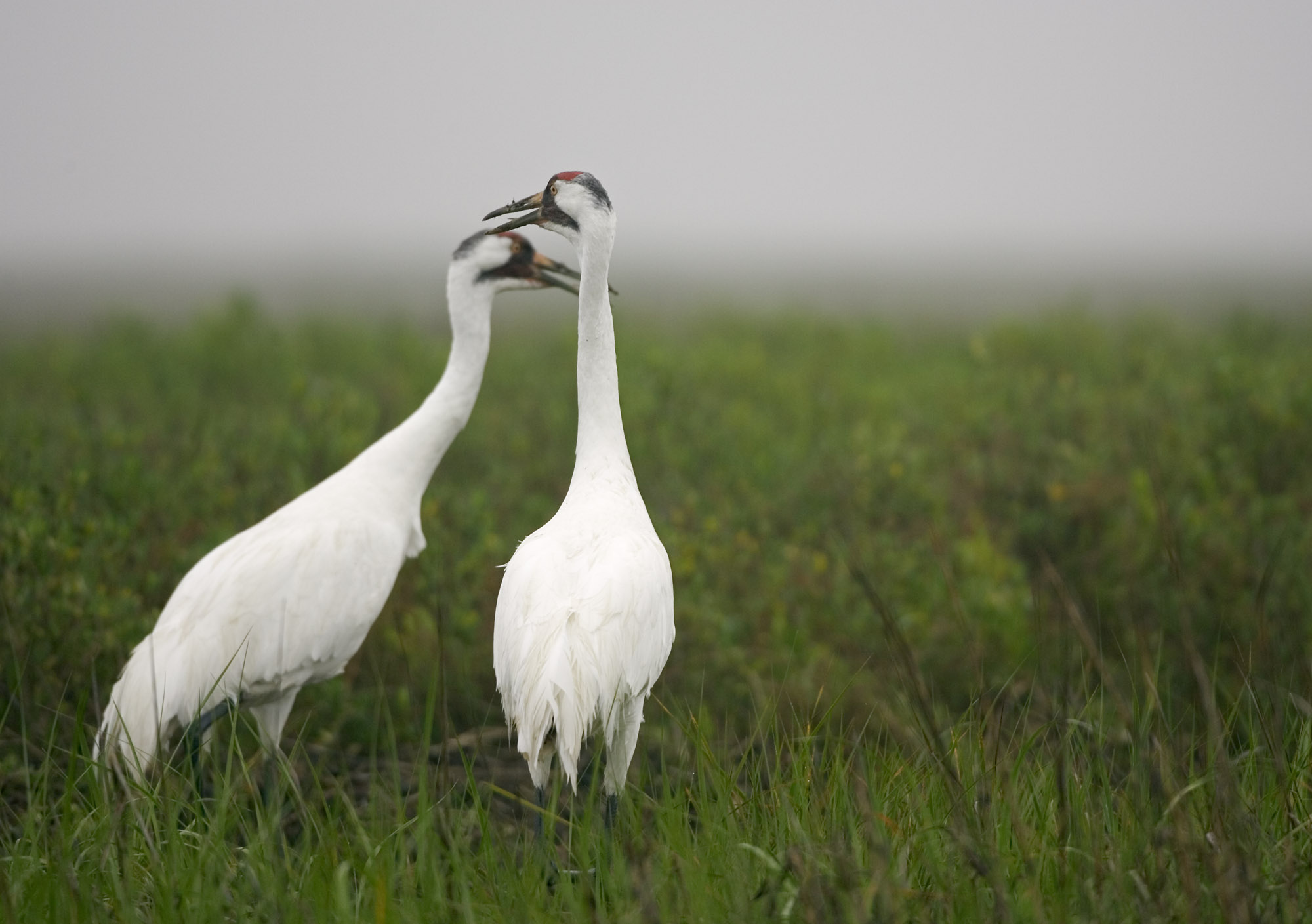
Whooping Crans, photo by Earl Nottingham

Whooping Crans, photo by Earl Nottingham


Passport to Texas with support from the Wildlife and Sport Fish Restoration Program

Habitat protection and hunting restrictions (in place since the early 20th Century) saved the last wild migratory flock of whooping cranes from extinction.

06— Our whooping crane population in Texas is getting larger. We’re approaching about 300 birds in that population now.

That’s up from a low of 16 birds. Lee Ann Linam, a biologist in the Wildlife Diversity Program, says last year a few whoopers wintered farther inland than usual. To better understand this event, Texas Parks and Wildlife created a new monitoring program called Whooper Watch.

18–If we have whooping cranes that linger either in migration or in some of these non-traditional wintering areas, then we are training volunteers at workshops to go out and to observe those cranes in a way that’s not disturbing to the cranes, but would let them gather some data for us about the habitats they’re using and their behavior in those habitats.

Anyone can and should report a whooper sighting to Texas Parks and Wildlife, but if you want to go deeper, Lee Ann Linam recommends taking the training.

18– We’re using methods that are used by animal behaviorists – especially those who study cranes around the world. So our volunteers are learning some of the real techniques that biologists use. But anybody who enjoys watching wildlife and is a good observer, can learn from us how to gather this data in a way that is really useful to us.

Find information on Whooper Watch at the Texas Parks and Wildlife website.

The WSFR program supports our series and funds diverse conservation programs throughout Texas.

For Texas parks and Wildlife…I’m Cecilia Nasti.
Wildlife: New Citizen Science Program

Thursday, December 20th, 2012

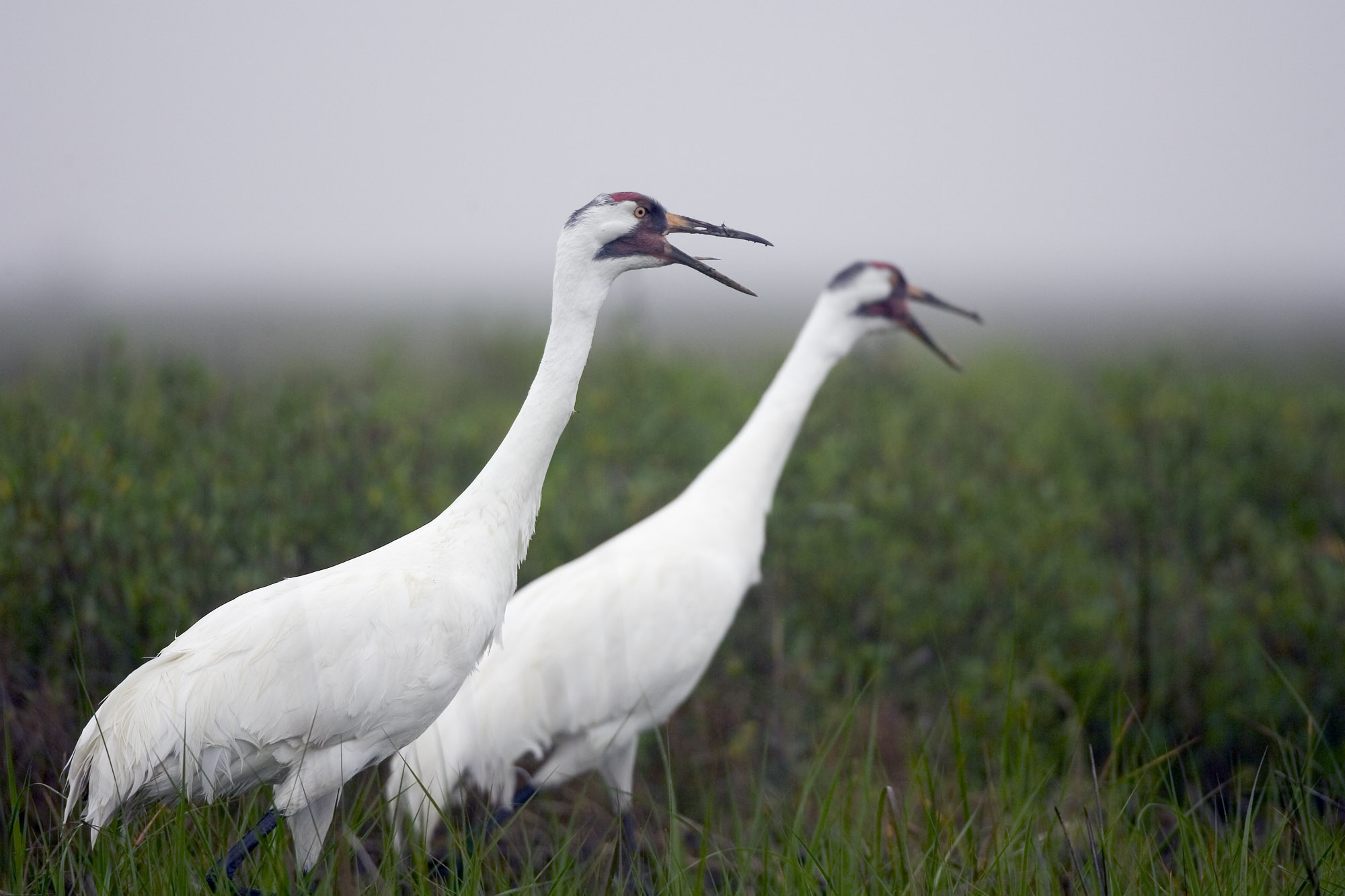
Whooping Cranes, photo by Earl Nottingham

Whooping Cranes, photo by Earl Nottingham


Passport to Texas with support from the Wildlife and Sport Fish Restoration Program

Texas has long been home to the last wild migratory flock of whooping cranes in the world.

05— And so we know that in Texas. And we enjoy seeing them and waiting for their arrival in the fall.

Lee Ann Linam is a biologist in the Wildlife Diversity program, and oversees the Nature Tracker program –which now includes Whooper Watch.

20–One of the interesting things that’s developing…as the whooping crane population expands… we’re seeing whooping cranes use new areas. Both in migration and in their wintering areas. And so, last year, when several whooping crane families spent the winter in the Austin area, we decided we wanted to be ready to watch for whoopers that might be using habitats like that and learn more about them.

Traditional Texas wintering grounds for the endangered species is the central-coast, around the Rockport area and in the vicinity of Aransas National Wildlife refuge. So, finding them so far inland last year was unusual.

20– Our whooping crane population in Texas is getting larger. We’re approaching about 300 birds in that population now. And as they try to squeeze themselves into their traditional wintering territories, perhaps they’re encountering some crowding there. In addition, last winter was a very mild winter, so inland water bodies that might have normally frozen early in the winter did not.

Linam also notes that habitat conditions on the coast last year may have suffered due to the drought. We’ll have information on Whooper Watch tomorrow.

The Wildlife and Sport Fish Restoration program supports our series and funds diverse conservation programs throughout Texas.

For Texas parks and Wildlife…I’m Cecilia Nasti.
