Archive for the 'Freshwater' Category

Don’t Blame the Cormorants

Monday, August 24th, 2015
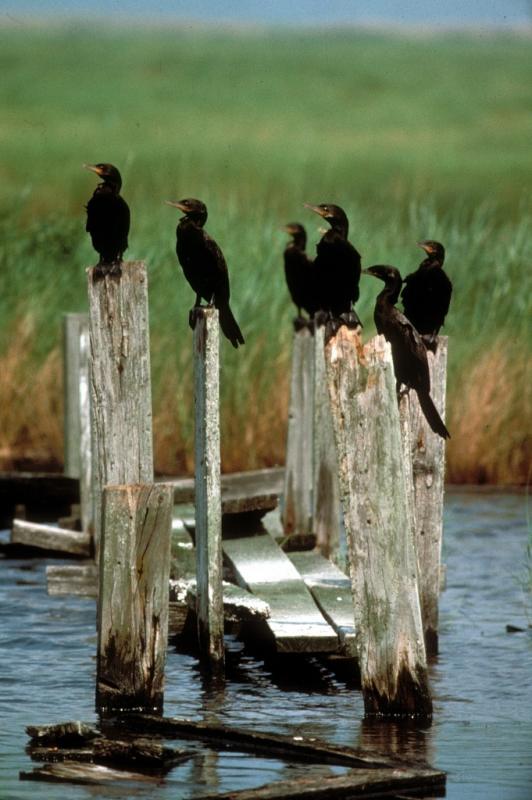
Cormorants waiting around to steal your fish. Not really.

Cormorants waiting around to steal your fish. Not really.

This is Passport to Texas

When we have bad luck, it’s human nature to blame a scapegoat. Some freshwater anglers do this when the fish aren’t biting by blaming the double-crested cormorant.

08-And what they do is they look to their side, and they see a bunch of these dark colored birds fishing, and they’re successful, and the angler’s not.

Naturally, the cormorants must be eating all the sport fish, right? Wrong, says ornithologist, Cliff Shackelford.

17-Our decline in fishes are not because of cormorants, it’s probably because of drought–and also golden algae is another cause for fish declines. So, there have been studies on the cormorant, and they found that most of the cormorant’s diet is non-game fish [like gizzard shad].

No offense, but some cormorant haters may need to step up their games.

06-Let’s not blame the cormorant on fish declines. It could be your equipment. Maybe you’re not doing the right thing. (chuckles)

Unconvinced of cormorants’ culpability regarding creel contents? Then shift your fishing forays to the warmer months only.

16-Our biggest numbers of double-crested cormorants in Texas is in the colder months. They start arriving in October and stay into March-April. They’re wherever there’s open water: stock tanks, stock ponds, aquaculture facilities.

Remember: a bad day of fishing is better than a good day at the office…even when the cormorants catch more fish than you do.

Funding provided in part by Ram Trucks. Guts. Glory. Ram

For Texas Parks and Wildlife, I’m Cecilia Nasti.
Drought Improves Fishing. What?

Friday, August 14th, 2015
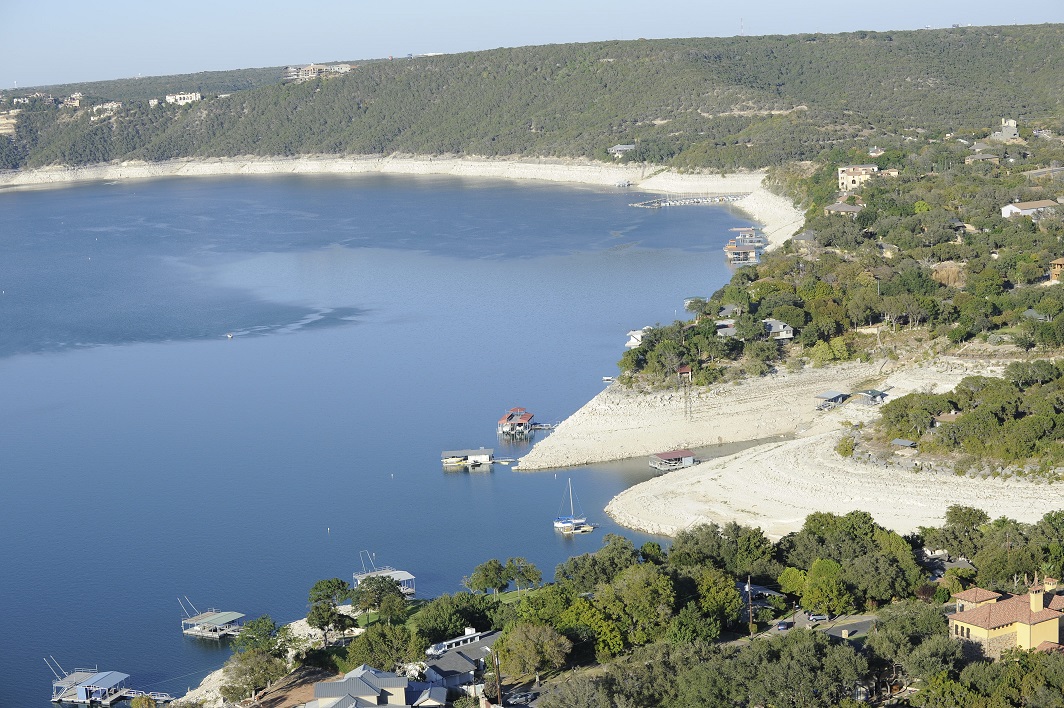
Lake Travis at 46.52 feet below normal.

Lake Travis at 46.52 feet below normal.


This is Passport to Texas

By 2011, Texas was in a record drought. And just when we were about to cry “uncle”…we got rain… lots of rain.

05— In Texas we talk about a state of constant drought periodically broken by floods.

Cindy Loeffler is water resources branch chief at TPW. The Memorial Day storms caused flooding, but they also brought lakes back to life.

09— This recent heavy rainfall really revitalized many lakes across the state. Not only the lakes themselves and the fisheries, but also access to our lakes.

Dave Terre, with Inland fisheries, says most boat ramps are accessible again, and stocking is back on track.

15— As a matter of fact, in 2011 at the peak of the drought, about 35% of Texas reservoirs, large reservoirs, in the state had little to no boat access. Now, today, we’ve regained most of that boat access back, so people can not only get on the water, we’re also going to have great fish populations in a couple of years.

Ironically, fishing will be great because of the drought.

30— When lake levels get really low, generally lakes lose habitat. And what we need is—we need habitat in the lakes to ensure fish that are spawned every year survive to a larger size to eventually be caught by anglers one day. TPW actually did some plantings of terrestrial plants in the dry lakebeds in anticipation of these lakes coming up to provide fish habitat. So when lakes rise, they inundate all sorts of terrestrial vegetation that grew in the lakebed when the lake was dry; when the lake comes up, we have an abundance of fish habitat.

Thanks drought!

The Sport Fish Restoration program supports our series.

For Texas Parks and Wildlife, I’m Cecilia Nasti.
TPW TV: A Fish Called Ethel

Friday, July 24th, 2015
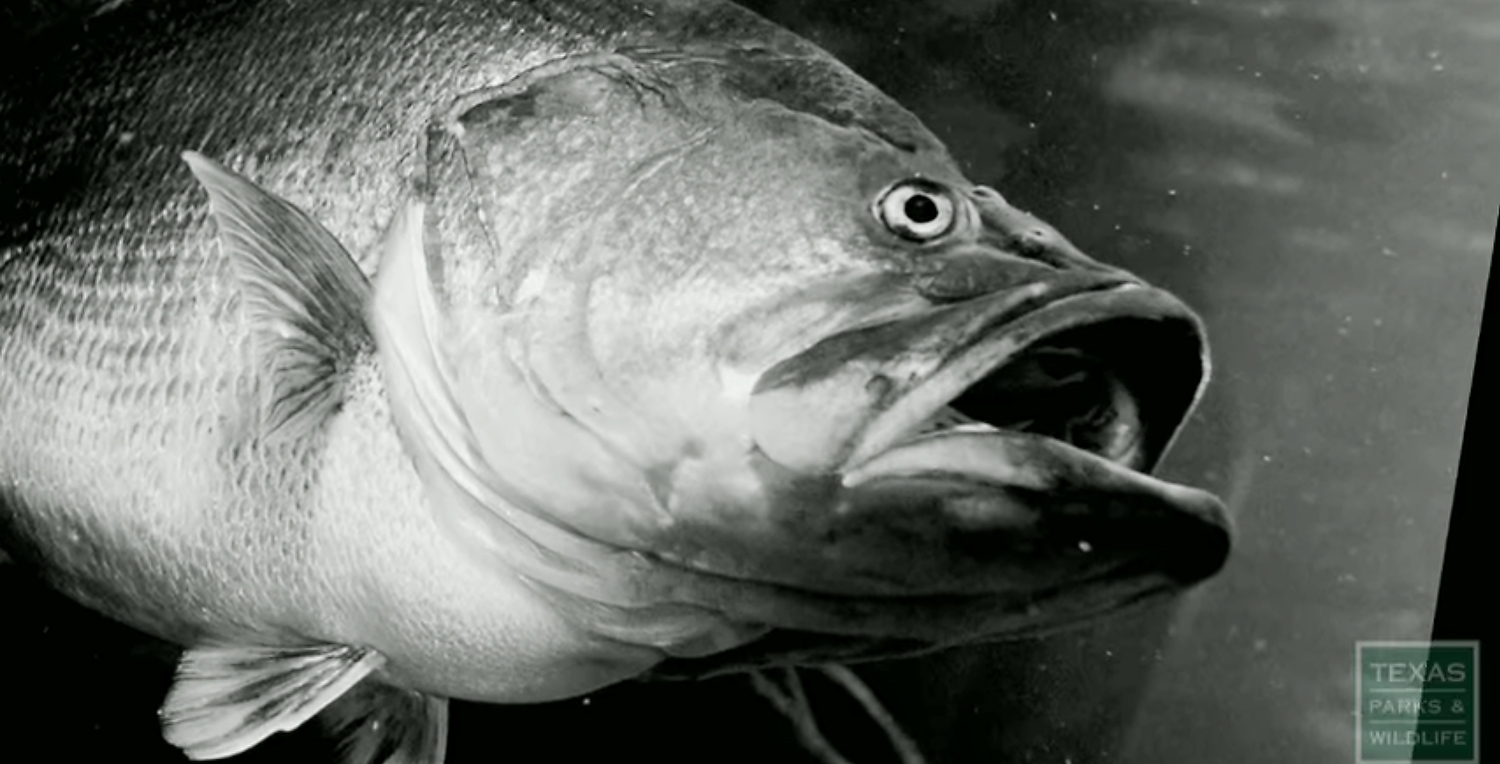
The big girl who started it all: Ethel

The big girl who started it all: Ethel


This is Passport to Texas

Ethel was a big girl from Lake Fork, and the first largemouth bass entered into the Sharelunker program in 1986.

06— And if you’d ever seen a picture of Ethel, she was as big around as she was long.

The Sharelunker program works to improve and grow bigger largemouth bass. Ethel was a 17.67-pounder caught and donated by fishing guide, Marks Stevenson. She served the program well, and changed the face of bass fishing in Texas

Former Director of Inland Fisheries, Phil Durocher, says bass fishing in Texas was very different before Ethel.

17— Back before ’86, bass fishing was primarily fish caught for food. People kept the big fish, and released the little fish. And we realized the larger fish were so valuable that we had to change the direction from a consumptive sport to recreation.

They brought Ethel to the Tyler fish hatchery where her survival was touch and go, says David Campbell, who oversaw the Sharelunker program from the beginning until his retirement in 2012.

13— This fish did not eat for a long time. My concern was if this fish died, it may kill the whole program. And I spent hours at night with a sunfish or something on a string and dangling it in front of her and she just sort of was sitting there looking at it.

She eventually, and literally spawned the success of the Sharelunker program. Learn more about Ethel and her legacy in a segment next week on the PBS Texas Parks and Wildlife TV series. Check your local listings.

For Texas Parks and Wildlife…I’m Cecilia Nasti.

Improving River Flows for Paddlefish and Beyond

Thursday, June 25th, 2015
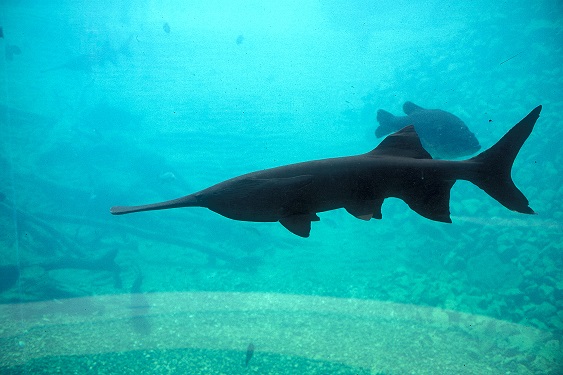
Paddlefish

Paddlefish

This is Passport to Texas

The batteries in the radio transmitters used to track 47 paddlefish reintroduced to Caddo Lake more than a year ago are fading.

06—We’re still tracking some paddlefish, but we know this is about the time we’re not going to be able to track ‘em anymore.

Native to Caddo, paddlefish disappeared following construction of a dam upstream at Lake of the Pines in the late 1950s.

Tim Bister, with Inland Fisheries, says early data suggest changes Texas Parks and Wildlife and partners made to simulate natural river flows and spawning habitat, kept the rare fish in the Big Cyprus Bayou and Caddo Lake system.

21—Having the opportunity to restore a native fish into the system, is certainly a good idea. But, to tie it into more of these natural river flows, and the idea that not just paddlefish—but
many other species—need natural river flows and appropriate spawning habitat, it’s going to benefit those things for rivers in Texas.

Bister says while they’ll continue monitoring paddlefish, the ongoing work is more expansive.

12— We will always be trying to do something in the Big Cyprus Bayou / Caddo Lake system to maintain quality river flow and quality habitat, and to monitor the fish populations.

The Wildlife and Sportfish Restoration Program supports our series.

For Texas Parks and Wildlife…I’m Cecilia Nasti.

Revisiting Paddlefish in Big Cypress Bayou

Wednesday, June 24th, 2015
Paddlefish at hatchery, photo courtesy of US Fish and Wildlife Service

Paddlefish at hatchery, photo courtesy of US Fish and Wildlife Service


This is Passport to Texas

Paddlefish, once abundant in the Big Cypress Bayou and Caddo Lake, started disappearing following construction of a dam at Lake of the Pines in the late 1950s.

07- So, basically, it took away the flows that the paddlefish need, and it took away their spawning substrate; eventually paddlefish just went away.

Inland fisheries’ Tim Bister says in spring 2014 a broad coalition of non-profits, landowners, and government agencies, reintroduced paddlefish into the system. But they first made improvements to benefit the rare species, including development of natural water releases upstream from Lake of the Pines, and gravel bar spawning areas.

14-We stocked 47 paddlefish, a year and a half old, between two and three feet long. And each were implanted with a radio transmitter, with a specific radio frequency that could be identified by a radio receiver.

Researchers tracked the paddlefish to see whether they would swim downstream over the spillway at Caddo Lake, and into Louisiana.

12-[If they did], they wouldn’t be able to swim back upstream because of that barrier. So, we wanted to make sure, by tracking these paddlefish, to see if they’re going to stay in the system. And after a year, I’m happy to say, that no fish were seen going over the spillway.

The radio transmitter batteries are fading, but the data collected so far is promising. Until the paddlefish reach reproductive maturity, we won’t know if we’ll see a self-sustaining population in Big Cypress Bayou and Caddo Lake.

The Wildlife and Sport Fish Supports our series.

For Texas Parks and Wildlife…I’m Cecilia Nasti.