Archive for the 'Fishing' Category

TPW Magazine/Invasive: Lionfish

Thursday, December 19th, 2013
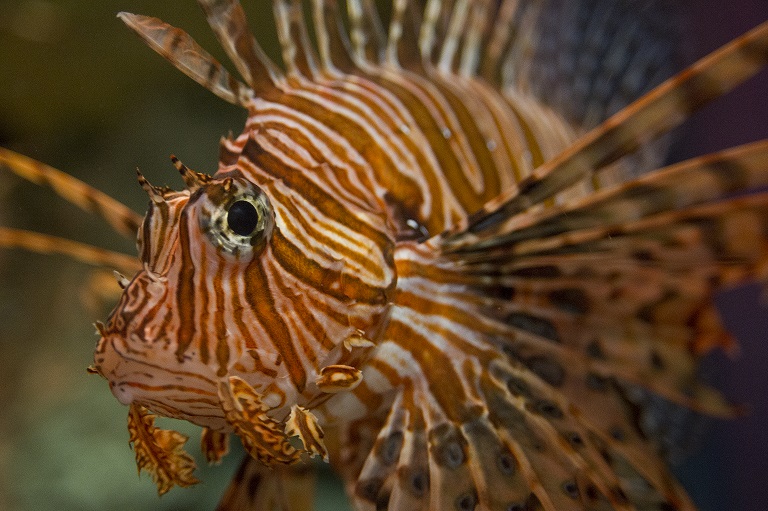
Lionfish, CHASE FOUNTAIN, TPWD ©2013

Lionfish, CHASE FOUNTAIN, TPWD ©2013


This is Passport to Texas

Since 1986, scientists have followed the spread of Lionfish from the south Atlantic to the Gulf of Mexico.

04— So far their effect in the Gulf has been minimal; but that will change.

Melissa Gaskill is a science and travel writer living in Austin. She wrote an article about the potential problem of Lionfish for the December issue of TPW Magazine, on newsstands now.

11—They’re very voracious eaters, and they eat everything and anything. They eat all kinds of fish; they’ll eat anything that can fit in their mouth. And they’ll eat and eat and eat, and just grow and grow and grow. And nothing eats them.

We may have saltwater aquarium enthusiasts to “thank” for the current Lionfish situation.

07— Someone probably got fed up with their pet lionfish eating all of their other pet fish and just decided to dump them in the south Atlantic.

In addition to the species’ voracious appetite, it’s also a prolific breeder.

23— They spawn more often than most reef fish; they also spawn in pairs. And when they reproduce, their little fishies drift on currents; so it’s inevitable they’d end up in this part of the Gulf given prevailing currents. And scientists and divers have been able to watch this gradual and not so gradual spread. They were first seen out around the Flower Gardens, and now they’ve been seen closer to our coast.

Tomorrow: managing this invasive species with butter and lemon.

For Texas Parks and Wildlife…I’m Cecilia Nasti.
Angling: Winter Fishing

Wednesday, December 18th, 2013

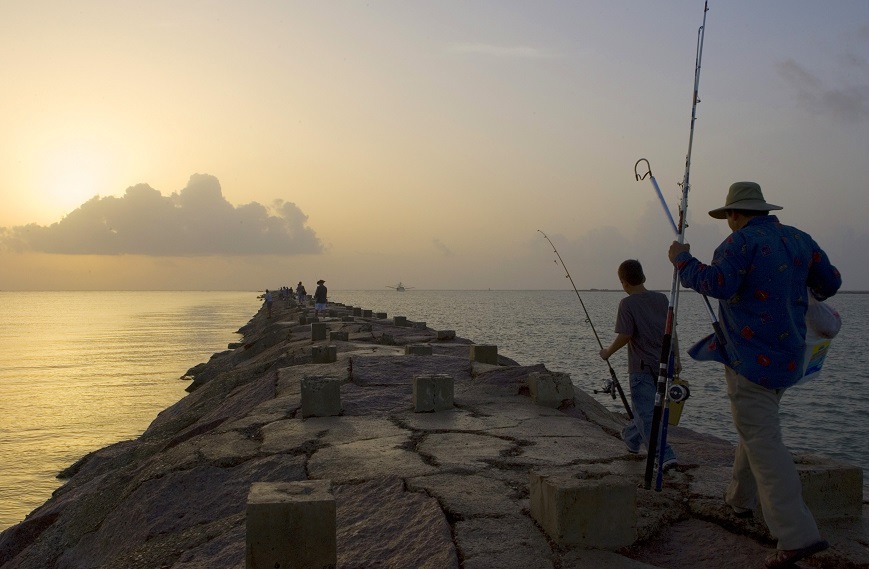
Jetty fishing at sunrise

Jetty fishing at sunrise


This is Passport to Texas

Saltwater anglers don’t have to keep their gear in storage until summer.

06—Texas has year-round saltwater fishing and it’s very productive, even in the worst of weather.

While the majority of saltwater anglers cast for redfish, flounder and speckled trout, professional fishing guide and outdoor writer, Danno Wise, recommends casting a wider net, so to speak. He says there are plenty of different fish in the sea.

40—Down here in the Rio Grande Valley is the only place in the continental United States outside of South Florida there’s a fishable population of snook year round. They’re sensitive to cold so they’re going to go into the deeper portions of our bay systems, but because the fish will be concentrated, we have excellent snook fishing during the winter time. We also have a substantial amount of beachfront fishing which is kind of overlooked. Whiting, which is a simple kind of fish, and the pompano. Very tropical looking species; in Florida, they’re targeted very heavily. Fish such as those are plentiful and good eating, and if you want to target going out just to get out of the house, relax, and catch a few to take home to eat, those are excellent choices.

Grab your gear and some warm clothes and head to the coast this winter to reel in more than the usual suspects.

That’s our show…we receive support from the Sport Fish Restoration program…funded by your purchase of fishing equipment and motor boat fuel…. For Texas Parks and Wildlife…I’m Cecilia Nasti.
Angling: Neighborhood Fishing for Rainbow Trout

Tuesday, December 17th, 2013

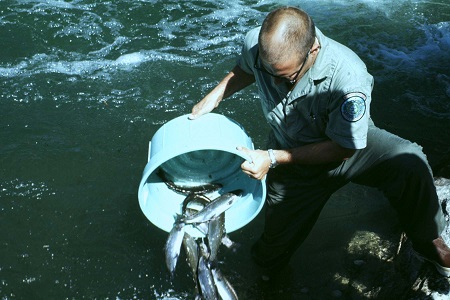
Trout stocking in Texas

Trout stocking in Texas


This is Passport to Texas

If you’re an angler who likes to eat what you catch, then now’s the time to reel in a rainbow trout.

14— We stock them at a catchable and eatable size. They are good fighting fish; they’re relatively easy to catch. We usually stock them in smaller bodies of water, so they’re a good fishing, catching opportunity and good eating opportunity as well.

Carl Kittle (kitl) is a program director for Inland Fisheries, and oversees winter trout stocking in Texas. Distribution began this month and continues through February 2014. Purchase of the trout is funded in part by city and local governments through the trout partner program.

17 – We’ve been stocking [rainbow] trout around Texas for almost 40 years. One interesting note about trout is that we often say there are no established populations of trout in Texas, but actually, way out west in the Davis Mountains there’s a small, tiny stream at high enough elevation that there is a reproducing population of rainbow trout.

In the rest for the state, however, it’s just too hot to sustain rainbow trout populations year round, and that’s why we will stock 289-thousand or so of the trout in 120-130 locations this year…including urban areas.

11 – And we have a special program; we actually stock somewhat larger trout in urban areas in our Neighborhood Fishin’ Program. And that’s something that you can specifically look for on our web page.

Find the stocking schedule and locations at the TPW website. The Wildlife and sport fish restoration program supports our series and funds rainbow trout stocking in Texas…

For Texas Parks and Wildlife…I’m Cecilia Nasti.

Angling: Trout Stocking in Texas

Monday, December 16th, 2013

Rainbow Trout

Rainbow Trout


This is Passport to Texas

We’re headlong into the holiday season; what better way to celebrate than with rainbows – rainbow trout, that is.

13— We do winter stockings when the water temperatures permit it, to provide an opportunity for anglers to catch trout in Texas. It’s a species of fish that anglers wouldn’t catch otherwise, so we stock them, and we intend them all to be caught out during the season.

Purchase of the trout is funded by anglers, through their purchase of the Texas freshwater fishing stamp. Carl Kittle (kitl) is a program director for Inland Fisheries. Drought had an impact on lake levels statewide over the past two years, but things are looking up in 2013.

13 – This year, things are pretty well back to normal. It’s very dry out west, but it looks like our normal level of stocking in over 120 sites will happen. In fact, we’re looking to stock about 130 sites this year.

Texas Parks and Wildlife plans to distribute approximately 289,000 rainbow trout amongst the various locations, including urban neighborhood fishin’ holes.

07 – We publish a schedule on the Texas Parks and Wildlife Department webpage. Look for the winter trout stocking link.

Carl Kittle says we stock rainbows in winter because these fish cannot survive our hot summers. So, when you reel one in this winter, take it home and eat it.

The Wildlife and sport fish restoration program supports our series and helps to fund rainbow trout stocking in Texas.

For Texas Parks and Wildlife…I’m Cecilia Nasti.
Tech/Wildlife: Saving the Guadalupe Bass

Thursday, October 31st, 2013

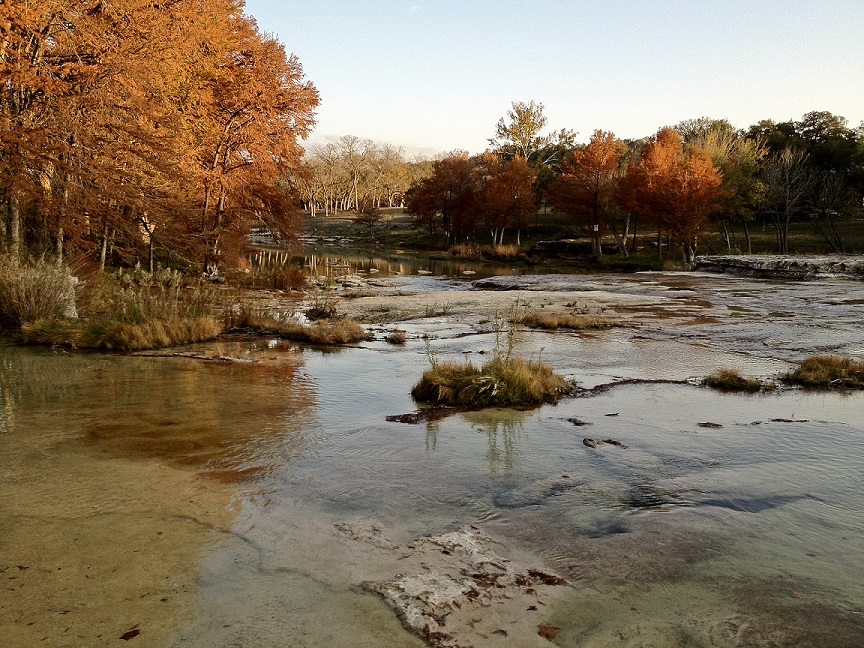
Fall foliage along the Blanco River

Fall foliage along the Blanco River


This is Passport to Texas

Unmanned aerial systems – or drones – in the hands of a trained biologist can improve the future a species…as it did with…

01— Guadalupe bass.

Tim Birdsong is chief of habitat conservation for Inland fisheries. Guadalupe bass – the state fish –once thrived in the Blanco River. In the 1970s TPW stocked smallmouth bass in it, but over time, the species bred creating a hybrid that outcompeted the Guadalupe.

12—That led to complete loss of Guadalupe Bass in that system. And we really didn’t see an opportunity to restore the Guadalupe bass populations in the Blanco River.

The 2011 drought caused the river’s flow to cease, leaving some enduring pools that concentrated the fish. Birdsong said they used a drone to map the location of the pools.

18—We used electro-fishing and nets to remove the remaining small mouth bass. Then flows improved in the Blanco in the spring of 2012 and we stocked roughly 150-thousand Guadalupe bass fingerlings; followed by a similar number in the spring of 2013.

Provided flows in the Blanco continue, Birdsong says he expects in 4 or 5 years we’ll have fishable populations of Guadalupe Bass in the river.

10—That’s a major success story, and it wouldn’t have been possible without this unmanned aerial system, or it would have required our staff to hike up and down miles and miles of riverbed to identify these pools.

The WSFR program supports our series and funds conservation projects in Texas…For Texas Parks and Wildlife…I’m Cecilia Nasti.
