Archive for the 'Fishing' Category

Nature: What’s up With the Sargassum?

Thursday, July 4th, 2013
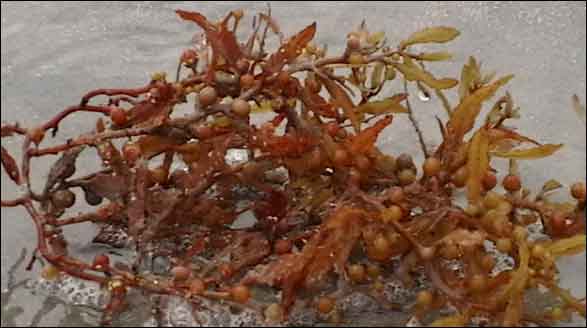
Sargassum, Image © Texas Parks and Wildlife Department

Sargassum, Image © Texas Parks and Wildlife Department


This is Passport to Texas

Every spring and summer, visitors to the Texas coast encounter piles of brown, wet, slimy vegetation lining Texas beaches.

02 – It’s a brown algae called sargassum.

Paul Hammerschmidt, with Coastal Fisheries, says sargassum may accumulate on tide lines for miles.

21 – It belongs to a whole group of plants that belong to the sargassum group. Most of those plants are attached to hard substrate – rocks, shells – that kind of thing. These particular species don’t attach to anything; they’re floating. They have little tiny gas bladders that help the plant float. So, periodically that breaks away and ends up on the Texas beach.

Sargassum originates in the Sargasso Sea, in the middle of the North Atlantic Ocean.

16 –…in a big floating gyre; a gyre is a big eddy. And this particular sea has no shoreline at all – no land shoreline. It’s surrounded by four different ocean currents that keep that seaweed trapped in this one particular area.

Yet, tons of sargassum escape and end up on Texas shores.

13 – Changes in the currents; winds and storms can occur in the area, and sections of it actually break off and get into the main currents. Those main currents will bring them into the gulf and eventually onto the beaches.

Tomorrow: the value of sargassum.

The Wildlife and Sport Fish restoration program supports our series.

For Texas Parks and Wildlife…I’m Cecilia Nasti.

Conservation: Public Reefing

Wednesday, June 12th, 2013

Concrete pyramids for near shore reefing

Concrete pyramids for near shore reefing


This is Passport to Texas

An artificial reef is marine habitat created by man and placed on the ocean bottom for the benefit of marine life.

06 – Fish like structure. And just about anything you put overboard will attract fish.

Paul Hammerschmidt, with coastal fisheries, says a program called public or near-shore reefing allows the public to deposit reef materials into the gulf.

12 —We’re going to allow the general public to reef material within state territorial waters, and that will expand the number of artificial reefs that we have out in the Gulf of Mexico off of Texas.

You shouldn’t think of this as an invitation to dump your garage sale rejects into the gulf.

13 – We have certain criteria for the material. It has to be stable; it can’t fall apart, it can’t wash up on the beach, it can’t float…all of those things, which is just exactly what we comply with when we do our own reefing.

More reefs in the Gulf of Mexico will mean better fishing for coastal anglers.

03—Our charge is to increase fishing opportunities, and this is a really good way to do it.

Find details about near shore reefing on the Texas Parks and Wildlife website.

The Sport Fish Restoration Program supports our series and provides funding for the operations and management of Sea Center Texas.

For Texas Parks and Wildlife…I’m Cecilia Nasti.

TPW TV: Coastal Fishing

Tuesday, June 4th, 2013

Image from June issue Texas Parks and Wildlife Magazine

Image from June issue Texas Parks and Wildlife Magazine


This is Passport to Texas

Summer officially arrives later this month. And if fishing is on your to-do list, Texas Parks and Wildlife TV Series Producer Don Cash says, a segment on this week’s show highlights angling opportunities along the Texas coast.

58 –I’m pretty sure that the fishing along the Texas coast is pretty good all year round, but summertime is when people seem to really think about going fishing. And this story focuses on a couple of different ways to do it. One of those ways is to take a charter boat out. The great thing about that is you’re surrounded by water — no land anywhere in sight – and you don’t really know what you’re going to catch sometimes. You never know what’s going to come up on the end of your hook; you can specifically fish for a certain type of fish, but Lord, there might be a hundred pound grouper, when you’re fishing for that two pound snapper. So, there’s a lot of excitement there. One thing you see in this story is the people fishing are having a really good time. Whoa! That’s a red snapper [laughs]. What I hope happens with this story is people will watch it and they’ll say ‘Wow. That looks like fun.’ If you can’t do a charter boat, you can always do wade fishing; you can go fish on the pier. There are all kinds of ways to go fishing on the coast, and all of them are a lot of fun.

Thanks, Don.

Support provided by Ram Trucks. Doing what’s right and good regardless of the degree of difficulty — takes guts. Those are the people who build Ram trucks. RAM.

For Texas Parks and Wildlife…I’m Cecilia Nasti.
Fishing: Fish Free in Parks

Monday, June 3rd, 2013

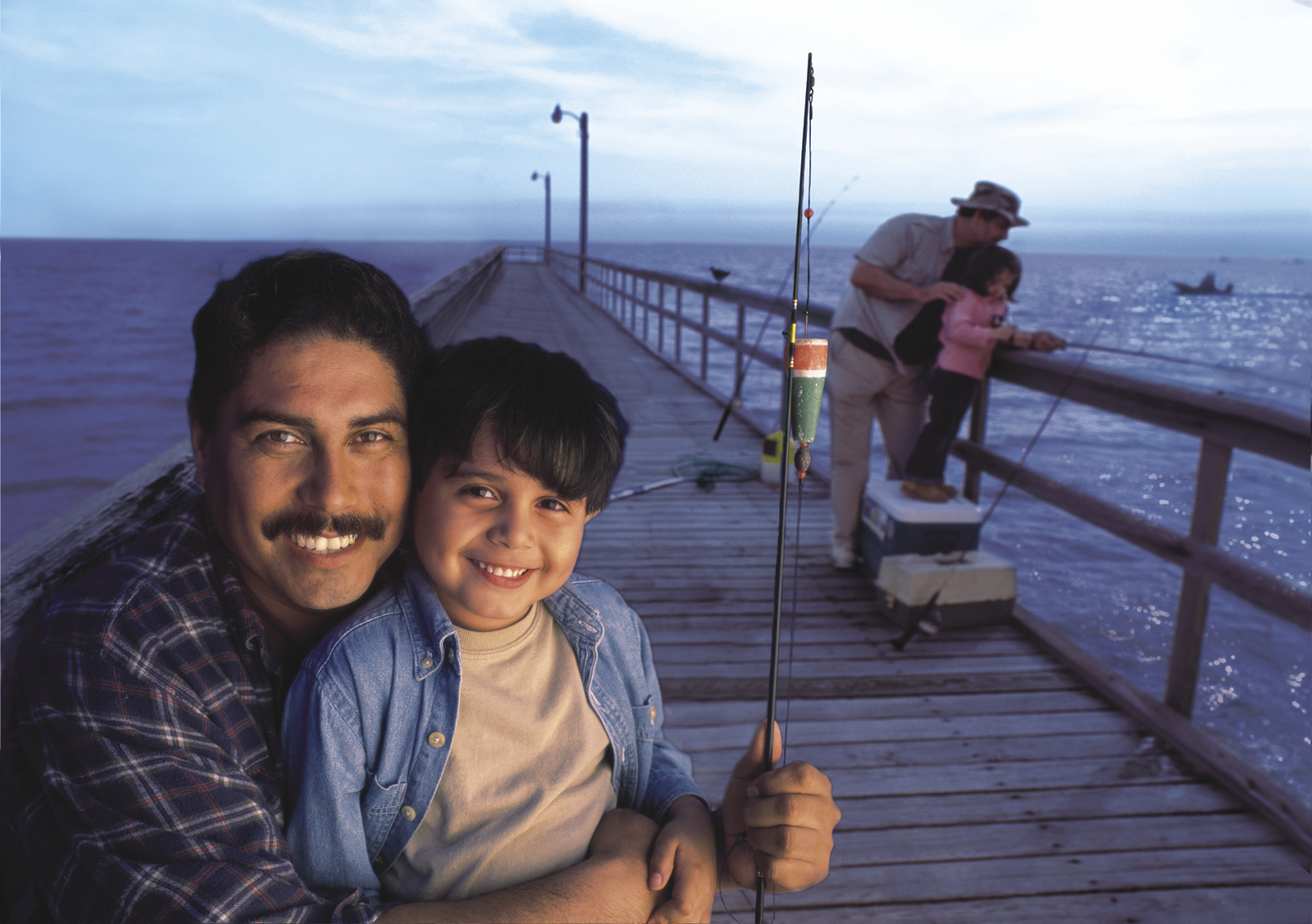
Free Fishing in State Parks

Free Fishing in State Parks


This is Passport to Texas

June 3rd through 9th is National Fishing and Boating week. The Recreational Boating and Fishing Foundation — or RBFF –promotes this week as a way to increase participation in recreational angling and boating.

The non-profit hopes that by improving public awareness citizens will protect, conserve, and restore this nation’s aquatic natural resources. Research indicates people who engage the out of doors safeguard it.

One way RBFF does this is by promoting Free Fishing Day on the first Saturday of June. Most states allow people with or without a license to fish for free in their state’s waters on that one day. In Texas, we fish free every day when casting a line in a water body inside a Texas state park.

That’s why we didn’t make a fuss about Free Fishing Day this year. The ability to fish free 365 days a year in state parks, without needing a fishing license, is yet another benefit of living in Texas. Having said that, you must follow size and bag limits, and when it’s trout stocking time, you will need a trout stamp to reel in the rainbows.

Some parks even offer tackle loaner programs, so if you don’t have gear, no problem.

Whether you catch and release, or bring fish home for dinner, make plans to go to an inland or coastal state park and cast a line during National Fishing and Boating week or any week…because you fish free in state parks.

That’s our show…we receive support from the Sport Fish Restoration Program…working to increase boating and fishing opportunities in Texas.

For Texas Parks and Wildlife…I’m Cecilia Nasti.
50th Anniversary: Redfish Wars, 2

Friday, May 31st, 2013

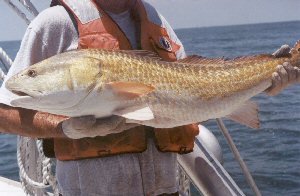
Red Drum

Red Drum


This is Passport to Texas

After years of monitoring, data collection and analysis, the TPW Commission upheld a Legislative directive, and in 1981 banned commercial fishing of red drum/redfish in Texas waters; something known today as The Redfish Wars.

15- You think of the term ‘wars.’ This was really a conflict between what we were finding in our bays regarding the red drum populations, and what the commercial fishermen traditionally did. It was their livelihood.

Paul Hammerschmidt, with coastal fisheries, says commercial fishermen criticized the agency’s method of random sampling, saying it set nets where redfish were sparse.

19-If we sampled in areas where there always were found fish, it would take us a longer time to detect a change – either positive or negative — when you’re always able to catch fish. When you do it randomly around a bay system, you have a much better way of detecting a change.

Although Texas Parks and Wildlife was sued over redfish regulations, the strength of the science won the case. In the thirty years since the ban, redfish populations have rebounded, and are more robust than ever. The ban, stocking programs, size and bag limits placed on sport anglers, have helped. Since then, the relationship with commercial anglers has also improved.

04- We do have a much better relationship than during the wartime.

The Wildlife and Sport Fish Restoration project supports our series…and funds the operations and management of fish hatcheries in Texas. For Texas Parks and Wildlife…I’m Cecilia Nasti.
