Archive for the 'Saltwater' Category

50th Anniversary: Redfish Wars, 2

Friday, May 31st, 2013
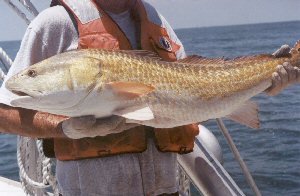
Red Drum

Red Drum


This is Passport to Texas

After years of monitoring, data collection and analysis, the TPW Commission upheld a Legislative directive, and in 1981 banned commercial fishing of red drum/redfish in Texas waters; something known today as The Redfish Wars.

15- You think of the term ‘wars.’ This was really a conflict between what we were finding in our bays regarding the red drum populations, and what the commercial fishermen traditionally did. It was their livelihood.

Paul Hammerschmidt, with coastal fisheries, says commercial fishermen criticized the agency’s method of random sampling, saying it set nets where redfish were sparse.

19-If we sampled in areas where there always were found fish, it would take us a longer time to detect a change – either positive or negative — when you’re always able to catch fish. When you do it randomly around a bay system, you have a much better way of detecting a change.

Although Texas Parks and Wildlife was sued over redfish regulations, the strength of the science won the case. In the thirty years since the ban, redfish populations have rebounded, and are more robust than ever. The ban, stocking programs, size and bag limits placed on sport anglers, have helped. Since then, the relationship with commercial anglers has also improved.

04- We do have a much better relationship than during the wartime.

The Wildlife and Sport Fish Restoration project supports our series…and funds the operations and management of fish hatcheries in Texas. For Texas Parks and Wildlife…I’m Cecilia Nasti.
50th Anniversary: Redfish Wars, 1

Thursday, May 30th, 2013

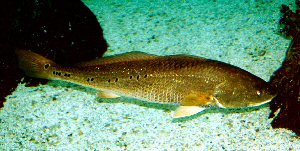
Red Drum

Red Drum


This is Passport to Texas

It’s illegal to commercially fish red drum, or redfish, in Texas. In the 1970s, during routine monitoring of bays, biologists discovered a serious decline in the number of the species caught by commercial fishermen.

06- So, we started looking into it very carefully, and started implementing bag and size limits on these animals.

Paul Hammerschmidt, with coastal fisheries, says the new restrictions were just the beginning of a lengthy and involved process to help increase populations of the species.

12-The legislature actually required us to establish quotas on commercial fishing. And we were allowed to modify those quotas depending on the amount of fish that were being caught on a day-by-day basis.

Most commercial anglers cooperated with Texas Parks and Wildlife by reporting the redfish caught in their nets….

26-Annecdotally, we had heard that red drum being landed and sold to fish wholesalers were actually reported as another species. What that did, is that showed fewer and fewer redfish were being caught in a particular bay. And that impacted the formula that we used to establish the quotas. So, the fewer and fewer fish that they got, the next year the fewer and fewer fish they were allowed to catch.

This marked the beginning of what would become known as The Redfish Wars; we’ll have more tomorrow.

The Wildlife and Sport Fish Restoration project supports our series…and funds the operations and management of fish hatcheries in Texas. For Texas Parks and Wildlife…I’m Cecilia Nasti.
Wetlands: Bahia Grande, 1

Tuesday, May 21st, 2013

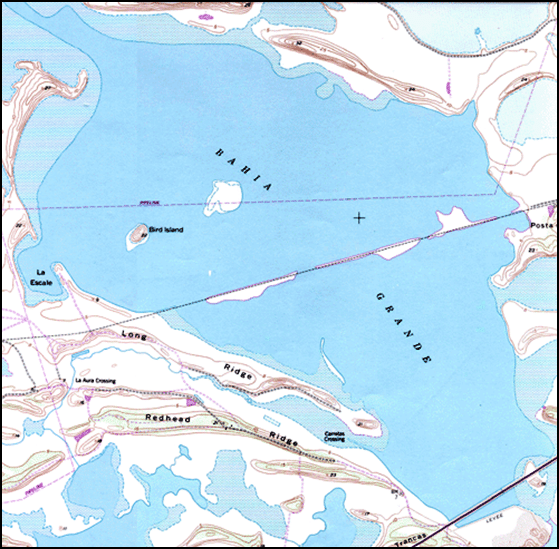
Bahia grande Map, Texas A&M Corpus Christi

Bahia grande Map, Texas A&M Corpus Christi


This is Passport to Texas

Bahia Grande, the largest tidal wetland restoration project in the state of Texas, is getting closer to completion.

10 – A tidal wetland is normally a coastal wetland that is influenced by the daily tide cycle that would basically push or pull water into that system on a daily basis.

John Wallace, Deputy Project Leader South Texas Refuge Complex, says construction of the Brownsville Ship Channel in the 1930s effectively cut off Bahia Grande from the gulf.

09 – The spoil from that ship channel was piled on the north side, and it blocked off those natural channels that allowed water to flow into the Bahia Grande.

Without water, the basin dried up, and eventually became a nuisance to local residents and businesses whenever prevailing winds came from the southeast.

26 – Normally on a coastal area with prevailing winds, you would get winds ten to twenty miles an hour every day. And these winds would pick up that real fine clay dust, and blow it to the north and northwest. And the local communities north of there were suffering from this blowing dust. It was impacting people that had breathing problems. The local schools, their air-conditioning systems, it was getting into the classrooms. So, it was a major concern for the local communities.

Solving the problem…that’s tomorrow.

The Wildlife & Sport Fish Restoration Program supports our series and provides funding for wetland conservation through the Private Lands Enhancement Program.

For Texas Parks and Wildlife…I’m Cecilia Nasti.

Recreation: Go Coastal, 2

Wednesday, May 15th, 2013


This is Passport to Texas

Wondering what you’ll discover on a visit to the Texas coast?

02—There’s always something new and surprising.

Writer… Melissa Gaskill…should know. She grew up on the coast and although she lives in Austin now, she’s a frequent visitor to her old stomping grounds. She says if you steer clear of the Texas’ sandy shores because you’re looking for something more tranquil…you need to check out her article in the June issue of Texas Parks and Wildlife magazine.

19—[In] Port Aransas you’ve got the busy beach, [but] you can get on a ferry and ride over to St. Joe Island, and walk off and be all by yourself. You can do that at Sea Rim; you can do that on Matagorda Island, and you can even do it in Matagorda County on the Beach, or South Padre island, where you can go down past where all the people are and just keep on going.

Melissa says wildlife viewing, dining, kayaking, swimming, and fishing just scratch the surface of the activities awaiting coastal visitors…activities such as instruction on sandcastle-making taught by experts.

16— It’s a class you pay for. You typically get an hour with one of these people; they’re on the beach – that’s where the sand is. And they’ve got all the tools. You’re usually under a little shady tarp. The place I went, they gave you a drink. And they start showing you from the basics up; over that hour, you build something pretty impressive.

Check out Melissa Gaskill’s article, titled Go Coastal in the June issue of Texas parks and Wildlife magazine.

For Texas Parks and Wildlife…I’m Cecilia Nasti.

Recreation: Go Coastal, 1

Tuesday, May 14th, 2013

Image courtesy of www.destination360.com

Image courtesy of www.destination360.com


This is Passport to Texas

Writer Melissa Gaskill is never at a loss for things to do on the Texas coast.

09—I spent my middle school and high school years on the beach; I have spent my adult life all along the coast. Believe it or not, that article only scratches the surface.

The article Melissa’s referring to is one she wrote for the June issue of Texas Parks and Wildlife magazine titled: Go Coastal. It’s a compendium of diverse activities.

10—I just made a list right off the top of my head and sent it to the editor and said, ‘how does this look?’ and she goes ‘great!’ And we refined it a little bit, but for the most part these are things that I’ve been doing my entire life and loving.

Melissa says the first place to start a coastal visit is on the beach…but you needn’t stay there.

26—There are places to hike… you can get in a kayak; a kayak is a wonderful way to explore. You can charter a boat, you can go offshore. You can go out on a fishing pier. There are all of the touristy things: you can go to the pier and ride a Ferris wheel, you can go to a restaurant, sit out on the deck and feed fish– that sort of thing. Or you can go off the beaten path: ride a horse, kayak, or hike off into some pretty remote areas.

Melissa Gaskill returns tomorrow and shares more about her Go Coastal article for the June issue of Texas Parks and Wildlife magazine.

Funding for the show’s provided in part by RAM Trucks: Doing what’s right and good regardless of the degree of difficulty — takes guts. Those are the people who build Ram trucks. RAM.

For Texas Parks and Wildlife…I’m Cecilia Nasti.