Archive for the 'Shows' Category

Campstravaganza

Monday, April 3rd, 2017
Guale #2 at Big Bend Ranch State Park

Guale #2 at Big Bend Ranch State Park

This is Passport to Texas

The Texas State Park system has close to 8,000 campsites. In the April issue of Texas Parks and Wildlife magazine, father and son—Russell and Luke Roe—highlight the available prime “real estate”.

You know the places: great views, near water, or shaded by an ancient oak; spacious—or, perhaps, secluded.

In the section, the Roes reveal site and shelter numbers of these coveted spots: such as Guale #2 at Big Bend Ranch State Park in West Texas; this remote site, only accessible by four-wheeler, offers visitors spectacular views of sunsets that will change your life.

Site #65 at Caprock Canyons State Park in the Panhandle, offers solitude, the beauty of the shimmering red-rock Canyonlands, a covered picnic shelter, and a stunning view of Little Red River.

Site #92 at Inks Lake State Park  in the Hill Country is everything you want a camping getaway to be, with the perfect balance of shade, convenience, privacy, scenery and lake access. Boaters can moor their boats at the site, and the sunsets will take your breath away.

The special section of Texas Parks and Wildlife magazine has an illustrated Native American story you can tell around the campfire, tips on setting up the perfect campsite, and eight new s’mores recipes!

That’s our show for today… Funding provided in part by Ram Trucks. Guts. Glory. Ram

For Texas Parks and Wildlife, I’m Cecilia Nasti.
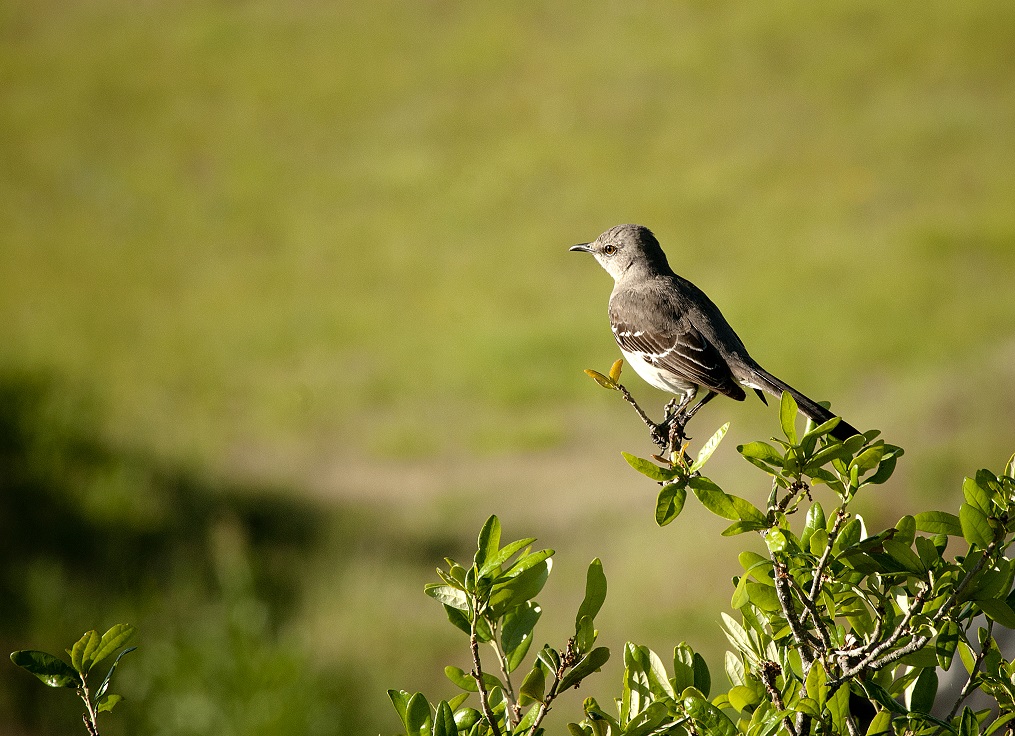
Your Own Backyard Offers Birding Opportunities

Friday, March 31st, 2017
Mockingbird photgraph taken from the roof of TPWD HQ building.

Mockingbird photgraph taken from the roof of TPWD HQ building.

This is Passport to Texas

The Texas coast attracts a wide variety of species of birds during spring migration. But what if you live inland and don’t have plans to visit the coast?

Folks that are inland can probably scout and look for big groves of trees and watch the weather.

Cliff Shackelford is Parks and Wildlife’s non-game ornithologist.

I’m here in Nacogdoches, and we have a place in town called Pecan Park – it’s right next to Stephen F. Austin State University – and it is a migrant trap. So what I do is I look at the weather; if it rained the night before during a window of time when I know birds are passing through, that would be late April, early May, I would immediately get out there at eight in the morning and see what’s there.

Inclement weather grounds birds as it does some aircraft. Shackelford said a location with large trees and an open understory is ideal for birders to glimpse migrants high above in the canopy. Of course, if you want to encourage migrants to visit your backyard…

Provide a wildscape; that’s landscaping for wildlife. And in that you’ll start to see that ‘hey if I want berry-eating birds like tanagers and grosbeaks and buntings, I should put some of these berry-giving shrubs and trees out. If you’re wanting to attract fly-catching birds, then just having a wildscape means you’re going to have a lot of insect fauna – flies and bees and things like that – that a lot of birds feed on.

Find wildscaping and birding information on the Texas Parks and Wildlife website. The Wildlife Restoration program supports our series.

For Texas Parks and Wildlife…I’m Cecilia Nasti.

Birding Hot Spots During Spring Migration

Thursday, March 30th, 2017
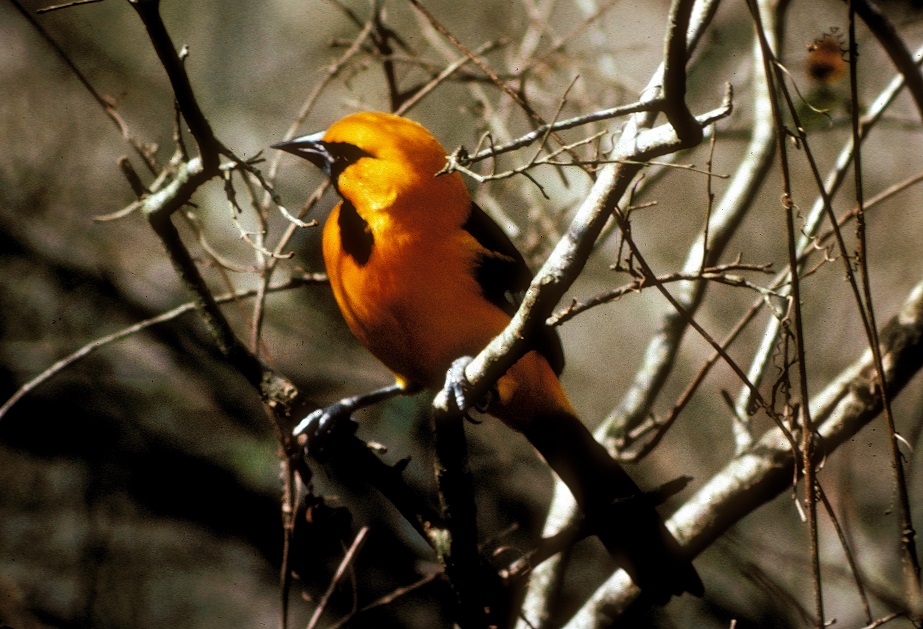
Altamira Oriole

Altamira Oriole

This is Passport to Texas

Texans perk up as the monochromatic birds of winter give way to their colorful counterparts of spring.

Like the orange and black of the Baltimore Oriole, or the red and black of a Scarlet Tanager. So, all of a sudden you see this splash of color that you haven’t seen in months, and it’s very exciting.

Cliff Shackelford, Parks and Wildlife’s non-game ornithologist, says to witness these colorful migrants, location is only part of the equation.

Location is important, but if a storm hit – like a blue norther – in late April, that grounds those birds just like it would ground small aircraft. And so, they’re seeking shelter, and that could be your backyard.

Hot spots where you can view large concentrations of migratory birds are plentiful – the Texas coast is one of the best.

Places like High Island, Sabine Woods near Sabine Pass, Bleacher Park near downtown Corpus Christi, the South padres island Convention center. Birdwatchers go to those spots, typically in April and May. They can be very productive. Those are just a few of the really important hot spots we call “migrant traps” that are great for the birds and the bird watchers.

Find birding information on the Texas Parks and Wildlife website. The Wildlife Restoration program supports our series.

For Texas Parks and Wildlife…I’m Cecilia Nasti.

The Kraken Serves Texas as an Artificial Reef

Wednesday, March 29th, 2017
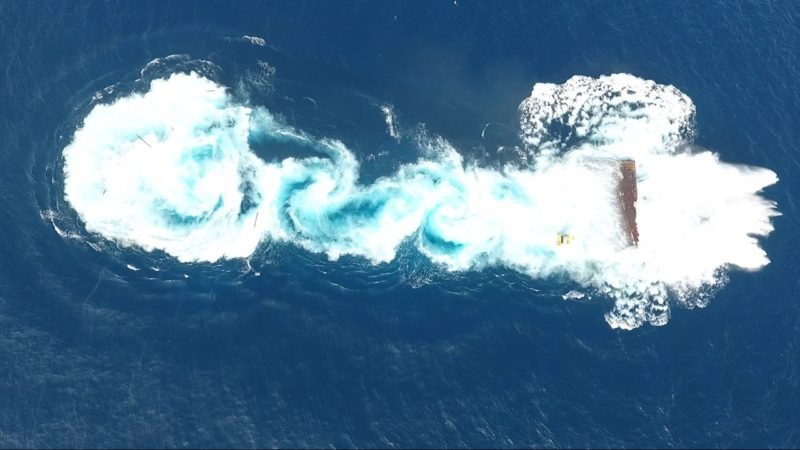
The Kraken on the way down to the gulf floor to become an artificial reef.

The Kraken on the way down to the gulf floor to become an artificial reef.

This is Passport to Texas

On Jan. 20th, Texas Parks and Wildlife’s Artificial Reef Program sank a 371-ft cargo vessel, named The Kraken, more than 60 miles off the coast of Galveston. Alison Baldwin is an Artificial Reef technician.

Because Texas [gulf floor] doesn’t have a lot of structure, it makes it hard to for fishermen to fish because fish really enjoy structure. So any time we put structure out here, it’s really good for fishermen and divers.

Program Leader, Dale Shively, says the Kraken, which began life in 1987 as a Japanese cargo ship, was cleaned of fuel, oil and hazardous materials before being deployed into gulf waters.

We’re at our reef site, about 65 miles out of Galveston. We’re trying to maneuver into a deep water spot that’s at least 140 feet deep.

To facilitate a controlled flood to sink the ship, Baldwin says work crews cut four large holes into the its hull.

Water will rush into the stern, and we’re hoping that the stern touches the bottom first, and all that super structure will fill with water, and it will bring the bow down nice and slow.

Everything progressed flawlessly, because of the planning and preparation that went into it beforehand.

As soon as we sink the ship, there should be fish on it in minutes—which is really exciting.

Since 1990, the artificial reef program has documented more than 200 marine fish species that make these complex, stable and durable habitats home.

The Sport Fish Restoration program supports our series.

For Texas Parks and Wildlife…I’m Cecilia Nasti.

Birds of Prey at Lake Livingston State Park

Tuesday, March 28th, 2017
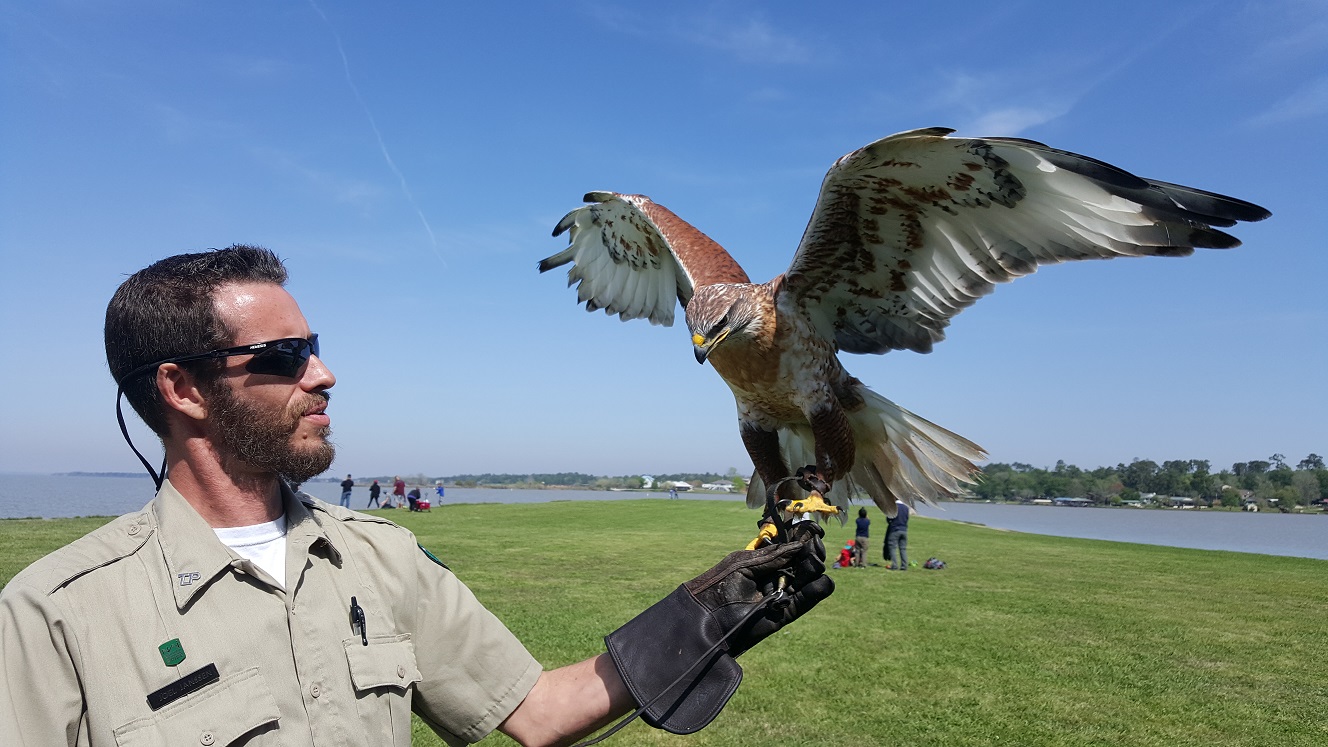
Joel making friends with a falcon.

Joel making friends with a falcon.

This is Passport to Texas

Birds of prey are apex predators. See them in action at Lake Livingston State Park during a birds of Prey Demo on April first, by the non-profit environmental education organization, EarthQuest.

So, we reached out to them, and said people are asking about birds of prey here at the park. We’ve got a lot of them, and we would love for you to come out, showcase some of the different birds of prey that can be found in this area—as well as some birds you may not find in Texas—so that we can educate our visitors about the importance of these birds of prey and our role in conserving habitat.

Joel Janssen is a park ranger and interpreter.

What makes birds of prey fascinating to not only birders but regular park visitors is that they are true masters of the sky. They have adaptations that make them ideally suited for catching prey, and [during the program] they show off those skills.

The Birds of Prey Program is April 1, with two shows—at 10 a.m. and 2 p.m. Bring blankets and camp chairs for your comfort, and cameras to capture the action.

Between the two programs, the falconer and his assistant are going to be available. They will hold the birds for the visitors and let them get up close and personal. So, you are more than welcome, and we encourage you to bring your camera out and take photos both during and after the program.

Your $5 park admission gets you into the April 1st Birds of Prey program at Lake Livingston State park. Find complete details at texasstateparks.org.

For Texas Parks and Wildlife…I’m Cecilia Nasti.