Archive for the 'Shows' Category

Watch the Birdie (at the Feeder)

Tuesday, November 29th, 2016

Project Feeder Watch

Project Feeder Watch

This is Passport to Texas

The Christmas Bird Count, a project of the National Audubon Society, is December 14 through January 5. Volunteers count birds during a 24-hour period inside defined 15-mile diameter circles throughout the state.

But there aren’t any on December 25th—you can’t compete with family time and ripping open presents.

Nongame ornithologist, Cliff Shackelford says if you’re unable to participate in a Bird Count circle, you can still contribute to the count as a feeder watcher.

That’s someone that just merely watches out their back window and looks at the birds coming to the feeder and just counting those things. It’s a really good niche for someone that’s not able to get out if it’s too cold, or you’re just not physically able to get out, or maybe you have a newborn at the house, These are people that might have their eyes open watching the feeder and can contribute.

Get in touch with your area Audubon Christmas Bird Count Compiler through the Audubon website.

Contribute to the world of citizen science all year long as a feeder watcher. Just go to feederwatch.org for details.

The Wildlife Restoration Program supports our series and funds diverse conservation programs in Texas.

For Texas Parks and Wildlife…I’m Cecilia Nasti

Count Birds, Help Science

Monday, November 28th, 2016
Christmas Bird Count participants. Photo: Camilla Cerea/Audubon

Christmas Bird Count participants. Photo: Camilla Cerea/Audubon

This is Passport to Texas

More than a hundred years ago people participated in a time-honored Christmas tradition.

People would go out and do what was called a side hunt, and the winning group would come back with the biggest pile of dead critters.

Most of the critters in those piles were birds. Cliff Shackelford, non-game ornithologist with Parks and Wildlife, says conservationists had a better idea.

Early conservationists thought that we ought to count birds and not try to collect birds.

Today we have the Christmas Bird Count, December 14th through January 5th. Volunteers, armed with a bird list and binoculars, head into the field on a specified day to count birds over a 24-hour period.

What people do is they get into teams, and they have a defined 15 mile radius circle that they’re counting in, and that circle never moves. The hope is that you would count that circle for decades and decades and over time you would see trends.

Everyone turns in their data to a compiler who sorts it out and sends it to researchers; they use it to assess the health of bird populations, and to guide conservation action.

Go to audubon.org for more information and to register.

The Wildlife Restoration Program supports our series.

For Texas Parks and Wildlife…I’m Cecilia Nasti.

TPW TV – Gobblers Go East

Friday, November 18th, 2016
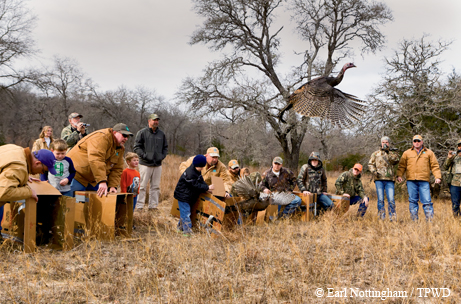
Turkey release.

Eastern wild turkey release at Gus Engeling WMA 02-05-2014

This is Passport to Texas

A group of 31 eastern wild turkeys recently released in the Angelina National Forest may not be from Texas, but they got here as fast as they could. Wildlife biologist, Jason Hardin.

Any of these birds that come into Texas from out of state, we draw blood for disease testing. We’ve been really lucky—we’ve had really healthy birds coming in. In addition to that, the University of Georgia is doing DNA on all these birds.

Each bird got banded with its own ID number, and joined a four-decades-long restocking effort.

Turkeys were historically found throughout close to 30-million acres in east Texas. So, this is part of their historic range. Around the turn of the 20th Century, we lost birds due to over harvest—primarily—European settlers coming into Texas. There were no regulations to stop them from harvesting those animals. And no law enforcement out there to enforce the few regulations that we did have.

With the last batch of 31, Texas Parks and Wildlife has introduced about 80 birds to the site. Now they’ll monitor their habitat use to determine their preferences, and to ensure their future.

From what we can tell, the birds appear to be doing pretty well. We have some of our highest populations of turkeys in east Texas on that site. So, we know that it can be very successful.

The Texas Parks and Wildlife TV series on PBS airs a segment called Gobblers Go East the week of November 20, where you can see the rest of the story. Check your local listings.

The Wildlife Restoration program supports our series.

For Texas Parks and Wildlife…I’m Cecilia Nasti.

Pheasant Hunters May Expect Successful Season

Thursday, November 17th, 2016
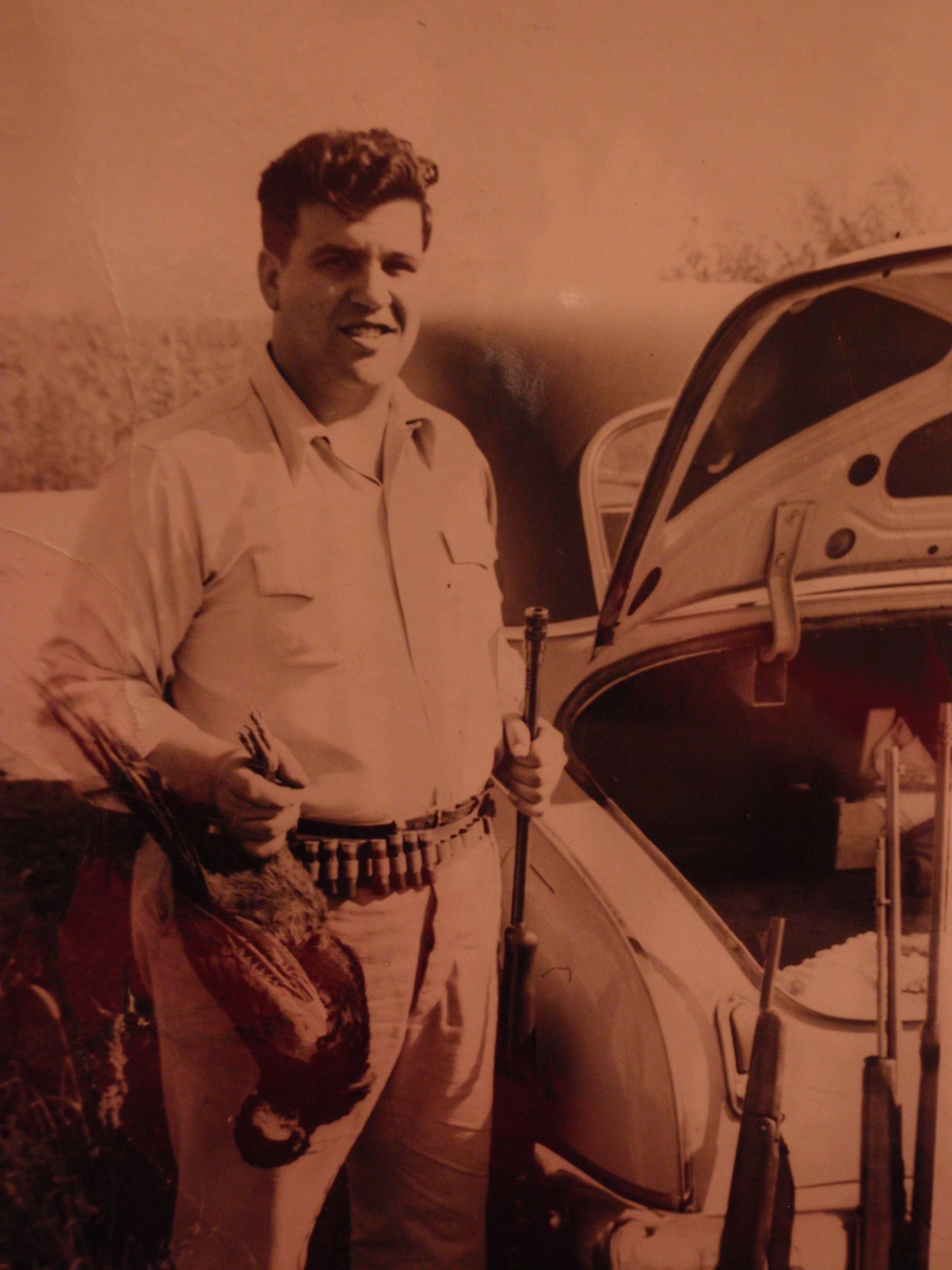
Cecilia Nasti's father after a pheasants hunt.

Cecilia Nasti’s father after a pheasant hunt.

This is Passport to Texas

Higher rainfall averages in the Panhandle bode well for pheasant hunters this season.

This year I had actually seen clutches in July and August. The past several years I hadn’t seen any babies at all.

Todd Montandon, a biologist based in Canyon, says the area’s seen successful hatches three years in a row. Even so, pheasant continue to play a game of catch up after years of drought.

The drought really, really did a number to pheasants. 2011 through probably 2013, there just weren’t good nesting conditions at all. There wasn’t any cover. There wasn’t any water on the landscape. Very little insect production. So, those nests that were successful, the chicks just didn’t make it to adulthood, because they couldn’t find enough food.

Despite the lower numbers of the game bird, Montandon says there are enough adults on the ground for a successful hunt, if you know where to go.

Typically, we’re probably going to see the best numbers around the Dalhart, Perryton, Stratford, Gruver areas. The Herford area also holds quite a few birds, and I’ve seen some hatchlings over there this year. And then as you get down around Tulia and Plainview it starts tapering off.

Pheasant season runs December 3 through January first. Based on current surveys, the recommended bag limit is three per day. Find more information on the Texas Parks and Wildlife website.

The Wildlife Restoration program supports our series.

For Texas Parks and Wildlife…I’m Cecilia Nasti.

Farming Practices Impact Pheasant Population

Wednesday, November 16th, 2016
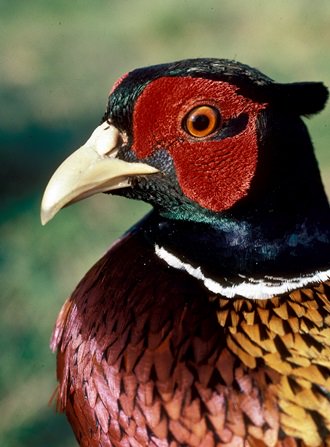
Ringneck Pheasant

Ringneck Pheasant

This is Passport to Texas

Pheasant can make a good living in the Panhandle.

If they can find an area where there’s good grain crops—like wheat, sorghum, corn—and playa lakes that will intersect with CRP [conservation reserve program] and the grain crops. That’s really good habitat. The CRP and the playa lakes provide plenty of cover, and the grain crops provide an ample food source for them. And then the irrigated crops, you know, that will provide a good water source for them, too.

Biologist Todd Montandon surveys pheasant in fall to develop harvest recommendations, noting their numbers and distribution.

The change in farming practices has affected where the distribution of the birds has been. Up in the northern panhandle you have more grain, sorghum, corn and wheat. And then as you move further south, it shifts over to cotton and wheat. And it’s not as conducive to pheasant populations as it is up north.

Changes in irrigation also play a role in the species’ survival.

Back in the 70s and 80s, most of the irrigating was done with irrigation ditches into the rows. And now, it’s switched over to the sprinkler system. And there’s not as much water on the ground as there used to be.

Despite these setbacks, Todd Montandon is optimistic about the upcoming hunting season. Details tomorrow.

The Wildlife Restoration program supports our series.

For Texas Parks and Wildlife…I’m Cecilia Nasti.