Archive for the 'Shows' Category

The Benefits of Flooding

Monday, July 18th, 2016
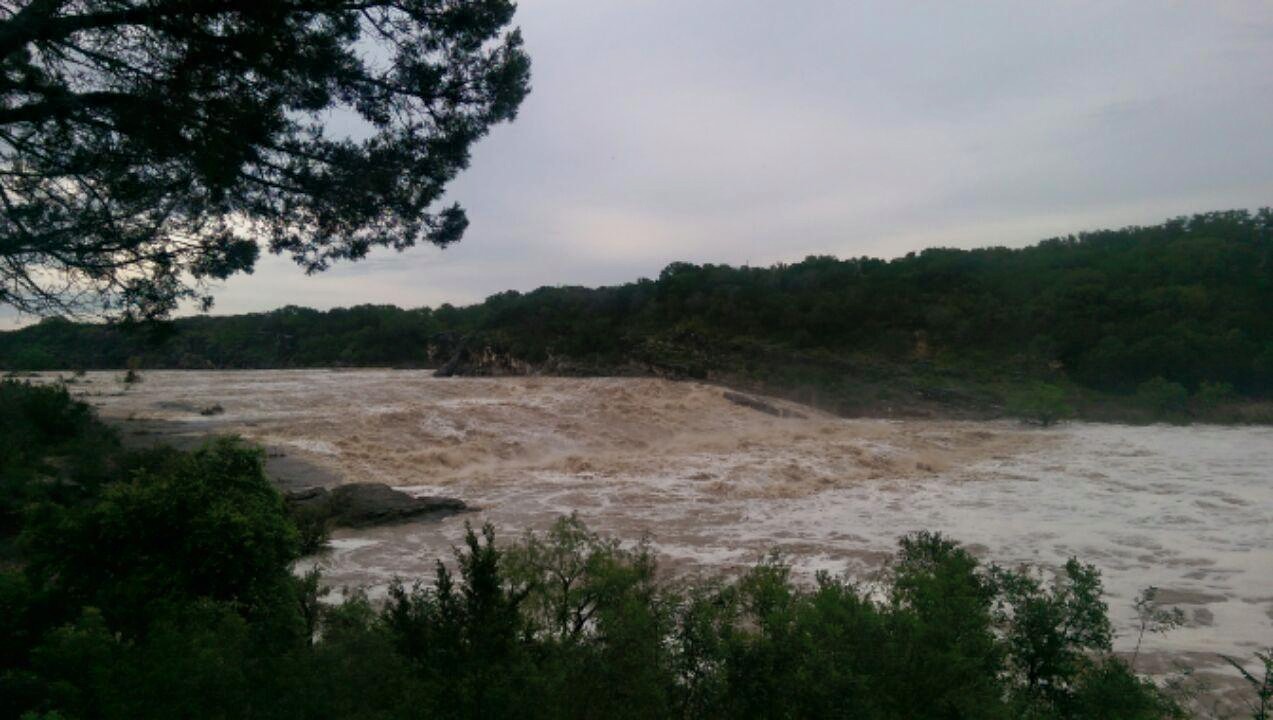
Pedernales Falls Flooding

Pedernales Falls State Park Flood May 24 2015
© Texas Parks and Wildlife Department

This is Passport to Texas

Torrential rains in 2015 and again in 2016 ended five years of exceptional drought across Texas, but also caused rivers to flood.

It’s important to recognize that floods are a part of a functioning river system.

Ryan McGillicuddy is a Texas Parks and Wildlife conservation ecologist. We tend to focus on the negative impacts of flooding, but ecologically, floods have beneficial functions, too.

Once the water spills out of its normal channel, it infiltrates into that riparian zone, and becomes absorbed by that soil and then acts as a time-release capsule that feeds the river channel; the water makes its way back to the channel in the drier times of the year. There are also a number of fish and animal species that are dependent on floodwaters. There are a number of tree species that thrive on floodwaters. So, ecologically, there are a number of things a functioning floodplains provide.

A riparian zone is the land that parallels rivers and streams. A broad and wide undeveloped floodplain contains plenty of vegetation that forces floodwaters to slow down, giving soil time to absorb them, thus protecting more developed areas downstream.

It gives water a place to go.

Getting to know riparian zones…that’s tomorrow.

The Wildlife and Sport Fish Restoration program supports our series.

For Texas Parks and Wildlife, I’m Cecilia Nasti.
TPW TV – Rescuing History

Friday, July 15th, 2016
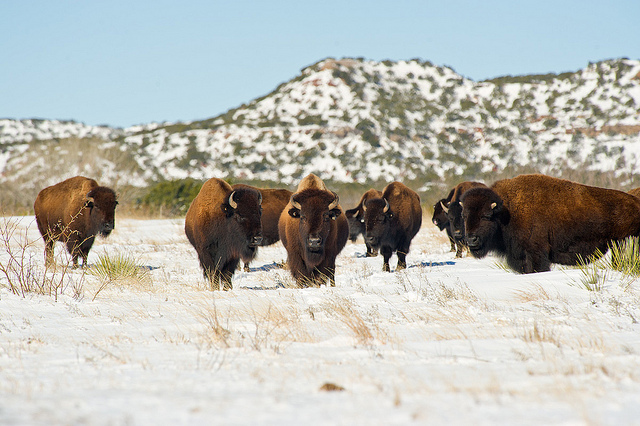
Bison at Caprock Canyons State Park

Bison at Caprock Canyons State Park

This is Passport to Texas

For the past 30 years, PBS viewers have experienced the Texas outdoors through Texas Parks and Wildlife’s television series. To celebrate, show producers, including Karen Loke who’s been with the series 24 years, share their favorite stories from the past.

And my favorite story is called Rescuing History. It’s about the capture and relocation of the last of the Southern Plains bison herd.

[Narrator Jim Swift] Doug is helping capture and relocate the last few descendants of the Southern Plains Bison. A pure, genetic strain of buffalo found nowhere else in the world.

[Doug Humphreys] But what makes this one different is that another buffalo has never been brought into this herd. There’s been no outside gene source introduced into this particular bison herd. So we’ve got a distinct genetic strain of buffalo that doesn’t exist anywhere else.

Producer Karen Loke said this touched her due to something rather unexpected that happened during filming. You can see for yourself when you tune into the Texas Parks and Wildlife television series on PBS the week of July 17.

[Roy Welch] To those of us involved in this project, it’s turned into be something quite more than just a simple matter of capturing a bison herd and relocating them over here to Caprock Canyons, in essence, we’re literally capturing a living piece of Texas history.

The award-winning Texas Parks and Wildlife Television series celebrates 30 years on PBS all season long. Check your local listings.

For Texas Parks and Wildlife, I’m Cecilia Nasti.
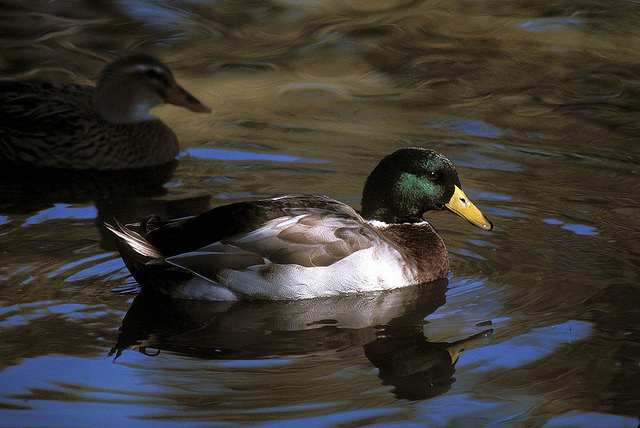
Getting to Know Dabblers and Divers

Thursday, July 14th, 2016
The Mallard is the most common of the dabbling ducks.

The Mallard is the most common of the dabbling ducks.

This is Passport to Texas

What do gadwalls…pintails…teal…wigeons… redheads and shovelers have in common?

That’s right. They’re ducks…waterfowl. They’re also game birds. But the similarities don’t end there. These fowl are further grouped by another characteristic.

There’re two different types of ducks, there’re dabblers and there’re divers.

Dave Morrison is the waterfowl program leader at Parks and Wildlife. Neither of the descriptions—diver nor dabbler—fully conveys what to expect from these birds.

And the difference is the way they feed. How they’re bodies are made up. Dabblers tend to have their feet more centered, whereas, divers are in the back of the body. Dabblers jump, spring into the air, whereas diving ducks pitter patter along the water.

Still not sure whether you would be able to distinguish a dabbling duck from a diving duck? Then, consider the following next time you see a flock of fowl feeding at a lake, stock pond or reservoir:

Dabblers feed at or near the water’s surface by filtering food… and they often tip upside down in the water to reach food at the bottom of a pond.

The Wildlife Restoration program supports our series.

For Texas Parks and Wildlife…I’m Cecilia Nasti.

New Pollinator Protocols

Wednesday, July 13th, 2016
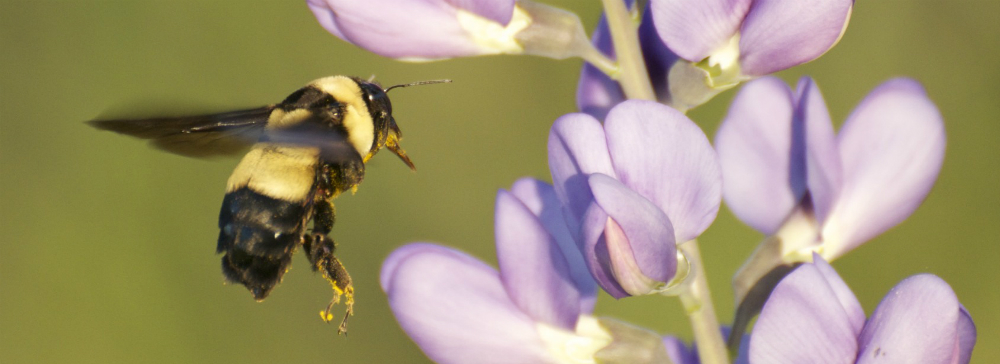
Southern plains bumble bee. Courtesy of Jessica Womack.

Southern plains bumble bee. Courtesy of Jessica Womack.

This is Passport to Texas

European honeybees and native bees, both important pollinators, are in decline.

With interest in declining pollinators, there’s been a call from a number of landowners for plans to help these species.

Texas Parks and Wildlife’s Michael Warriner says the agency developed new pollinator protocols for landowner use that begin with food and nesting sites for bees and other pollinators.

Let’s say you only have a few species of [flowers] that bloom in the spring. Not many in the summer. Not many in the fall. You could do a reseeding, or seed the area with native plant seed. Now, that can oftentimes be expensive if you have a lot of acres. In the protocols, we also describe another method of putting in native pollinator plots. You can consider this analogous to a deer food plot where you put in, let’s say, a half an acre. You seed it with good quality native plant seed. A number of species. And that’s your native pollinator plot, which makes it a little more cost effective than reseeding a really big area.

Find complete protocols on the Texas Parks and Wildlife website. Some landowners who implement protocols may qualify for a wildlife exemption.

If they’re actively wanting to develop a wildlife management plan for their property, they don’t have to do all the protocols; they can pick and choose what they want to do. If they need help, they can contact their local Texas Parks and Wildlife biologist in their region for help with this.

The Wildlife Restoration program supports our series.

For Texas Parks and Wildlife…I’m Cecilia Nasti.

Pollinators in Peril

Tuesday, July 12th, 2016
Friendly neighborhood pollinator.

Friendly neighborhood pollinator.

This is Passport to Texas

Pollinators are a trending topic these days.

We’re mainly talking about insects and sometimes mammals—like bats—who visit flowers.

Michael Warriner is non-game and rare species program leader for Texas Parks and Wildlife. Pollinators visit flowers for nectar or pollen, which they use as food.

But in the process, they’re transferring pollen from plant-to-plant, which the plant needs to become pollinated, and set viable seed.

Yet, over the years we’ve noticed a decline in the number of non-native and native pollinator species.

There’s a whole level of concern that’s manifested out of the concern for honeybees. Folks then started thinking about what’s going on with native bees, butterflies… And research shows that with things like bumblebees, there are a number of species that have experienced declines—that have disappeared from big parts of their range. And so there’s this whole overarching concern about native and non-native pollinators since their so closely tied to-–especially—human food production.

Tomorrow: how landowners can help revive slumping pollinator populations with Texas Parks and Wildlife’s new protocol.

The Wildlife Restoration program supports our series.

For Texas Parks and Wildlife…I’m Cecilia Nasti.