Archive for the 'Shows' Category

Halloween in State Parks

Tuesday, October 20th, 2015
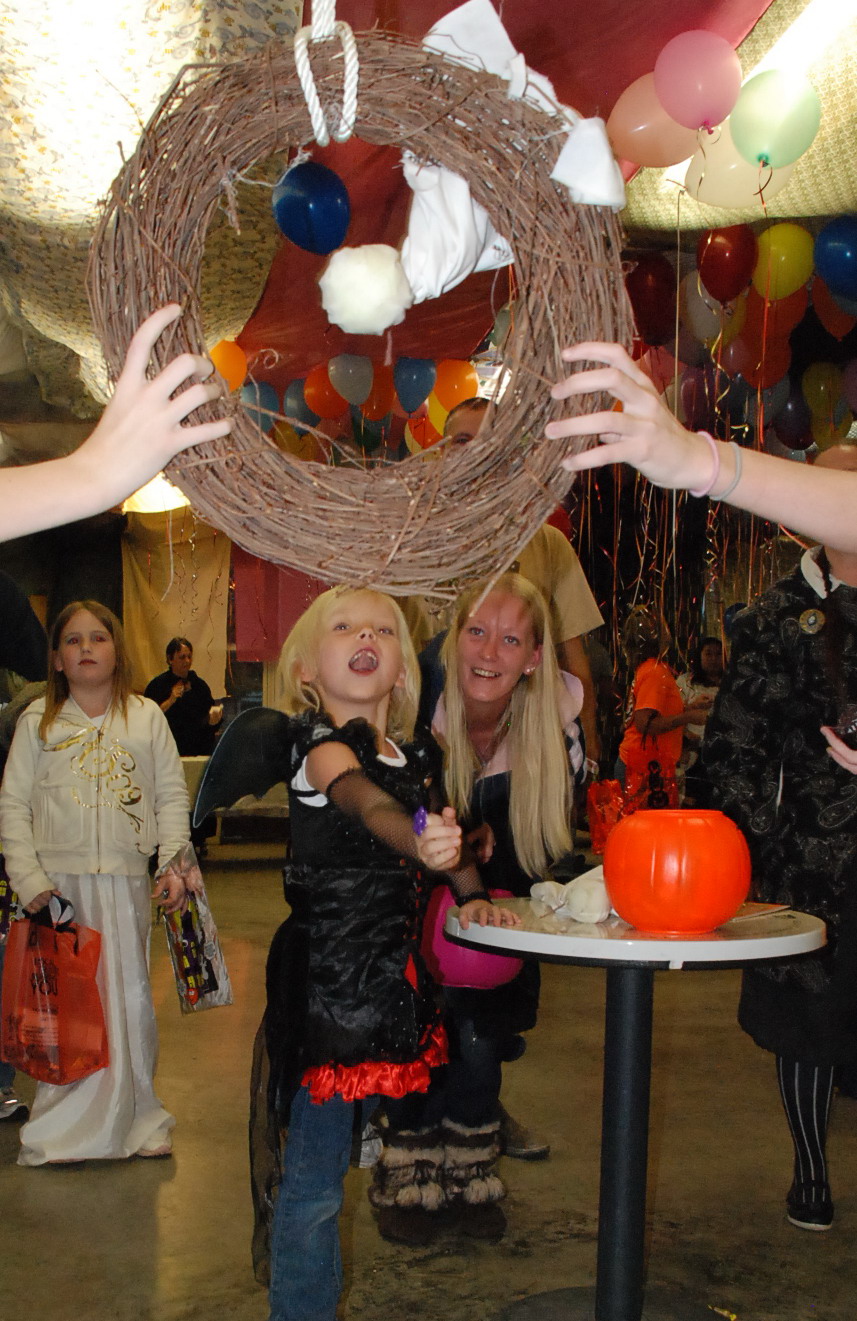
Tossing a “ghost” through a ring is just one of the kid-friendly activities offered in the fright-free area at Halloween at the Hatchery.

Tossing a “ghost” through a ring is just one of the kid-friendly activities offered in the fright-free area at Halloween at the Hatchery.

This is Passport to Texas

Life is unpredictable, unless, of course, it’s October. That’s because in October you can always predict a spell of Halloween hijinks at Texas State Parks and Historic Sites.

08—You’ll find Halloween events in every corner of the state from far El Paso down to the Gulf, up to far North Texas.

Thomas Wilhelm is with state parks. He says there will, of course be trick-or-treating in the parks.

15—But there are also some other events—educational type events like: Not so Creepy Critters, where you can learn about spiders and owls and bugs. And then some downright spooky events, like the Wake of Henry Fanthorp at Fanthorp Inn. That event is 10 years old and up.

Historic sites will offer some of the more intriguing Halloween programs, suitable for mature audiences.

10—Battleship Texas is doing an event called The Seedier Side of Battleship Texas, where they talk about some of the shenanigans on board. And that’s a twenty-one and up only event.

Well, we are talking about shenanigans, after all. State Parks and Historic sites; who knew, right? Find a full schedule of Halloween and fall events in State Parks by region at texasstateparks.org/holidays.

That’s our show for today… Funding provided in part by Ram Trucks. Guts. Glory. Ram

For Texas Parks and Wildlife…I’m Cecilia Nasti.
Merlin Tuttle is Batman

Monday, October 19th, 2015
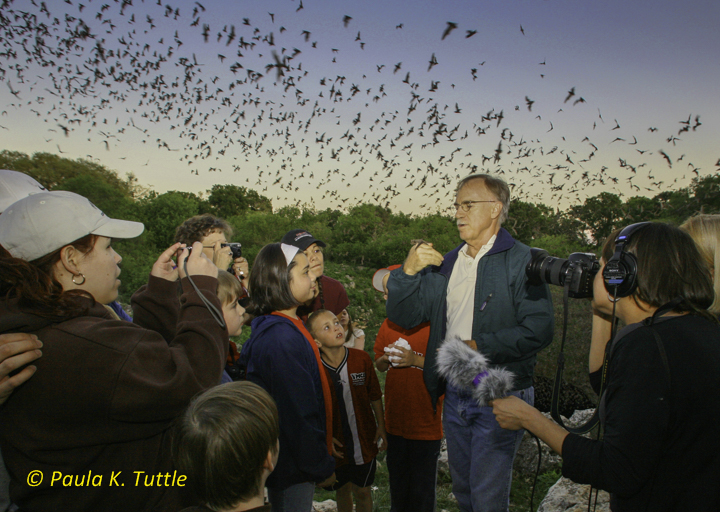
Merlin showing free-tailed bat to visitors at Bracken Cave during a National Public Radio interview. Media

Merlin showing free-tailed bat to visitors at Bracken Cave.


This is Passport to Texas

Merlin Tuttle was a curious kid destined to become a scientist. He lived near a bat cave in high school and started making observations.

13- I found that the bats came in the spring and the fall, but were not there any other time of year. Yet, when I identified them, the field guides that I had said that this species of bat lived in one cave year round.

He wanted this misinformation corrected.

16-So, I caught some. I actually made specimens of a couple of them so that I could prove that I had what I said I had. And convinced my mother, just as a teenager, to drive me to the Smithsonian so I could tell the guys that wrote the books that there was something wrong.

So began a 55 year career that’s taken Dr. Tuttle around the world studying bats. He’s engages in hands on conservation and public education. One goal: remove the public’s fear of bats.

26-People hear that bats are dangerous–they’re going to cause you to get sick with some terrible malady. But in reality, bats have one of the finest safety records of any animal on our planet of living safely with humans. People like me, I’ve studies bats for 55 years now on every continent where they exist, spending literally hundreds if not thousands of hours actually in caves surrounded by millions of bats. And I’m still healthy!

Merlin Tuttle’s written about his life with bats in THE SECRET LIVES OF BATS: My Adventures with the World’s Most Misunderstood Mammals. It comes out this week.

For Texas Parks and Wildlife…I’m Cecilia Nasti.
TPW TV: Big Bend, Life on the Edge

Friday, October 16th, 2015


This is Passport to Texas

The Texas Parks and Wildlife TV series on PBS kicks off its 30th Anniversary season October 18 with a half hour film called Big Bend, Life on the Edge, narrated by Peter Coyote.

11- I was on a camping trip with Hill Country Outdoors and some friends in November last year; and we went into the headquarters and saw this film showing, and it just blew me away.

Don Cash is the Texas Parks and Wildlife TV series producer.

09-It was so beautiful, and so well done, I thought: you know people need to see it outside of having to come to the headquarters to watch the film.

Don Cash sought and received permission to air the film on the Texas Parks and Wildlife TV series from the National Park service and the film’s producers, Great Divide Pictures. He says viewers will experience Big Bend like never before.

28-The film gives you a view of Big Bend that very few people are going to get. The aerial photography in this film is just beautiful and fantastic. Of course, everything is shot at the right time of day. The colors are beautiful. So, you get this just really unique perspective from the air. Plus you get to see the whole park. That’s one thing that I enjoyed about it: I got to see it from a whole different perspective. It is a beautiful film, but frankly, it’s better to go there and spend some time, and see it [Big Bend] for yourself.

See Big Bend, Life on the Edge, narrated by Peter Coyote the week of October 18 on the Texas Parks and Wildlife TV series on PBS. Check your local listings.

For Texas Parks and Wildlife…I’m Cecilia Nasti.
Quail Going Gangbusters

Thursday, October 15th, 2015
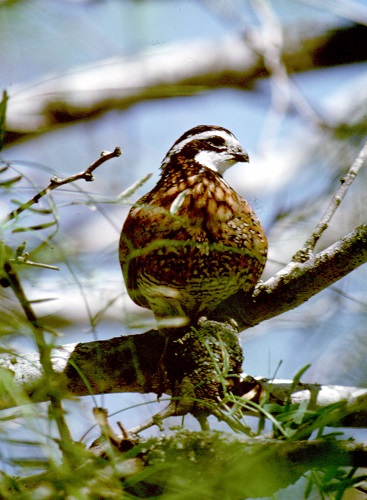
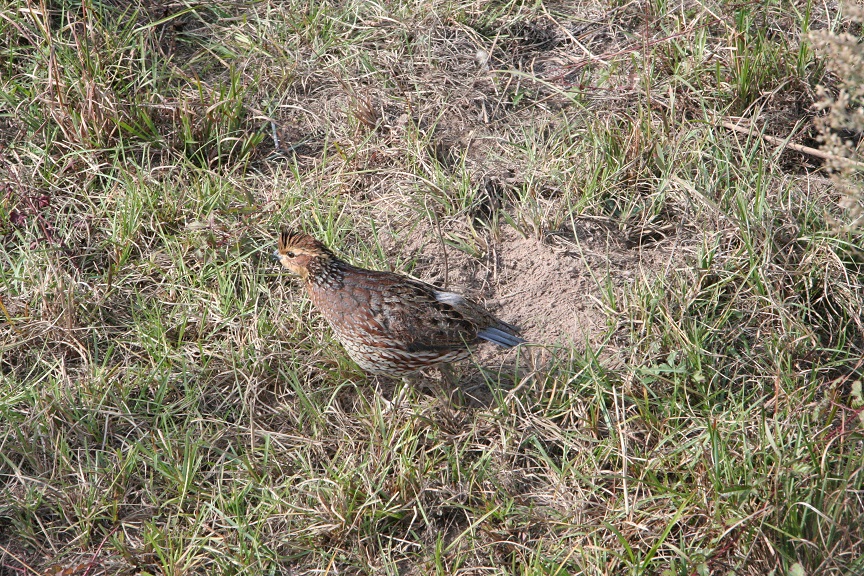
Bobwhite Quail

Bobwhite Quail


This is Passport to Texas

Late winter through early summer rainfall created ideal breeding conditions for quail in most parts of Texas.

14-We’re getting reports from all over from our staff that they’ve not seen this many quail in several years in some places–in other places, in decades. We’re talking about a species that has the potential to boom. And I think in some part of the state that’s what we’re seeing.

Before this, quail were in decline throughout much of the state, says upland game bird program leader, Robert Perez. Currently, large broods of chicks in all age classes dot the landscape.

07-This tells us that the window of opportunity was wide [due to abundant resources], and that when bobwhite hens had a nest failure, they were able to start again.

Perez is quick to point out that drought, alone, is not the cause of quail decline. Habitat loss is another factor.

23-And that’s where Parks and Wildlife has gone to great lengths to work with partners and landowners and wildlife cooperatives to bring quail back. And it’s important to remember that the rangelands of south Texas and the rangelands of the Rolling Plains, up into the Panhandle–quail are there because its big open spaces, and the land use is [mostly] compatible with bobwhite quail. And when the weather is great, we see that response. But, in other parts of the state,
we’ve really lost a lot of the available habitat.

Find information about quail restoration on the Texas Parks and Wildlife website.

The Wildlife and Sport Fish Restoration Program supports our series.

For Texas Parks and Wildlife…I’m Cecilia Nasti.

Quail on the Rebound

Wednesday, October 14th, 2015
Bobwhite quail

Bobwhite quail


This is Passport to Texas

Quail’s short life span makes them vulnerable to extended drought.

07-During dry years there’s just not enough moisture to hatch out eggs, and there aren’t enough insects to really feed chicks and raise a brood.

Robert Perez is upland game bird program leader at Texas Parks and Wildlife.

16-So, they shrink down on the landscape and then they’re waiting on rain. How long do quail live? Their average lifespan is only several months. A better way to look at it is: each year’s crop–everything that’s produced in the summer–by the following spring, anywhere from 70 to 80% will be gone. They will be consumed, basically.

Texas eventually got some rain; the timing of the rainfall was as important the rain itself.

26-Late winter there was enough moisture to produce the forbes: all the plants that quail need to eat during January and February; those were available pretty much everywhere, and that gets those birds into breeding condition. And then as we moved into spring, it continued to rain. There was a flush of vegetation, lots of insects, soil moisture. And it kept raining intermittently: off and on, off and on, off and on–all the way up to about the second week of July for most of the entire state.

And that created a huge window for quail to breed, which, hunters in most areas of the state will notice when the season opens at the end of the month, says Perez.

The Wildlife and Sport Fish Restoration Program Program supports our series.

For Texas Parks and Wildlife…I’m Cecilia Nasti.