Archive for the 'Shows' Category

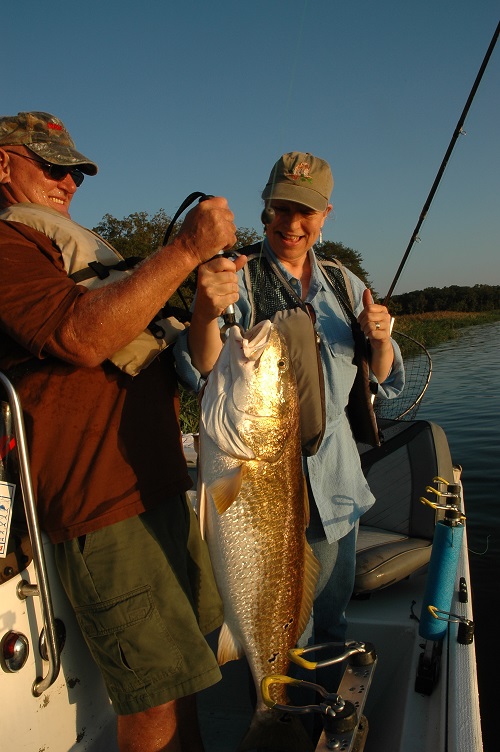
Angling: Bull Redfish Run

Wednesday, September 25th, 2013
Catching Redfish

Catching Redfish


This is Passport to Texas

Red drum, also called redfish, is a favorite among coastal anglers. And now is the time of year when this species make a big splash.

08— From about August to November or December, adult red drum congregate near the beach in these spawning aggregations.

Bill Balboa is a fisheries biologist for the Galveston Bay system. This concentration of red drum near the beaches is the annual red bull run.

06— So, they’re very big fish; they can run anywhere from 30-inches to upwards of 46 to 48-inches long.

Balboa says the name Bull redfish is a coastal colloquialism for any big fish in the gulf or estuaries.

11—But [they’re] also [called bulls] because they’re very powerful; and if you ever catch one it would be like trying to hold a bull in place. They’re very strong fish.

Medium to heavy fishing tackle with 12 to 30 pound test line, using crab, finger mullet or cut bait could help you real in these big boys.

21— If you catch a red drum between 20 and 28 inches long, you can keep three per day per person. If you catch one that’s over 30-inches long, with a Texas saltwater fishing license, we have a bonus red drum tag. So, if you catch a red drum that’s over 28-inches long, the fish has to be tagged after you catch it, and the tag has to be filled out. So, you can keep one fish over 28 inches.

We have more coastal fishing information on the Texas Parks and Wildlife website. The Sport Fish Restoration program supports our series.

For Texas Parks and Wildlife…I’m Cecilia Nasti.
Nature/Wildlife: Benefits of Native Bees

Tuesday, September 24th, 2013

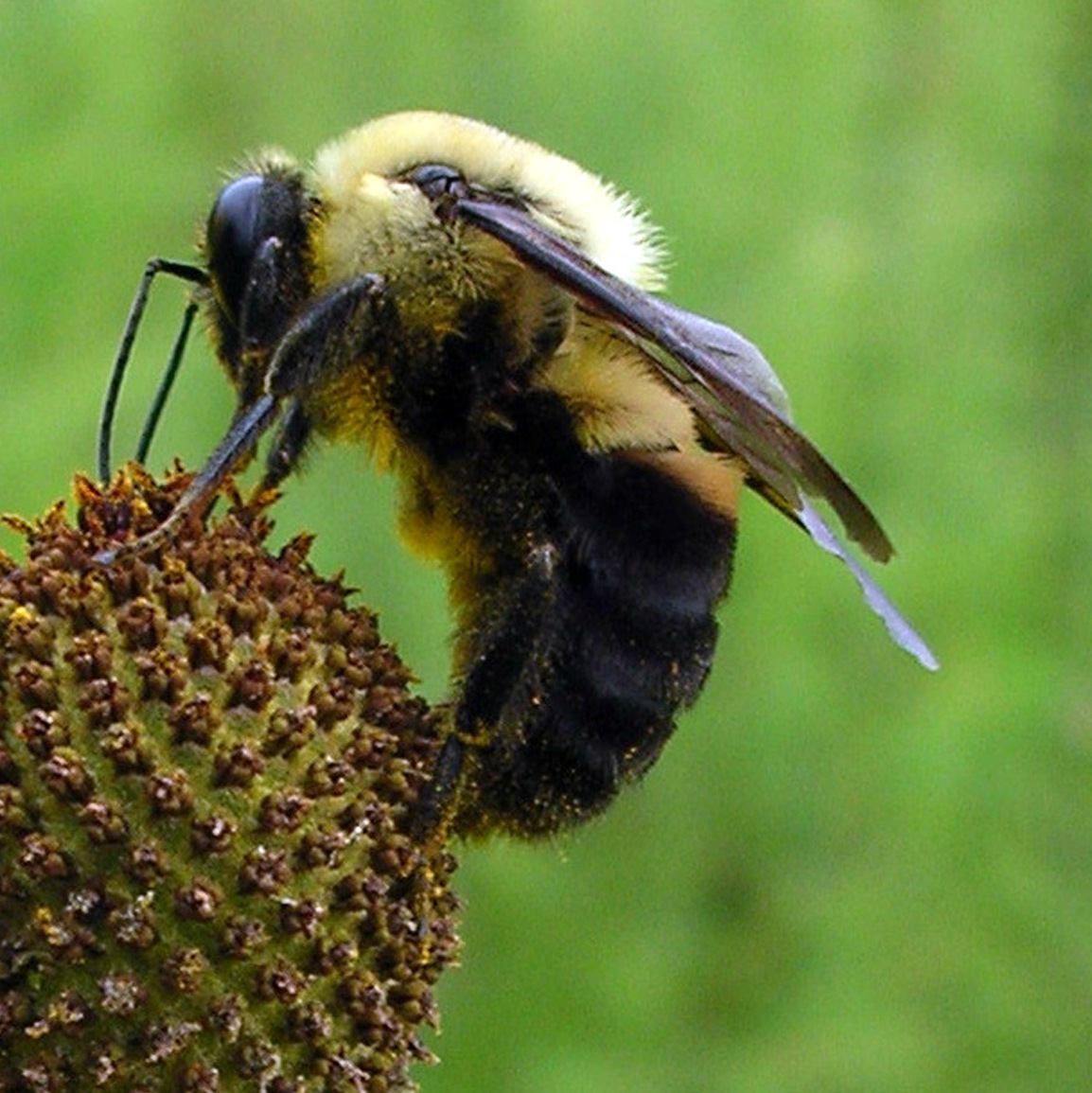
Native Texas Bumblebee, Image from Native Plant Society of Texas, www.npsot.org

Native Texas Bumblebee, Image from Native Plant Society of Texas, www.npsot.org


This is Passport to Texas

Bumblebees and solitary bees are the native bees of Texas.

09— Compared to honeybees, native bees have far less interest in term of research and money and organized conservation.

That’s too bad because native bee populations are declining from loss of habitat and plant diversity, says TPW invertebrate biologist Michael Warriner. Should they decline significantly, that could further affect what you see on the landscape.

13— If decline happens, you may see over decades, fewer of certain plants. Maybe you don’t see that wildflowers as frequently as you did or that flowering shrub as much as you did. And they slowly just disappear off the landscape.

We can all help the native bee populations.

19—The landscape of Texas has changed so much that we’ve lost a lot of plant diversity – particularly of those plants that bees need for nectar and pollen. Even if you live in the heart of a city, if you planted just a few more good native plants that produce good nectar and pollen – you can help to support the native bees in those areas.

Find resources for supporting native bees at passporttotexas.org.

That’s our show for today… Funding provided in part by Ram Trucks. Guts. Glory. Ram.

For Texas Parks and Wildlife…I’m Cecilia Nasti.
_________________________________________________________

Native Texas Bee Resources:

http://www.txnativebees.com/
http://www.beewatchers.com/bee-watchers.html
http://dallas.culturemap.com/news/food-drink/06-09-13-north-texas-farmer-garden-native-solitary-bees/
https://www.facebook.com/texasnativebees
https://www.facebook.com/texasnativebees#!/texasbumblebees

Nature/Wildlife: Native Texas Bees

Monday, September 23rd, 2013

Native Solitary Bee. Image from www.txnativebees.com.


This is Passport to Texas

Although we’re concerned about the loss of honeybees from colony collapse disorder, this might ease your mind:

12— You have to think of honeybees as a farm animal. We can grow more of those. And we can produce more honeybee queens, which can in turn, grow more honeybee colonies.

That’s TPW invertebrate biologist Michael Warriner. While we focus on replaceable non-native European honeybees, we’re neglecting our irreplaceable native bee populations, also in decline.

17—If we lose native bees, we can’t necessarily breed more of those because we don’t know how. We don’t necessarily know what kinds of things they prefer – because we’re not managing them. They’re existing in natural habitat that we’re losing. Honeybees are pretty much a domesticated animal we can breed
more of.

Native bees play a valuable role in the ecosystem.

18— They play the biggest role in maintaining native plant communities. And a lot of those plants have to be pollinated by bees. As we lose bees, those plants will be less able to produce viable seed, which means that they just slowly disappear off the landscape.

How to help native bees…that’s tomorrow.

That’s our show…the Wildlife and Sport Fish Restoration program supports our series, and funds diverse conservation projects in Texas.

For Texas Parks and Wildlife…I’m Cecilia Nasti.
Recreation: Texas Outdoor Family

Thursday, September 19th, 2013

Texas Outdoor Family Workshop

Texas Outdoor Family Workshop


This is Passport to Texas

You want to camp overnight in a state park but don’t want to spend money on gear until you hone your skills?

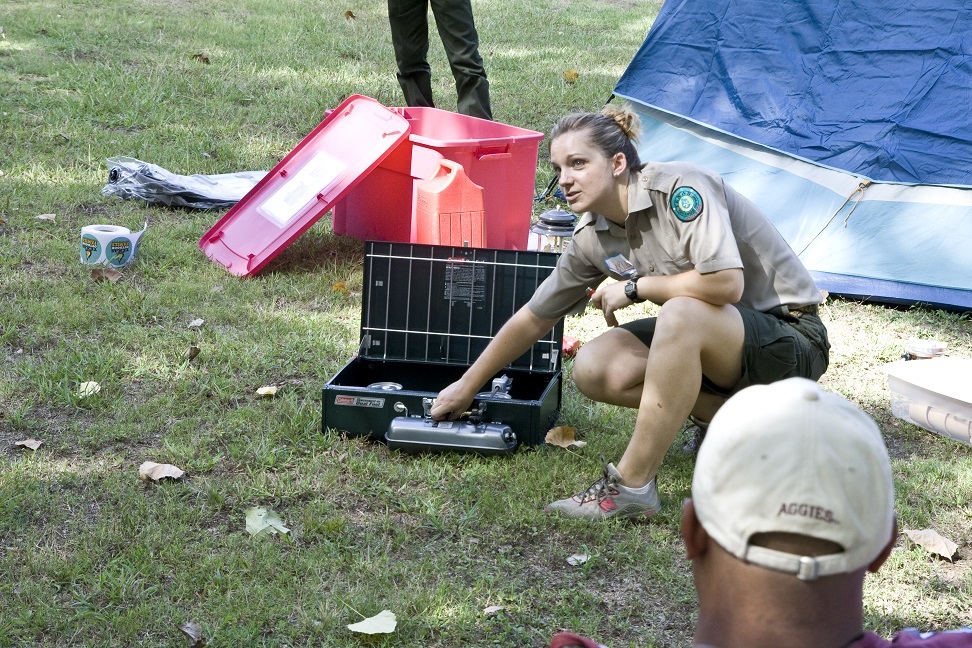
04— Texas Outdoor Family provides all of the camping equipment that a family needs for a weekend.

Robert Owen oversees the Texas Outdoor Family Program. During supervised weekend workshops, Texas Outdoor Family provides nearly everything families need for a successful overnight camping experience.

14—Generally a family needs to bring their own food and personal items like a sleeping bag. We provide the rest from a tent to the air mattresses, pots and pans… And even a bunch of ranger guidance to go along with it Rangers actually spend the night in the campground with the families.

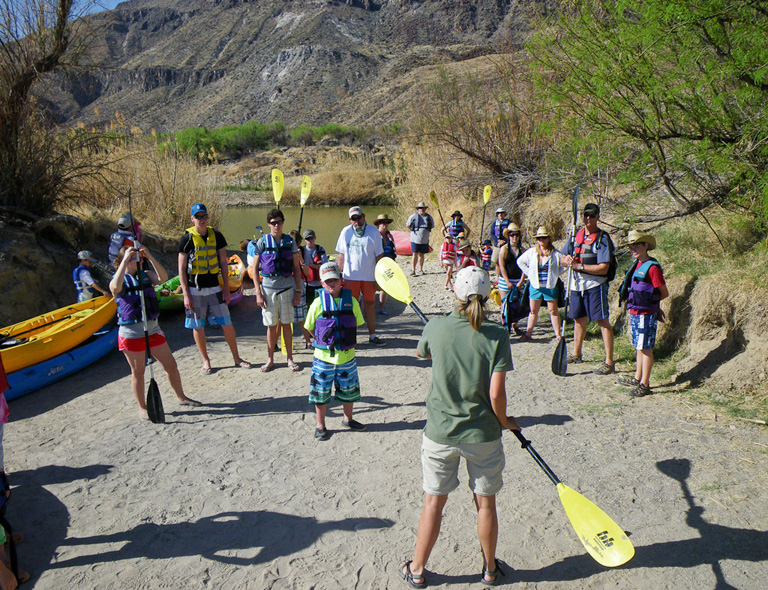
TOF staff helps families set up camp, and plans activities for them like kayaking, geocaching, fishing, and hiking to get them into the outdoor groove. If one weekend isn’t enough …

21— We invite families back to join us as many as three times. The first time is very much their beginner experience. So, you come out the first time you realize it’s fun; you realize your family has really enjoyed it. The second and third times you refine your skills. And then we hope you’re ready to be released out there into the parks, and do it on your own.

The cost of the weekend is $65 for up to six people. There are Texas Outdoor Family workshops this fall; find details on the Texas Parks and Wildlife website.

For Texas Parks and Wildlife…I’m Cecilia Nasti.
Recreation: Updating Outdated Outdoor Skills

Wednesday, September 18th, 2013

Texas Outdoor Family Weekend: Learning to Kayak

Texas Outdoor Family Weekend: Learning to Kayak


This is Passport to Texas

Which outdoor skills can make your next overnight camping experience successful?

04—The basics: how to put up a tent, how to get the stove going, or how to light a campfire.

When those skills are rusty, Robert Owen says people are reluctant to take their families camping. But that’s not the only reason some folks shy away from this outdoor activity.

17—Well, they’re not sure if their family is going to be interested in spending money on a tent and camping equipment just to find out maybe it’s not for them. Or time? A lot of folks think they don’t have the time to plan a weekend camping trip. Additionally, some folks just don’t have the confidence in getting outside.

That’s why Owen recommends Texas Outdoor Family Workshops. He oversees the program.

10—Texas Outdoor Families is a skills based program for families that want to get outdoors and want to get back into the hobby of camping, but for some reason it’s been left behind in their past.

A weekend workshop for up to six people costs $65, and Texas Outdoor Family supplies most everything campers need – including staff. More on that tomorrow.

That’s our show… For Texas Parks and Wildlife…I’m Cecilia Nasti.
