Archive for the 'Shows' Category

Outdoor Activity of the Month: Picnics in Parks

Monday, May 6th, 2013

Sirloin with Sugar Snap Peas, © Courtesy Texas Beef Council

Sirloin with Sugar Snap Peas, © Courtesy Texas Beef Council


This is Passport to Texas

May is Picnicking Month at Texas Parks and Wildlife and our state park guide, Bryan Frazier, recommends heading to a state park with your favorite foods.

56 – Do we really need any incentive to eat while we’re doing something we enjoy? This is one more time to do that. And, it seems like, when you’re outdoors, whether you’ve cooked over a campfire or one of the grills in the picnic area, or whether you packed it ahead of time and put in all your favorite foods and snacks (it can be everything from sandwiches or hotdogs, to venison to veggies), take it with you, and find a beautiful place. It seems food tastes better with a great view. And some of our state parks have fantastic places for picnicking. There’s day use areas that have picnic tables. There are picnic tables in most all of the campsites you can find. And then there are designated areas along lake shores. Or, sometimes maybe you’re on this remote wilderness trek backpacking, and there’s a little rest area or a bench off the trail. Take your lunch there and enjoy it. It can really be a unique dining experience when you get a picnic with a view.

Thanks, Bryan.

Find picnicking information at www.texasstateparks.org.

That’s our show for today…with funding provided by Chevrolet, supporting outdoor recreation in Texas; because there’s life to be done.

For Texas Parks and Wildlife…I’m Cecilia Nasti.

Birding Event: International Migratory Bird Day, 2

Friday, May 3rd, 2013

Environment for the Americas

Environment for the Americas


This is Passport to Texas

International Migratory Bird Day falls on the second Saturday in May in both the US and Canada.

04-We encourage groups to host a program or an event when it works for them and the birds.

Susan Bonfield is Executive Director of Environment for the Americas, which coordinates this international event. She says the goal is for attendees to experience birds firsthand.

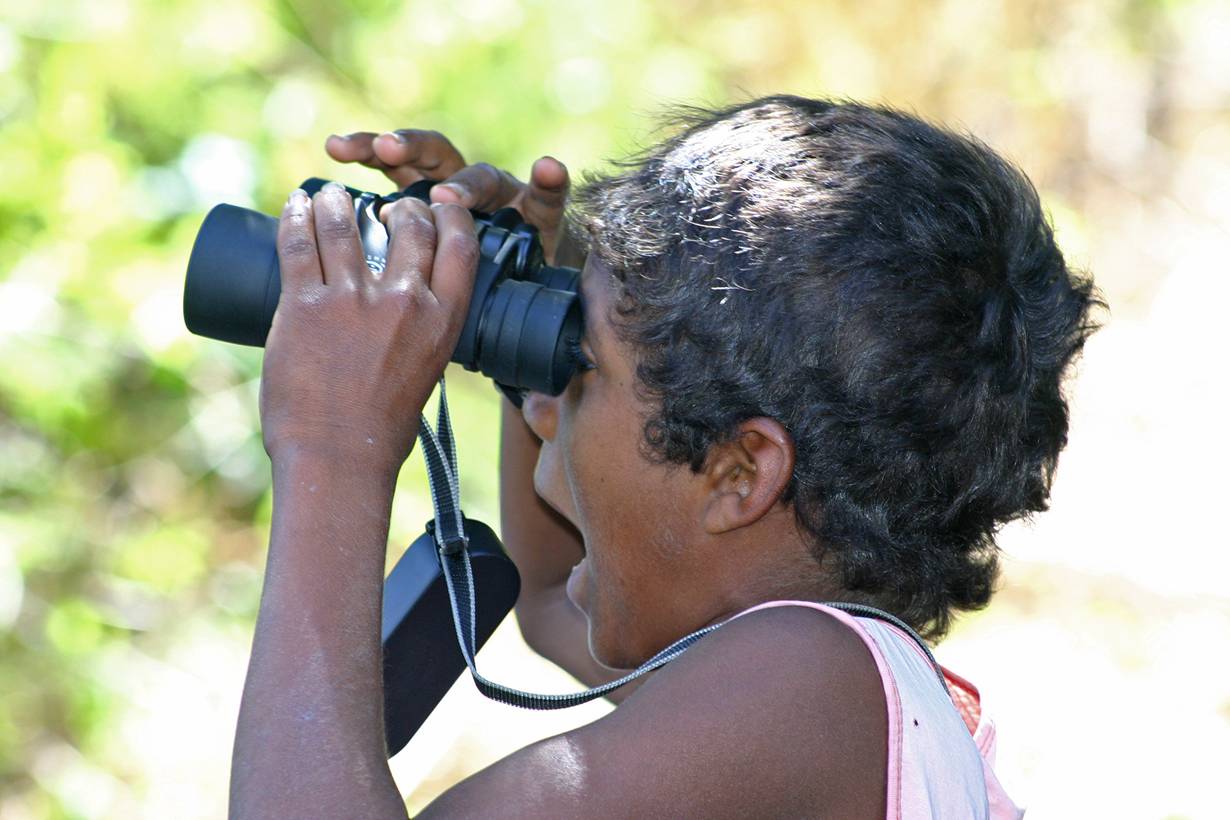
12-I want people to go to these programs and have one of their first opportunities to see a bird. To use binoculars, to use a field guide, to get excited about birds, and to want to become involved in bird conservation.

Find events at www.birdday.org. But if you can’t get to one, don’t fret.

25-You know, your backyard is just a great place to celebrate migratory bird day. I think that anything you do around your house to help conserve birds—we have information up on the website about threats to birds, and what you can do to minimize the threats at your home. Any improvement of habitat in your yard, cleaning your bird feeders. Any very basic and practical activities are a wonderful way to help conserve birds.

You can also just sit in a lawn chair in your yard with a beverage and binoculars and see who comes along.

The Wildlife and Sport Fish Restoration program supports our series and funds conservation projects in Texas.

For Texas Parks and Wildlife…I’m Cecilia Nasti.
Birding Event: International Migratory Bird Day, 1

Thursday, May 2nd, 2013

Image Courtesy National Park Service

Image Courtesy National Park Service


This is Passport to Texas

In the early 1990s, scientists started noticing that some populations of migratory birds were declining.

10-There was a concern about what these causes were, and at the same time there was considerable interest in getting the public involved in learning more about birds and their conservation…

Susan Bonfield is Executive Director of Environment for the Americas. Her non-profit coordinates International Migratory Bird Day, an event created as a direct result of scientists’ concerns over declining avian populations.

12-Several researchers at the Smithsonian Migratory Bird center came up with the idea of hosting a public event to get communities involved in learning about birds. And that was the origins of International Migratory Bird Day.

It is the second Saturday of May for the US and Canada, and is intended to occur during peak migration. The idea is to give folks an opportunity to see these migrants.

09-That doesn’t work for everyone. So, for example, in some parts of Canada it may too early, and some parts of the United States, even, it’s a little bit too late—migratory birds have already passed over.

This time of year is excellent for bird watching in Texas. Tomorrow: celebrating birds at an event, or your own backyard.

The Wildlife and Sport Fish Restoration project supports our series…and funds diverse conservation projects in Texas.

For Texas Parks and Wildlife…I’m Cecilia Nasti.
TPW TV: Protecting Rare Bats

Wednesday, May 1st, 2013

Rafinesque's Big-eared Bat TPWD YouTube Channel

Rafinesque’s Big-eared Bat TPWD YouTube Channel


This is Passport to Texas

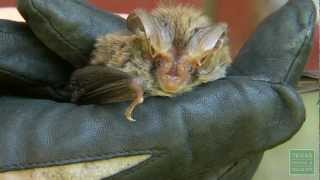
Texas is home to some thirty-two bat species. TPW PBS TV producer, Abe Moore, says viewers will meet one of the lesser known bats in a segment airing this month.

56— We did a story on the Rafinesque’s Big-eared Bat. They’re one of the least known bats in the Southeastern United States. And the story looked at one of the largest Big Eared Bat colonies in Texas. The colony’s at the Trinity River National Wildlife Refuge. And it’s in – of all places – in an abandoned mobile home that’s out in the woods. The house was abandoned 18 years ago. We were going to tear it down; we decided that we would rather keep it open for the bats, and actually keep the house in working order enough so they could use it as a roost. It’s this abandoned horror movie type of house. There are rat droppings all over the floor and spider webs everywhere. I mean, it would be the greatest set for a film. But it was the perfect home for the bats. And the refuge built these cool bat roost towers nearby for them to live in the mating season. And they’re close by, and the bats will readily move from here to the towers, depending on the temperature. That story’s going to be on Texas Parks and Wildlife television the week of May 5th through the 11th.

Thanks, Abe.

Support provided by Ram Trucks. Doing what’s right and good regardless of the degree of difficulty — takes guts. Those are the people who build Ram trucks. RAM.

For Texas Parks and Wildlife…I’m Cecilia Nasti.
Conservation: Freshwater Inflows

Tuesday, April 30th, 2013

Freshwater inflow

Freshwater inflow


This is Passport to Texas

Joe Moore, former Executive Director of the Texas Water Development Board, understands the health of bays, estuaries—and us—depends on freshwater inflows; that means freshwater getting to the Gulf of Mexico. Helping folks who live upstream understand this has been a challenge.

49 – A major engineering consulting firm was meeting with an advisory group [in Lubbock] one time, and we were talking about freshwater inflows. He suddenly realized we were talking about assuring freshwater inflows, and he said, ‘You mean you’re going to give the water to a fish before you give it to people?’ They didn’t understand the economics of freshwater inflows. There was a 1957 conference on this campus in which waste was described as a bucket of water that escaped into the Gulf of Mexico. The objective at that point was to dam every river in Texas so that there was not a drop of water that went out of a Texas river into the Gulf of Mexico. So the Trinity would stop flowing before it got to Galveston Bay. Every river in Texas would be so controlled that no water would quote, be wasted into the Gulf of Mexico, end quote. That’s how little understanding there was of the significance of freshwater inflows.

Audio of Joe Moore used in cooperation with the Conservation History Association of Texas.

Support provided by Ram Trucks. Doing what’s right and good regardless of the degree of difficulty — takes guts. Those are the people who build Ram trucks. RAM.

For Texas Parks and Wildlife…I’m Cecilia Nasti.
