Archive for the 'Shows' Category

The Next 50 Years at TPWD

Friday, January 18th, 2013
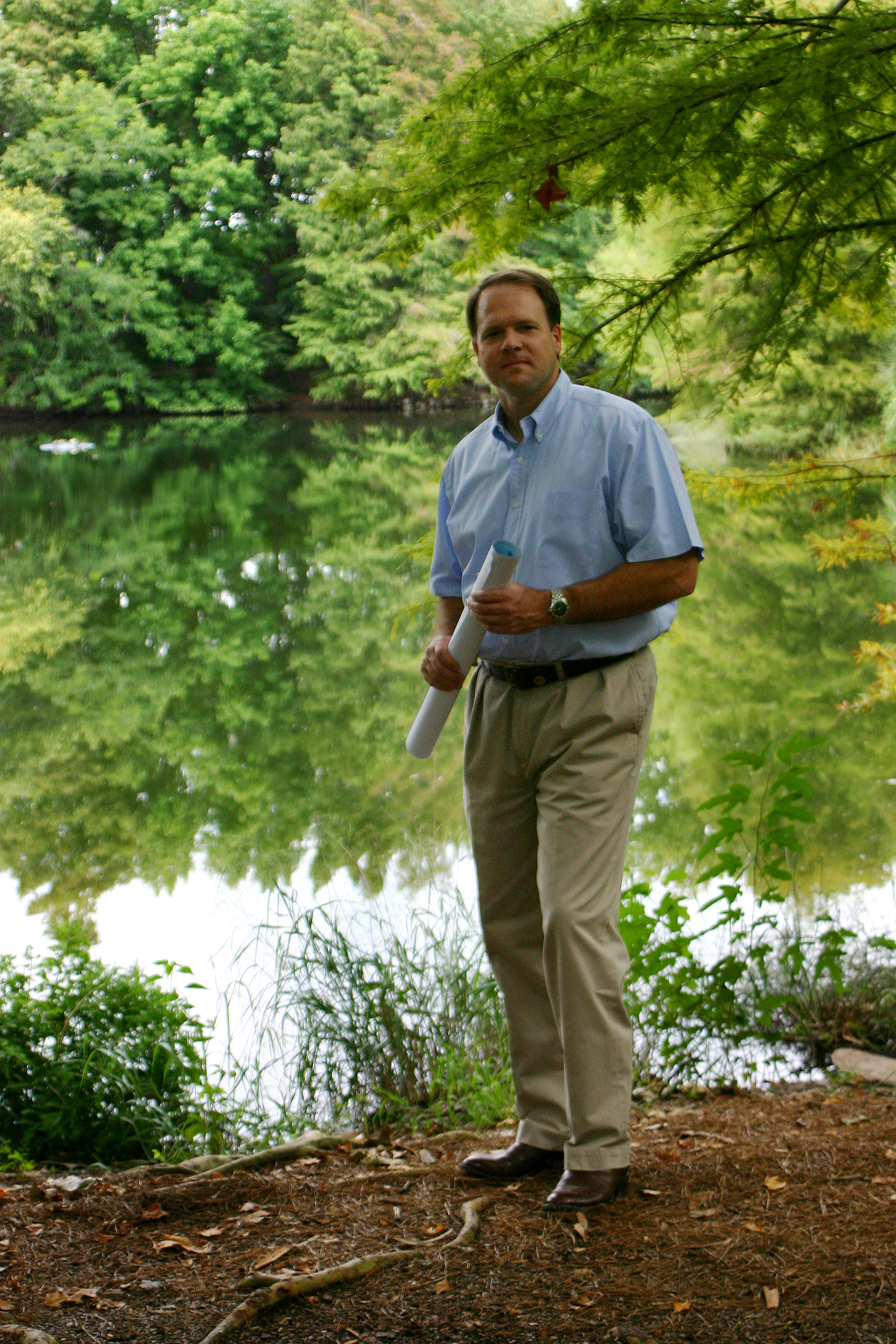
Carter Smith © Lynn McBride, the Nature Conservancy

Carter Smith © Lynn McBride, the Nature Conservancy


This is Passport to Texas

When the State Parks Board and the Texas Game and Fish Commission merged fifty years ago, hope and anxiety ran high. Today, the wisdom of that union is certain, as are the challenges ahead.

08— We’re going to have many challenges ahead in the next fifty years, just as we have had them in the past fifty years. We’ve tackled them all head on, and this will be no different.

Carter Smith, Texas Parks and Wildlife Executive Director, says the agency will continue to deal with the day-to-day and the crises as they arise.

31—None of that’s going to change. But the real battle…the real fight for us is going to be for the hearts and minds of Texans that aren’t even born yet. We serve a state that’s been urban for sixty years, but in the future it’s going to be even more urban, even more diverse, and it’s going to be ever more populated by fellow citizens who have even less of a direct connection to the places that we steward on their behalf.

The agency’s challenge is to make support of Texas’ environmental and cultural legacy meaningful.

08— And to establish connections to help foster that desire to get out and explore the wonders and beauties of our lands and waters.

Connect with the outdoors, and share it with others. Get started on the Texas Parks and Wildlife website.

For Texas Parks and Wildlife…I’m Cecilia Nasti.
Looking Back on 50 Years of TPWD

Thursday, January 17th, 2013

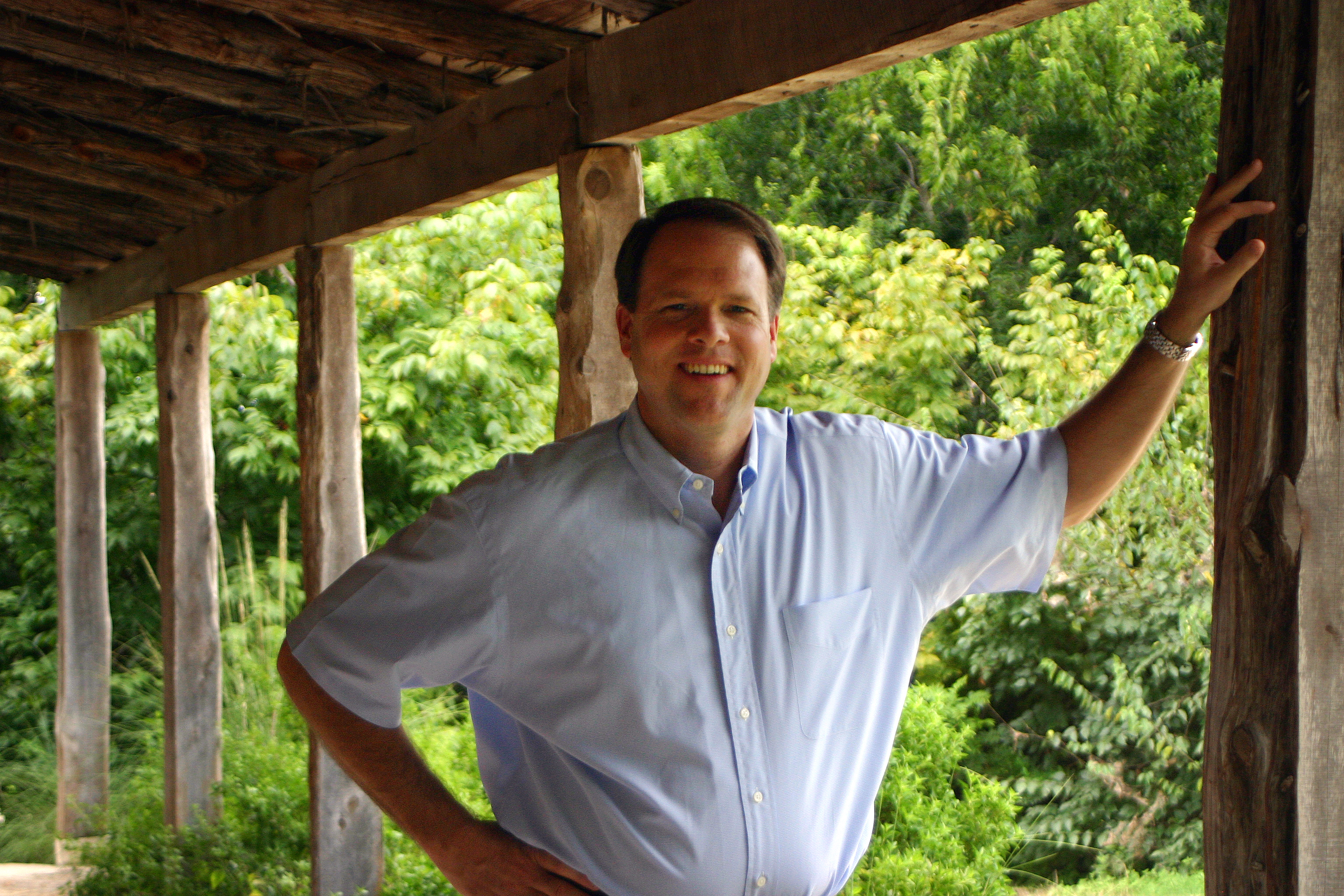
Carter Smith © Lynn McBride, the Nature Conservancy

Carter Smith © Lynn McBride, the Nature Conservancy


This is Passport to Texas

Fifty years ago the State Parks Board and the Texas Game and Fish Commission merged.

03— To create what is now the Texas Parks and Wildlife Department.

Carter Smith is Texas Parks and Wildlife Executive Director.

37—There was a lot of angst and anxiety over that merger and acquisition and what would that mean: Would the state’s fish and wildlife and their conservation somehow be diluted by the merger with the State Parks Board, or would state parks suffer because of too much emphasis on fish and wildlife and law enforcement and other programs? But I think any objective person looking back on the past 50 years and all the attendant accomplishments and milestones that have come from the creation of this department would have to call it an unqualified success.

State park acreage has increased tenfold since the merger; the agency reintroduced desert bighorn sheep to their traditional range in Far West Texas. Texas Parks and Wildlife developed a world class Largemouth Bass fishery, and created myriad opportunities for Texans to enjoy the outdoors. And that’s just a fraction the accomplishments from the first fifty years.

15— There’s been some extraordinary synergies that have come from the creation of this fine agency that is so rich with lore and legacy and history and heritage and meaning to all Texans. And Looking back it seems like an awfully good idea at the time.

Tomorrow: Looking ahead to the next fifty years. Until then, spend time outdoors and share it with others, because Life’s Better Outside.

For Texas Parks and Wildlife…I’m Cecilia Nasti.

Birding: Great Backyard Bird Count

Wednesday, January 16th, 2013

Cedar Waxwing: Ben Thomas, Georgia

Cedar Waxwing: Ben Thomas, Georgia


This is Passport to Texas

Birds indicate the health of our environment, says Pat Leonard, who coordinates the Great Backyard Bird Count for the Cornell Lab of Ornithology, a joint project with the Audubon Society and Bird Studies Canada.

07— And, so, by understanding what’s happening to them – both good and bad –we have a measure of what we should be doing to preserve the environment.

The bird count, in its sixteenth year, is a citizen science project where birders around the world tally species not only in backyards, but anywhere there are birds—and then report their findings online.

17—What we’re going to do for the 2013 count, is integrating it with another big online bird checklist program we run with Audubon called eBird. What that will allow us to do is have much more valuable data, because the locations that people put in for their birding activity is much more precise.

Birders must register with the website bird count dot org to input their findings. Researchers use the data to study the various species and their habitat. And Pat says Texas participation is high.

18— Texas is such a birdy state. And in the count we had for 2012, it was number two after California for the most species. Corpus Christi was actually number one in terms of localities reporting the most species. They had 184. You can’t say birds, bird count, and leave Texas out of the equation.

Go to bird count dot org for more information about the Great Backyard Bird Count, February 15 -18.

For Texas Parks and Wildlife…I’m Cecilia Nasti.
Birding: Cornell Lab of Ornithology

Tuesday, January 15th, 2013

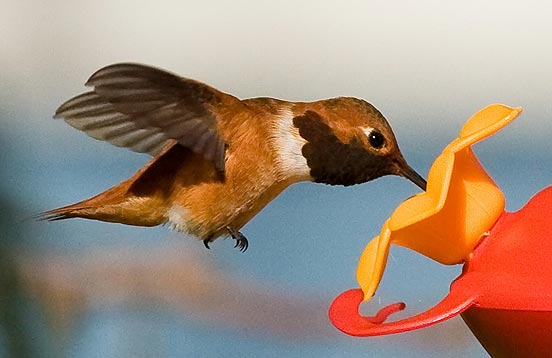
Image courtesy of Lois Miller © Cornell Lab of Ornithology

Image courtesy of Lois Miller © Cornell Lab of Ornithology


This is Passport to Texas

Winter is a great time for birding in Texas, and much of what we know about birds comes from the Cornell Lab of Ornithology in New York. It’s a world leader in the study, appreciation, and conservation of birds.

06— We are a part of Cornell University, but we are also a semi-independent unit of the university.

Pat Leonard works at the lab, which she says is also a nonprofit membership organization with 45-thousand members nationwide supporting their work.

12—So, there’s that outreach to the public side, but then we’re also a research institution. We have people here studying feeder birds, we’re studying specific species, bird biology, bird behavior, bird sounds…

Here’s where it gets interesting. In addition to studying birds, Pat says the Cornell lab of Ornithology also studies whales and elephants.

26—Because of our interest in sounds and communication of animals, we develop a lot of high tech tools for gathering and recording sounds that can be studied later. Some of those devices are used on land to capture bird sounds and to track migration, for example. But we also have devices that we put under the
ocean to track whales, particularly the highly endangered North Atlantic Right Whale, and then we also put them out to track forest elephants in Africa.

While the Lab’s research may seem broad, Pat Leonard says it always comes back to biodiversity and preserving places for these types of animals to continue to survive.

Tomorrow: a citizen science project that’s for the birds.

For Texas Parks and Wildlife…I’m Cecilia Nasti.
State Parks: World Birding Center

Monday, January 14th, 2013

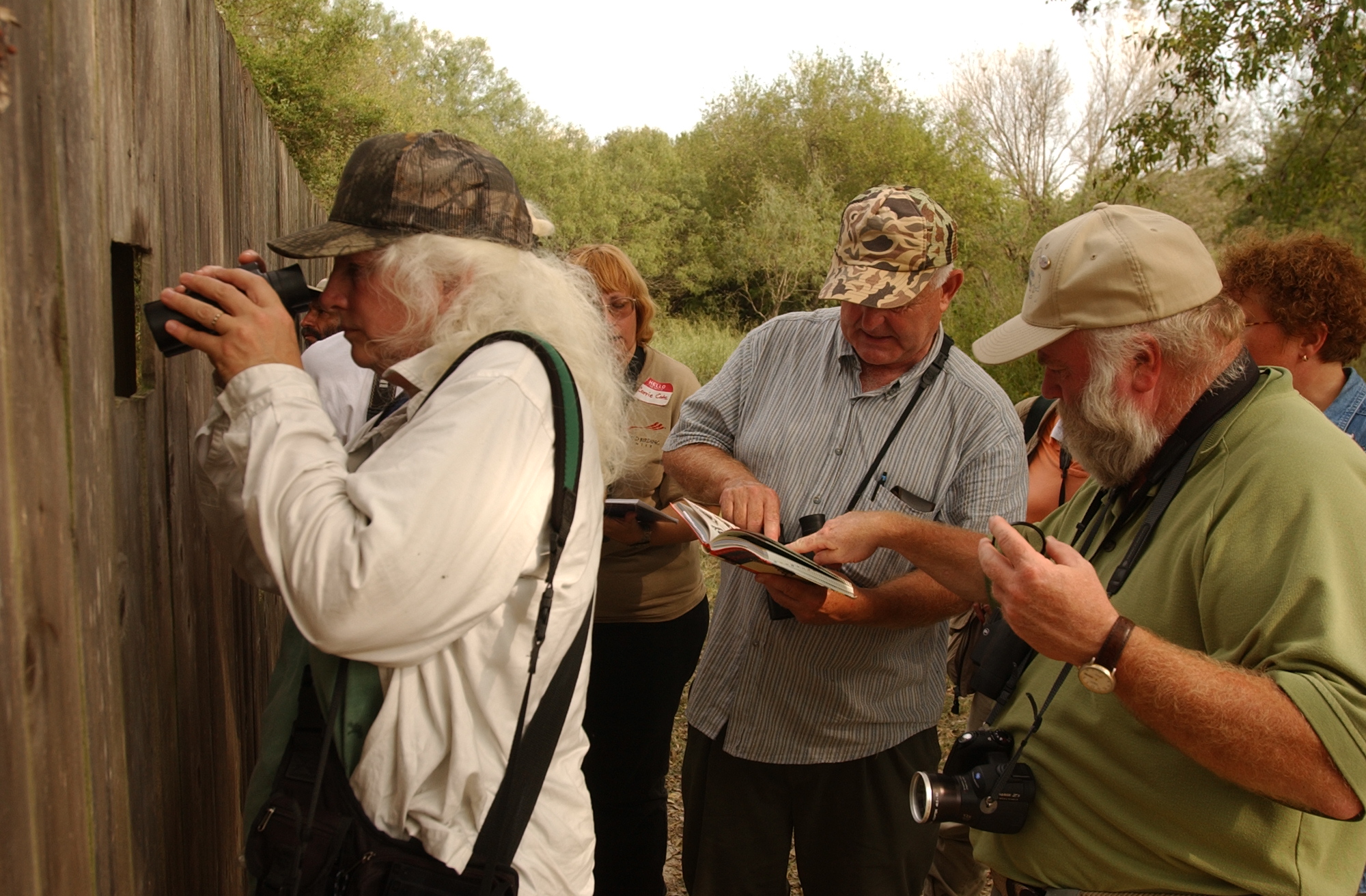
Birders at Blind, image © John W. Liston

Birders at Blind, image © John W. Liston


This is Passport to Texas

Winter is one of the best times for birders to visit the World Birding Center in the Rio Grande Valley. Our state park guide Bryan Frazier says this sub tropical region boasts myriad species that you won’t see at any other place or time of year in Texas.

58— You’ve got about 500 species of birds that either reside there, or travel through there and spend some time there. And winter months, particularly in January, is about the best time to see most of them. And we’re talking about everything from birds of prey like Swainson’s hawks and falcons, to colorful sub tropic species like Altamira orioles and groove billed Anis. And Green jays – just spectacularly colored birds that draw people from all over. These are one of the few places you can see them – and one of the only places in Texas where you can see them. And, wintertime, in general, is the best time to go down there. Head to the Rio Grande Valley, and you can visit Estero Llano Grande SP in Weslaco, Resaca de la Palma SP, just outside of Brownsville, and
Bentsen Rio Grande Valley SP…the food and the culture there in South Texas is rich and diverse and unique. And the birding opportunities are second to none.

Thanks, Bryan.

That’s our show for today…with funding provided by Chevrolet, supporting outdoor recreation in Texas; because there’s life to be done.

For Texas Parks and Wildlife…I’m Cecilia Nasti.
