Archive for the 'Shows' Category

Helping Women Engage the Outdoors

Wednesday, November 7th, 2018
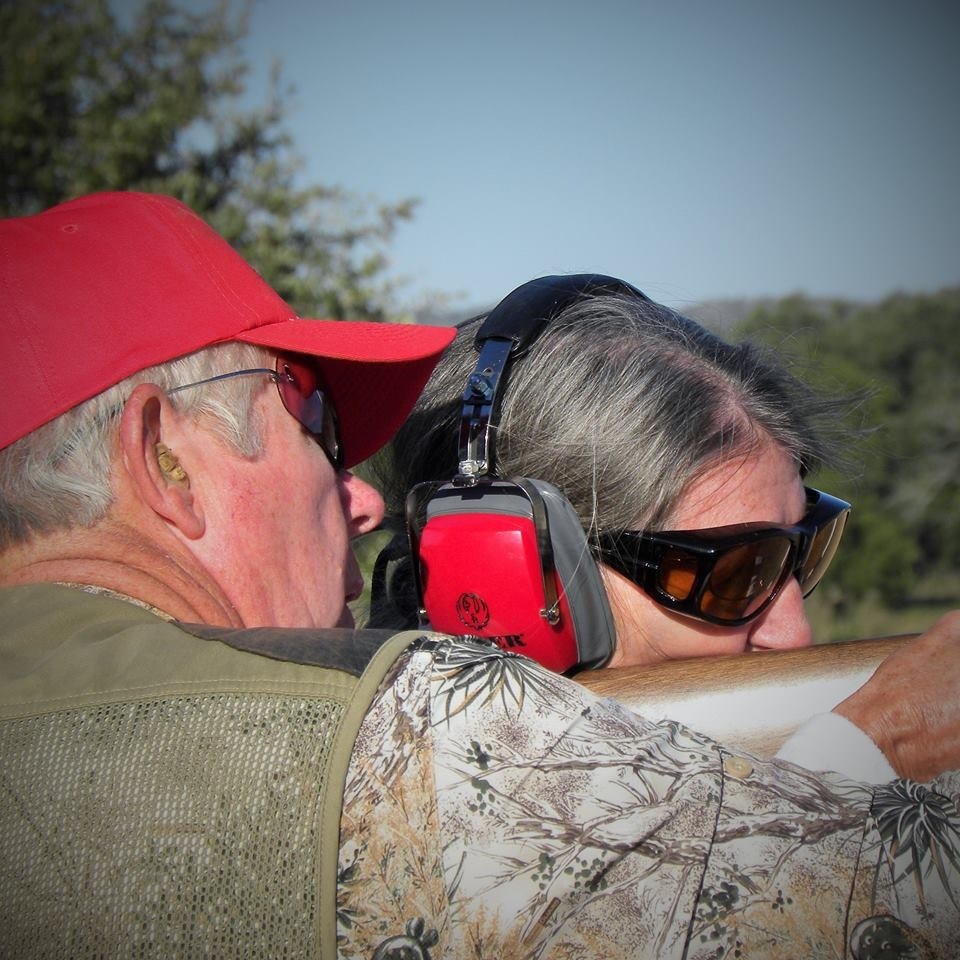
Learning the proper use of firearms during a Becoming and Outdoor Woman Weekend Workshop

This is Passport to Texas

Thanks to a unique program from Texas Parks and Wildlife, women of all ages–who have never had the opportunity to camp, climb, fish, or sport shoot–are getting the chance to become the outdoor women they always dreamed of being.

The Becoming and Outdoors Woman workshops span a weekend. They usually begin on a Friday at noon and lasting through Sunday noon. The weekend is divided into four sessions and attendees pick their own classes.

Class topics are diverse and can be divided into three areas: shooting sports, fishing, and non-harvest activities (like camping, kayaking, and plant identification). As much as possible the classes are taught with the “hands-on” approach and equipment is provided. They’ve even
learned to field dress harvested game.

Participants come away from the weekends with the confidence to engage the outdoors in new ways. Moreover, they meet other women with similar interests, and make new friends.

We just missed this year’s Becoming an Outdoors Woman Workshop. Even so, it is not too early to get on the list for next year. Visit the Texas Parks and Wildlife website to find out how to sign up. And while you’re there, you can check out other outdoor opportunities for you and the family.

We record our series at the Block house and Joel Block engineers our program.

For Texas Parks and Wildlife…I’m Cecilia Nasti
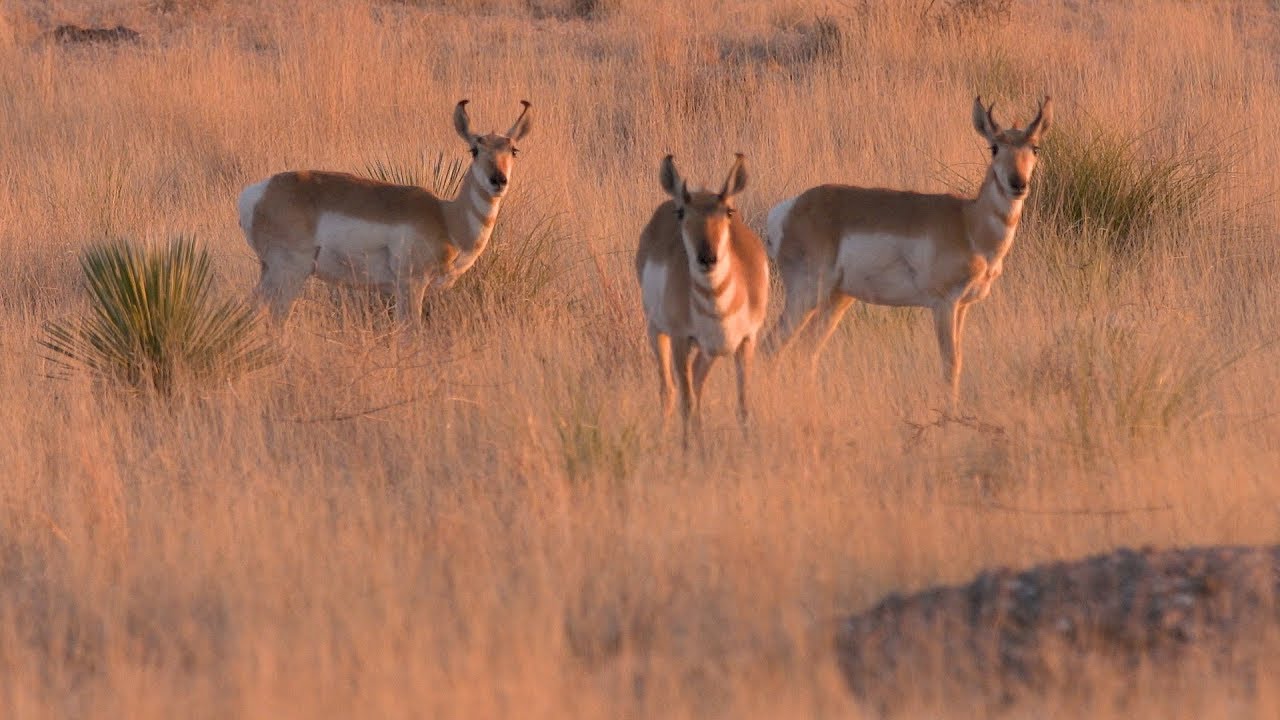
TPW TV — Billingsley Ranch

Friday, November 2nd, 2018

Billingsley Ranch

This is Passport to Texas

The Billingsley Ranch in the Trans-Pecos is made up of pristine Chihuahuan dessert grassland. Shortly after buying the ranch in 2008, Stuart Sasser said a wildfire set him back to square one.

And it came up through here and burned about seventy percent of this ranch. We were able then to start completely over with a new set of fences that were antelope friendly type fences.  And build a new type of water system.

In an upcoming segment on the Texas Parks and Wildlife TV series, viewers see the ranch and meet, Sasser: a 2018 Lone Star Land Steward Award recipient. Michael Sullins is a Natural Resource Specialist with Texas Parks and Wildlife.

Stuart’s approach to management out here is not really all from a cattle production perspective. He has a holistic view of the place; he wants to improve it for the native wildlife.

Whitney Gann is a Research Scientist with Borderlands Research Institute. She says the ranch’s prime grassland habitat made it an ideal place to translocate pronghorn.

We’ve completed seven translocations since 2011, the Hughes Sasser ranch served as our release sight for pronghorn in 2016, and the results of these translocations is an upturn in the population, and so we’ve actually doubled our population size since 2012 to today.

A segment featuring innovations on the Billingsley Ranch airs the week of November 4 on the Texas Parks and Wildlife TV show on PBS.

The Wildlife Restoration program supports our series.

For Texas Parks and Wildlife, I’m Cecilia Nasti.

It’s Buck Fever Season

Thursday, November 1st, 2018

 Trophy buck taken by Tom Roughton with guide Rene Garza.

This is Passport to Texas

As you round a bend during a hike, you spy a buck with large, flawless antlers. Your heart races; your breathing becomes shallow; your nerves tingle. Hunters call this: buck fever. And it’s caused by the sight of perfect antlers.

Nice smooth lines, tall tines coming off the main beams; very symmetrical one side to the other.

John Stein knows a thing or two about perfect antlers; he’s curator at the Buckhorn Saloon and Museum in San Antonio. Antler and taxidermy covered walls draw visitors to the saloon by the thousands.

Overall, in the collection, there’s over 12-hundred trophies that are on the walls –of all difference species.

Some hunters shell out big money to landowners to bag trophy animals on their property; money the landowner funnels into management and conservation. For 25 years, deer experts at the Kerr WMA have studied the genetic and nutritional aspects of antler growth in bucks, and shared the data with landowners; biologist, Gene Fuchs.

The information that we’ve gained from this study shows that through selection – by never allowing a buck that was a spike to ever breed a doe – we produced no spike antler yearling bucks two years in a row. And, the percentage of good quality antler yearling bucks has steadily increased.

Opening day for deer season in the north and south zones is November 3rd.

The Wildlife Restoration program supports our series and funds whitetail research in Texas.

For Texas Parks and Wildlife, I’m Cecilia Nasti.

Technology and Sea Turtles

Wednesday, October 31st, 2018
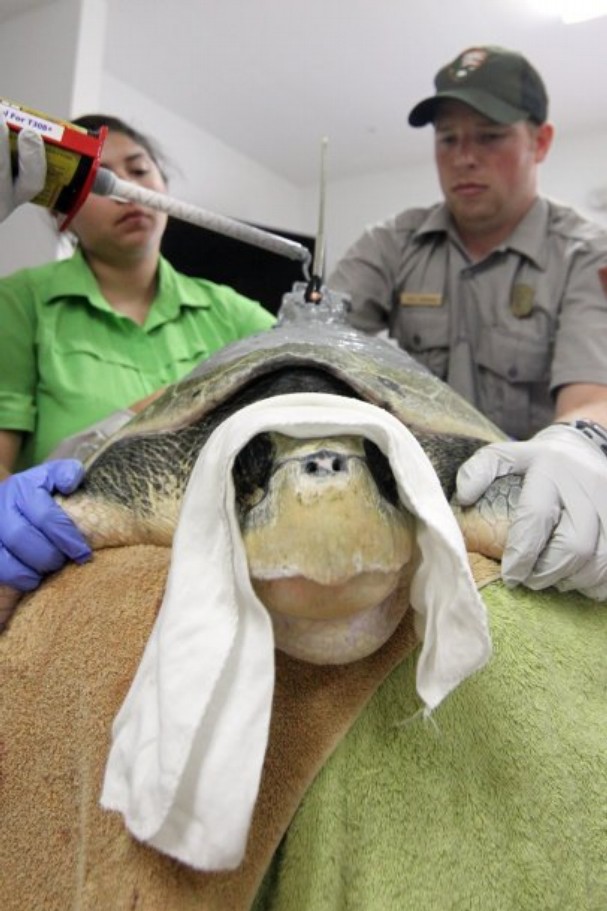
Sea turtle receiving GPS, Image courtesy Corpus Christi Caller Times

Sea turtle receiving GPS, Image courtesy Corpus Christi Caller Times

This is Passport to Texas

Understanding where wildlife goes provides valuable information to help manage species. Dr. Donna Shaver uses the newest GPS technology in tandem with satellites orbiting12-thousand miles above earth, to track endangered Kemp’s Ridley Sea Turtles on the Texas coast.

We’re conducting this tracking because we want to get an idea about the habitat usage by these adult females.

Dr. Shaver is with the National Park Service.

We want to see where they’re going in the marine environment, which is where they spend the vast majority of  their life; where they’re going for migration as well as for foraging when they’re done nesting.

It takes Dr. Shaver and her team about three hours to prepare a turtle for tracking.

We have to sand the shell; we put down the first layer of epoxy, then we’ll affix the transmitter. Then when it’s on here solid, we will paint the surface to help prevent barnacles from adhering onto that area where it [the transmitter] has been applied.

Dr. Donna Shaver uses GPS and satellite technology to track endangered Kemp’s Ridley Sea Turtles, and you can
see a video of her in action on the Texas Parks and Wildlife YouTube channel.

We’re one step closer towards recovering the species someday so that it can be enjoyed by future generations.

That’s our show… For Texas Parks and Wildlife…I’m Cecilia Nasti.

You Need Mussels to Make Pearls

Friday, October 26th, 2018
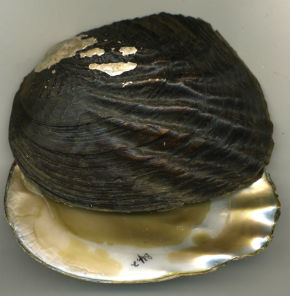
Washboard Mussel

Washboard Mussel

This is Passport to Texas

Though seemingly obscure, freshwater mussels play a vital role in a multi-million dollar industry.

There are at least 300 species of freshwater mussels in North America; Texas is home to more than 50 of those.
Freshwater mussel species are commercially harvested for their shells. Pieces of which become “seed material” for making cultured pearls.

More than 99% of all pearls sold worldwide are cultured.

Most freshwater mussel shells end up in Japan, Australia and Polynesia for the cultured pearl industry. Such a pearl begins with a polished sphere of North American freshwater mussel shell that’s surgically implanted into a marine oyster. The oyster identifies the object as an irritant, and begins to cover it with layers of iridescent mother-of-pearl. After about a year, it’s made a pearl.

Fifteen mussel species in Texas are listed as threatened at the state level. Six of those 15 species are now candidate for listing under the U.S. Endangered Species Act.

Learn more about Texas freshwater mussels and get involved in Texas Mussel Watch on the Texas Nature Trackers page of the Texas Parks and Wildlife website.

For Texas Parks and Wildlife…I’m Cecilia Nasti.