Archive for the 'Shows' Category

TPW TV — Mules of the Plains

Friday, December 22nd, 2017
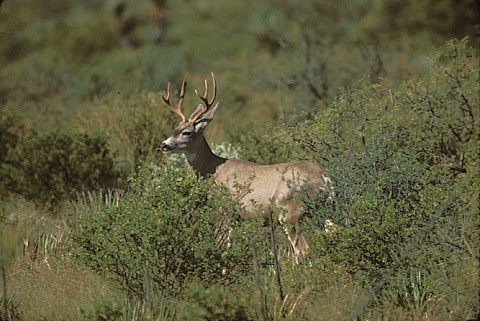
Mule deer buck

Mule deer buck

This is Passport to Texas

The panhandle of Texas is the epitome of rural. And mule deer can be found nearly everywhere. Just ask local, Rodney Geissler.

It’s not unusual to nearly be able to walk plumb up on a mule deer. [Truck door closes] Or drive up on one. If they’re out in the field next to the highway you can stop and take pictures of them [camera clicks].

In fall and winter it’s common to see groups of up to 200 mule deer grazing in wheat fields. And that interests biologists like Thomas Janke.

One of the big questions of this project is dealing with agriculture land versus the rangeland like you see behind me.

Janke is studying how mule deer movements and survival are influenced by panhandle agriculture.

Is there a difference in the nutritional value of the plants? Or is it the deer are picking it just because it’s out here and they have a buffet.

During the week of December 24, the Texas Parks and Wildlife TV series on PBS will feature a segment on the mule deer study, which shows how they use helicopters to track and trap the animals.

We have deer that are radio collared that we captured back in 2015. The radio collars all transmit a signal. Those radio collars are allowing the helicopter crew to use radio telemetry and locate them.

Check your local listings.

The Wildlife restoration program supports our series, and funds mule deer research in Texas.

For Texas Parks and Wildlife…I’m Cecilia Nasti.
Protecting Pelicans from Deadly Downdrafts

Thursday, December 21st, 2017
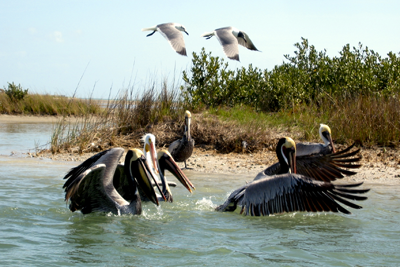
Brown Pelicans (and seagulls).

Brown Pelicans (and seagulls).

This is Passport to Texas

Winter evenings, when north winds blow, brown pelicans perish along SH 48 between Brownsville and South Padre. The highway bridge, concrete barriers, and changing tides, contribute to downdrafts that cause the birds to crash onto the roadway enroute to their roost at Bahia Grande.

It’s heartbreaking to see what’s going on there.

Over the last year more than a hundred the birds died on SH 48. Texas Parks and Wildlife Department, TxDOT, USFWS, nonprofits and citizen groups, have joined to develop solutions, says Laura Zebehazy, program leader for Wildlife Habitat Assessment at Texas Parks and Wildlife.

They’re putting up temporary signage to ask the traveling public to slow down. Be aware: there’s pelicans on the road. DPS is getting involved. There’s folks who volunteer to flag people down to get them to slow down if they know a bird is on the roadway.

Earlier, TxDOT installed poles on the bridge, which forces the birds to fly higher.

Now, they’re actually putting these flashing lights [on the poles] so the birds can see. All of these things trying to encourage the birds to move up as much as possible so, they can maybe avoid that tornado of winds that makes them fall to the roadway.

If you find yourself driving that stretch of road at dusk this winter, slow down; save lives.

The Wildlife restoration Program supports our series.

For Texas Parks and Wildlife…I’m Cecilia Nasti.
The Problem With Pelicans

Wednesday, December 20th, 2017
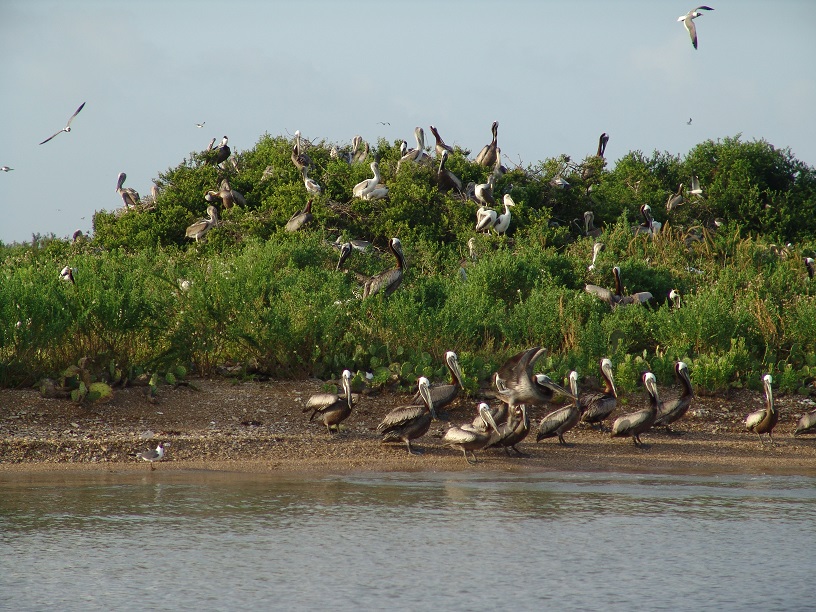
Brown Pelicans

Brown Pelicans

This is Passport to Texas

You’re driving the posted 75 MPH speed limit on SH 48 in south Texas. It’s winter. Dusk. You’re crossing the bridge. Suddenly, you see a pelican on the road; you barely miss it.

What happened?

In winter, what’s been happening at the Gamin Bridge—at SH 48 in Bahia Grande—is strong northerly winds come through at dusk, when pelicans are coming from the coast; they want to go roost on the Bahia Grande, [but] the way the bridge as well as the concrete barriers is engineered, it’s creating these wind vortexes that—if they don’t get high enough loft—makes the birds lose loft, and they crash into the roadway.

Laura Zebehazy, program leader for Wildlife Habitat Assessment, studies the impacts of roadways on wildlife, known as road ecology. Researchers believe the structure of the SH 48 Bridge, along with the fluctuating tide, may impact the wind, and the pelicans’ fate.

It is contributing, but now there needs to be further research that looks at what can we do to the bridge and those concrete barriers that’s the most effective to alleviate the number of pelicans that are being impacted.

We’ll learn more about that tomorrow.

The Wildlife restoration Program supports our series.

For Texas Parks and Wildlife…I’m Cecilia Nasti.
Road Ecology and Protecting Rare Species

Tuesday, December 19th, 2017
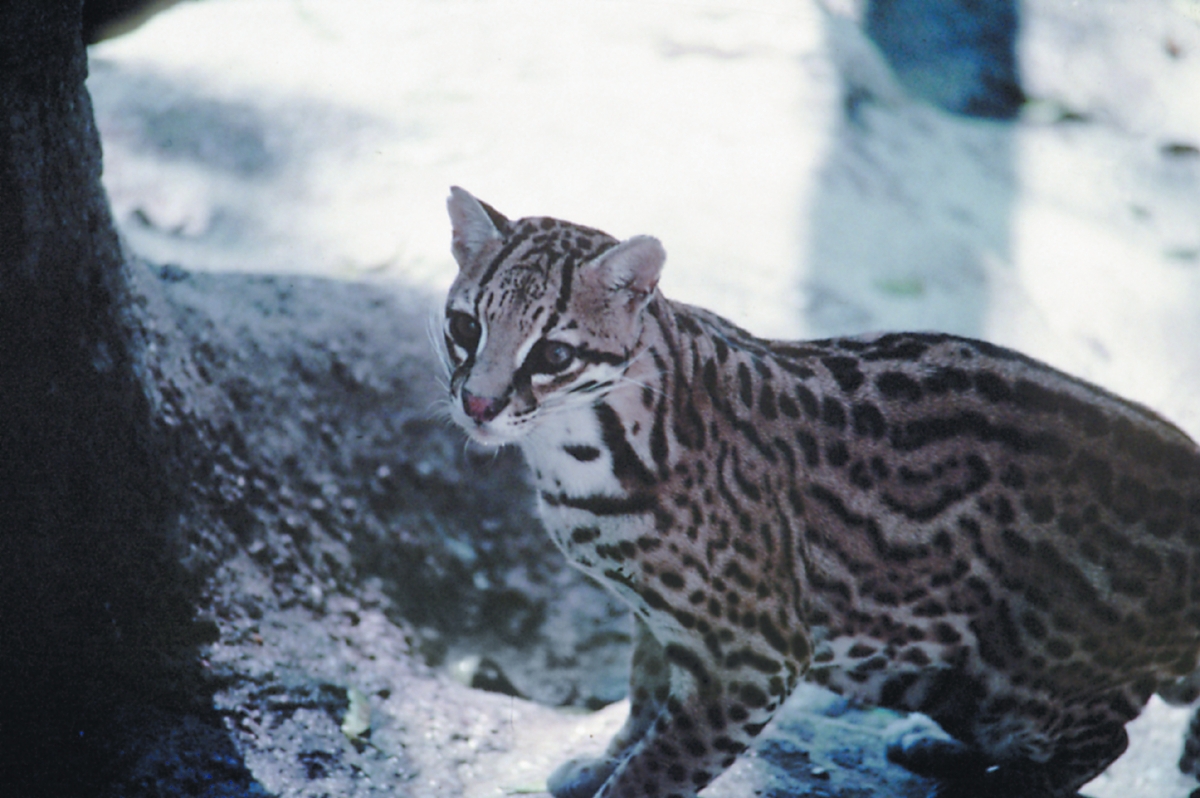
Ocelot

Ocelot

This is Passport to Texas

Roads provide convenient travel to work, school and home for humans—but not for wildlife.

You have habitat loss. And then that physical road can act as a barrier to wildlife. It can impact habitat connectivity. Which, then, in turn can impact genetic transfer of information between populations, and weaken the genetic background for a species.

Laura Zebehazy, program leader for Wildlife Habitat Assessment, studies the impacts of roadways on wildlife, known as road ecology.

Basically, it is where biologists, engineers, landscape architects… try to evaluate the impacts that road infrastructure has on wildlife habitat connectivity, air pollution, noise pollution, and try to find solutions to alleviate those impacts from that type of development.

Endangered ocelots that live in Rio Grande Valley brush country have died on SH 100. Recently, TxDOT, in consultation with USFWS and Texas Parks and Wildlife…, completed four wildlife underpasses along this popular route to South Padre Island.

To allow ocelot and any other wildlife in the area to move under the road between the Bahia Grande to the south, and the Port of Brownsville area up north towards Laguna Atascosa National Wildlife Refuge.

With wildlife cameras in place, TxDOT will collect data on these solutions and adjust as necessary to save this (and other) rare species.

The Wildlife restoration Program supports our series.

For Texas Parks and Wildlife…I’m Cecilia Nasti.
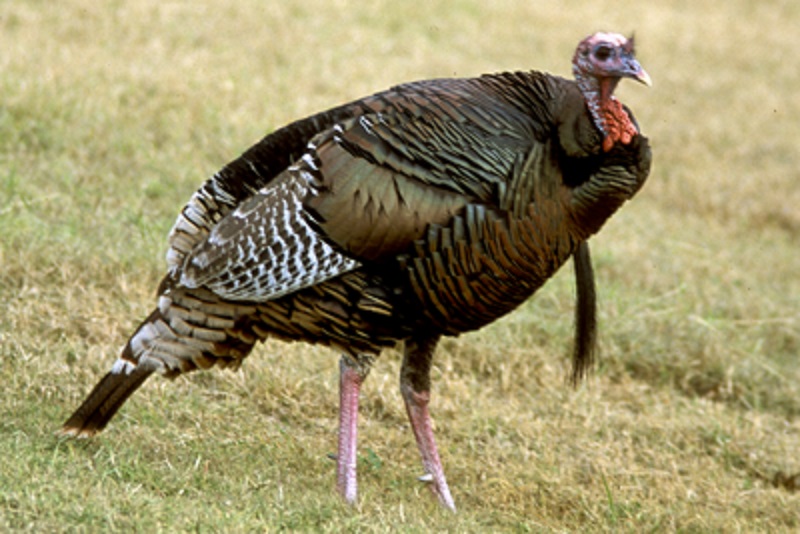
Quail and Turkey Outlook for 2017-2018

Friday, December 15th, 2017
Wild turkey in Texas.

Wild turkey in Texas.

This is Passport to Texas

Last quail season, bobwhite were at an all-time high thanks to a few years of great weather in a row.

We saw something we hadn’t seen in over 10 years, and it was quite special. And what comes up, must come down.

Robert Perez is Upland Bird Game Program Leader.

This past winter and spring we had average winter rains. Average spring rains. And so, we did have some quail production over the summer—that wasn’t phenomenal. But what we did have was so many birds that are still alive from last year that they carried over to this year. So, hunters can expect—in the bag—a lot of adult birds.

The season for Bobwhite, Scaled (blue) and Gambel’s Quail runs through February 25, statewide.

Scaled quail were phenomenal as well. Way out west in the Trans Pecos. There will still be great hunting opportunities out west at our WMAs.

If turkey’s more your bag, Perez says Rio Grande Turkey season is looking good.

Rio Grande turkey hunting in Texas is top notch. Populations in our state are at an all-time high. We’ll have two year old, three year old birds. Maybe not so much production this past year—a little bit below average—but, overall, Texas populations of Rio Grande turkeys are just through the roof.

Refer to the Outdoor Annual for seasons and bag limits for all upland game birds.

The Wildlife Restoration Program supports our series and funds quail research in Texas.

For Texas Parks and Wildlife…I’m Cecilia Nasti.
