Archive for the 'Shows' Category

Developing an Ear for Backyard Birds

Wednesday, September 6th, 2017
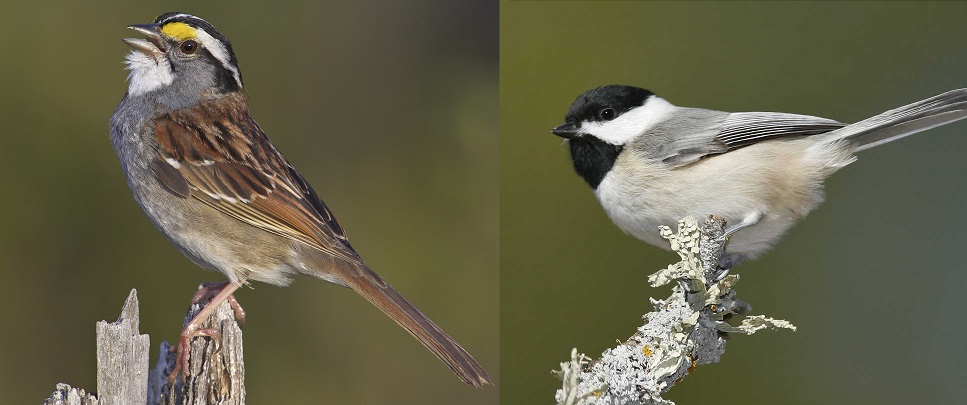
White-throated sparrow and Carolina Chickadee. Images:  National Audubon Society.

White-throated sparrow and Carolina Chickadee. Images: National Audubon Society.

This is Passport to Texas

It’s not uncommon to find the white-throated sparrow and Carolina chickadee in backyards throughout Texas.

Most Texans have these – especially in the eastern two-thirds of the state

Cliff Shackelford, nongame ornithologist with Texas Parks and Wildlife, says these birds are whistlers.

They have very clear, clean whistles. Sometimes you might even think it’s the neighbor whistling – but it’s a little bird!

If whistling like this comes from ground level, it’s likely the white-throated sparrow.

If it’s a little higher up– maybe up in the trees – it’s probably the Carolina chickadee. We get a lot of phone calls from people saying: what is this bird with that has this crystal clear whistle in my backyard? And it’s probably going to be one or the other – either the chickadee or the sparrow.

The chickadee is finch-sized with a gray body, white underside and black and white head. The sparrow is plump with a black and white head, white throat, gray underside and little yellow eyebrows.

You can hear the chickadee whistling year-round, but the white throated sparrow leaves for southern Canada where it’s nice and cool in the summer while we’re here melting in the summer months.

Learn more about Birds in Texas on the Texas Parks and Wildlife website.

The Wildlife restoration program supports our series and funds wildlife surveys throughout Texas.

For Texas Parks and Wildlife…I’m Cecilia Nasti
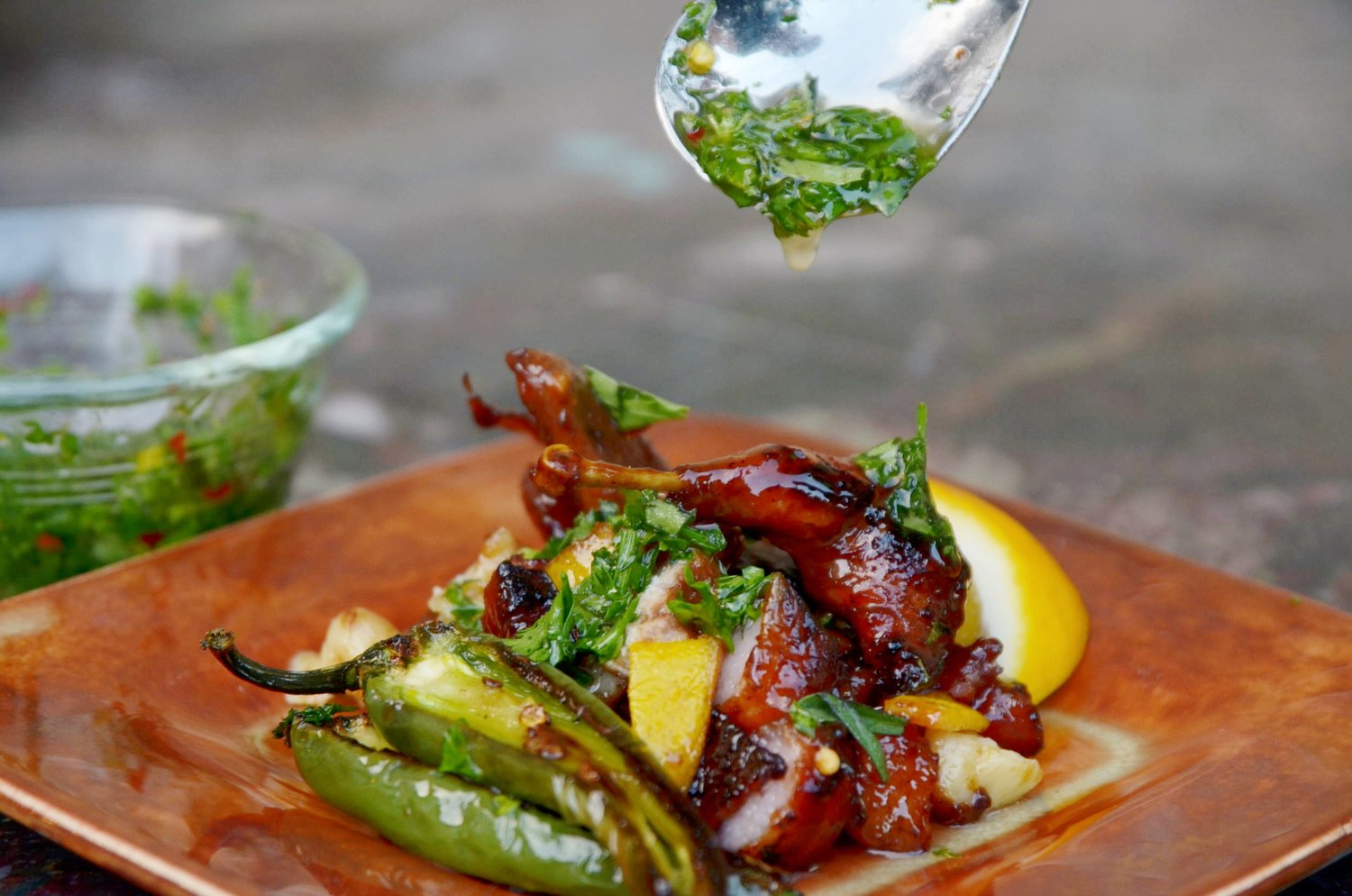
Beyond Bacon: Dove Carnitas a la Killer Chefs

Tuesday, September 5th, 2017
Dove Carnitas a la Killer Chefs. Photo: Jesse Morris.

Dove Carnitas a la Killer Chefs. Photo: Jesse Morris.

This is Passport to Texas

With dove season underway in the north and central zones, bacon wrapped dove breasts will soon show up on the tables of hunters everywhere.

People don’t really like eating doves, they like eating bacon, if that’s the only way that they cook it.

Jesse Morris is a hunter and chef with Killer Chefs in Richardson, Texas. He says there are more inventive ways to enjoy dove—including carnitas.

Everybody’s go-to recipe—and there’s nothing wrong with it – is bacon wrapped dove. It’s nice to actually use all the bird. So, you can use the heart in the carnitas, and the legs, and the breast meat, and everything. Cooking that down low and slow; finishing it off, letting all the sugars come out in the product. It’s something good.

If you’re a new hunter and longtime foodie, you may be tempted to “go gourmet” when preparing dove or any game. Jesse recommends to start simply.

People get off on wanting to cover them in sauces or gravy, and things like that – when they’re really not tasting the bird, or whatever game that it is that they’re eating. When you’re first starting out cooking wild game, cook it simply: grill it; salt and pepper. See what the flavors that the actual game is, and then work with that.

We have Jesse Morris’ dove carnitas recipe at Passport to Texas dot com.

For Texas Parks and Wildlife…I’m Cecilia Nasti.

____________________________________

Killer Chef’s Dove Carnitas Recipe
by Jesse Morris
One of my all time favorites and go to recipe is carnitas. They are flavorful and easy to cook. My version of the recipe is not totally traditional. I like to lighten it up and use things that I can find around me in the late August early September months. If you don’t like the idea of using real sugar cokes, then don’t use it. You may substitute piloncillo, an unrefined sugar, and water.

Ingredients
1 pound salt pork, large cubed
Pig skin or pig ears, you may use the skin from the salt pork
1 white onion, rough chopped
6 cloves garlic, peeled
1 pound block of lard
10 dove plucked and cleaned doves quartered and hearts (trust me)
1 bunch fresh thyme, whole
1 bunch fresh oregano, whole
2 sticks Mexican cinnamon
1 Meyer lemon (or small orange), peeled, rind and juice
3 Mexican real sugar cokes

Instructions
In a deep, heavy bottom pan or Dutch oven brown the salt pork.
Add onions and garlic to pan and sauté for a few minutes.
Then add lard and allow it to melt and begin to slightly fry ingredients in pan.
Next add dove and remainder of the ingredients and simmer for about an hour on medium/high heat until meat is tender and the cloudy look of the coke and lard turns semi clear.
Pick all the meat and some of the lemon peel out. Pull apart the meat to prep for serving.
Finish off on flat top or cast iron pan till caramelized.
I prefer to garnish with charred jalapeno, chimichuri and a slice of lime or Meyer lemon.

Dove: Good Flavor Begins in the Field

Monday, September 4th, 2017
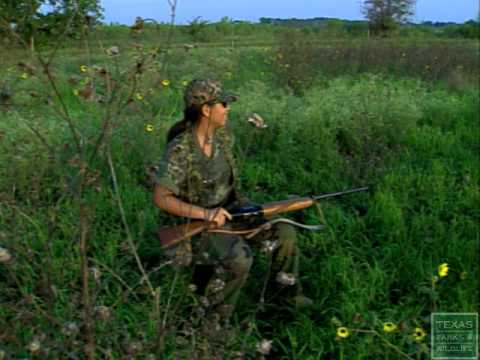
Ready for dove.

Ready for dove.

This is Passport to Texas

Jesse Morris is a hunter and professional chef; he traded his chef’s jacket for a new career that allows him to spend more time with his family.

I felt that I needed to have a creative outlet to continue food. Two of my greatest passions were food and hunting, so I decided what better way to celebrate what I was doing than to put those together; and that’s how Killer Chefs was born.

He shares these passions through the Killer Chefs website. Dove season is underway in the north and central zones. Jesse says: don’t expect this bird to taste like chicken.

When people think about wild game, the thoughts in their head are: ‘It tastes livery.’ That’s the word that they use. It has a flavor to it. But, what will give it that ‘off taste’ is not handling it properly.

Dove has a good flavor, but needs proper handling to ensure full enjoyment.

The very first thing in terms of food that you really want to think about, especially it being as hot as it is, is getting that animal cooled down. I always put the birds in a cooler right after they’re shot. Getting that body temperature cooled down as quickly as possible – that’s the most important thing.

That one act can mean the difference between delicious and disaster. Tomorrow: beyond bacon.

That’s our show… Funding provided in part by Ram Trucks. Guts. Glory. Ram

For Texas Parks and Wildlife…I’m Cecilia Nasti.

TPW TV — In Search of the Blue Sucker

Friday, September 1st, 2017
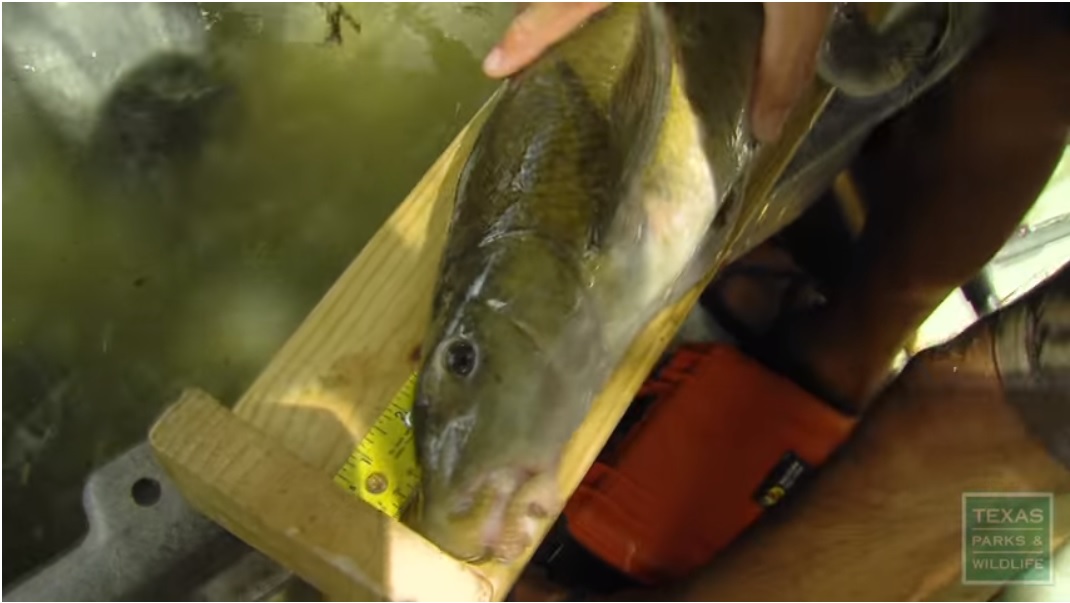
Wrangling blue suckers in teh Colorado River.

Wrangling blue suckers in the Colorado River.

This is Passport to Texas

The Colorado River is home to a blue ghost: a fish called the Blue Sucker. It’s a rare and threatened species, and for Mathew Acre, it’s worth the days, weeks and months spent searching for it.

Currently the Blue Sucker status is somewhat unknown in the lower Colorado River, so we are not a hundred percent sure how the Blue Sucker is doing.

Acre is a PhD Student from Texas Tech, and works with a team – that includes Texas Parks and Wildlife biologist Dakus Geeslin – to search for this elusive fish.

So we are about ten miles east of Austin on the Colorado River, we are looking for that faster water, and some type of structure, they are really adept at swimming in fast water, they are great swimmers.

Blue suckers used to be found throughout North America, but dams and poor river quality have led to their dramatic decline.

It’s unique in that it has this really elongated body and it hangs out in these fast flowing waters, shoots, and riffles, that most fish tend to avoid because they just don’t have the energy budget to stay within that riffle.

Join the search for the blue sucker when you tune into the Texas Parks and Wildlife TV series on PBS September 3-9.

Wow, finally! He was in that fast water just where we expected him to be! It just took us a couple of passes through there. You just have to be on your game. That is awesome dude!

The Wildlife and Sport Fish restoration program support our series.

For Texas Parks and Wildlife…I’m Cecilia Nasti.

Texas Outdoor Annual App — a Friend in the Field

Thursday, August 31st, 2017
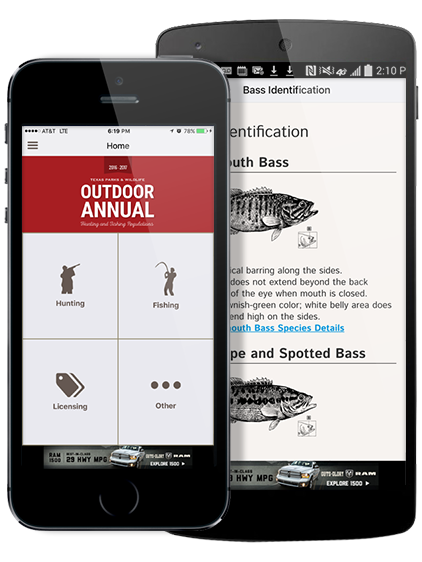
Texas Outdoor Annual App

Texas Outdoor Annual App

This is Passport to Texas

The Texas Outdoor Annual is a handy print and online guide loaded with useful information for hunters and anglers. It’s also an app.

Smart phones and tablets have become more popular among the general population, and our hunters and anglers are also using those devices.

Tim Peterson–director of creative and interactive services at Texas Parks and Wildlife–says the app takes the guesswork out of which regulations apply to your location.

If an angler’s sitting in a particular water body or lake, or near or water body or lake, they can use the GPS function in the APP, locate the lake that they’re at or near, and they can see bag limits and exceptions for that particular lake. In addition, same goes for hunting. Same goes for hunting. If a hunter is in a blind, they can pull out the APP, and using the GPS functionality of their device, they could see which county they were in, and they would see the bag limits and season dates for that particular county.

The app is free and available for download for apple and android devices. Find a link at the Texas Parks and Wildlife website.

That’s our show, funded in part by the Wildlife and Sport Fish Restoration Program. Through your purchases of hunting and fishing equipment, and motorboat fuels, over 40 million dollars in conservation efforts are funded in Texas each year.

For Texas Parks and Wildlife, I’m Cecilia Nasti.