Archive for the 'Shows' Category

TPW TV–Adult Onset Hunting

Thursday, September 5th, 2019
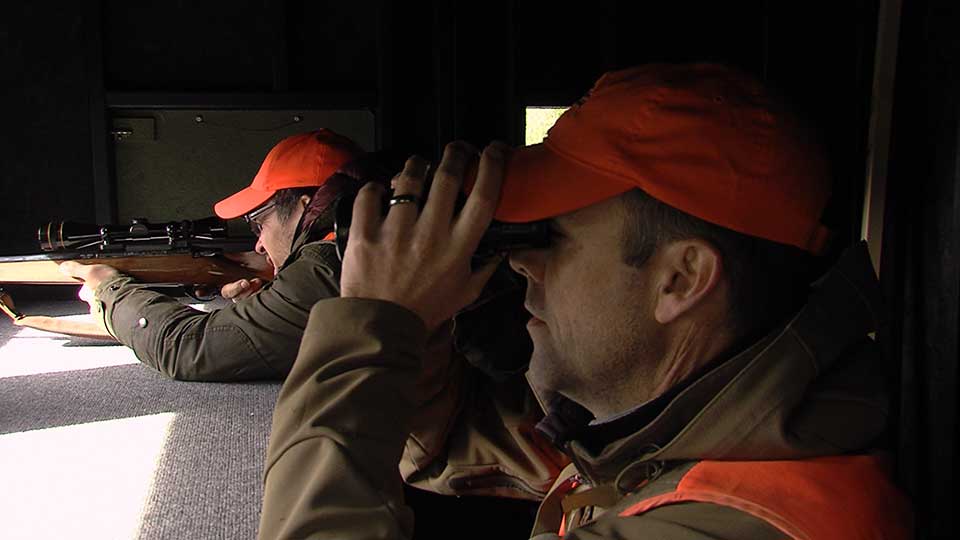
In a deer blind on a mentored hunt for adults.

This is Passport to Texas

During fall hunting season we join with friends and family in the field. Skill and luck ensure that we bring home quality protein for the table. But not everyone has someone to teach them, which is why TPW offers mentored hunting programs.

We have lots of youth hunting programs around the state. But there just aren’t many opportunities for adults.

Until now, says Justin Dreibelbis, who oversees private lands and public hunting at Texas Parks and Wildlife.

So this is an opportunity for them to come out, take part in a hunt, learn from experienced hunters and be able to take those skills back to their friends and families so they can go hunting.

In an upcoming segment of the Texas Parks and Wildlife TV series we follow a group of adult-onset hunters, including first-time hunter Kristen Rodgers.

It was great; unfortunately, I wasn’t able to get a deer on my side but had an amazing mentor. It was quite an experience. It was something if anybody else out there really wanted to do, I would highly recommend it. It took the scary away from hunting, and for me it kind of gave me that knowledge to make me a little more comfortable I guess.

The mentored hunt segment is on the Texas Parks and Wildlife Television series the week of September 8 on PBS.

For Texas Parks and Wildlife…I’m Cecilia Nasti.
Avoid this Violation in the Field

Wednesday, September 4th, 2019

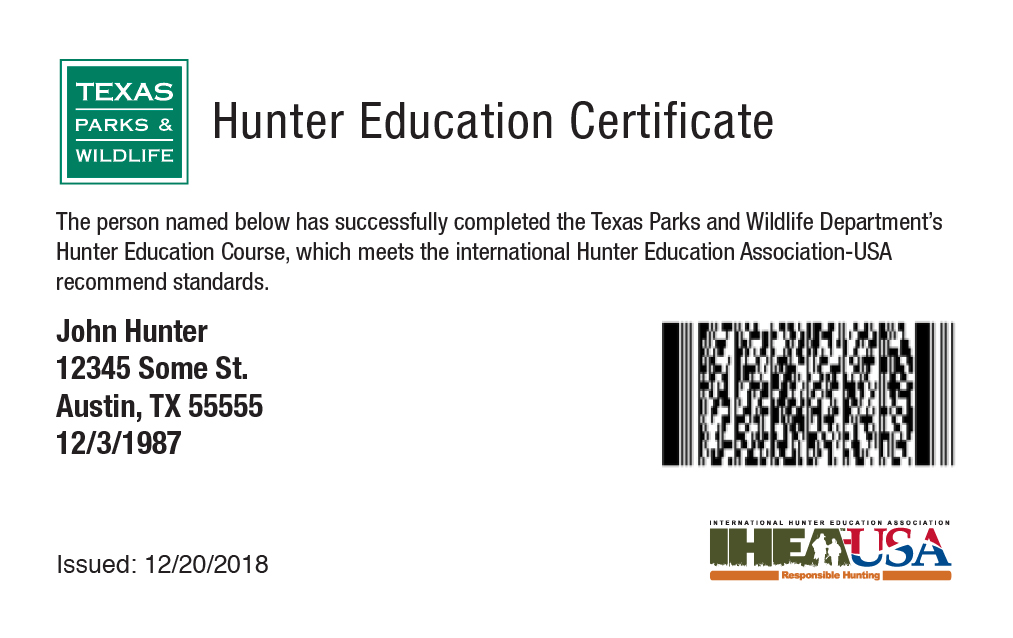
Texas Hunter Education certificate. Never go hunting without it.

This is Passport to Texas

What’s the most frequent violation Texas Game Warden encounter in the field?

That’s hunter education and it’s a preventable one.

Aaron Sims is a Texas game warden.

That’s something that’s been mandatory for a long time now.

The 70th Texas Legislature made hunter education a requirement in 1987. Hunters born on or after Sept. 2, 1971 must successfully complete the course.

“I know how to use guns. I’ve been shooting them all my life. Why do I have to go through another class?” And I’ll tell them that’s a very small portion of the hunter education class. The other part is why it’s important. Why we have these laws. Conservation, ethics; something that might not be unlawful may be unethical. We have to have respect for the animals when it comes to hunting or fishing.

The Hunter Education program strives to produce safe, responsible, knowledgeable and involved hunters.

All we want is for them to get compliant. Take the class, learn the good information and pass it along to your children. If an adult is already certified and they have a young son or daughter that wants to go through it. We always encourage them. If you would like to go sit through the class with them and learn with them and maybe they can ask you questions because its more comfortable. We definitely encourage parents to attend classes with their children

Find hunter education information on the Texas Parks and Wildlife website.

For Texas Parks and Wildlife…I’m Cecilia Nasti.
Taking the “Tense” Out of Tent Camping

Tuesday, September 3rd, 2019

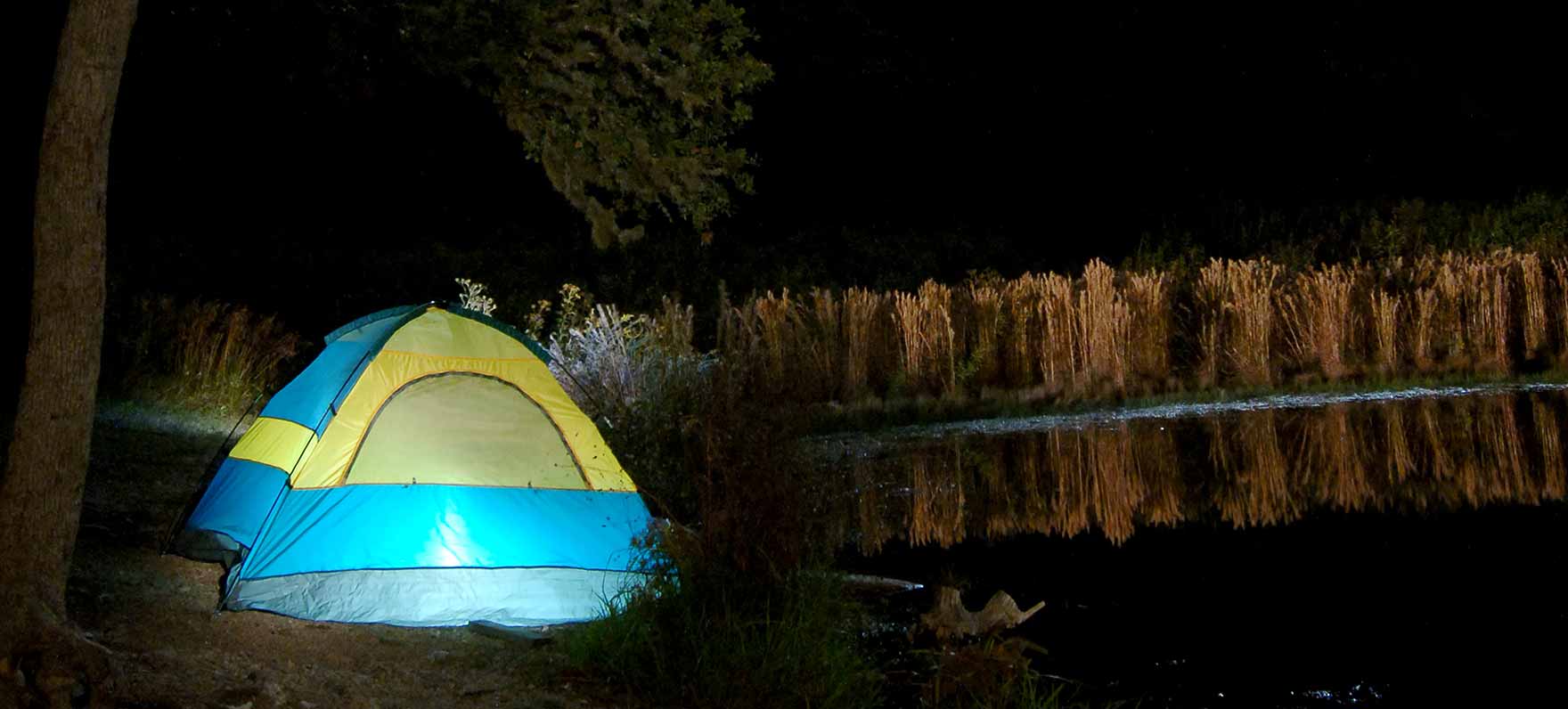
Overnight tent camping at Lost Maples State Natural Area.

This is Passport to Texas

Does the thought of tent camping at a state park give you anxiety? An article in the October issue of Texas Parks and Wildlife magazine may help quell your fears.

Writer and avid tent camper, Wendel Withrow, addresses ten of the most common anxieties people have when it comes to overnight tent camping and how to overcome them.

Anxiety about the unknown is something a we all face. Address it by getting to know the park. Start with one that’s close to home, and spend the day, exploring—particularly the camping loops. Get a feel for where you and fellow campers will pitch your tents and spend the night.

Willingly trading in your pillow-top mattress for a sleeping bag on the floor of a tent may seem mad. Tent camping doesn’t have to be unpleasant. Gear like ultra-plush sleeping pads and bags stuffed with soft down or synthetic insulation will keep you off the ground and comfy.

If you’re concerned you won’t sleep because of worry about wildlife roaming the park in the dead of night, know that they’re not interested in you. Although, keeping your provisions and waste away from your tents and securely stowed will ensure they’ll give you a wide berth. Although, mosquitoes are another story.

The Oct. issue of Texas Parks and Wildlife magazine with the article on overcoming tent camping fear is on newsstands now.

For Texas Parks and Wildlife…I’m Cecilia Nasti.

Hands on Habitat

Thursday, August 29th, 2019

Manmade habitat for freshwater fish.

This is Passport to Texas

The Lone Star State is revered for its exceptional sport fishing opportunities.

To preserve and enhance these destinations, a recent project at Lake Sulfur Springs experiments with nontraditional materials and designs to create artificial habitat.

Fish need habitat and structure in general.

Tim Bister is a District Fisheries Biologist with Texas Parks and Wildlife

Even in reservoirs that left timber standing, over time, that timber in the water breaks down and the habitat for the fish declines. We’ve done work with Christmas trees in the past but the PVC that we’re using in the structures we’re building today are going to last for many, many years

One design for artificial habitat involves using simple, materials like PVC pipe and corrugated plastic drainpipe. Biologists and volunteers use the PVC to build a four-foot cube-shaped framework, and then weave and secure the drainpipe to it; it’s not much to look at, but it creates a nest-like structure.

Kody Corrin is the state director for Bass Unlimited and a restoration project volunteer

Somebody that doesn’t really know would think that we’re just piecing recycled garbage together, and we’re really not. We’re actually providing good habitat for the fish.

The Sport Fish Restoration Program supports our series.

For Texas Parks and Wildlife…I’m Cecilia Nasti.
Return of the Black-Capped Vireo

Thursday, August 22nd, 2019
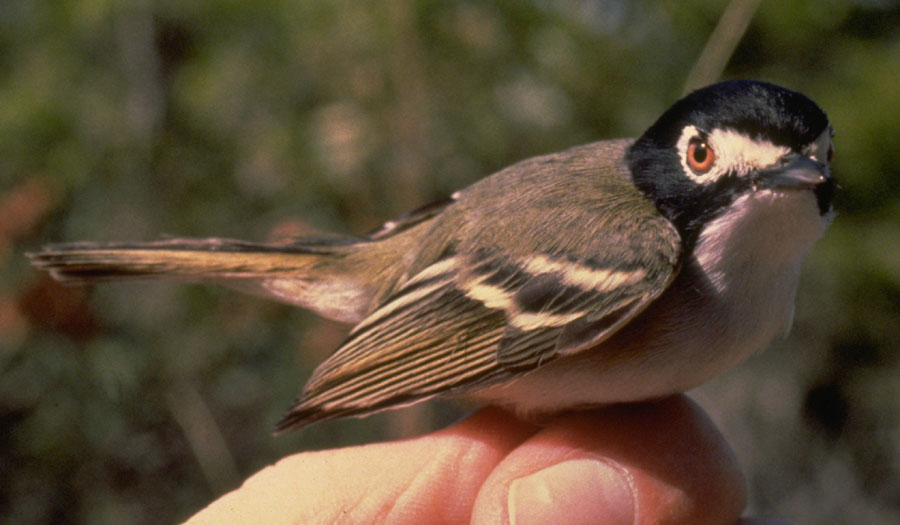
This black-capped vireo male is a passerine species.

Male Black-capped vireo.

This is Passport to Texas

Not long ago the tiny masked bird known as the Black-capped Vireo nearly became extinct. The US Fish and Wildlife Service listed the species as endangered in 1987. But rigorous habitat recovery efforts have finally changed that listing.

Good news for the Black-capped Vireo is that it was recently delisted.

Cliff Shackelford is a state ornithologist at Texas Parks and Wildlife.

Now we’re in a phase of what we call the post-delisting monitoring. So Parks and Wildlife is involved in continuing the count of Black-capped vireos to make sure that the numbers are still steady and increasing but not decreasing.

Cliff believes we’ve become better at understanding what makes a healthy Hill Country ecosystem.

I think the one thing our agency has learned is better deer management. We’ve relayed that to a lot of our landowners that we work with, and you can drive around the Hill Country and see who’s doin’ it right. But I think that’s the big thing is finding that balance of where you can have your agriculture, your deer, and your Black-capped Vireos and everybody lives in harmony, and we’ve found that sweet spot and it’s really working.

Now it’s up to us to hand down our lessons learned to the next generation so that the Black-capped Vireo is never endangered again.

The Wildlife Restoration program supports our series.

For Texas Parks and Wildlife…I’m Cecilia Nasti.
