Archive for the 'Research' Category

Research | Hunt: Dove Lethality Study

Tuesday, February 24th, 2015
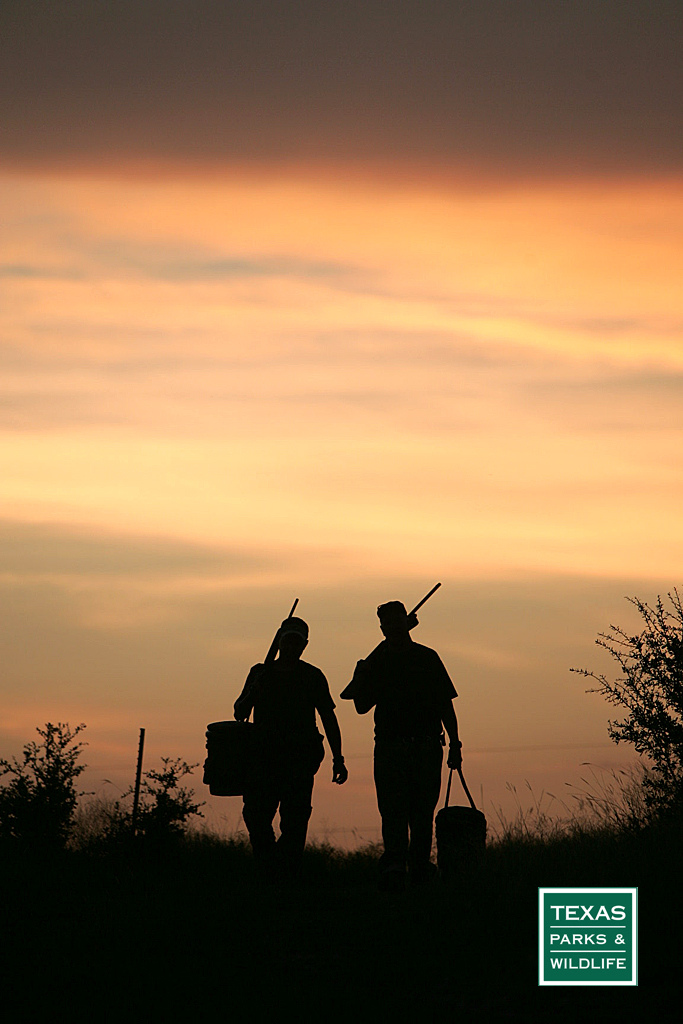
Dove hunters at sunset

Silhouette of dove hunters at end of day with sunset


This is Passport to Texas

Texas leads the nation in dove hunting with roughly a quarter million hunters bagging 5 million mourning doves each fall.

03—Dove hunting is kind of a rite of passage for fall for many hunters.

Corey Mason is Wildlife Region Three Director. He says in December (2014), the agency released results of a two year study examining the lethality of lead versus non-toxic shot for mourning dove.

07— Long story short, what this [analysis] told us is that bagging, wounding and missing rates, they really did not differ across ammunition types.

Mason said the most commonly used shot is a 2 3/4-inch 12-guage shell, one and one-eighth ounce 7 1/2 lead shot.

10— We compared that to a one ounce seven steel, and a once ounce six steel. It came out with very comparable results. So that statistically speaking, there was really no difference.

Texas Parks and Wildlife staff, trained as observers, spent two years in the field collecting birds bagged by hunters at commercial hunting operations.

14—There were over 5-thousand shots fires; there were over 11-hundred birds bagged. Every bird that was shot was necropsied, x-rayed, and examined. We took information gained in the field – as well as the terminal ballistics – [to determine] the effects those particular pellets had on the birds.

Again, researchers discovered negligible differences between ammunition types. But why study this at all. That’s tomorrow.

The Wildlife and Sport fish Restoration Program supports our series.

For Texas Parks and Wildlife…I’m Cecilia Nasti.
TPW TV: Wild Kitties in the City

Friday, January 16th, 2015


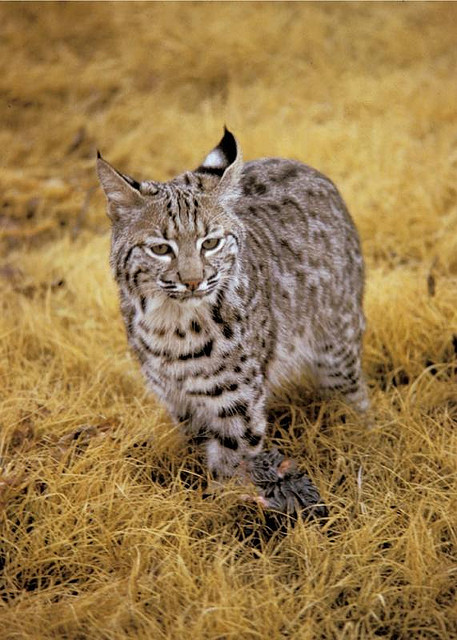
Bobcat

Bobcat


This is Passport to Texas

Bobcats don’t fit the description of “city slicker.” Yet, in a new Texas Parks and Wildlife PBS TV segment airing next week, you’ll discover these felines are becoming a common site in the Dallas-Fort Worth area.

04—The allure of cats and their strength and their stealth – they’re pretty fascinating.

Graduate student, Julie Golla, works with Texas Parks and Wildlife to examine how bobcats move in a city. She’s trying to understand the way they use available habitat in an urban setting to make a living. But first she has to trap them.

10—I thought we were going to have a hard time finding cats to catch in these really urban spots; but there’s no shortage of bobcats, and I think people will be surprised.

Once trapped, a team gathers, and they sedate the animals, take their vitals, and collect other data

15—You want to get good, solid information, because this is a lot of work that goes into every bobcat we catch. It’s always stressful doing this because you take the animal’s well-being into your hands when you work with them like this. But, we did everything right and everything went really well. He’s doing great right now.

The wild cat gets a GPS tracking collar before release.

Watch Julie Golla and Texas Parks and Wildlife Wildlife biologists trap and track bobcats in the Dallas-Fort Worth area this week on the Texas Parks and Wildlife PBS TV show.

The Wildlife and Sport Fish Restoration program supports our series, and is funded by your purchase of fishing and hunting equipment and motor boat fuel…

For Texas Parks and Wildlife…I’m Cecilia Nasti.
Conservastion: Dogs with the Right Stuff

Tuesday, November 11th, 2014
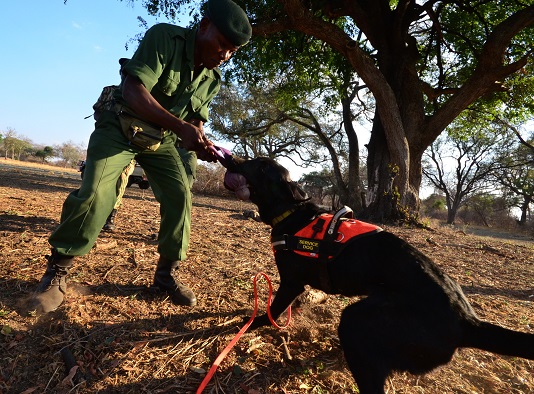
A scout from the South Luangwa Conservation Society, Godfrey Mwanza, and Steven (the black lab). Both are in training to stop ivory smuggling out of the Luangwa Valley of Zambia.

A scout from the South Luangwa Conservation Society, Godfrey Mwanza, and Steven (the black lab). Both are in training to stop ivory smuggling out of the Luangwa Valley of Zambia.


This is Passport to Texas

Working Dogs for Conservation in Bozeman, Montana trains dogs to help researchers in the field.

05—One in fifteen hundred dogs that we screen has what it takes to be a conservation detection dog.

Some of the program animals are rescues. Pete Coppolillo, Executive Director, says they train the dogs to detect everything from scat, to live animals, to invertebrates, and even invasive weeds.

12—We select for high drive so that they’ll want to do it and work really hard at it. And we also select for dogs that are toy obsessed – that are really excited about a specific toy. And that’s their reward, and that’s also how we train them.

At the time we spoke, Working Dogs for Conservation had just deployed animals to Africa to help fight the illegal ivory trade. Pete told me how they used toys to train the dogs for that assignment.

22—The ivory dogs were trained by hiding ivory with their toy. So, they’ll come in and they’ll sniff around and they’ll begin to associate the scent of ivory with their toy. And as soon as they discover the toy is sitting right behind the ivory, and they get a big whiff of ivory and then they get their toy – and so they get their reward. And then, gradually we separate the toy from the ivory; they learn as soon as they find it they get their toy and their reward.

Tomorrow: some positive results of working the dogs. Learn more about these dogs at Working Dogs for Conservation.

That’s our show for today… Funding provided in part by Ram Trucks. Guts. Glory. Ram

For Texas Parks and Wildlife…I’m Cecilia Nasti.
Conservation: Money for Quail

Thursday, November 6th, 2014

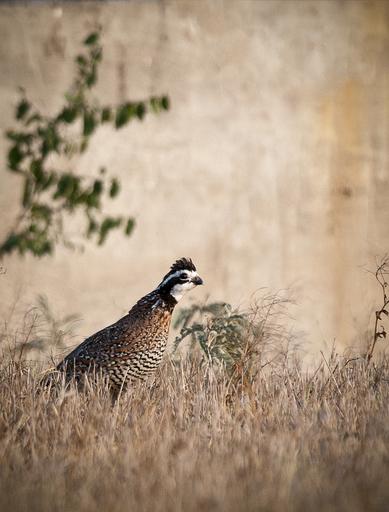
Bobwhite quail in Texas

Bobwhite quail in Texas


This is Passport to Texas

There’s new hope for bobwhite quail.

13—Four million dollars of the upland game bird stamp fund was authorized by the legislature this past session to specifically go towards further developing this concept of focus areas for bobwhite quail and grassland birds.

The “focus area” concept is one TPW upland game bird program leader, Robert Perez, has worked on for years.

08—Well, a focus area is an intensive effort within a small area to demonstrate that quail restoration can be successful.

Most focus areas are east of the I-35: places where quail are gone, said Perez, but they haven’t been gone long.

23— One of our focus areas in the Columbus-Seely area, southeast Texas. Another is the Navarro-Ellis area, along the I-35 corridor where Waxahachie is. Another is West of Dallas a good ways over towards Wichita Falls, around Clay County and south. So these are the front lines of bobwhite decline; birds are still around, but they’re noticeably rarer.

The agency awarded 15 grants, with two more in process, to nonprofits, universities and others for grassland restoration. Grantees will use the $4 million dollars over a two year grant period.

19—But that doesn’t mean that the project is over at the end of two years. Because the impacts – when you start to turn the dirt or manipulate habitat – those effects go on for years. And so what’s most important is to continue to monitor – think of the future beyond those two years – to really understand and paint a good picture of what the impacts are of these types of manipulations.

Find quail information on the Texas Parks and Wildlife website. The Wildlife and Sport Fish Restoration Program supports our series.

For Texas Parks and Wildlife…I’m Cecilia Nasti.
Nature: Diversity in the Chihuahuan Desert

Friday, September 12th, 2014

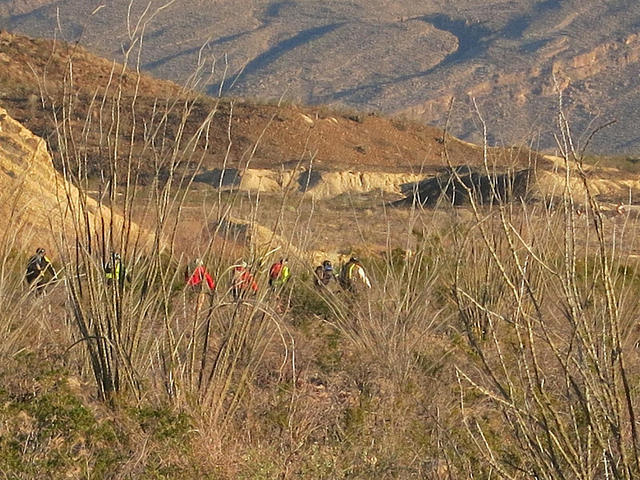
The Chihuahuan Desert

The Chihuahuan Desert


This is Passport to Texas

Say the word desert, and –and an image of a bleak and lifeless place may come to mind. That may be true for some deserts – but it’s not true for the Chihuahuan Desert Region.

07—It’s one of the most diverse places for both plants and animals in this country, and frankly, in the world.

That’s not including tropical and subtropical regions, of course. Cynthia Griffin is Executive Director of the
Chihuahuan Desert Research Institute, or CDRI, in Fort Davis…located within the 220-thousand acre ecosystem.

29—There are over 3-thousand plant species on the Chihuahuan; it is a center of diversity for cacti. Our cactus greenhouse has some of the most rare and best examples of cactus found in the Chihuahuan Desert. There are more reptiles on the Chihuahuan than there are on the Sonoran. There are more birds on this desert [region] than in the Everglades. And in the Davis Mountains, we have 16 of the 18 species of North American Hummingbirds.

The Chihuahuan Desert Region has an elevation range from 1-thousand to 10 thousand feet above sea level, and it is isolated from other North American deserts.

10—So there’s not the bleeding over. And, so because it’s large, and because of its range of elevation, you will find species here that you will not find anywhere else.

Learning about deserts isn’t as dry as you once thought.

Find out more about the Chihuahuan Desert Region in the Aug/Sept issue of Texas Parks and Wildlife magazine.

For Texas Parks and Wildlife, I’m Cecilia Nasti.
