Archive for the 'Endangered' Category

Endangered: Recovery Implementaion Program

Friday, August 24th, 2012

The Edwards Aquifer

RIP: Eye on Nature Newsletter

Eye on Nature


This is Passport to Texas

The Edwards Aquifer Recovery Implementation Program, or RIP, protects endangered and threatened species in the Edwards Aquifer.

Many of these species are no more than an inch long. The Comal springs riffle beetle is even smaller…only two millimeters long.

But Texas parks and Wildlife water resources branch chief, Cindy Loeffler, says preserving the species is crucial to the ecosystem.

16 — These are, you know, you’ve heard the cliché canary in the coal mine. If we want to truly protect natural resources, fish and wildlife, these unique ecosystems. These species are indicators of the health of those ecosystems.

Loeffler also says if the program protects the identified species, it will most likely save many more in the process.

16 — We have some species that there’s very little known about. And these are in a way the tip of the iceberg of the threatened and endangered species that are found associated with the Edwards Aquifer. There are many more species that are not listed that are found nowhere else.

Many of these species — like the San Marcos blind salamander and Texas wild rice — are found nowhere else in the world…. And pumping water from the Edwards Aquifer alters the habitat, putting these species in an unstable environment.

Learn more about threatened and endangered species on the Texas Parks and Wildlife website.

The Wildlife and sport fish restoration program supports our series and celebrates 75 years of funding diverse conservation projects throughout Texas… For Texas Parks and Wildlife…I’m Cecilia Nasti.
Conservation: Endangered Sea Turtles

Tuesday, August 14th, 2012

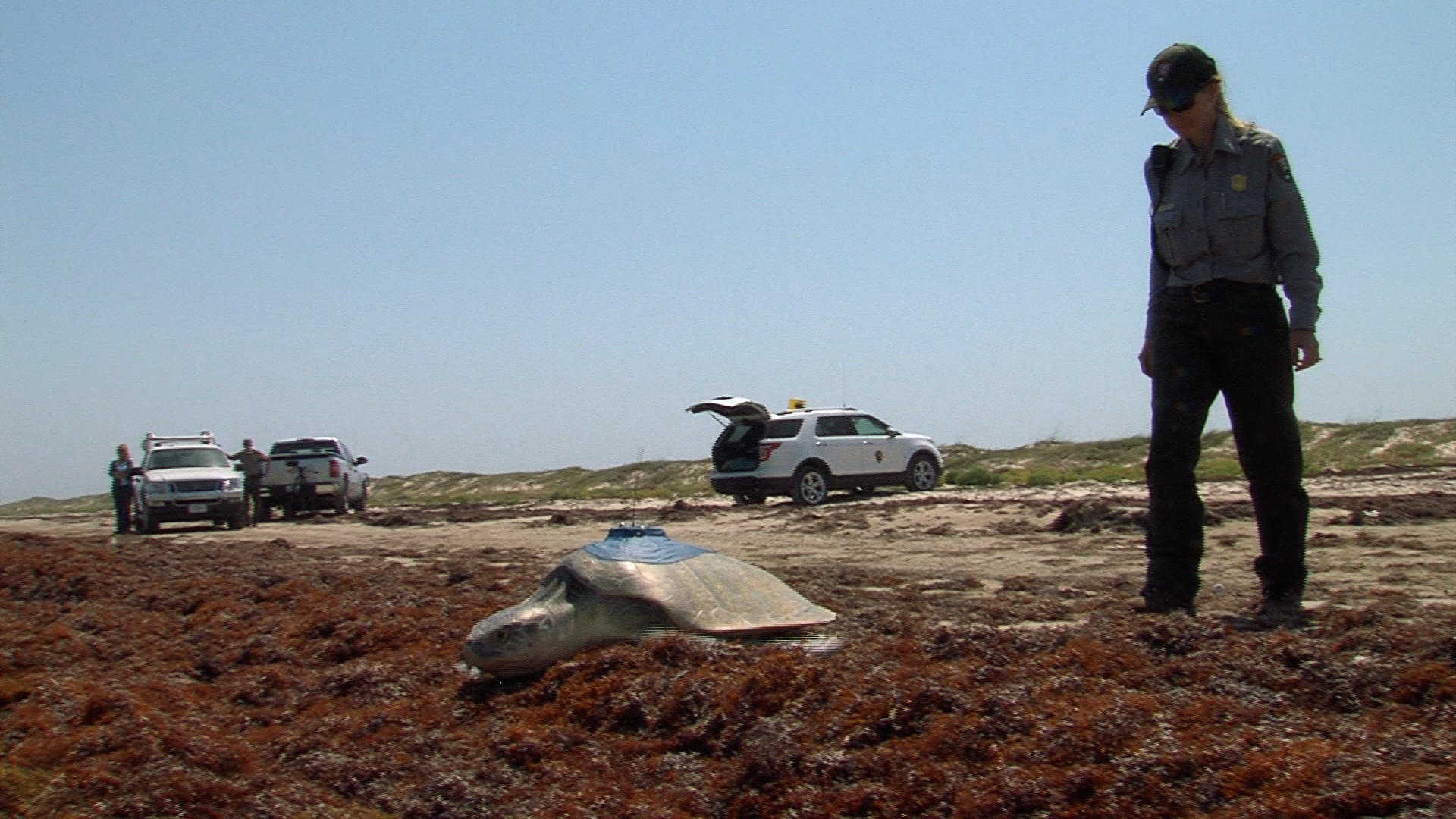
Donna Shaver Releasing Ridley Turtle With Satellite Transmitter

Donna Shaver Releasing Ridley Turtle With Satellite Transmitter


This is Passport to Texas

The Kemps’ Ridley may be the best known—and most threatened—sea turtle that occurs along the Texas coast, but it’s not the only one.

19—The ones that we hear most commonly about are the Kemp’s Ridley, and the green sea turtle—the green sea turtle is threatened in Texas and the populations are increasing. Also in Texas, there’s the Loggerhead, that’s a threatened species. What we hear about less are both endangered turtles: The Hawksbill and the Leatherback.

Dr. Donna Shaver is with the US National Park Service at Padre Island National Seashore. She says if you ever see stranded or nesting sea turtles, report your observation to officials.

17—Many of our entrances to beach access roads, signs are posted that have a telephone number to call. And then once they call, they will receive a recorded message that will tell them the proper contact number for the particular geographic area where they are located.

The number to call is 1-866-TURTLE5…And if you come across a nesting female…

17—Stay back from the nesting turtle until she’s dug her hole with her rear flippers and is remaining mostly motionless and laying eggs. At that time, without touching the turtle, look for any tags, and without piercing anything into the sand, put a designating market next to where the turtle laid her eggs.

The number to call if you find a nesting female is 1-866-turtle5.

The Wildlife and sport fish restoration program supports our series and celebrates 75 years of funding diverse conservation projects throughout Texas…

For Texas Parks and Wildlife…I’m Cecilia Nasti.

State Parks: South Padre Sea Turtle Release

Monday, August 13th, 2012

Kemps' Ridley Sea Turtle Release

Kemps’ Ridley Sea Turtle Release


This is Passport to Texas

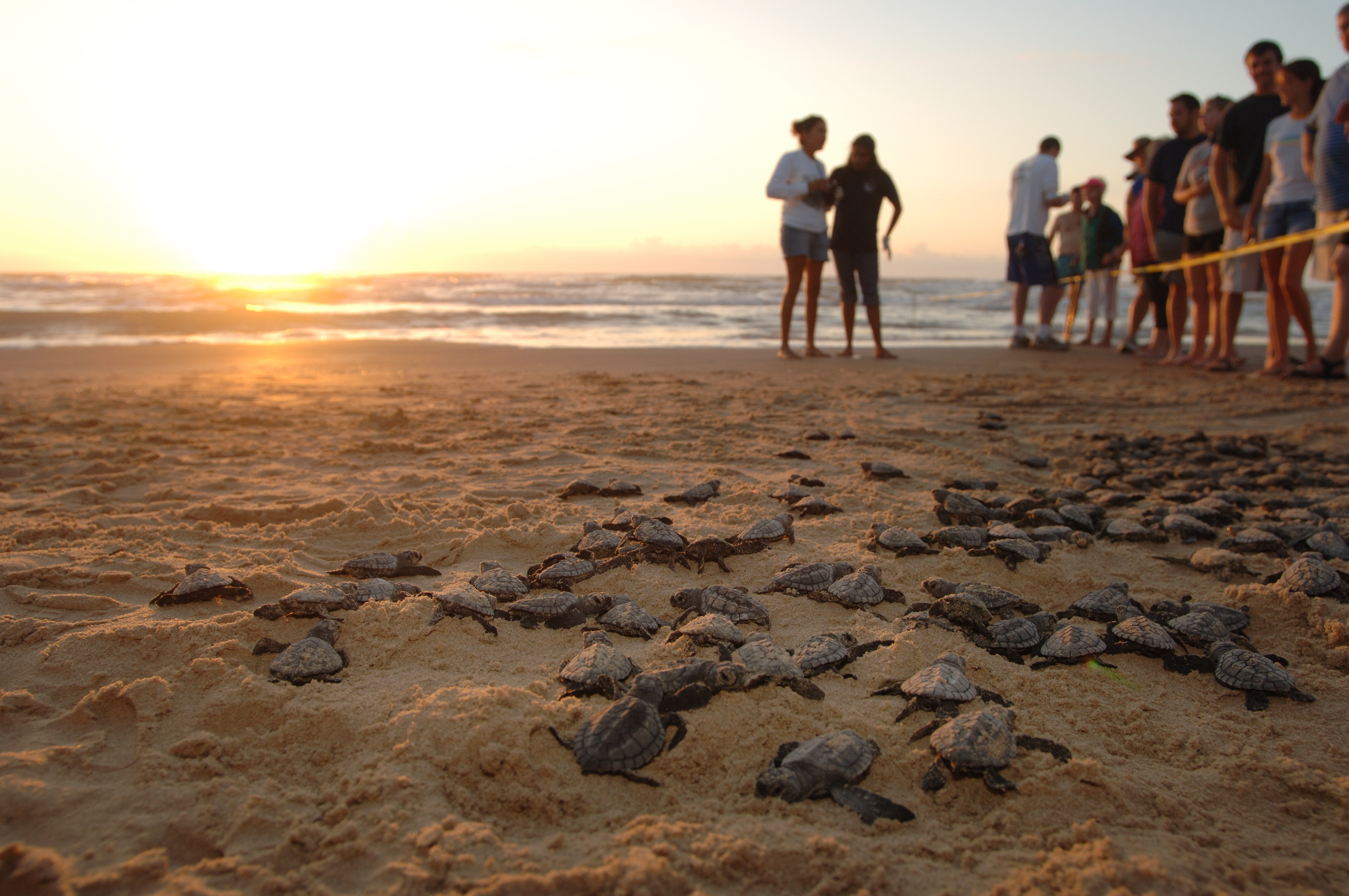
All species of sea turtles are endangered: and none more than the Kemp’s Ridley. Our state park guide Bryan Frazier was on South Padre Island recently and witnessed the release of some Kemp’s hatchlings.

54— Sea Turtle, Inc., which is a partner with TPW and the National Park service..they do such fantastic down on South Padre Island and the Gulf of Mexico in rescuing, rehabilitating and releasing sea turtles back into the wild. And while I was down there on vacation they just happened to be having a hatchling release: 89 baby Kemp’s Ridley sea turtles, which are critically endangered. And I got to photograph that release back into the Gulf of Mexico. It was a profound experience. The whole summertime is the time when those hatchlings come out of the eggs and are released back into the Gulf, and so it’s still a time to do that, and they’re open to the public. If people will visit Sea Turtle, Inc. Like them on Facebook, or call them while they’re down there on South Padre island, they can witness this as well. And the work that’s going on there is impacting things all the way down into the interior of Mexico and the Mexican coast. Follow them and us on Facebook and see the incredible story that the sea turtles have to tell, and how relevant that is to all of our efforts here in Texas.

Thanks Bryan

That’s our show for today…with funding provided by Chevrolet, supporting outdoor recreation in Texas; because there’s life to be done.

For Texas Parks and Wildlife I’m Cecilia Nasti.

TPW TV: Endangered Prairie Chickens

Friday, February 3rd, 2012


This is Passport to Texas

One of the most endangered birds in North America is the Attwater’s Prairie Chicken. Learn about efforts to help protect this species this month on the Texas parks and Wildlife TV series. Producer, Abe Moore.

57—There used to be close to a million of them in Texas and Louisiana; now they’re teetering around a hundred or so. I went down to the Attwater Prairie Chicken National Wildlife Refuge by Eagle Lake. It’s kind of their last stronghold right now.

Over the last 15, 20 years, there have been fewer than a hundred individuals in wild populations. And for a species that only lives on average two years, that’s a very bad place to be.

So I followed the biologist there for a breeding season, to see what it takes to keep the birds from going extinct. And they’re doing some hands on work building fences actually around the nest sites to protect the female.

The idea of this predator deterrent fence is to deflect predators away from the nest area so that hopefully they won’t find the nest and destroy it.

So, the team goes through some serious struggles this breeding season, and one of the things that happens is they have an ace up their sleeve to kind of help the Attwater Prairie Chicken from going extinct.

Abe says he won’t provide any clues to that ace. We’ll just have to tune in to find out. Check your local listings.

The Wildlife and Sport Fish Restoration Program supports our series; it’s funded by your purchase of fishing and hunting equipment and motor boat fuel. For Texas Parks and Wildlife, I’m Cecilia Nasti.

TPW TV: Big Horn Sheep Restoration

Monday, January 23rd, 2012


This is Passport to Texas

By the early 1960s native Texas bighorn sheep, which once populated 16 mountain ranges in the Trans Pecos, were gone. Unregulated hunting and disease from domestic sheep brought in by landowners did them in. But Texas Parks and Wildlife TV producer Bruce Biermann says a segment [on the TV show this month] spotlights a successful restoration project.

64—This story is called Home Again, because the bighorn sheep are finally being brought home again. For the very first time they are being released on a state park.

We show the population here it lives at Elephant Mountain. The capturing process is really interesting, with the use of helicopters.

Once they come upon a herd, they try and capture what they call family units. That’s another measure taken to increase survivability.

They use a net gun and shoot a net over the sheep, and then a guy goes down and handles the sheep and gets is shackled, blindfolded and into a bag that they then sling underneath the helicopter and bring back to processing. And then they release them out at Big Bend Ranch State Park.

Forty six sheep were captured at Elephant Mountain and released. And, of those forty-six that I know of, they’ve had three die to mountain lions. But, that’s part of the normal cycle. They’ve had many babies already born. So, the birth rate is far outgrowing the death rate. And the population is surviving and thriving.

Thanks Bruce.

The show airs this week.

The Sport Fish and Wildlife Restoration Program… funded by your purchase of fishing and hunting equipment and motor boat fuel.

For Texas Parks and Wildlife…I’m Cecilia Nasti.