Archive for the 'Wildlife' Category

Whooper Week: Protections Since 1941

Monday, October 16th, 2017
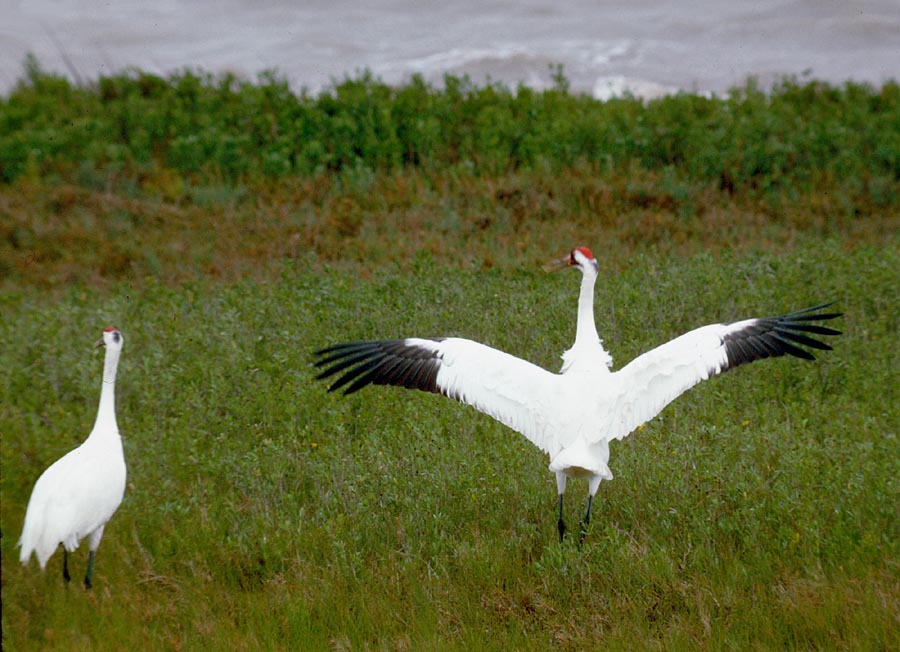
Whoopers at Aransas National Wildlife Refuge

Whoopers at Aransas National Wildlife Refuge

This is Passport to Texas’…Whooper Week.

Pushed to the brink of extinction by unregulated hunting and loss of habitat, federal and state protections on Whooping Crane breeding and wintering grounds were enacted in 1941 to save the remaining 21 wild birds.

And we’ve steadily seen those whooping crane numbers come up farther and farther and farther. And currently now, when we look at Aransas national Wildlife Refuge on the coast of Texas, it is one of the major whooping crane birding spots in the world now.

Biologist, Shaun Oldenburger says the flock is currently 300 strong; it took a coordinated effort between the US and Canada to reach that number.

If we look back in the 1940s, the US Fish and Wildlife Service purchased Aransas National Wildlife Refuge – which was the major wintering grounds at the time for the last population that we had here in North America. Their breeding grounds also became a national park through Canada. Wood Buffalo National Park. And, also along through the migration corridor, there’s also been protections and closures of hunting seasons in the past, and just doing lots of activities and education to make sure that those birds succeed in spring and fall migration from their wintering and breeding grounds.

More about this iconic species tomorrow when Passport to Texas Whooper Week continues.

The Wildlife Restoration program supports our series.

For Texas Parks and Wildlife, I’m Cecilia Nasti.
Texas Outdoor Story – The Squirrel and the Snake

Friday, September 22nd, 2017
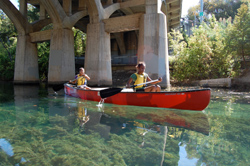
Paddling Ladybird Lake.

Paddling Ladybird Lake. Image: Texas River School

This is Passport to Texas Outdoor Stories

Ginger Turner enjoys paddling on Lady Bird Lake in Austin. Over the years, she says she’s witnessed her share of unusual incidents on the water.

The one that was really funny and sticks out in my head. My friend and I were paddling and we saw something swimming and we couldn’t figure out what it was. We get over there and it’s a squirrel swimming over one of the widest parts of the lake. We’re like, “let’s get closer; get closer.” So we follow him over and he ran up this tree that was leaning over in the water. As he was running up he ran smack dab into a snake that was curled up sunning on the tree. And it startled the squirrel, and it startled the snake and they both jumped about 10 ft. up in the air! And the snake plopped in the water and the squirrel we couldn’t even find. Later we heard a rustling and we saw the squirrel had made it over to the shore. But it was hilarious, it was funny. But I didn’t know that squirrels swam, but I guess they do. [laughs]

Thanks, Ginger. You never know what you might see when you get outside.

Do you have a funny or memorable Texas outdoor story to share? Go to passporttotexas.org, and let us know. We love to hear what you do outside!

That’s our show… For Texas Parks and Wildlife…I’m Cecilia Nasti.

The Ecosystem Functions of Wildlife

Thursday, September 21st, 2017
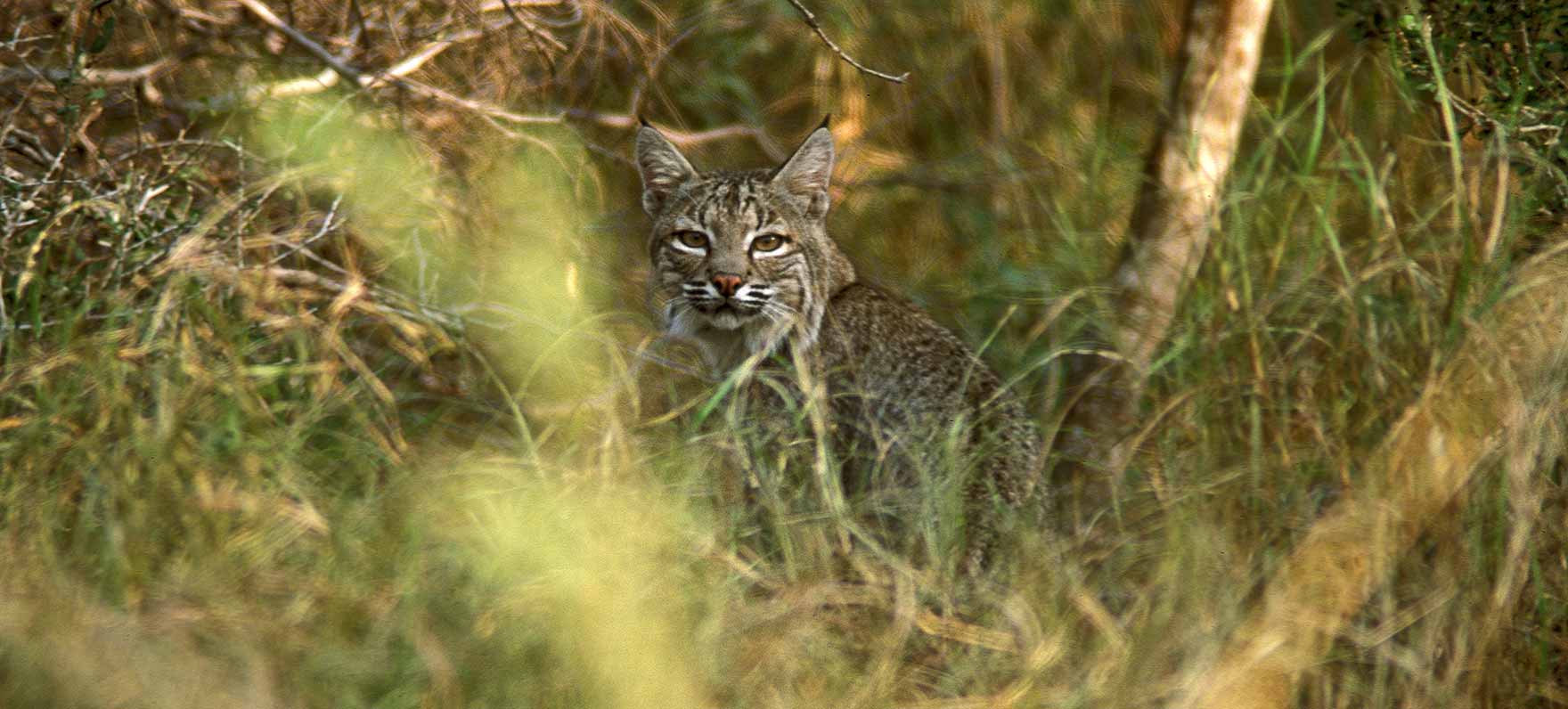
Bobcats serve an ecosystem function.

Bobcats serve an ecosystem function.

This is Passport to Texas

Golf courses, cemeteries, creeks, parks and greenbelts, all common in urban areas, provide habitat for wildlife.

In a typical greenbelt [for example], you’ll find owls and hawks and songbirds and lizards and snakes and coyotes and bobcats. And all of those put together form a functional ecosystem that only exists in those urban areas.

Richard Heilbrun is team lead for the urban wildlife technical guidance program. These biologists work with communities to ensure humans and wildlife coexist comfortably.

Most people recognize that seeing wildlife is a great thing, and they feel fortunate to see that wildlife. Every once in a while we get folks who are nervous, but once they talk to our urban wildlife biologists, and are told this is a good thing, they change their perception fairly quickly. So, someone that might be nervous about seeing a coyote, when they call an urban wildlife biologist and are told that coyote populations perform an ecosystem function – they keep those rats at bay, or they make sure that the skunk populations don’t go haywire. So, when they realize there’s a benefit, their perception changes fairly quickly.

Find your urban biologist when you log onto the Texas Parks and Wildlife website.

The Wildlife restoration program supports our series and helps fund Wildlife technical guidance and assistance to urbanites of Texas.

For Texas Parks and Wildlife…I’m Cecilia Nasti.

Landscaping for the Birds

Thursday, September 14th, 2017
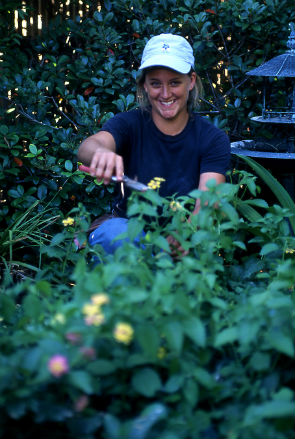
Working on a wildscape in San Antonio.

Working on a wildscape in San Antonio.

This is Passport to Texas

Putting out feeders is one way to attract wildlife to your yard. A better way is to create a wildscape.

What a wildscape is, is landscaping for wildlife.

Ornithologist, Cliff Shackelford, says this includes native plants that provide food and shelter; most urban yards, however, traded native habitat for lawns.

So, any little help you can [give] by putting in a wildscape really helps. And even if you don’t have a yard, you can do a wildscape on your patio with pots. I have seen hummingbirds go up to the 6th floor balcony of condos where someone has showy plants that say, “hummingbird come up here.”

A variety of berry and nectar producing plants will draw wildlife to your yard—or balcony.

You want to always stick to natives because they’re acclimated to the soil and the weather and the rainfall that you’re going to give them. And then, you want to make sure that they have some value to wildlife: that they’re going to give you the nectar to attract butterflies; they’re going to have berries at the right time when the cedar waxwings come, and so forth.

Fall is the best time to plant native trees, woody shrubs and perennial flowering plants. Find a list of native species that do well in your area on the Texas Parks and Wildlife website.

The Wildlife Restoration program supports our series.

For Texas Parks and Wildlife…I’m Cecilia Nasti.

Texas Brigades Inspire Careers

Wednesday, September 13th, 2017
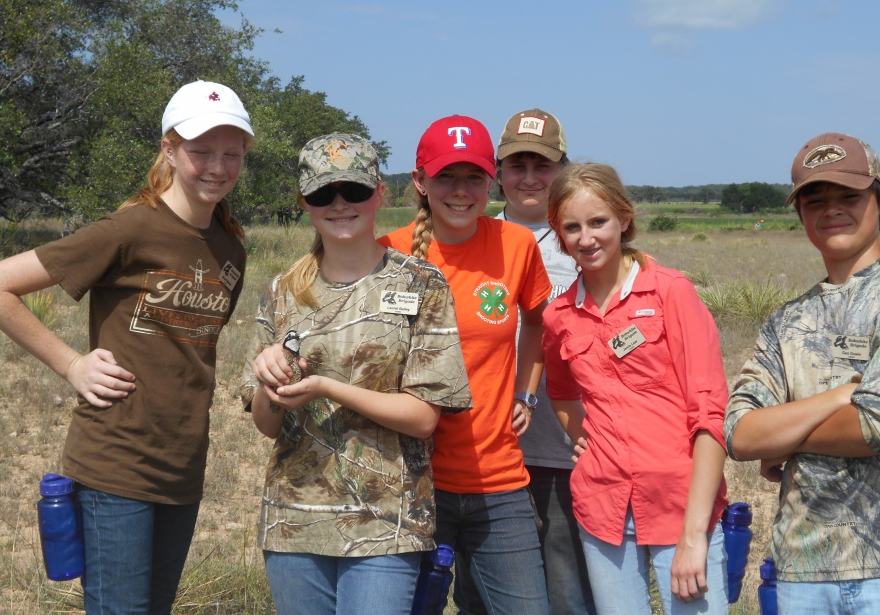
Bobwhite Brigade Cadets. Image: Texasbrigades.org

Bobwhite Brigade Cadets. Image: Texasbrigades.org

This is Passport to Texas

To categorize the Texas Brigades as “summer camp” is like calling a mountain lion “a kitty cat”.

This is not a normal summer camp. This is meant to be a lot more than that.

Writer, Aubry Buzek wrote a story about the Brigades for the October  issue of Texas Parks and Wildlife magazine.

The editor of the magazine said, I want you to go to this summer camp and write about it. And I was thinking: Okay. There’s going to be fun stuff happening; I get there and it’s in the middle of a session on how conservation groups work in Texas….and conservation and hunters ethics. And I was like, Whoa!

The 5-day, cell-phone free, camps for youth build confidence and camaraderie with projects, public speaking and debates on conservation issues.

There are some really amazing instructors who come to this camp. There are instructors there who are wildlife biologists from Texas Parks and Wildlife, other private hunting ranches, water control authorities…just the gambit of [conservation] organizations in Texas. The kids get to meet people not easily accessible. Every instructor that I talked to said that they want these kids to pick up the phone and keep in touch with them. They want to help them grow now and into the future.

Aubry Buzek’s story on the Texas Brigades appears in the October issue of Texas Parks and Wildlife magazine.

The Wildlife Restoration program supports our series.

For Texas Parks and Wildlife…I’m Cecilia Nasti.