Archive for the 'Wildlife' Category

TPW TV – Rescuing History

Friday, July 15th, 2016
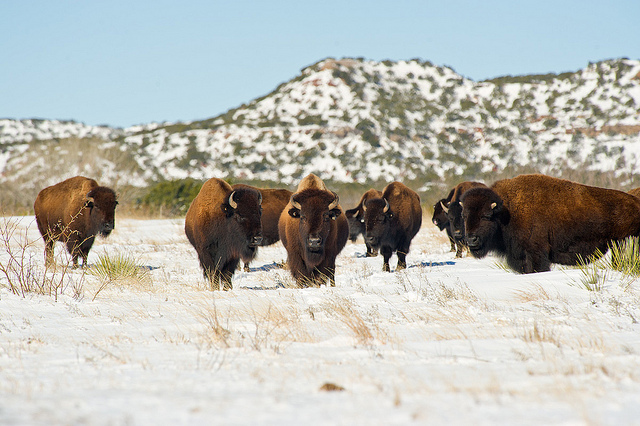
Bison at Caprock Canyons State Park

Bison at Caprock Canyons State Park

This is Passport to Texas

For the past 30 years, PBS viewers have experienced the Texas outdoors through Texas Parks and Wildlife’s television series. To celebrate, show producers, including Karen Loke who’s been with the series 24 years, share their favorite stories from the past.

And my favorite story is called Rescuing History. It’s about the capture and relocation of the last of the Southern Plains bison herd.

[Narrator Jim Swift] Doug is helping capture and relocate the last few descendants of the Southern Plains Bison. A pure, genetic strain of buffalo found nowhere else in the world.

[Doug Humphreys] But what makes this one different is that another buffalo has never been brought into this herd. There’s been no outside gene source introduced into this particular bison herd. So we’ve got a distinct genetic strain of buffalo that doesn’t exist anywhere else.

Producer Karen Loke said this touched her due to something rather unexpected that happened during filming. You can see for yourself when you tune into the Texas Parks and Wildlife television series on PBS the week of July 17.

[Roy Welch] To those of us involved in this project, it’s turned into be something quite more than just a simple matter of capturing a bison herd and relocating them over here to Caprock Canyons, in essence, we’re literally capturing a living piece of Texas history.

The award-winning Texas Parks and Wildlife Television series celebrates 30 years on PBS all season long. Check your local listings.

For Texas Parks and Wildlife, I’m Cecilia Nasti.
Getting to Know Dabblers and Divers

Thursday, July 14th, 2016
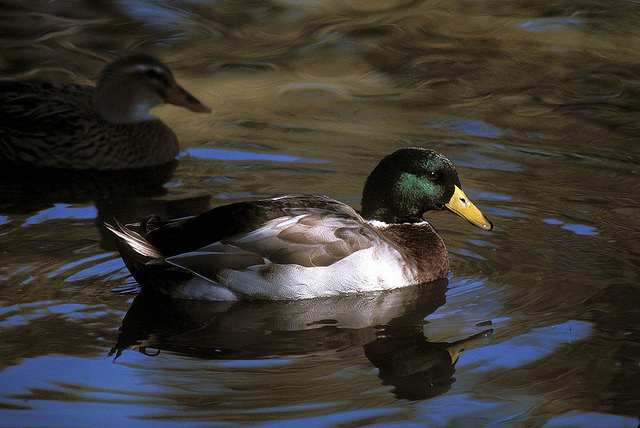
The Mallard is the most common of the dabbling ducks.

The Mallard is the most common of the dabbling ducks.

This is Passport to Texas

What do gadwalls…pintails…teal…wigeons… redheads and shovelers have in common?

That’s right. They’re ducks…waterfowl. They’re also game birds. But the similarities don’t end there. These fowl are further grouped by another characteristic.

There’re two different types of ducks, there’re dabblers and there’re divers.

Dave Morrison is the waterfowl program leader at Parks and Wildlife. Neither of the descriptions—diver nor dabbler—fully conveys what to expect from these birds.

And the difference is the way they feed. How they’re bodies are made up. Dabblers tend to have their feet more centered, whereas, divers are in the back of the body. Dabblers jump, spring into the air, whereas diving ducks pitter patter along the water.

Still not sure whether you would be able to distinguish a dabbling duck from a diving duck? Then, consider the following next time you see a flock of fowl feeding at a lake, stock pond or reservoir:

Dabblers feed at or near the water’s surface by filtering food… and they often tip upside down in the water to reach food at the bottom of a pond.

The Wildlife Restoration program supports our series.

For Texas Parks and Wildlife…I’m Cecilia Nasti.

Wildlife Viewing in State Parks

Friday, July 8th, 2016


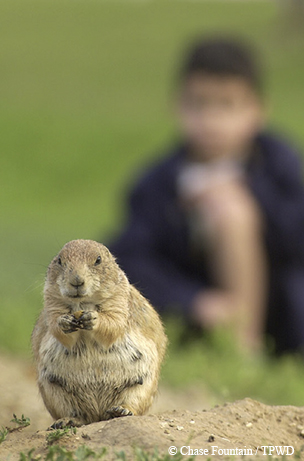
Prairie Dog at Lake Arrowhead State Park, copyright Texas Parks  and Wildlife Dept.

Prairie Dog at Lake Arrowhead State Park, copyright Texas Parks and Wildlife Dept.

This is Passport to Texas

There’s no telling the diversity of wildlife that will cross your path—from birds to bison—when you spend time outdoors.

If you missed the May issue of Texas Parks and Wildlife magazine, you can find it online at tpwmagazine.com. In that issue, writer Dale Blasingame put together a list of state parks that offer some of the best wildlife viewing in Texas. We mention some of them here.

If you want to set eyes on one big mammal—the bison—you can do that at Caprock Canyons State park, where the official herd of Texas roams freely. These majestic animals will leave you in awe.

Brazos Bend and Sea Rim State Parks are known for their alligators—which have a prehistoric look about them. The park also boasts a wide array of beautiful bird species.

Speaking of birds, Choke Canyon State park in South Texas has been recognized by the American Birding Association for the diversity of species one can see there.

If you prefer to keep your eyes to the ground, Lake Arrowhead will charm you with its prairie dog town. But you have to be patient, as those little guys are shy—but it’s worth the wait when you see them pop up from their burrows.

Find the complete list of the nine best state parks for wildlife viewing at tpwmagazine.com. That’s our show for today… Funding provided in part by Ram Trucks. Guts. Glory. Ram

For Texas Parks and Wildlife, I’m Cecilia Nasti.
Coastal Fisheries Gets Social (Media)

Friday, June 24th, 2016
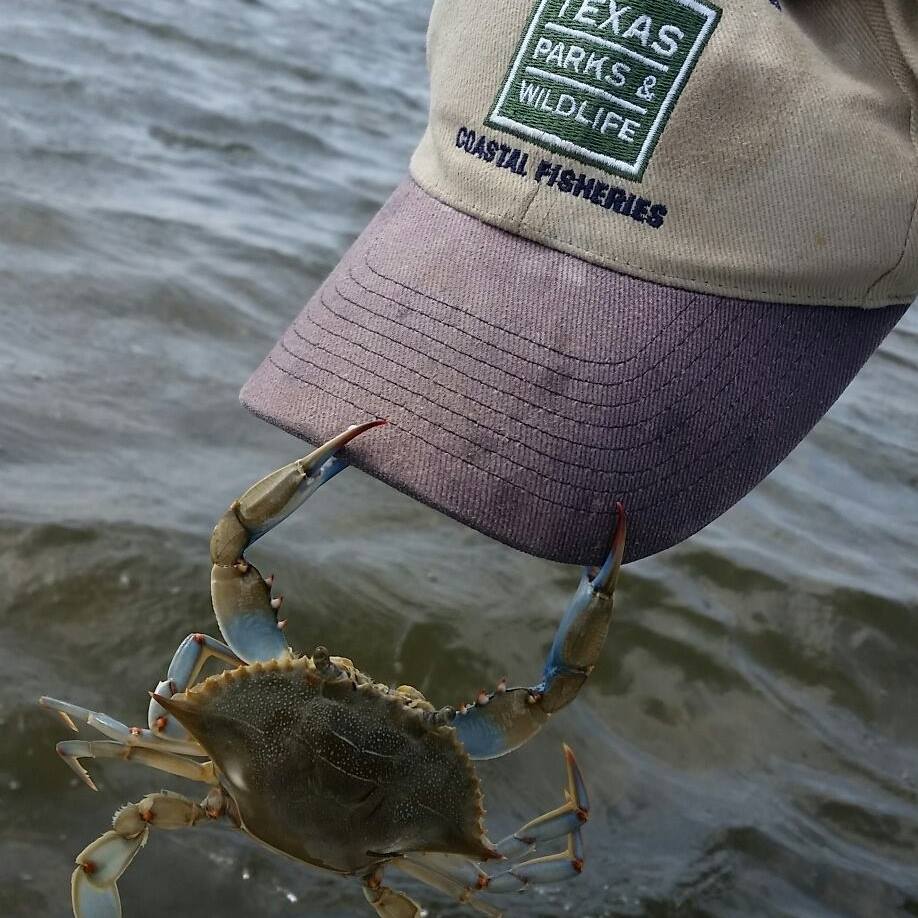
Crab clutching TPWD Coastal Fisheries hat. Photo by Braden Gross.

Crab clutching TPWD Coastal Fisheries hat. Photo by Braden Gross.

This is Passport to Texas

Social media has improved Texas Parks and Wildlife’s ability to communicate with the public.

I think Social Media is just a great way to network and connect with people.

Julie Hagen is the social media specialist for the Coastal Fisheries Division.

Right now we just have a Facebook page, and we also use the Texas Parks and Wildlife main [social media] pages to also get out some pictures and different videos that we’re doing. But, our Coastal Fisheries Facebook page is a great place for people to come and ask questions; we answer all your questions. Or, just [come by] to see what other people are doing. Tell a story. Like a picture. Send us your own pictures. If you catch a nice fish and you want to show it off, send it to us—we’ll post it on the page.

Visitors to the Coastal Fisheries Facebook page enjoy behind-the-scenes photos of researchers in action.

It’s fun to see what they do. They have very different jobs; they get to go out on the water every single day—collect data. And it’s really interesting to see a different side of Texas Parks and Wildlife.

Julie Hagen encourages community among Facebook fans.

I want to create a community on Facebook where people can go and respond to other people’s comments. If they ask a question and an angler knows—‘Oh, where’s the best fishing spot in Rockport?”—well, I’d love someone in the Facebook community to come along and say: “Hey, I’m from Rockport. This is where I love to fish.’ Those interactions are my favorite because sure we can give you some ideas, but there’s so much knowledge people have on their own, and having a space for them to come and share that with other people is really important to us as well.

The Sport Fish Restoration Program support our series.

For Texas Parks and Wildlife…I’m Cecilia Nasti.

The Challenges of Dove Surveys

Wednesday, June 22nd, 2016
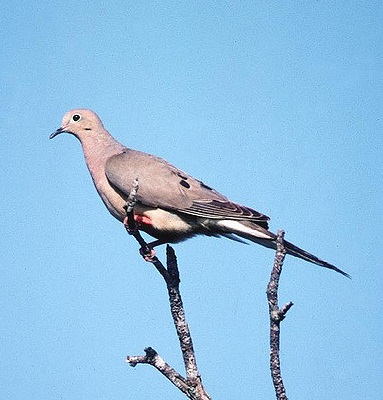
Mourning Dove

Mourning Dove

This is Passport to Texas

Field surveys are necessary when creating management strategies for game species. Some species are easier to survey than others.

Our dove surveys, for instance, have to be done under some pretty finite weather conditions.

Heidi Baily is a wildlife biologist in east Texas. Weather can put a damper on successful completion of surveys.

The winds can’t be blowing all that much. We don’t want to survey right before or after a rain, because it can affect the amount of birds that we see. So, sometimes it makes it tough to actually get them done.

But they do get done…along a 20 mile route.

We’ll get out there to the beginning of our survey line, about a half an hour before sunup. We’ve got a 20 mile route that we run—exactly the same way every year. As a matter of fact, some of the routes have been around for a couple of decades. At the start, we’ll get out of the truck, and we’ll sit, look and listen for three minutes, and we’ll record what we see or hear. Then we’ll drive a mile and we’ll do the same thing. And that process is repeated over the 20-mile route.

Although when we talked, the dove survey was a couple of weeks away, Heidi Baily said she wouldn’t be surprised if this spring’s violent weather impacts dove populations.

Doves build a really flimsy nest, so if you get a good hard wind, or some of these huge hail storms that we’ve been having, even though doves will re-nest—we might have low reproduction this year.

We’ll know more after biologists collect and analyze survey data.

The Wildlife Restoration Program support our series.

For Texas Parks and Wildlife…I’m Cecilia Nasti.