Archive for the 'Wildlife' Category

Turkey at the Matador

Wednesday, March 9th, 2016
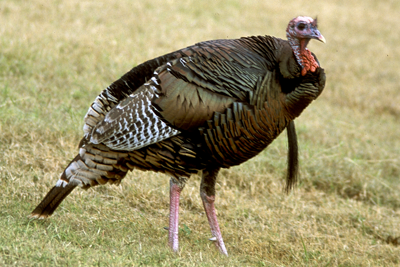
Turkey at the Matador WMA

Turkey at the Matador WMA


This is Passport to Texas

Seven miles north of Paducah… in the Texas Panhandle… the Matador Wildlife Management Area offers about 28-thousand acres of rolling grasslands.

Former assistant area manager, Bill Adams, said it’s open to the public.

It’s open throughout the year for hiking, bird watching, nature tours, horseback riding… We have 76-miles of road on the area, and it will take you through a diversity of landscapes.

The site is off limits to the casual visitor only a few times a year.

We have a few hunts during the year that it’s closed. And those are our gun hunts for feral hogs, and deer and also for our spring turkey hunts.

Adams says turkey hunting is strictly regulated on the Matador.

We’ve got three good roosting sites for those turkeys, but they’re range is limited to those roost sites. We have to regulate the number of hunters we allow to take those Toms. We also have to consider natural mortality of the turkey population in the area. We want to be careful with what we harvest. Regulating that harvest is a way we can provide for public hunting but also provide for betterment of the turkey population on the Matador.

That’s our show… made possible in part by the Wildlife Restoration Program… helping to fund the operations and management of more than 50 wildlife management areas.

For Texas Parks and Wildlife…I’m Cecilia Nasti.
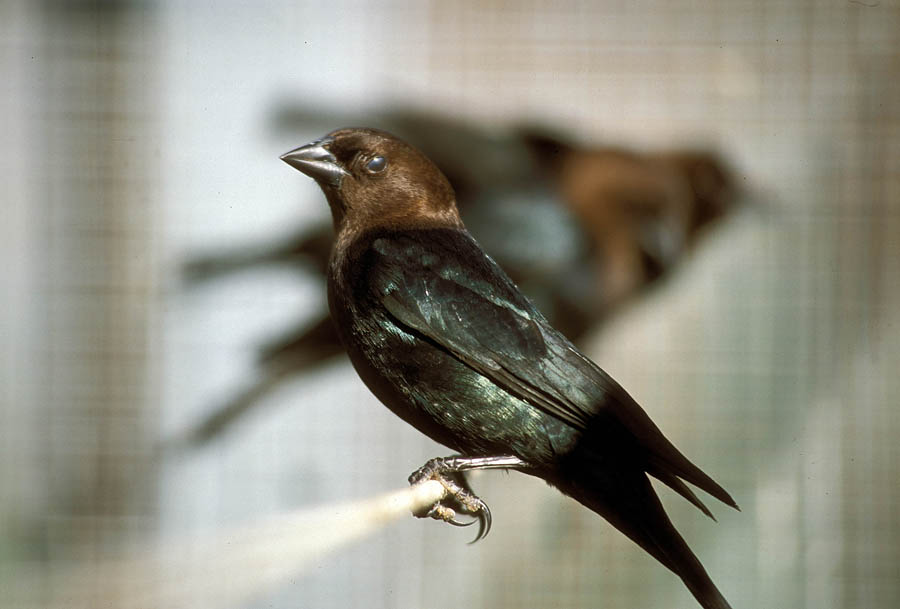
No Country for Old Cowbirds

Wednesday, February 24th, 2016
Cowbird.

Cowbird.

This is Passport to Texas

The brown-headed cowbird migrated with bison across the Great Plains, and because it’s hard to raise a family on the road, cowbirds laid their eggs in other birds’ nests; host birds unwittingly raised cowbird young.

The problem with the cowbird eggs is that normally they’re big eggs; they hatch earlier than the host eggs do; and they’re very vocal and hungry and beg for food.

Biologist, Marsha May, says the cowbird hatchlings out compete the host’s offspring for food, starving them out, and reducing populations of that species. Back when bison roamed, cowbirds didn’t have quite the same impact.

Black-capped vireos, which are an endangered species now, evolved where if they were parasitized by a brown-headed cowbird, they would leave that nest and re-nest – start a new nest. Well, if the cowbirds had already moved through, that would have worked.

Without bison, cowbirds hang with cows. Because cows are fenced in and don’t migrate, neither do cowbirds.

They’re parasitizing all the birds in that area – their nests – and they’re having a major impact on some species like the black capped vireo, because the black-capped vireo keeps re-nesting and that’s wasting a lot of energy, and if it’s constantly being parasitized, then no young will be reproduced at all that year.

That’s our show for today… Funding provided in part by Ram Trucks. Guts. Glory. Ram.

For Texas Parks and Wildlife…I’m Cecilia Nasti.
Water for Humans and Endangered Species

Friday, February 5th, 2016
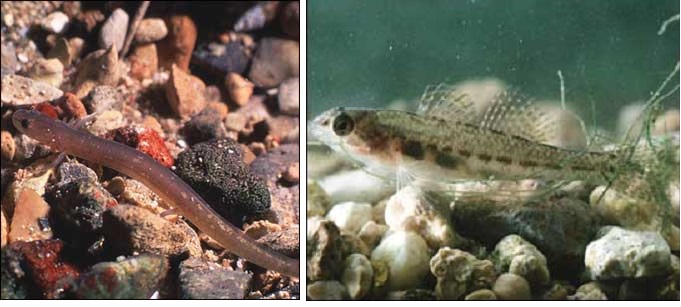
San Marcos Salamander and Fountain Darter

San Marcos Salamander and Fountain Darter


This is Passport to Texas

The Edwards Aquifer Habitat Conservation Plan permits what’s necessary to ensure the survival of rare, threatened and endangered species that depend on the Aquifer and the San Marcos and Comal Rivers while allowing continued use of the resource by the rest of us.

There’s federal law requiring this, but it’s the right thing to do in terms of protecting the resource for all of us into the future.

Cindy Loeffler is water resources branch chief at Texas Parks and Wildlife and one of the architects of the protection plan. Convincing people to do the right thing – like modifying their water usage based on the needs of rare species – can be a hard sell.

The plan includes ongoing water conservation—especially during times of drought—removing invasive species, and declaring a portion of the San Marcos River a state scientific area that would make it illegal to uproot endangered Texas Wild Rice.

But Loeffler says these protected species are indicators of a healthy ecosystem – which benefits everyone.

By providing these protections for these species, that helps ensure the San Marcos river, the Comal River will keep flowing. Keeping these springs flowing is really at the heart and soul of the work done by the recovery implementation program. And so that benefits the species, of course, but also benefits people as well.

The Wildlife and Sport Fish Restoration Program…supports our series and funds diverse conservation projects throughout Texas…

For Texas Parks and Wildlife…I’m Cecilia Nasti.

Blue Quail Translocation

Wednesday, January 6th, 2016

This is Passport to Texas

Five…four…three…two…one… [Birds flutter].

That’s Dale Rollins Director of the Rolling Plains Quail Research Ranch. Along with Texas Parks and Wildlife his group released 88 wild-caught blue quail on the Matador Wildlife Management Area early last year.

So we’ve been trapping wild birds out in the San Angelo area and moving those here and testing two release styles to see which one, if either, is going to be an effective way of restoring blue quail to this country.

Blue quail, once plentiful in the Rolling Plains, have been absent for years. Various partners joined to reestablish populations of blue quail on public and private land. Researchers outfitted thirty-nine of the birds with tiny radio collars to track their movements. Texas Parks and Wildlife Biologist, Kara Campbell.

We’ll try and keep tabs on them, are they staying on the area, are they leaving the area, where they are moving and also survival. We’re just really excited to be part of it. This is the beginning stages and so you know it phase one pilot stage. And to be part of that is pretty neat. And we’ll see where it goes in the future.

Learn about blue quail on the Texas Parks and Wildlife website.

The Texas Parks and Wildlife Foundation supports our series and helps to keep Texas wild with the support of proud members across the state. Find out more at www.tpwf.org

For Texas Parks and Wildlife, I’m Cecilia Nasti.

TPW TV: The State of Quail

Friday, November 13th, 2015


This is Passport to Texas

Grassland birds throughout North America, including the bobwhite quail, have been in decline.

06—Over the past 20, 30 years—we’ve seen serious declines across its entire range, including Texas.

Robert Perez is upland game bird program manager for Parks and Wildlife. He and others concerned about this enigmatic species’ survival appear in a segment called The State of Quail on the Texas Parks and Wildlife TV series on PBS.

07— Fundamentally, conservationists agree that the root cause is the changes in the quality and quantity of habitat.

During the segment, airing next week, watch conservation groups and private landowners, like Jim Willis, collaborate to improve habitat for quail, by planting native grasses, which provide shelter, seeds and insects for the birds.

19— This is a sample of a native grass. This plant contributes to the health of the land. This is the way you conserve moisture. Man has come in and ripped out a lot of this native grass and planted what we call improved grasses, which is really not improved, they’re invasive species, like Bermuda grass, and Bahia grass, and they don’t give back to the soil. They take from the soil.

The State of Quail airs the week of November 15 on the Texas Parks and Wildlife TV series on PBS. Check your local listings.

For Texas Parks and Wildlife…I’m Cecilia Nasti.