Archive for the 'Wildlife' Category

Wildlife: Quail & Landowner Cooperatives

Wednesday, October 16th, 2013
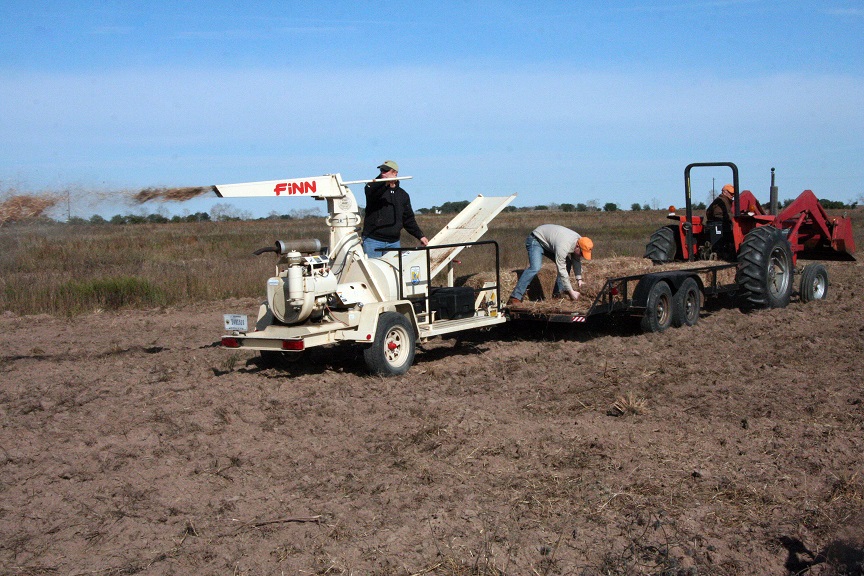
Landowners restoring quail habitat

Landowners restoring quail habitat


This is Passport to Texas

Embracing the “it takes a village model”, Texas landowners are banding together to restore fragmented bobwhite quail habitat in Texas. Think of fragmentation as a puzzle missing many pieces.

09 —Fortunately, we’ve got landowners that are working together with parks and Wildlife that formed landowner cooperatives that have formed specifically to help bobwhite quail.

Robert Perez is the upland game bird program leader at TPW. Quail populations need hundreds and sometimes thousands of acres to prosper. Neighboring landowners work together to manage their properties to support this charismatic game bird –which is primarily a grassland species.

16—Usually dominated by what’s called a bunch grass. And that’s something like little bluestem, Indian grass – grasses that grow in clumps. The growth patterns of these native grasses allow for the passage of adult quail, but more importantly, small, little, tiny chicks that can navigate through these areas.

Why would landowners go through the effort and expense to make their property more welcoming to a small bird?

08—We’re talking to landowners, and they’re not interested in hunting quail. They’re interested in seeing a quail and hearing a quail and having their kids see a wild quail on their farm and on their ranch.

The Wildlife and Sport Fish Restoration Program supports our series and receives funding from your purchase of fishing and hunting equipment and motor boat fuel.

For Texas Parks and Wildlife…I’m Cecilia Nasti.
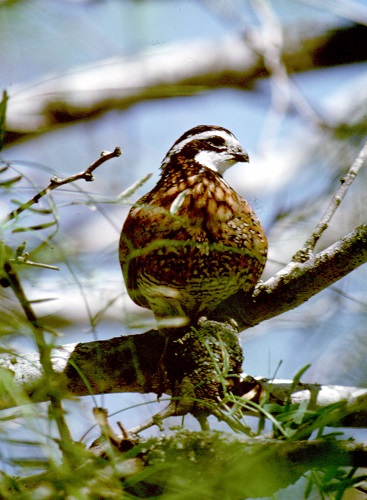
Wildlife: Quail & Fragmentation

Tuesday, October 15th, 2013

Bobwhite Quail

Bobwhite Quail


This is Passport to Texas

In the rolling plains and south Texas brush land, years of drought has taken its toll on bobwhite quail populations. East of Interstate 35, the problem is fragmentation.

09 —And so it’s more an issue of: how much habitat is left. And the question is: if you build habitat will the birds respond? And I think that they can and they do.

Robert Perez is the upland game bird program leader at Texas Parks and Wildlife.

19—Right now we’re working in three different focus areas of the state, where we are concentrating resources, manpower, habitat funding, working with partners in select counties to do that very thing: to impact enough acreage to reverse the trend of fragmentation and to demonstrate through surveys – through counting birds – a positive response. Because we know it’s possible.

But how much habitat is enough in our modern, highly developed times?

23—In the old textbooks, they talk about a quail living its whole life on 40 acres if it has everything that it needs. While that very well may be the case, you can’t have a viable population on 40 acres in the middle of a shopping mall. So you’ve got to have some area. And there have been researchers that have taken estimates at what that may be. And it ranges anywhere from 800 to 10-thousand acres depending on the quality of the habitat.

How landowners work together to create quail habitat: that’s tomorrow.

The Wildlife and Sport Fish Restoration Program supports our series and receives funding from your purchase of fishing and hunting equipment and motor boat fuel.

For Texas Parks and Wildlife…I’m Cecilia Nasti.
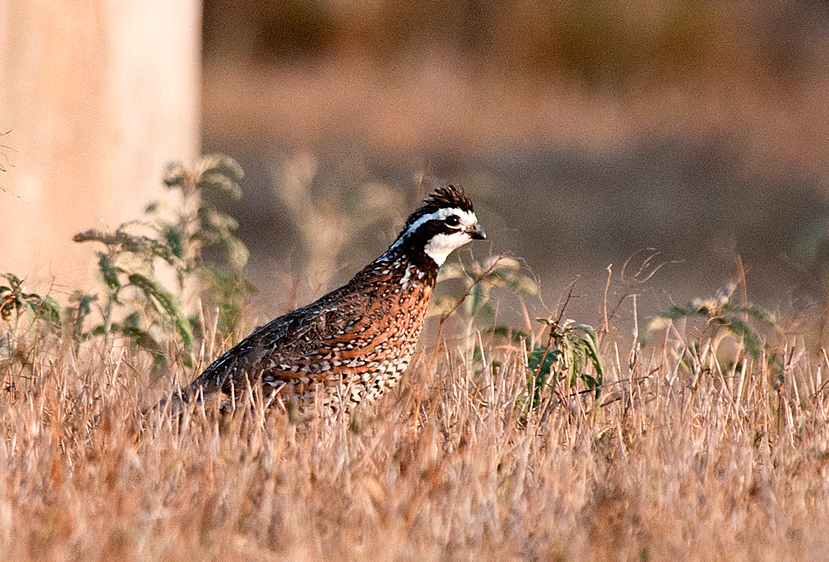
Wildlife: Quail & Drought in Texas

Monday, October 14th, 2013

Bobwhite quail.

Bobwhite quail.


This is Passport to Texas

A major issue affecting bobwhite quail in southern brush lands and the Rolling Plains regions of Texas is drought.

06 —Long term drought. I’m talking in some areas eight, ten, eleven years now of below average rainfall.

Robert Perez is the upland game bird program leader at TPW. He says the drought is beginning to take its toll on bobwhite.

16—And it’s really caused some declines in the numbers – at least in recent years. So what we hope is things can turn around weather-wise in those areas that are still holding birds, and they will be able to rebound in those areas. And that’s certainly something that we know the species can do.

I asked Robert if there is a threshold at which the birds will not rebound even if we get relief from the drought.

17—I think that you can get there at some point, but in Texas it’s just not very likely to happen any time soon in the Big Country…because the landowner practices and our traditional land uses in some of these areas just lend themselves to quail if mother nature will just cooperate.

Many areas of the state received meaningful rainfall last month. Whether that improves the quail outlook remains to be seen. Meantime, there’s another threat to the well-being of this charismatic game bird.

04—If you’re anywhere eat of I35, then the issue becomes fragmentation.

That’s tomorrow.

The Wildlife and Sport Fish Restoration program supports our series and receives funding from your purchase of fishing and hunting equipment and motor boat fuel. For Texas Parks and Wildlife…I’m Cecilia Nasti.
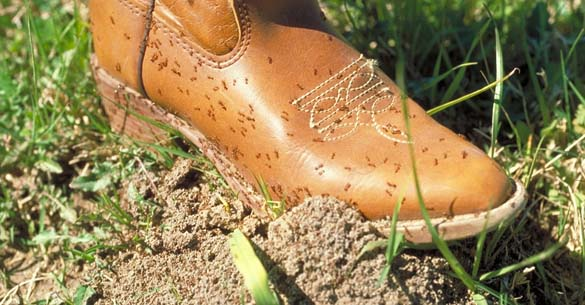
Invasives: Combating Fire Ants

Friday, September 27th, 2013
Fire ant swarm on the attack, Image from http://fireant.tamu.edu/.

Fire ant swarm on the attack; image from http://fireant.tamu.edu/.


This is Passport to Texas

[NS: fire ant stridulations]

That’s the sound of the imported red fire ant. A sad truth: they’re most active outdoors during nice weather.

08—We typically see most activity in the spring and in the fall. It’s nice, and that’s generally when we like being outside, too, unfortunately.

Elizabeth “Wizzie” Brown, an entomologist with AgriLife Extension, says the insect—native to South America—found its way into the U.S. in the 1930s through the port of Mobile, Alabama; perhaps in soil used for ships’ ballasts. We discovered them in Texas in the 1950s.

Brown says researchers continue to work on ways to manage this invasive exotic pest.

29—We have had things that we’re working on…things like fungus, and there’s organisms that live in the fire ant body that reduce the reproductive capabilities of the fire ants. They have brought in parasitizing flies, that are called phorid flies that they use that attack the fire ants and pretty much eat them from the inside out. So we are working on it, but the fire ants are here—they’re always going to be here; these are just tools in our tool belts to help up manage those populations.

Tomorrow Wizzie Brown tests a home remedy to control fire ants. Find out if it works.

That’s our show… For Texas Parks and Wildlife…I’m Cecilia Nasti.
Nature/Wildlife: Benefits of Native Bees

Tuesday, September 24th, 2013

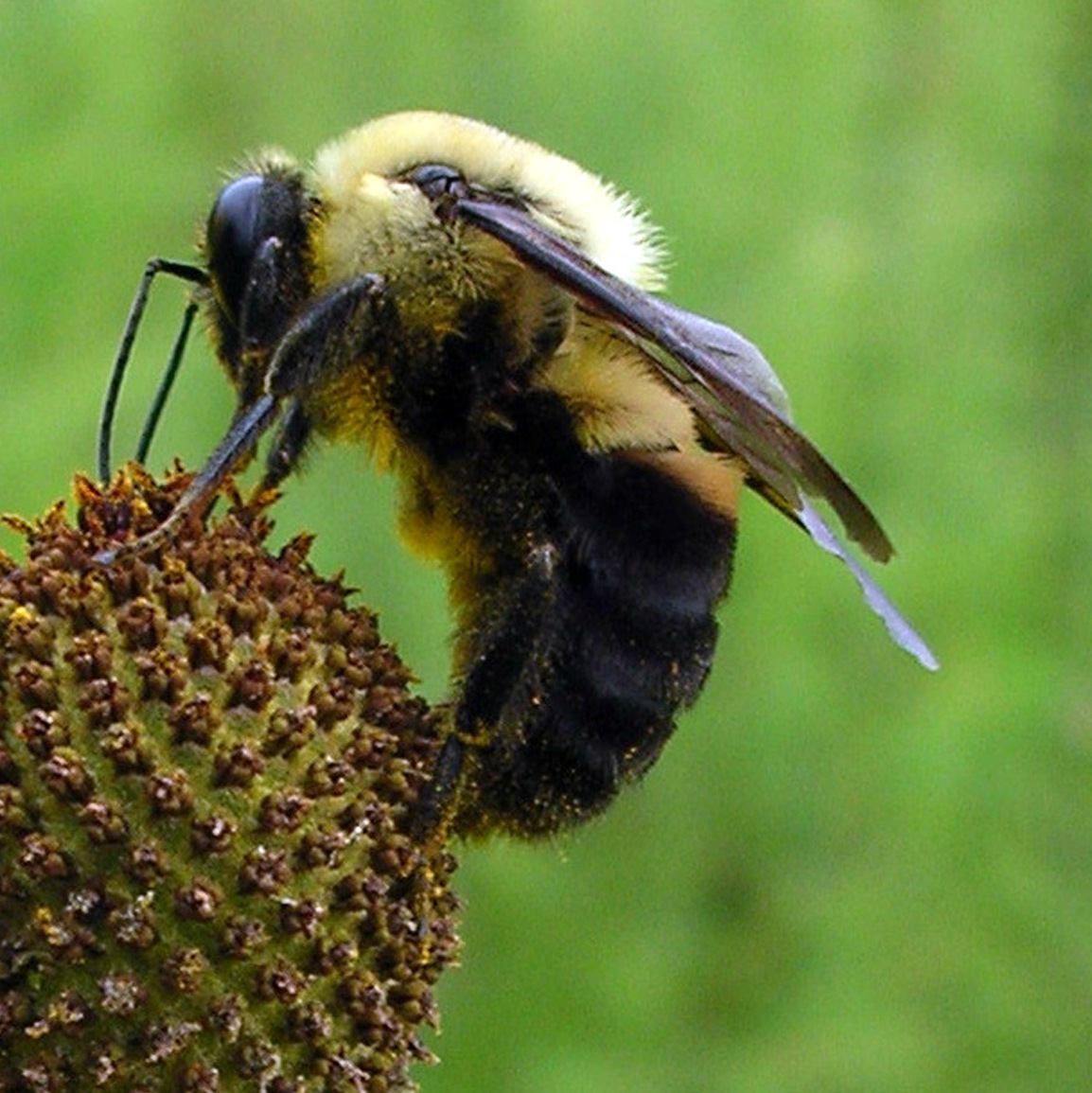
Native Texas Bumblebee, Image from Native Plant Society of Texas, www.npsot.org

Native Texas Bumblebee, Image from Native Plant Society of Texas, www.npsot.org


This is Passport to Texas

Bumblebees and solitary bees are the native bees of Texas.

09— Compared to honeybees, native bees have far less interest in term of research and money and organized conservation.

That’s too bad because native bee populations are declining from loss of habitat and plant diversity, says TPW invertebrate biologist Michael Warriner. Should they decline significantly, that could further affect what you see on the landscape.

13— If decline happens, you may see over decades, fewer of certain plants. Maybe you don’t see that wildflowers as frequently as you did or that flowering shrub as much as you did. And they slowly just disappear off the landscape.

We can all help the native bee populations.

19—The landscape of Texas has changed so much that we’ve lost a lot of plant diversity – particularly of those plants that bees need for nectar and pollen. Even if you live in the heart of a city, if you planted just a few more good native plants that produce good nectar and pollen – you can help to support the native bees in those areas.

Find resources for supporting native bees at passporttotexas.org.

That’s our show for today… Funding provided in part by Ram Trucks. Guts. Glory. Ram.

For Texas Parks and Wildlife…I’m Cecilia Nasti.

_________________________________________________________

Native Texas Bee Resources:

http://www.txnativebees.com/
http://www.beewatchers.com/bee-watchers.html
http://dallas.culturemap.com/news/food-drink/06-09-13-north-texas-farmer-garden-native-solitary-bees/
https://www.facebook.com/texasnativebees
https://www.facebook.com/texasnativebees#!/texasbumblebees