Archive for the 'Wildlife' Category

Wildlife: New Citizen Science Program

Thursday, December 20th, 2012
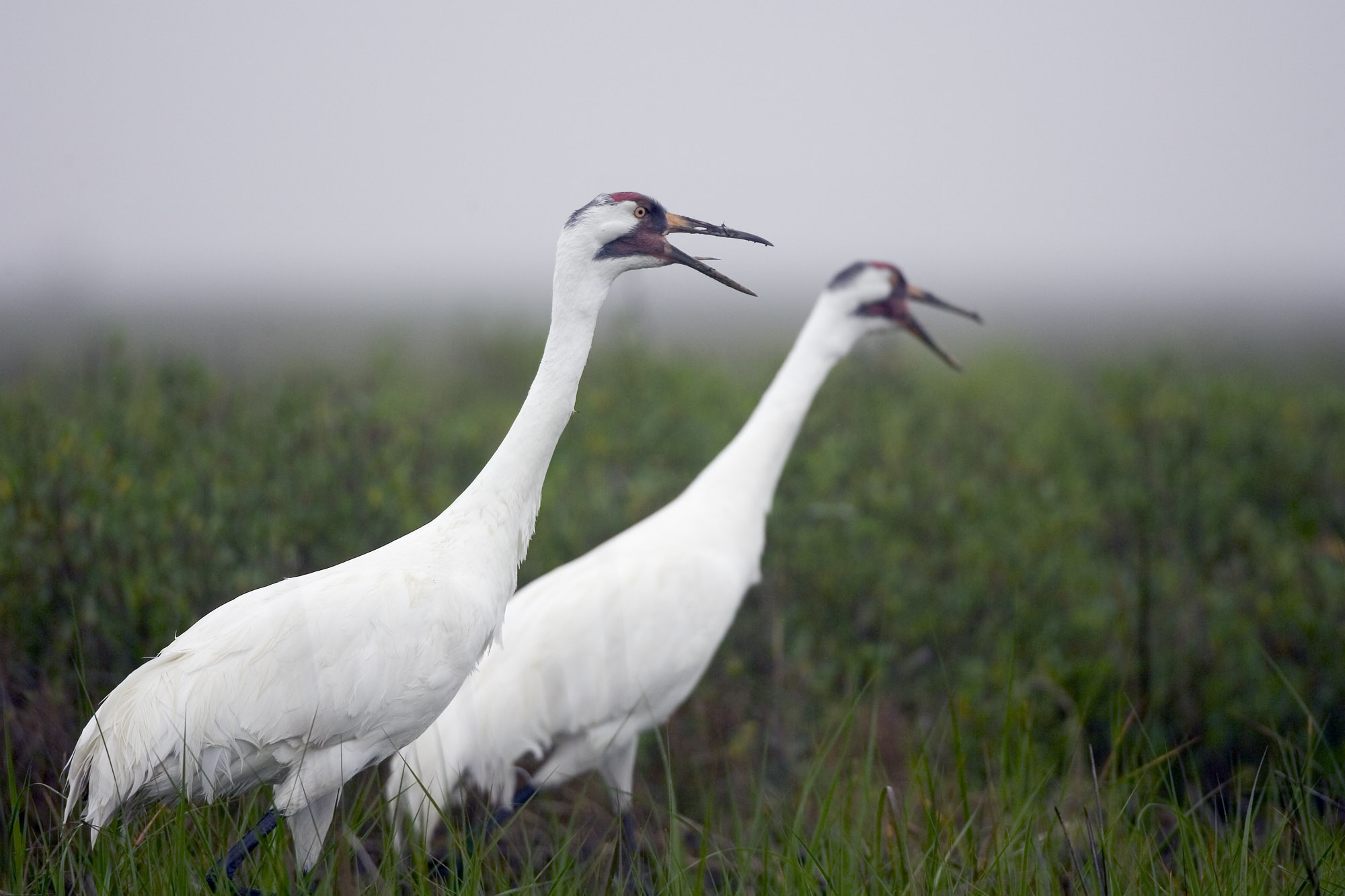
Whooping Cranes, photo by Earl Nottingham

Whooping Cranes, photo by Earl Nottingham


Passport to Texas with support from the Wildlife and Sport Fish Restoration Program

Texas has long been home to the last wild migratory flock of whooping cranes in the world.

05— And so we know that in Texas. And we enjoy seeing them and waiting for their arrival in the fall.

Lee Ann Linam is a biologist in the Wildlife Diversity program, and oversees the Nature Tracker program –which now includes Whooper Watch.

20–One of the interesting things that’s developing…as the whooping crane population expands… we’re seeing whooping cranes use new areas. Both in migration and in their wintering areas. And so, last year, when several whooping crane families spent the winter in the Austin area, we decided we wanted to be ready to watch for whoopers that might be using habitats like that and learn more about them.

Traditional Texas wintering grounds for the endangered species is the central-coast, around the Rockport area and in the vicinity of Aransas National Wildlife refuge. So, finding them so far inland last year was unusual.

20– Our whooping crane population in Texas is getting larger. We’re approaching about 300 birds in that population now. And as they try to squeeze themselves into their traditional wintering territories, perhaps they’re encountering some crowding there. In addition, last winter was a very mild winter, so inland water bodies that might have normally frozen early in the winter did not.

Linam also notes that habitat conditions on the coast last year may have suffered due to the drought. We’ll have information on Whooper Watch tomorrow.

The Wildlife and Sport Fish Restoration program supports our series and funds diverse conservation programs throughout Texas.

For Texas parks and Wildlife…I’m Cecilia Nasti.

Hunting: A Gift to Help the Hungry

Thursday, December 6th, 2012

RGV Food Bank Hunters for the Hungry


This is Passport to Texas

It’s the holiday season, a time when many of us look for ways to reach out to those less fortunate. If you’re a hunter, the easiest way is by donating a deer to Hunters for the Hungry.

09—Once it’s [the deer is] donated, the meat is used by food pantries, food banks, and other food assistance providers that serve their local communities.

Anitra Hendricks oversees the program. Meat processors across the state are participating in the program. Hunters just need to bring them their legally tagged and field-dressed deer.

14—There is a reduced processing fee for those who donate to the program. They pay the fee, they do receive a receipt for a possible tax deduction. The meat processor will grind the meat, package it, and then from there it goes to the food assistance provider.

Find a list of participating processors on the Hunters for the Hungry website. Anitra says she is always on the lookout for more processors.

08— The have to be willing to do some minimal book-keeping as far as tracking donations and reporting that to us at the end of the season.

It’s a small inconvenience for the good it provides to hungry children, elderly and families during the holidays.

The Wildlife and Sport Fish restoration program supports our series and celebrates 75 years of funding diverse conservation projects throughout Texas…

For Texas Parks and Wildlife…I’m Cecilia Nasti.
Hunting: Help Feed Hungry Texans

Wednesday, December 5th, 2012

CAFB Hunters for the Hungry


This is Passport to Texas

Regular deer season continues through January 6th in the north and January 20th in the south. And with an estimated 3 to 4 million white tailed deer in Texas, hunting is necessary to manage their population. If your freezer is already full, but you still have a tag you want to use, consider donating your next deer to Hunters for the Hungry.

08—Hunters for the hungry is a statewide venison donation program that allows hunters to donate their extra venison.

Anitra Hendricks oversees the program, and says charitable food assistance providers receive the donated venison as two pound packages of ground meat. Last season Texas hunters donated more than 153-thousand pounds of venison to the program.

04—So [that comes to] just a little over 600-thusand quarter pound servings.

The average trimmed weight of a donated deer is about 40 pounds of usable meat. By that account, Texas hunters donated just over 38-hundred animals. Their generosity fed children, elderly, and families in need.

11—What we have heard from the agencies is that in many cases, the venison that they receive through Hunters for the Hungry, is the only meat –fresh meat—that they may receive on a limited basis.

More about Hunters for the hungry and how to donate to the program on tomorrow’s show.

The Wildlife and Sport Fish restoration program supports our series and celebrates 75 years of funding diverse conservation projects throughout Texas… For Texas Parks and Wildlife…I’m Cecilia Nasti.

Wildlife: Attwater’s Prairie Chicken

Friday, November 30th, 2012

Attwater's Prairie Chicken, photo by www.fws.gov

Attwater’s Prairie Chicken, photo by www.fws.gov


Passport to Texas with Support from the Wildlife and Sport Fish Restoration Program

Corporate America and sports teams depend on good recruiting…something they have in common with the endangered Attwater’s Prairie Chicken.

:07 — Historically, this bird went through periods of time when a population would be devastated, and then it would recruit from neighboring populations.

But they’ve had to change their recruiting tactics, says Mark Klym, Adopt-a-Prairie Chicken Program coordinator.

:02–Today those recruits have to come from the zoos.

Development destroyed the prairie chicken’s coastal habitat. We’ve gone from a million birds at the turn of the 20th century to fewer than 100 animals today. Currently Three small populations are maintained in the wild.

:21–The bird is being reproduced for release. We are confident that we have enough birds that we can maintain these three populations now that we have in the wild. But there’re biologists out there working with landowners every day trying to get land back in condition. And we have a number of landowners just
waiting and asking for release of the birds on their land.

Klym maintains the Attwater’s Prairie Chicken will continue to rebound, and not go quietly into that good night.

:08–We frequently get emails and calls asking when we expect this birds to go extinct. We don’t expect it to go extinct. This is going to be another good news story.

Learn about the adopt-a-prairie chicken program at passporttotexas.org. The Wildlife Restoration Program supports our series… For Texas Parks and Wildlife…I’m Cecilia Nasti.

Wildlife: The Red Wolf in Texas

Wednesday, November 28th, 2012
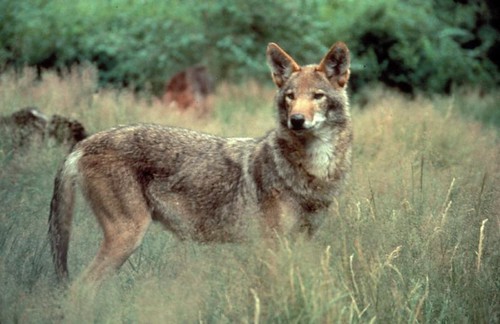
Red Wolf, photo by TPWD

Red Wolf, photo by TPWD


Passport to Texas with support from the Wildlife and Sport Fish Restoration Program

The red wolf population once covered about a third of the southeast US, including Texas. By the late 1960S, the animals were nearly extinct.

07– The only red wolves left were in a little corner of southeastern Texas and Southwestern Louisiana … and there were only a few of them left.

Russell Roe, managing editor of TPW magazine, wrote a story about red wolves for the December issue. Habitat loss, wolf eradication programs, and an influx of coyotes, caused their near demise. An Austin College professor, noting the decline, sounded the alarm.

28–Well, about the same time, Congress passed the Endangered Species Act, and the red wolf was one of the first species listed in the act. So, their first priority was to maintain the red wolf population where it was … even though it was down to almost nothing, and the coyotes were still moving in. The realized that was not going to work, so they decided, this last ditch effort–the only way we’re going to save the red wolf is by gathering them all up, putting them in captivity, with the hopes of reintroducing them in the wild.

Researchers had their work cut out for them, as the wolves and coyotes had interbred.

19– Once they collected what they thought were red wolves, they had maybe 40 they were pretty sure were red wolves. Once they got rid of what they thought might be hybrids, they were down to 17 pure red wolves. Of those, 14 were used in the captive breeding program. So, all the red wolves we have today came from those 14.

Learn more when you read the December issue of Texas Parks and Wildlife Magazine.

The Wildlife and Sport Fish Restoration Program program supports our series… For Texas Parks and Wildlife…I’m Cecilia Nasti.