Archive for the 'Wildlife' Category

Wildlife: Cowbirds Gaining Ground

Friday, November 2nd, 2012

Brown-headed Cowbird

Brown-headed Cowbird


This is Passport to Texas Supported by the Wildlife and Sport Fish Restoration Program

Calling a brown-headed cowbird a cowbird, is a misnomer as far as biologist Marsha May is concerned.

I think they should be called bison birds, and not cowbirds, because they evolved with the bison.

Semantics aside, the bird’s habit of laying its eggs in other birds’ nests can cause the decline of species with small populations, such as the endangered Black-capped Vireo. Additional species are also affected.

Woodland species are now being impacted by brown-headed cowbirds, because we’ve fragmented the woods. Previously those woodland species were protected by the woods. Now that it’s fragmented, the cowbirds are getting into that habitat, and they’re parasitizing birds that have never historically been parasitized before.

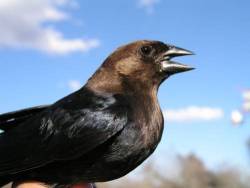
The cowbird is in the blackbird family. The male has a black body and brown head, while the female is mottled brown and gray. Want to intervene on songbirds’ behalf.

You can actually become certified in Texas to trap for cowbirds, and that’s mainly during the breeding season, between March first and May thirty-first. And, mainly you’re trying to trap the females.

Get ready for spring. Find certification information on the Texas Parks and Wildlife website.

That’s our show… the Wildlife and Sport Fish Restoration Program supports our series and is funded by your purchase of shooting and hunting equipment and motorboat fuel.

For Texas Parks and Wildlife…I’m Cecilia Nasti.
Wildlife: Cowbird Conundrum

Thursday, November 1st, 2012

Brown-headed Cowbird

Brown-headed Cowbird


This is Passport to Texas Supported by the Wildlife and Sport Fish Restoration Program

The brown-headed cowbird migrated with bison across the Great Plains, and because it’s hard to raise a family on the road, cowbirds laid their eggs in other birds’ nests; host birds unwittingly raised cowbird young.

12—The problem with the cowbird eggs is that normally they’re big eggs; they hatch earlier than the host eggs do; and they’re very vocal and hungry and beg for food.

Biologist, Marsha May, says the cowbird hatchlings out compete the host’s offspring for food, starving them out, and reducing populations of that species. Back when bison roamed, cowbirds didn’t have quite the same impact.

15—Black-capped vireos, which are an endangered species now, evolved where if they were parasitized by a brown-headed cowbird, they would leave that nest and re-nest – start a new nest. Well, if the cowbirds had already moved through, that would have worked.

Without bison, cowbirds hang with cows. Because cows are fenced in and don’t migrate, neither do cowbirds.

19—They’re parasitizing all the birds in that area – their nests – and they’re having a major impact on some species like the black capped vireo, because the black-capped vireo keeps re-nesting and that’s wasting a lot of energy, and if it’s constantly being parasitized, then no young will be reproduced at all that year.

We’ll have more on cowbirds tomorrow.

That’s our show… we receive support from the Wildlife and Sport Fish Restoration Program… funded by your purchase of fishing and hunting equipment and motor boat fuels.

For Texas Parks and Wildlife…I’m Cecilia Nasti.
Wildlife: Bird Feeding Myths

Friday, October 26th, 2012

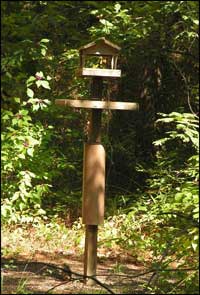
Bird Feeder

Bird Feeder


Passport to Texas with Support from the Wildlife and Sport Fish Restoration Program

When winter arrives, you may be tempted to set out feeders for your feathered visitors. But should you?

09—There are people that maintain that feeders are unnatural, that they crowd the birds into a smaller area. Birds are like us, if there’s food available, they’re going to come to it.

Mark Klym coordinates the Wildscape Program and says the crowding subsides, so don’t let it influence whether you provide supplemental feeding. He adds there’s a myth that dirty feeders can cause disease in birds that eat from them.

05—If they’re not kept clean, they can enhance disease situations, but they can’t—by themselves—cause disease.

Another unfounded feeder fear is that easy access to food will encourage migratory species to stay put.

13—Birds migrate for a much more powerful trigger than just whether there’s just food available. And if you look at it, in a lot of areas, when the birds start to move, there’s some of the biggest supplies of [natural] food that there have been all year.

Finally, there is no evidence that a birdfeeder will cause species not usually found in your area to book a visit.

10—Your feeder is not going to bring a bird that wouldn’t otherwise have been in the area. It’s going to be a situation where that bird happened to be in the area already, saw your feeder, and came to it.

When it’s frosty outside, feel free to feed feathered friends fearlessly. The Wildlife and Sport Fish Restoration Program supports our series and funds diverse conservation projects throughout Texas.

That’s our show… For Texas Parks and Wildlife…I’m Cecilia Nasti.

Wildlife: Feeding Backyard Birds

Thursday, October 25th, 2012

Platform bird feeder

Platform bird feeder


This is Passport to Texas Supported by the Wildlife and Sport Fish Restoration Program

Setting out backyard feeders encourages birds to gather where you can easily enjoy them.

10—Feeders should be a supplement to a garden. That’s what you should concentrate on, is creating a garden that is going to provide some of the materials, and then use your feeders to put the birds where you can easily see them.

Mark Klym coordinates the Wildscaping Program for Parks and Wildlife. The types of feeders and food you supply determines the birds that visit.

35—Black oil sunflower seed is your best. I certainly do not recommend using the mixes that have a lot of red millet or milo in them because they tend to attract a lot of house sparrows. Use different types of feeders. Not all of our birds can easily feed on a column that is hanging with a very short perch. Put out a platform feeder and you’ll get some of your traditionally ground-feeding birds that will go to the platform. Put out some peanut feeders for some of our bigger jays. You might want to look at putting out a sock feeder, which is just a sock that has thistle seed in it, for the finches. And they’ll actually pull it out of the cloth sock.

There you have it: creating a stunning and educational experience in your own backyard is as easy as hanging a sock filled with seeds. Remember to keep those binoculars handy.

05—There is no place better in the world for attracting birds than right here in Texas.

The Wildlife and Sport Fish Restoration Program supports our series and funds diverse conservation projects throughout Texas.

That’s our show… For Texas Parks and Wildlife…I’m Cecilia Nasti.
Wildlife/Recreation: Who Owned That Shell?

Wednesday, October 24th, 2012

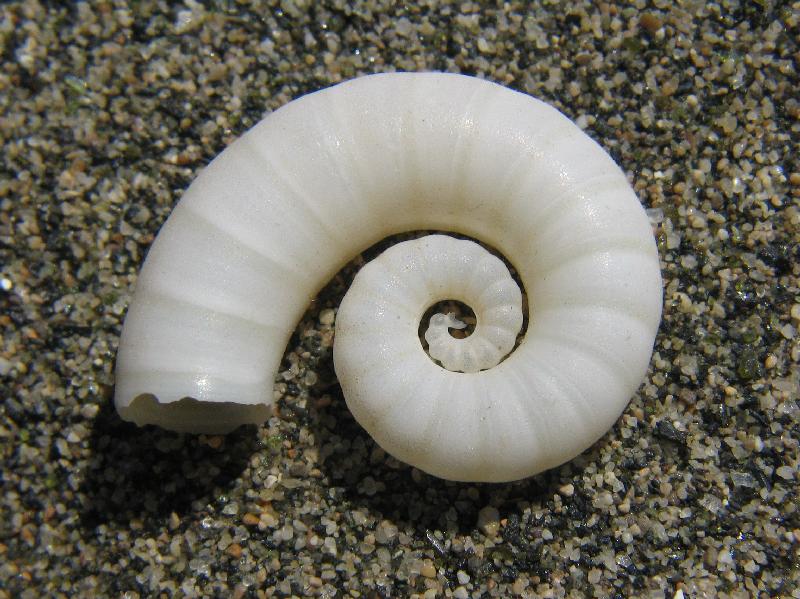
Spirula Shell from animaladay.blogspot.com

Spirula Shell from animaladay.blogspot.com


Passport to Texas with support from the WSFR Program

Before you sell seashells by the seashore, you first have to find them. Surprisingly, summer beachcombing may not yield the results you desire.

03—I feel the best time to go shelling is in the wintertime.

Paul Hammerschmidt, with coastal fisheries, is a lifelong and—admittedly obsessive—shell collector. He says winter storms churn up the Gulf bottom, sending marine critters and their calciferous containments onto the beach. To improve your chances of finding a variety of intact shells, Hammerschmidt says stay clear of crowded beaches.

12—If you get a chance to go to some more isolated beaches, like down on Padres island, or something like that, where the population of humans is not quite so thick, you’ll have a much better chance of finding some really unusual shells.

Such as a pretty little shell called baby ears—which looks like…well…baby ears. Or, there’s another special shell worth searching for called spirula.

19—And it’s a coiled, snail-like shell. But it doesn’t belong to a snail—it belongs to a little squid. And it’s inside the squid, and when the squid dies, that little thing has a lot of chambers in it with gas, and it floats and washes up on the beach. Those are very pretty, bright white, and they’re very fragile, so you have to be careful with them.

This winter, instead of heading to the slopes for skiing, head to the beach for shelling…you can still have hot cocoa when you’re done.

That’s our show for today…remember: life’s better outside…For Texas Parks and Wildlife…I’m Cecilia Nasti.
