Archive for the 'Wildlife' Category

Wildlife/Recreation: Shell Collecting

Tuesday, October 23rd, 2012
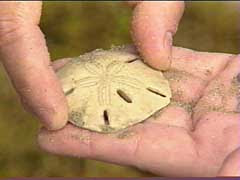
File photo Texas Parks and Wildlife

File photo Texas Parks and Wildlife


Passport to Texas with support from the Wildlife and Sport Fish Restoration Program

Nobody thinks twice about collecting shells from the beach. But I started to wonder if it’s really okay since beaches are public land.

08—It’s okay to collect shells. The ones that are broken and come apart, they create the sand that’s out there, but there is no law against it [collecting].

Paul Hammerschmidt, with coastal fisheries, is a lifelong shell collector. He says collect responsibly to avoid creating problems for the environment or marine animals.

05—I highly recommend that you only take shells that are from dead animals—not live animals.

How can you determine if something is still alive? In the case of the popular sand dollar, small spines cover the shells of living animals…so look for smooth, spineless shells. If, like me, you’ve never found a sand dollar on the beach—there’s good reason for it.

18—I think it’s because everybody wants to get a sand dollar. And, too, they’re another very fragile shell. And when the waves are strong, they’ll get broken up, and you’ll just see fragments of them. A lot of times, the best time to find a sand dollar, is after a storm—and then very early in the morning—before anybody else gets out on the beach.

When and where to go shelling on tomorrow’s show.

Our series receives support from the Wildlife and Sport Fish Restoration Program …funding diverse conservation projects throughout Texas…

For Texas Parks and Wildlife…I’m Cecilia Nasti.

Wildlife: Why Spiders Come Indoors

Thursday, October 11th, 2012

Michael Warriner holding his pet tarantula, Photo by Cecilia Nasti

Michael Warriner holding his pet tarantula, Photo by Cecilia Nasti


This is Passport to Texas

As we near Halloween, we’re seeing more spider-themed decorations, because spiders can, after all, seem scary. But invertebrate biologist, Michael Warriner, says these arachnids are beneficial in the ecosystem.

11—Spiders are natural pest control agents. So, they’re eating lots of other things, and helping to control the populations of insects that can be pests [to humans].

Still, nobody wants spiders in their homes. Nevertheless, if you find them indoors…

06—They feed on other arthropods – things like roaches, beetles… They need a prey source.

A spider in your house is helping to keep pest populations down. Michael Warriner says spiders will come into the home for another reason as well.

26—They’ll wander into housed – especially during mating season. Male spiders will leave where they were living and they just wander. And they’re searching for females. And that’s what happens with a lot of people, they’ll see spiders in their house during particular times of the year. And it doesn’t necessarily mean you have an unkempt house, and you have lots of vermin. It just means that it’s spider mating season, and these spiders are out wandering around looking for mates.

What would you rather have in your home – a hungry spider or an amorous spider?

[SFX—oh, my darling…I love you]

Hmmm…Tough call.

Until next time…For Texas Parks and Wildlife…I’m Cecilia Nasti.

Wildlife: The Misunderstood Spider

Wednesday, October 10th, 2012

Tarantula, Photo by Cecilia Nasti

Tarantula, Photo by Cecilia Nasti


This is Passport to Texas

I think it’s safe to say most people are – if not scared of spiders – are at least wary of them.

02—It probably disturbs them a little bit.

Michael Warriner is an invertebrate biologist with Texas Parks and Wildlife.

05—I actually like spiders, but most people don’t. It kind of comes down to their appearance.

Eight legs…a segmented body…and fangs… several pairs of eyes… spinnerets… what’s not to like? In Texas we have just over a thousand spider species.

18—People are concerned about spider bites and spider venom, but only about five to six of those one thousand plus species have venom that could be considered medically significant. Meaning you might need to go to the doctor or a hospital.

Michael says there’s a group of spiders called house spiders that are harmless—and like us – just trying to make a living. If you see spiders in your home, that means they have found a food source.

13—Spiders are predators. They feed on other insects – tings like roaches. They need a prey source. And so, maybe the best way, if you don’t like having spiders in your house, is to modify the habitat.

Even the tidiest of homes may have spiders in them.

Tomorrow, we tell you about what – besides food – brings them indoors. It may surprise you.

For Texas Parks and Wildlife…I’m Cecilia Nasti.
Wildlife: Origin of White-Nose Syndrome

Friday, September 21st, 2012

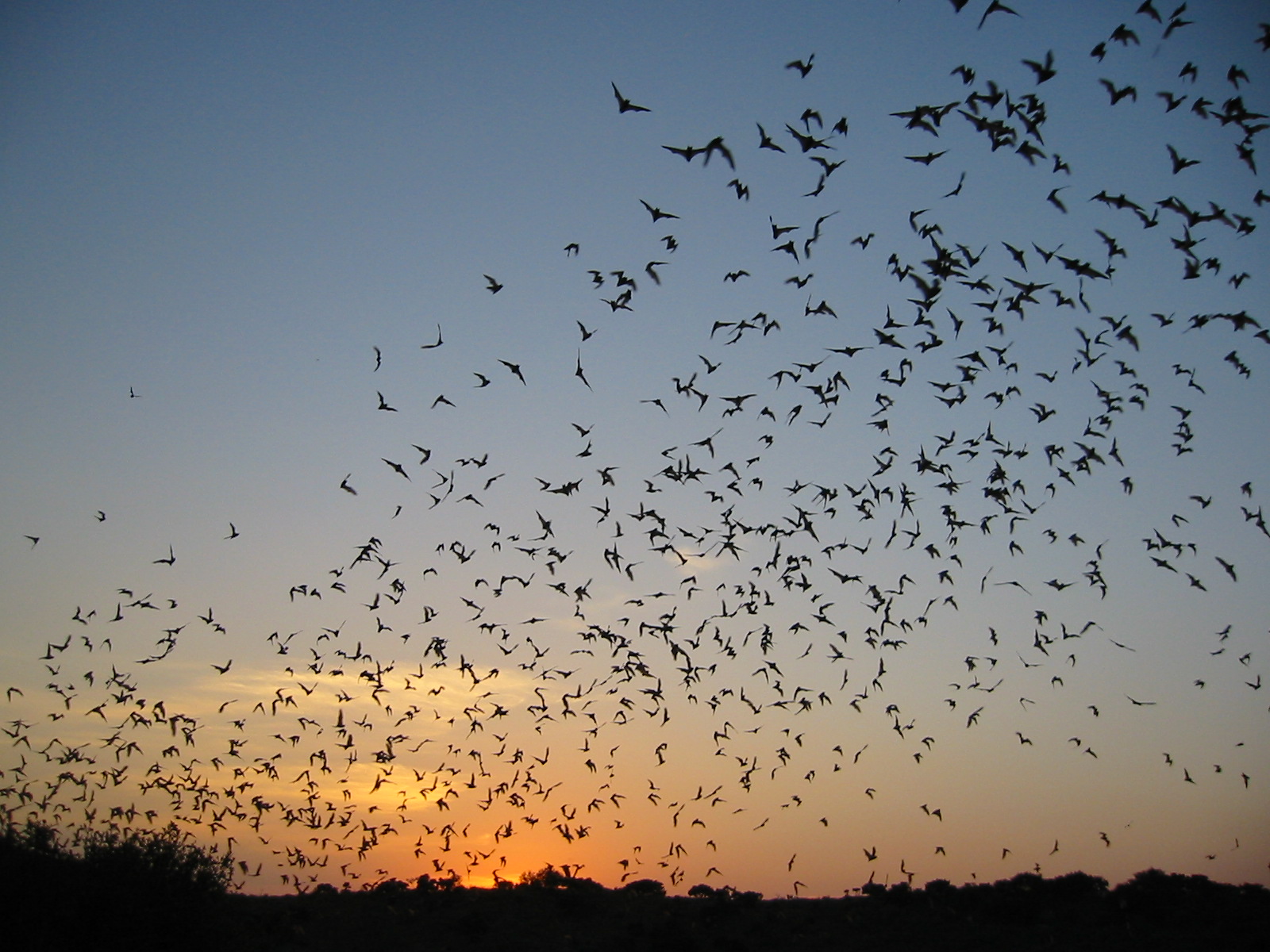
Frio Cave Bat Emergence

Frio Cave Bat Emergence


This is Passport to Texas

Geomyces destructans is a cold-loving fungus responsible for White Nose Syndrome that kills cave hibernating bats. It’s new to North America; when discovered six years ago, Scientists hypothesized it came from Europe.

14—This year a paper came out that demonstrates and provides the strongest support that, yes, this is a new fungus that arrived from Europe. It adheres to the novel pathogen hypothesis. And that’s why the bats are so susceptible to it here.

Katie Gillies, imperiled species coordinator at Bat Conservation International, says the novel pathogen hypothesis suggests because it is the bat’s first exposure to the fungus, they have no defense against it. Sampling of European caves provided answers to its origin.

14—They went around to several sites in Europe, and took fungal swabs, and grew them on cultures. And then sequenced the genomes for those fungi, and the found a match basically for the Geomyces destructans that’s here.

Scientists hypothesize the fungus struck thousands of years ago in what is now Europe, perhaps giving bats the opportunity to adapt to its presence.

20— The bottom line is we’re going to see this big die-off; it’s probably not going to kill every single bat on the landscape, but we’re going to see a significantly different composition of bats on the landscape as a result of this. And the species that are impacted, they will absolutely not recover in our lifetime. I mean, it will be many, many, many generations before they’re able to recover.

Find more information about white nose syndrome and our role in preventing its spread at www.batcon.org.

For Texas Parks and Wildlife…I’m Cecilia Nasti.

Wildlife: White-Nose Syndrome Update

Thursday, September 20th, 2012

Mexican Free-tailed Bats

Mexican Free-tailed Bats


This is Passport to Texas

Since the winter of 2006, White-nose Syndrome has killed more than 5.7 million bats in Eastern North America. The culprit is a fungus called Geomyces destructans.

14—The fungus can be present on the bat and in the environment before it actually evolves into the full blown disease. And right now we’ve got 19 states and 4 Canadian provinces with the disease and an additional two states with just the fungus present.

Katie Gillies is the imperiled species coordinator at Bat Conservation International.

17—This is what they call a sacrophilic fungus, which basically means it’s cold-loving. And so the environment has to be cold, and it generally has to be humid, too. And then you also have to have that host present on which it can grow. And so, it just happens to be the trifecta for cave hibernating bats.

Texas bat populations are free of white nose… for now. Temperatures may be too warm for it to survive, but Gillies says it is hard to make a “blanket statement” about the fungus in a state the size of ours.

26— I think most people are concerned, primarily, in north Texas, where we do have the cooler temperatures and the right humidity levels that could be conducive to it. You know, most of these big caves [in Texas] are used by Brazilian free-tailed bats who do not hibernate. So, we don’t really think that it is going to affect those species of bats, but we don’t know what role they could play in possibly transferring the fungus to other caves.

Tomorrow: Where did this fungus originate?

For Texas Parks and Wildlife…I’m Cecilia Nasti.
