Archive for the 'Wildlife' Category

Texas River Otters Revisited

Friday, November 6th, 2009
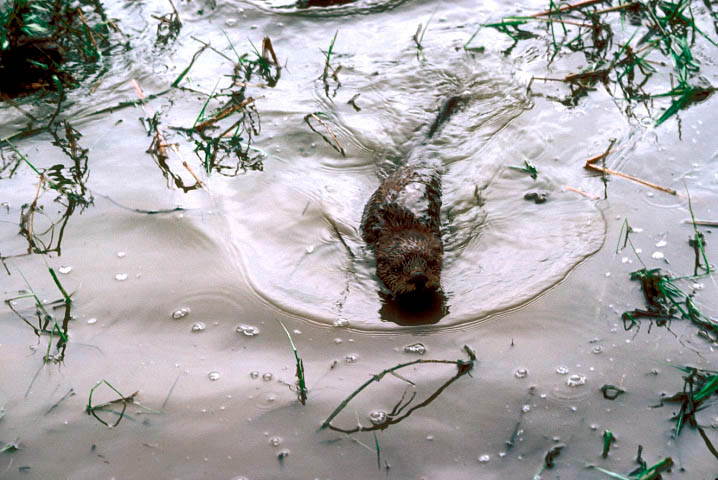
Texas River Otter

Texas River Otter


This is Passport to Texas

A few months ago we aired a program about Texas river otters with biologist Gary Calkins. At the time, he told us few people ever get to see otters…but then…

With the awareness now from the program, people are talking about it. And so, we’re getting to hear what they’re seeing.

What you’re seeing and telling us about, are river otters… a lot of them it seems…and some in unexpected places.

This has been awesome. We found out about otters a lot further west and further north than we really had an idea that there were good populations. So it’s been really interesting.

Calkins says having extra sets of eyes looking for otters has been a boon to his research.

I was very surprised, but also pretty psyched. It was really neat to start getting some feedback from the radio program on something that we had been trying to do other ways and hadn’t been able to get there.

Researchers are interested in Texas river otters for more than their playful personalities.

They’re kind of an indicator species of how healthy our environment is. So, by trying to get a handle on how their population’s doing, it kind of tells us how our environment is doing overall.

If you spot an otter…on land or water…tell us about it …you know you ought to…at passporttotexas.org.

The Wildlife restoration program supports our series…For Texas Parks and Wildlife…I’m Cecilia Nasti.

Troubled Waters: Whooping Cranes

Monday, September 28th, 2009

Passport to Texas from Texas Parks and Wildlife

[Whooping crane calls]

Last winter, twenty-three out of two hundred and seventy whooping cranes died after a decline in blue crab and wolfberries, two of the crane’s main food sources.

Tom Stehn is the whooping crane coordinator for the U.S. Fish and Wildlife Services. He says the decline is linked to two sources: drought and diversion of Texas rivers.

The human consumption of water has been increasing annually as the population of South Texas grows. This is a very critical issue for the bays that in some way we need to figure out a mechanism so sufficient freshwater inflows reach the bays to keep them productive.

Stehn says the fate of the whooping crane could rest in the hands of Texans.

There are management actions that people will have to do such as conserve water. And those are the choices that Texans have to make.

And many new threats are coming onto the scene.

As issues get worse for the whooping cranes, inflow issues, housing development issues, wind energy development, possibly taking away habitat from the cranes in migration. There’s a lot of threats out there right now, so I’m really leery of how the whooping cranes are going to do in the future.

The good news is there are sixty-one nesting pairs of cranes, which make some researchers hopeful that the population will increase next year.

That’s our show…with research and writing help from Gretchen Mahan. For Texas Parks and Wildlife I’m

Endangered Species: Houston Toad

Friday, September 25th, 2009

Passport to Texas from Texas Parks and Wildlife

[Call of the Houston toad]

That sound is the Houston toad. And it’s become a very rare sound over the past two decades. Years of drought and habitat destruction have diminished the Houston toad population to only a few hundred.

Michael Forstner is a professor at Texas State University. And through the Texas Parks and Wildlife Landowner Incentive Program (L.I.P.), he’s working with private landowners in Bastrop County to restore habitat for the Houston toad.

Most of the people in Bastrop want to live in Bastrop County because it looks a certain way. And if it keeps looking like the lost pines, we keep the toad.

So what do these “lost pines” look like?

Imagine a cathedral forest. Most of the habitat that we find Houston toads doing the best in, whatever that means for its current levels, are gallery forests. Those are the forests that you see in the images for computer desktop wallpapers. Those are large-trunked trees with open space beneath them.

By planting the fast-growing loblolly pine trees, a habitat can be restored in about twenty years.

So if current efforts are successful, Forstner says the Houston toad population could make a comeback.

The best thing about the Houston toad is they make 6,000 eggs at a time. Those babies just need a place to grow up.

That’s our show…with research and writing help from Gretchen Mahan. You can find more information on passporttotexas.org. For Texas Parks and Wildlife, I’m Cecilia Nasti.

GO TEXAN Wildlife Initiative

Monday, September 21st, 2009

Passport to Texas from Texas Parks and Wildlife

The GO TEXAN brand is well-known among agricultural producers, wineries and restaurants. And now, the brand is expanding to include wildlife.

I’m extremely excited to announce the addition of the GO TEXAN Wildlife initiative. We’re inviting businesses and organizations that focus on wildlife recreation to join GO TEXAN.

Texas Agriculture Commissioner, Todd Staples, encourages businesses that cater to hunting and fishing enthusiasts to take part in the GO TEXAN Wildlife Initiative.

TPWD estimates fish and wildlife recreation activities have a $15.8 Billion dollar impact on the Texas economy. Parks and Wildlife shares our commitment to business development in rural Texas, and the GO TEXAN brand is a tremendous way to do that.

Commissioner Staples says the GO TEXAN Wildlife initiative captures the heritage of our state.

Since the beginning of time, Texas has been recognized as an ecosystem that offers a diverse variety of fish and wildlife opportunities for enthusiasts. Whether you’re hunting [,fishing] or nature tourism—whatever it is—the Texas Wildlife Initiative showcases the best that Texas has to offer.

We have more information about the program at passporttotexas.org.

For Texas Parks and Wildlife…I’m Cecilia Nasti.

Wind Turbines & Bats

Friday, August 7th, 2009

Passport to Texas from Texas Parks and Wildlife…

Wind turbines are a popular form of alternative energy, but it’s not without disadvantages. Gretchen Mahan tells us more…

Wind turbines kill tens of thousands of bats each year like the Brazilian free-tailed bat in Texas. It’s often killed by running into the turbines or because of a sudden drop of pressure near the turbine blades.

Ed Arnett is a conservation scientist for Bat Conservation International and project coordinator for the Bats and Wind Energy Cooperative. He says he expects bat fatalities to increase in the future.

I do believe the threats to threatened and endangered species will increase as we enter into the range of those creatures.

Arnett also says bats hunt for insects during low-wind periods. So turning off the turbines during these times will save many bats.

By reducing the amount of operating hours during those low wind periods we reduce the fatalities of bats at least half and up to as high as 87 percent of the fatalities can be reduced.

Other solutions being developed include a white noise that could be emitted from the turbine to keep the bats away from the turbines altogether.

Bat Conservation International certainly supports the development of renewable energy resources. But we want to do that wisely. And we don’t want to develop at the expense of today’s resources for tomorrow’s hopes.


Ultimately, Arnett says, animals need to be taken into consideration as we develop renewable energy.

Thanks Gretchen. That’s our show… For Texas Parks and Wildlife I’m Cecilia Nasti.