Archive for 2014

Wildlife: Herpetology

Wednesday, January 8th, 2014
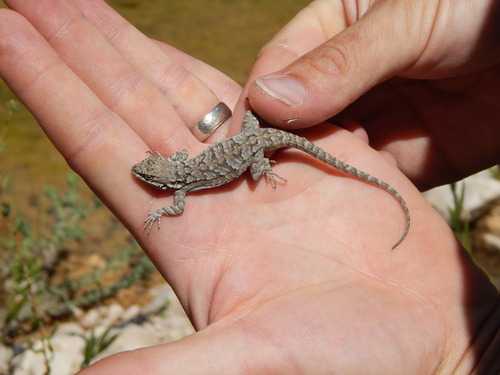
Big Bend Tree Lizard, image by Michael Smith

Big Bend Tree Lizard, image by Michael Smith


This is Passport to Texas

Herpetology is a branch of zoology concerned with amphibians and reptiles.

16—Amphibians are the species that are associated with water in their lifecycle. [They’re] smooth skinned, and usually lay their eggs in water and often have a larval stage such as a tadpole for a frog. So frogs, salamanders, and an interesting creature called the caecilian are amphibians.

Leeann Linam is a biologist who recently retired from Parks and Wildlife. Reptiles are those species with scales that tend to lay hard-shelled eggs on land in dry nests.

13—And so we have several divisions of reptiles as well. We have the turtles, we have the lizards, and we have the snakes… And then there are a few other groups. The crocodilians and some others that are kind of unique.

Linam says scientists agree they need to give reptiles more consideration.

14—Lizards are a group of organisms that scientists have said: “You know, we really haven’t paid much attention to what’s going on with them. They are mostly eating insects in the environment, and so one can perhaps think of them as being sensitive to things like pesticides and habitat loss, as well as
direct persecution, or killing, as areas are changed in terms of their use.”

Before you spray or spread a pesticide on your lawn or garden, think of the lizards.

That’s our show with support from the wildlife restoration program…For Texas Parks and Wildlife…I’m Cecilia Nasti.
Outdoor Safety: Treating Hypothermia

Tuesday, January 7th, 2014

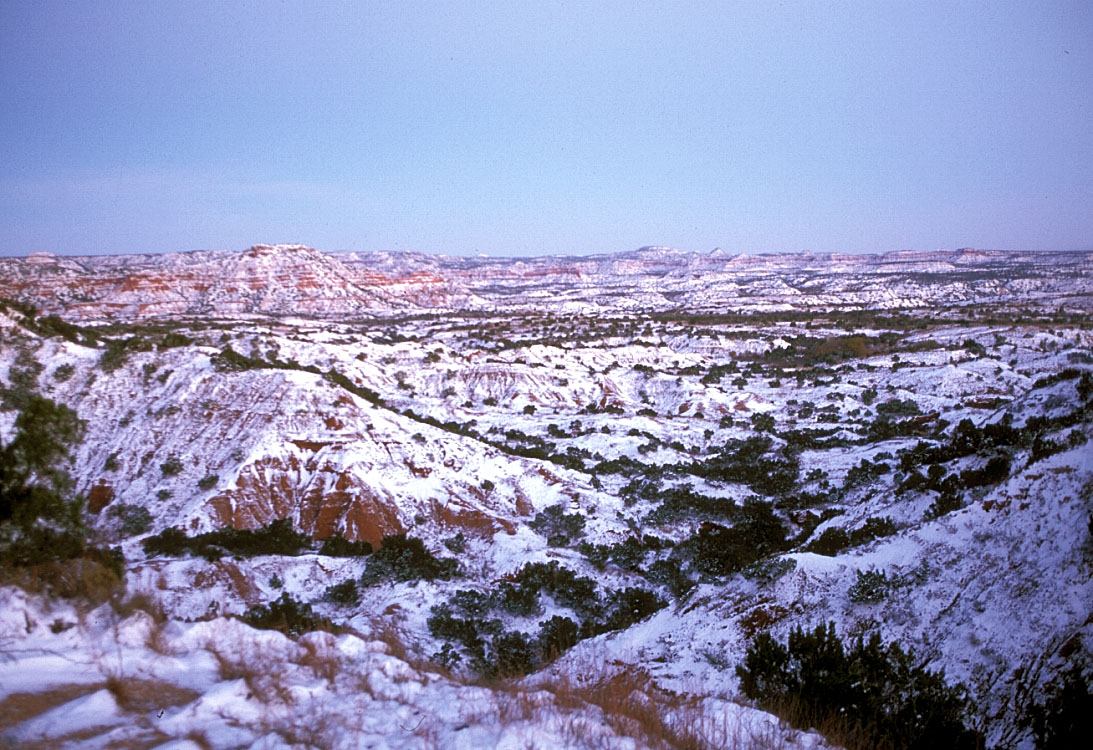
Caprock Canyon in Winter

Caprock Canyon in Winter


This is Passport to Texas

Cold temperatures and strong winds increase the risk of hypothermia when outdoors this winter. It’s a potentially serious condition whereby the body’s core temperature drops below normal.

Dorian Drigalla (Dre-gal-a) is an assistant professor of emergency medicine at Scott and White Memorial Hospital with tips on combating this condition.

51—The first thing to try to do is to get the patient to the warmest possible environment, whether that be getting them out of the wind or out of the water. So the first two things to be concerned about on a hike or in the wilderness are basically to remove everything possible wet, get the patient dry and try and get them into a warmer environment. Even if that just means out of the wind behind shelter even of a hillside. Then you want to try additional measures, whether that’s using insulating materials like a sleeping bag or dry clothing to warm the patient and also ingestion of warm liquids can help. If the person is cold and they’re already in water, the water between them and their clothing is actually insulating. The heat is conducted out of the body and into the water but it’s maintained between them and their clothing. And it’s only if those clothes can come off and all the water can be removed that that’s actually helpful.

That’s our show…Funding provided in part by Ram Trucks. Guts. Glory. Ram.

For Texas Parks and Wildlife…I’m Cecilia Nasti.
Outdoor Safety: Hypothermia

Monday, January 6th, 2014

Caprock Canyon in Winter

Caprock Canyon in Winter


This is Passport to Texas

Winter weather never kept a Texan from enjoying the great outdoors. Even so – everyone needs to exercise caution in the cold to prevent hypothermia.

Dorian Drigalla (Dre-gal-a) is an assistant professor of Emergency Medicine at Scott and White Memorial Hospital.

09—Hypothermia is a condition where the body’s temperature drops below normal and certain physiologic changes happen the body because of that.

There are three stages of hypothermia that determine the severity.

41—Stage one, or mild hypothermia, is when the body’s temperature drops from what is considered normal down between 1 and 3 degrees below that. Stage two – becomes a little bit more obvious in that the person starts to realize they are more than just cold and while they are still conscious, they do realize that they are shivering more, the shivering becomes more noticeable and the rest of the body’s movements are less coordinated. It’s at this point that the body starts to appear more pale. Stage three is when the body temperature drops below ninety degrees. At this point, the body’s reflexes start to fail, the shivering intended in the prior two stages to help warm the body starts to fail. Concentration, speaking and thinking become more difficult.

Severe hypothermia can lead to organ failure and death.

Backcountry treatment of hypothermia tomorrow

That’s our show…Funding provided in part by Ram Trucks. Guts. Glory. Ram…For Texas Parks and Wildlife…I’m Cecilia Nasti.

Wildlife/Angling: Fish Genetics

Friday, January 3rd, 2014

A.E. Wood Fish Hatchery

A.E. Wood Fish Hatchery


This is Passport to Texas

04—It’s definitely high tech, cutting edge…we’re really happy to have it.

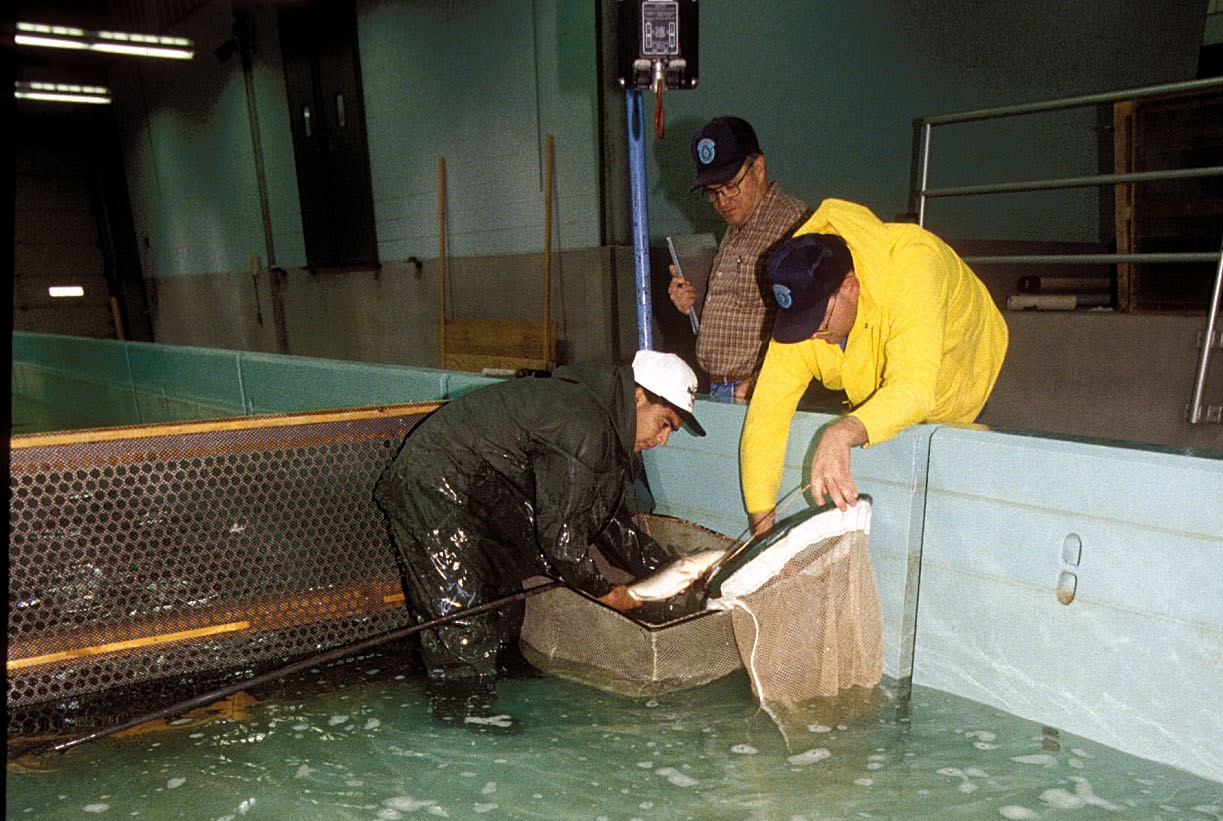
Lorraine Fries is talking about a DNA Analyzer – a high tech piece of equipment used at the A.E. Wood laboratory in San Marcos. Ms. Fries was the site’s lab director before retiring. Researchers use the analyzer to “fingerprint” hatchery raised fish.

14—We also can use the DNA analyzer for selective breeding programs. We can identify markers associated with traits that we’re interested in and breed for those. We can use it to evaluate stocking success because we can tell what fish we stock.

They do that by simply analyzing a small piece of tissue from the animal.

10—One of the other really great things about DNA is that it’s in all tissues.

Which means by taking a very small piece of fin, for example, researchers obtain as much DNA as needed. Before the analyzer, Fries says they performed liver biopsies on the fish.

04—Which is okay, but the fish don’t like it too well. (laughter)

Understanding fish genetics allows fisheries biologists to improve fisheries.

The Sport Fish Restoration Program supports our series and funds fishery operations in Texas. For Texas Parks and Wildlife…I’m Cecilia Nasti.

Birds/Wildlife: Attracting Backyard Birds

Thursday, January 2nd, 2014

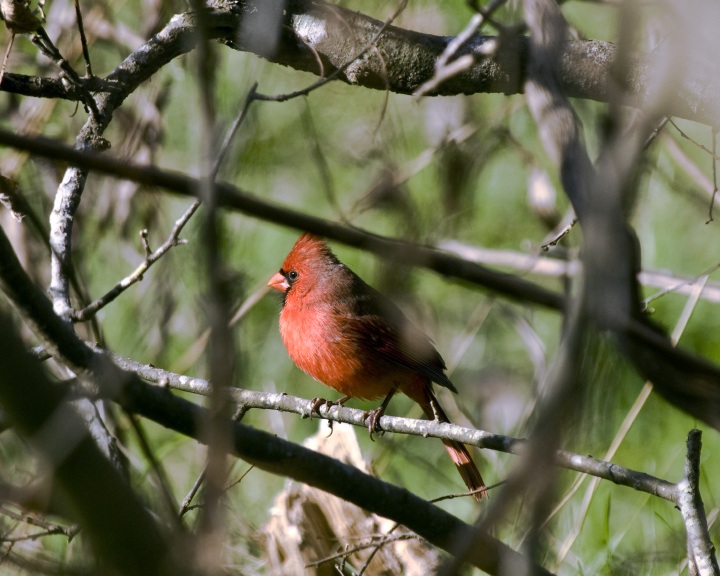
Northern Cardinal

Northern Cardinal


This is Passport to Texas

Birding is a year-round activity in Texas that’s growing in popularity among all age groups. The wide variety of species found here keeps it interesting.

08—Texas is Mecca for birders around the world because we are on the migration flyway for the entire Western hemisphere.

Valerie Staats is past Executive Director of the Travis Audubon Society. She says birds have very simple needs.

04—Birds need food, shelter, water, and a place to raise their young.

Ms. Staats offer a few simple ways to entice a wide range of bird life into your neighborhood.

28—In the ideal world if you want to bring birds to your backyard, you’re going to have several feeders offering different types of food. Have water available- if anything, that’s more important than food. The water alone will bring a lot of birds to the backyard. One thing that people often forget is that the birds need a shelter, and by that I don’t mean a home per se, but a way to be protected from their predators while they’re enjoying what you’re offering in the backyard.

Interested in birding? Find birding information on the Texas Parks & Wildlife website.

That’s our show for today .. Funding provided in part by Ram Trucks. Guts. Glory. Ram

For Texas Parks and Wildlife…I’m Cecilia Nasti