Archive for the 'Food' Category

TPW TV–Freshwater Fishing Hall of Fame Honoree

Friday, June 15th, 2018
Texas Freshwater Fishing Hall of Fame 2017 Honoree: Gulf States Toyota.

This is Passport to Texas

The Texas Freshwater Fishing Hall of Fame honors individuals and organizations for their contributions to the sport. Gulf States Toyota is one such inductee.

Gulf States Toyota joined with Texas Parks and Wildlife Department in a private-public partnership to create the Toyota Texas Bass Classic, and also with the Toyota ShareLunker program.

Dave Terre, Texas Parks and Wildlife chief of fish management and research, says Gulf States Toyota, has been a boon to bass fishing…and not just in Texas.

The Toyota Texas bass Classic has been huge for Texas Parks and Wildlife. It’s provided us an opportunity to engage millions of people into fishing—all across Texas, and really across the United States of America.

The Guld State’s support helped double the neighborhood fishin’ lakes in Texas, thus making fishing accessible to more families in the urban core. And its long-term involvement in the ShareLunker program, is legend.

Gulf States Toyota supported the Sharelunker program since 2009. It’s really putting us on a path to create cutting edge science. It’s allowed us to be able to track these fish through DNA.

Gulf States Toyota is in the spotlight next week on the Texas Parks and Wildlife TV series on PBS. Check your local listings.

For Texas Parks and Wildlife…I’m Cecilia Nasti.
#GARWEEK: Gar in Texas

Monday, June 11th, 2018

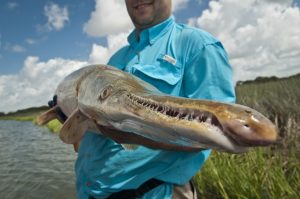
A man and his gar. #GARWEEK

This is Passport to Texas

Alligator gar are Texas’ largest and most long-lived freshwater fish. People claim to see alligator gar just about everywhere in Texas, but they are one of the most misidentified species of fish around.

The main thing Texans need to know is that there are four species of gar in the state of Texas. And it seems like everybody thinks every gar they see is an alligator gar – and that’s not the case.

Michael Baird, a fisheries biologist for parks and wildlife, says even among the four species of gar that occur in Texas —spotted, longnose, shortnose and alligator gar — this species is unique. The easiest way to tell the difference between alligator gar and spotted gar is in the name.

The spotted gar are the only gar species that have spots all over their head and body.

Longnose gar are the most abundant gar species in the state, but the name of this species also clues anglers to the best way to tell them apart from an alligator gar.

The way you can tell the difference between an alligator gar and a longnose gar is from the top of the fish looking down on the head – if it’s alligator like it’s probably an alligator gar. If it has a really narrow snout it’s probably a longnose gar.

The fourth species – shortnose gar – can only be found in Texas on the Red River below Lake Texoma along the Oklahoma and Arkansas borders.

If you’re up there you might see a shortnose gar, if you’re not there you are not going to see one.

Tomorrow: where to find alligator gar in Texas.

The Sport Fish Restoration Program supports our series.

For Texas Parks and Wildlife…I’m Cecilia Nasti.
Humane Handling of Caught Fish

Thursday, May 31st, 2018

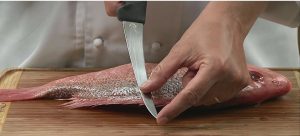
How to handle fish once you get them home.

This is Passport to Texas

Like to fish? Then you should know this Saturday, June second, is Free Fishing Day in Texas.

People don’t need a fishing license to fish on that first Saturday in June.

Great news, right? Former Texas Parks and Wildlife aquatic training specialist, Caleb Harris, says when you reel in a fish you intend to keep, there is a humane way to dispatch your catch before it becomes dinner.

Most people say that the kindest way to care for a fish that you want to keep [for dinner] is to put it on ice as fast as possible.

The cold temperature, says Harris, causes the fish’s bodily functions to slow down…way down.

The ice will anesthetize it; it’ll be virtually painless at that cold temperature; the fish will get cold and will slowly pass. So, yeah. If you have a boat, and you have the ability to bring an ice chest, you know—catch the fish—if you intend to keep it, make sure it’s a legal size, and put it right on ice.

When you get the fish home, you’ll want to immediately filet it and either cook it up right away, or freeze it.

Find a video on how to filet fish, and a link to information on the best way to freeze fish at passporttotexas.org.

The Sport Fish Restoration program supports our series.

For Texas Parks and Wildlife…I’m Cecilia Nasti

Hunting and Eating Rabbit

Wednesday, April 25th, 2018
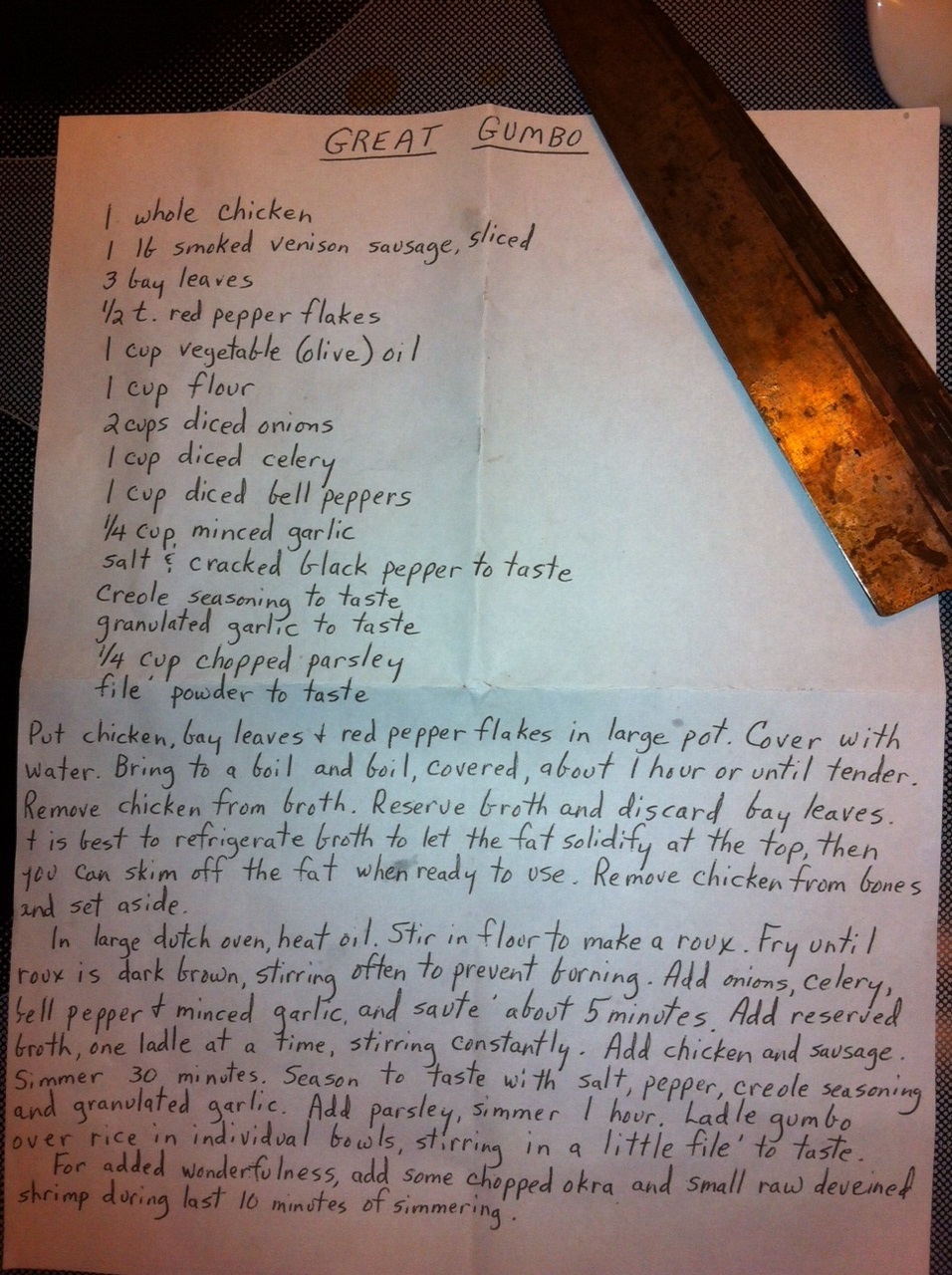
Andy's Mother in Law's Gumbo Recipe

Andy’s Mother in Law’s Gumbo Recipe; just substitute rabbit.

This is Passport to Texas

Andy Gluesenkamp calls rabbit the third white meat.

Rabbit really is all white meat; it’s like a cross between pork and chicken. It’s very, very lean; there’s very little fat in the meat, itself.

Director of Conservation at the San Antonio Zoo, Andy has hunted and eaten rabbit since he was a boy.

I grew up eating curried rabbit that my mom made. And no one makes better curried rabbit than my mom.

A self-professed “good cook,” Andy likes to prepare rabbit he’s harvested. Preparation, he says, begins with properly field dressing the animal, which, he adds, is “easy to clean.” Rabbit is a versatile and healthy protein that lends itself to a variety of cooking styles.

I think my buttermilk fried rabbit is pretty good. I also make rabbit gumbo, based on my mother-in-law’s gumbo recipe; and that is exceptional. I’ve also done rabbit pot pie, and Teriyaki rabbit, and grilled rabbit, and poached rabbit. It’s really hard to mess up rabbit.

If you don’t hunt rabbits, yourself, make friends with a hunter who does. Barring that, you may find recipe ready rabbits at farmers markets or at your local specialty grocer.

For Texas Parks and Wildlife, I’m Cecilia Nasti.

Creating Habitat for Freshwater Fish

Friday, March 30th, 2018
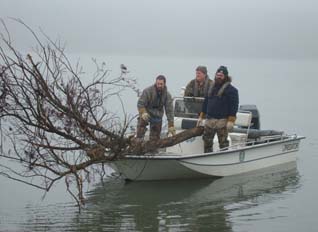
Creating a brush reef with dead trees.

Creating a brush reef with dead trees.

This is Passport to Texas

As we age, it’s natural to experience physical decline. That’s what’s happening to Texas’ reservoirs.

Many Texas reservoirs were formed years ago by constructing dams across rivers. As water filled the low lying areas it submerged trees and shrubs, which became fish habitat.

That organic matter’s been breaking down ever since—and has reached a breaking point in some reservoirs.

This past fall, with the help of local volunteers—and financial support from the Brazos River Authority (or BRA)—Inland Fisheries staff from TPWD completed several projects to improve fish habitat at Aquilla Lake, Lake Georgetown and Granger Lake.

Each water body received a different treatment, from replanting water willows and establishing new plant colonies, to creating artificial reefs, to sinking brush piles—all of which help to improve fishing.

These projects were completed with funding from the Brazos River Authority as part of a multi-year effort to improve all 11 BRA System reservoirs in the basin through 2020.

Learn about these habitat projects as well as others that have taken place in reservoirs across the state on the TPW website.

The Sport Fish Restoration program supports our series.

That’s our show…For Texas Parks and Wildlife, Cecilia Nasti.