Archive for the 'Conservation' Category

Nature: Chihuahuan Desert

Thursday, September 11th, 2014
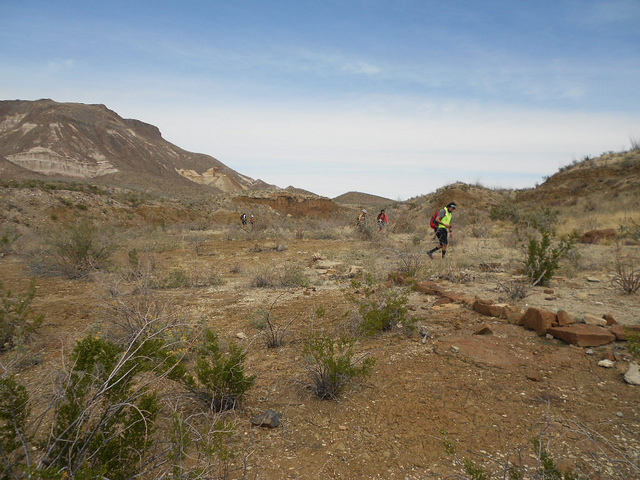
Chihuahuan Desert

Chihuahuan Desert


This is Passport to Texas

The Chihuahuan Desert Region is the third largest desert region of the Western Hemisphere and the second largest in North America. But many Texans know little about it.

13—I don’t know why they don’t know a lot more about the Chihuahuan Desert [region]. My guess is, when they think of West Texas, they think of Marfa and the art community; they think of McDonald Observatory, they think of Big Bend National Park and the State Park…

…Not realizing those places lie within this unique desert ecosystem. Cynthia Griffin is Executive Director of the Chihuahuan Desert Research Institute, or CDRI, in Fort Davis.

18—The Chihuahuan Desert [region] encompasses about 220-thousand square miles. Most of it is in North Central Mexico. But it also comes into West Texas basically west of the Pecos River. It’s in South Central New Mexico, and it’s in a small part of Southeastern Arizona.

Griffin says the range of elevations in the Chihuahuan Desert Region make it unique.

23—And it goes anywhere from a thousand feet above sea level up to ten thousand feet. And that large diversity in elevation accounts for the flora and the fauna, and it also accounts for the temperatures. Unlike the other deserts, we have a lot of coolness and we have more rain than they do because of that elevation range.

We’ll have more on the desert tomorrow. Until then read about the Chihuahuan Desert Region in the Aug/Sept
issue of Texas Parks and Wildlife magazine.

For Texas Parks and Wildlife, I’m Cecilia Nasti.
Education: Outdoor Outreach

Monday, August 11th, 2014

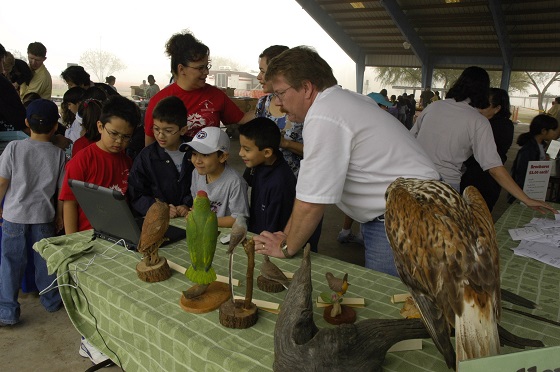
Bringing the outdoors to children.

Bringing the outdoors to children.


This is Passport to Texas

Texas parks and Wildlife offers a variety of enhancements for teachers and educators to use in and out of the classroom.

19— We offer outdoor skills training; we offer additions to curriculum – all kinds of supportive materials – to help people introduce youth to the outdoors and to outdoor skills so that they become more aware of their surroundings, enjoy the natural world, and feel connected to our natural resources.

Nancy Herron is Director of Outreach and Education. Water is a vital issue in Texas, and a curriculum on Aquatic Ecosystems of Texas provides a template for better understanding the resource and its users.

31— Without a basic understanding of how our aquatic systems work, it’s going to be very difficult to make those tough decisions that are facing us, such as how much water we need to have in a stream? Isn’t that an unusual question? I mean, it’s not something that people normally would think about; how would you even understand how to approach that question? Our folks are going to be making a lot of touch decisions in the future as we balance the needs of people and the environment. And we need to have a good understanding of how the environment works to do that.

Find the electronic student and teacher guides for Aquatic Ecosystems of Texas on the Texas Parks and Wildlife website, and partner websites: the Meadows Center for Water and the Environment, and the Hart Research Institute.

That’s our show for today. .. Funding provided in part by Ram Trucks. Guts. Glory. Ram

For Texas Parks and Wildlife…I’m Cecilia Nasti.

TPW TV: Winter Waterfowl Wonderland

Friday, August 8th, 2014


This is Passport to Texas

In east Texas near Palestine, the flooded bottomland hardwood forest at Gus Engling Wildlife Management Area is a winter wonderland for waterfowl.

06— It’s really a neat opportunity for the ducks that are here. We try to keep more water [in the forest area] and make things better for them while they are here.

Tucker Slack, a wildlife biologist with Texas Parks and Wildlife, says the diversity of ducks is outstanding at the Wildlife Management Area.

10—Normally the ducks we’ll see are going to be wood ducks. Wood ducks live here. You’ll see mallards, but you’ll also see pintails… ring necks…so there’s quite a diversity of ducks that you’d see here.

The bottomland hardwood forest at Gus Engling is in nearly pristine condition.

07—A lot of your bottomland hardwoods throughout our state and nation have really been logged and have had tremendous impact by people.

Slack says some wood ducks are year round residents; however, their population was once in decline.

14—It caused some concern, and one of the things it brought about was artificial nest boxes. So, the wood duck nest boxes were really one of the first large-scale attempts that people were able to make, and it’s really been quite a success story as far as the wood duck goes, and their population.

Wood ducks, and other waterfowl and wildlife, thrive in this untamed land.

06—It’s really important, for a lot of reasons, to have these wild spaces. One of them is for the animals, themselves. They need somewhere that they can call home.

See Gus Engling Wildlife Management Area and the wood ducks this week on the Texas Parks and Wildlife PBS TV Series. Check your local listings. For Texas Parks and Wildlife, I’m Cecilia Nasti.
Conservation: Tanksley Land Company

Thursday, July 24th, 2014


This is Passport to Texas

A family ranch since the 1920s, the Tanksley Land Company’s goal is to leave their 25-thousand acre property in Far West Texas in better shape than they found it.

05— It’s all about water out here: preserving and directing it to your benefit.

1989 when Betty and her late husband Ben took over management, creosote and tarbush dominated the landscape; grasses and water were scarce.

16—Ben’s vision was to preserve water and to direct the water to the benefit of the ranch. He was building some small dams and
some large dams and did a lot of what we call divots. Little small defilades.

These methods supported better water infiltration and runoff capture, and also created numerous small oases of green grass and forbs for wildlife. Texas Parks and Wildlife biologist Mike Janis says the Tanksley’s innovative management helped them win a regional Lone Star Land Steward Award.

18—We’re recognizing the Tanksleys for this award not because they did a great job implementing lots of things that we recommended at Parks and Wildlife. The roles are really kind of flipped in this situation. We’ve been able to take things we’ve learned that Ben was willing to try and share that information with other landowners who are interested in accomplishing similar goals.

The Wildlife and Sport Fish Restoration program supports our series and provides funding for the Private Lands and Public Hunting Programs.

For Texas Parks and Wildlife, I’m Cecilia Nasti.

Conservation/Food: Eating Bugs to Save the World

Wednesday, July 23rd, 2014

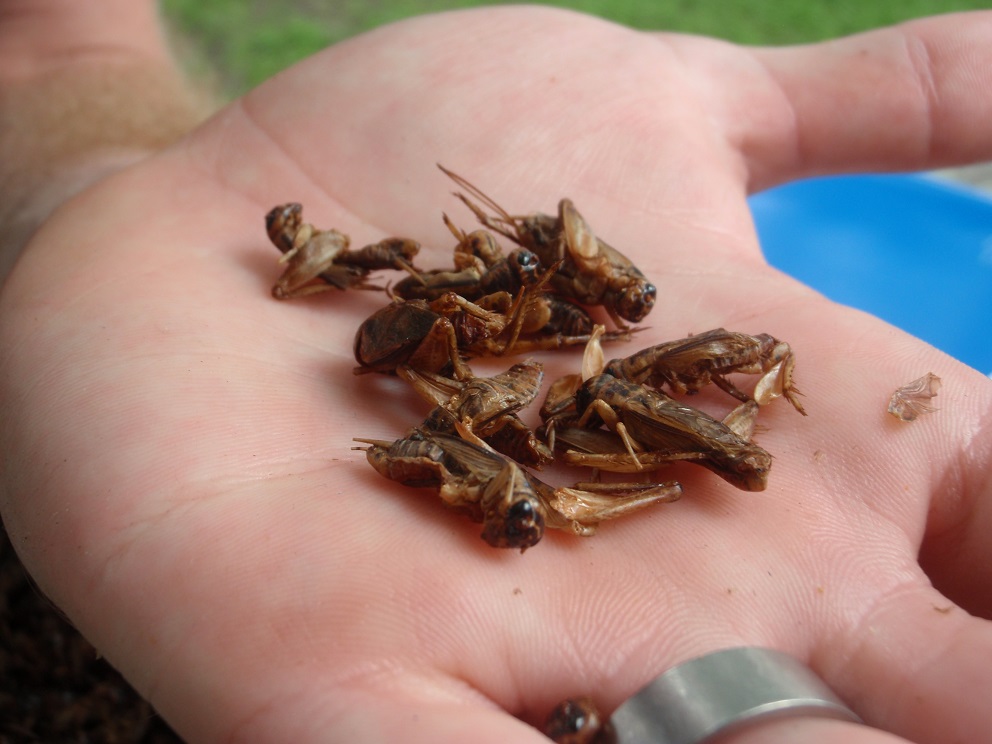
A handful of roasted crickets. Photo by Cecilia Nasti.

A handful of roasted crickets. Photo by Cecilia Nasti.


This is Passport to Texas

Experts predict the world’s population will increase to nine billion people by 2050. That’s two billion more mouths to feed. And Robert Nathan Allen says an eco-friendly protein to help nourish the masses is insects.

07— Compared to say a cow, where we can only really eat about forty percent of the cow, with insects; we can eat most if not all of them.

Allen founded the nonprofit Little Herds to educate the public about insects as a nutritious alternative food source. Insects are high in protein and rich in fiber and micronutrients. Currently 70% of agricultural land supports meat production, which limits the industry’s future growth.

15—So, with insects, we can raise them in a modular fashion vertically on a fraction of the land as traditional livestock, with a fraction of the water, with a fraction of the feed, and end up with more nutritional valuable protein.

It’s a huge leap from eating burgers to bugs. For the brave ones, Allen recommends obtaining edible insects from farms that raise them for human consumption.

11—That way we can assure that they’re raised in a hygienic, safe, clean environment. We can make sure that there’s no risk of diseases and parasites, and we can make sure tht they’re eating a clean, wholesome diet.

According to a UN report, over 2 billion people worldwide already supplement their diet with insects. Intrigued? Learn more about edible insects at littleherds.org.

For Texas Parks and Wildlife, I’m Cecilia Nasti.