Archive for the 'Conservation' Category

Habitat: Planting Native Trees

Wednesday, January 29th, 2014
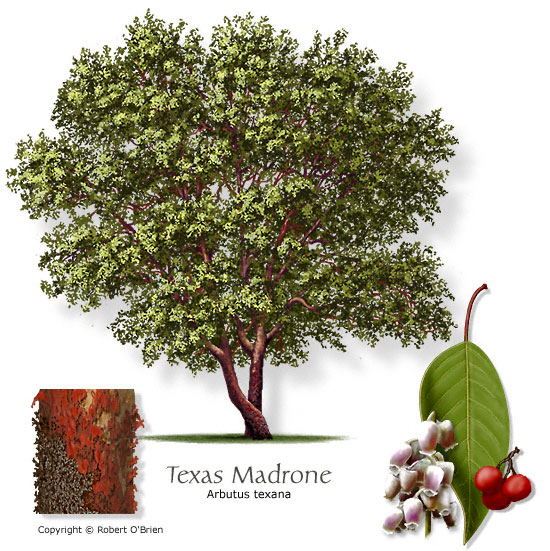
Texas Madrone, image from Aggi-Horticulture

Texas Madrone, image from Aggi-Horticulture


This is Passport to Texas

Now is an ideal time to plant trees throughout most of Texas…and you might wonder why.

08—Two reasons: the two most important constituents in tree planting—the people planting the trees and the trees. It’s just much easier on them.

Scott Harris is a certified arborist in Austin. Tree planting season in Texas started in October and continues through March.

11—Getting the trees in the ground in the fall [and winter], they have the entire cool season, dormant season, to spread roots out before the big demands on roots and water start in the spring.

Just because a tree will grow in Texas, doesn’t mean it should grow here. Harris advises that we all exercise caution about what we plant in our yards.

:20—The biggest thing to avoid is non-natives. Our natives have all of the features you would want, but they’ve spent thousands and thousands of years getting used to being here, and with all of the wildlife used to having them, too. It’s all a web, and you can’t tell which string you can pull out without upsetting things.

Tomorrow we’ll have a few tree planting tips to help you and your newly planted tree enjoy a long and happy life together

That’s our show…Funding provided in part by Ram Trucks. Guts. Glory. Ram…For Texas Parks and Wildlife…I’m Cecilia Nasti.
Conservation: Land Restoration

Tuesday, January 28th, 2014

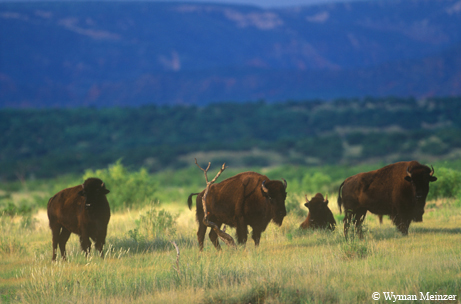
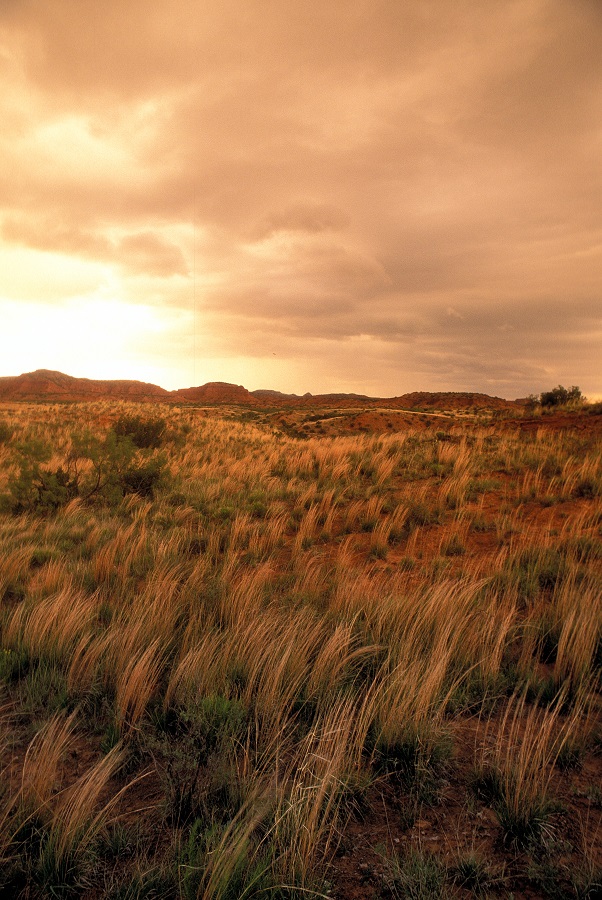
Caprock Canyons State Park

Caprock Canyons State Park


This is Passport to Texas

Returning land to near its original state –it’s condition prior to farming, grazing or development –takes years of planning and preparation.

07—Practically speaking it might take you a couple years to do some habitat assessment…to do some botanical assessment…

David Riskind… director of the natural resources program for state parks… says in most cases we can only approximate what the land looked like.

06—Most of the lands were previously forested…they were timbered…they were ranched…they’ve been modified.

One reason it takes two or more years to conduct assessments has to do with the state’s climate extremes.

14—We might acquire a piece of property, for example, during a drought year. We’d like to see what it looks like when it’s wet. So, before we do anything, we want to see what’s there. And quite often, we’re surprised at what recovers on a site after it has a chance to rest for a while.

After the land has had a chance to rest, then assessments take place.

13—We will do our baseline assessments. We may do some quantitative work… And then, for example, if it’s a grassland restoration project, it might take us another couple of years to gather the kinds of seed that we need to do restoration.

Find landowner information on the TPW website.

The Wildlife Restoration Program…supports our series and funds diverse conservations projects in Texas. For Texas Parks and Wildlife…I’m Cecilia Nasti.
Conservation: Land Management

Monday, January 27th, 2014

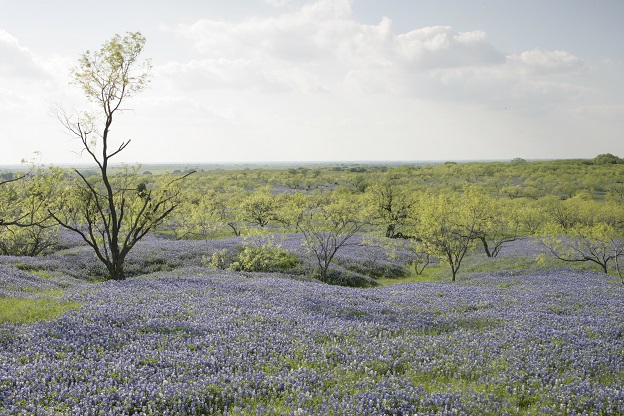
Well managed land.

Lone Star Land Steward statewide winner 2007. Gary and Sue Price


This is Passport to Texas

The concept of land management and restoration varies depending on landowner objectives.

09—It depends of whether you’re trying to restore forest, whether you’re trying to restore woodland, whether you’re trying to restore marsh or whether you’re trying grassland.

David Riskind is director of the natural resources program for state parks. Landowners managing for conservation purposes use similar strategies as other landowners, with one important difference.

38—They use a lot of the same strategies as other landowners do. Whether you’re in the forest business, the timber industry, the grass industry. But your objectives are different. In other words, you might weight it towards endangered species; you might weight it toward watershed protection, it might be toward songbird protection. But increasingly today, more and more people are getting involved in what’s called eco-system management. That is, you have an integrated approach. You include soil, you include wildlife, you include watersheds, you include hydrology and you include man as well.

Ecosystem management means addressing the long-term consequences of today’s decisions, and thinking of resources as interrelating parts of systems rather than as individual components to be managed separately.

The Sport Fish and Wildlife Restoration program supports our series and supports diverse conservation projects in Texas.

For Texas Parks and Wildlife…I’m Cecilia Nasti

Nature: Barton Warnock Center

Wednesday, January 22nd, 2014

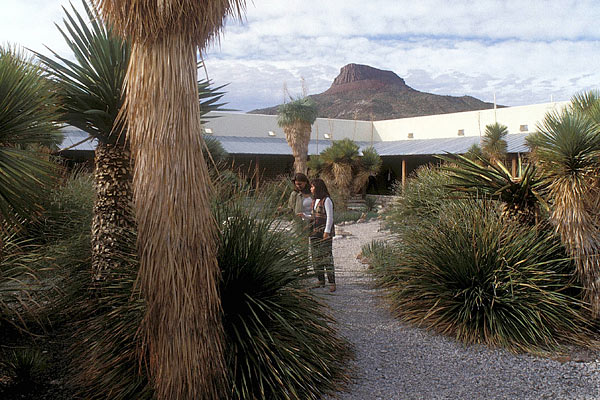
Barton Warnock Education Center, Terlingua, Texas

Barton Warnock Education Center, Terlingua, Texas


This is Passport to Texas

The Barton Warnock Environmental Educational Center in Terlingua is where the region’s 570 million year history comes alive.

11—It was first the Lajitas Museum and Desert Garden. In 1990, the state of Texas bought it and it became the eastern entrance to the Big Bend Ranch State Park system.

David Long is superintendent at Barton Warnock. While West Texas has a mystique that’s hard to define, the center takes on the challenge.

13—The exhibits focus on the geology of the area and the natural history of the Big Bend area. Geology brings together the vegetation, the biology, and all the natural resources here, and the culture in this whole area.

The cultural history of this region is just as fascinating as its geological and natural histories.

20—‘Terlingua’ – the name itself – means ‘tres linguas,’ and the three different languages, three different cultures that combine here are the Anglos, the Spanish, and the Indian cultures. These cultures have combined and created a unique border community. We call it the ‘borderlands,’ or if you’re in Mexico, you’d call it the ‘frontera.’

Whether you call it borderlands or frontera, the Barton Warnock Environmental Education Center in Terlingua is open to visitors who want to know more about this fascinating region. Find information about the center on the Texas Parks and Wildlife web site.

That’s our show…Funding provided in part by Ram Trucks. Guts. Glory. Ram …

For Texas Parks and Wildlife…I’m Cecilia Nasti

TPW TV: The JA Ranch

Monday, December 23rd, 2013

JA Ranch

JA Ranch


This is Passport to Texas

Andrew Bivins uses technology to manage his land.

11— He can tell you what kind of method they used. He can tell you how much it cost per acre. The amount of information he’s been able to incorporate into his databases is unheard of.

Bivins is managing partner of the historic JA Ranch in the Texas Panhandle, founded by Charles Goodnight and Bivins’ ancestor, John Adair. Texas Parks and Wildlife TV’s Ron Kabele produced a segment for the series about this fifth generation rancher.

05—When it comes to using computers and new technologies – Andrew gets it.

Bivins, a 2013 Lone Star Land Steward Award winner uses available GPS technology to keep track of his work on the property. This includes removing invasive woody species and prescribed burns to return the land to the prairie habitat it once was.

17—It’s a very long-term strategy. It will be my lifetime of working on it – and it will be my son’s lifetime of working on it. And hopefully, our grandchildren will have a ranch that’s more of a prairie than what my son and I will have.

Bivins has a detailed database of brushwork done on the ranch. Each acre he reclaims for prairie habitat translates into untold savings in water.

08— Everything out here is in competition for the little water we get. Pulling the woody invasive species out allows more water for the grasses.

This segment airs on the Texas Parks and Wildlife TV series the week of December 29.

For Texas Parks and Wildlife…I’m Cecilia Nasti.