Archive for the 'Conservation' Category

Habitat: Wetlands — A Natural Buffer

Thursday, October 18th, 2012

Wetland image from water.epa.gov

Wetland image from water.epa.gov


This is Passport to Texas supported by the Wildlife and Sportfish Restoration Program

Wetland ecologist Nathan Kuhn says a wetland is an area that’s neither open water nor dry land.

08—The wetland is a transitional area. So, basically you’re talking about an area where the soil’s saturated for at least two weeks or more a year.

Kuhn says acre per acre wetlands pack a huge ecological punch.

15—Without them, in many cases, we would not have the shrimp, or the speckled trout, or whatever, that a lot of people go to the Texas coast to enjoy. So, there are a lot of invisible values of these wetlands that people don’t necessarily realize unless they were gone.

At least half are gone because we don’t understand their value. We fill and develop wetland areas so homeowners can have gulf views. The impact of this loss mostly goes unnoticed, until nature sends a force like a hurricane crashing against our shores.

03—We’re paying the price for losing half of our coastal wetlands.

Dr. Larry McKinney, Executive Director of the Hart Research Institute says healthy wetlands could have lessened some of the damage of hurricane Katrina.

15–Because, if I understand some of the analysis, we could have taken up to two foot off the top of that storm surge if our wetlands had been intact in that area. And there’s a huge difference between an 18-foot storm surge and a 20-foot storm surge as, unfortunately, many people know. So those wetlands act as a natural barrier for us.

That’s our show for today… made possible by a grant from the Wildlife and Sportfish Restoration program…

For Texas Parks and Wildlife…I’m Cecilia Nasti.
Conservation: First Friday, Part 3 at the Kerr

Tuesday, October 2nd, 2012

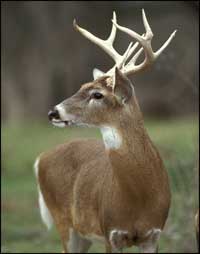
White-tailed Deer

White-tailed Deer


This is Passport to Texas supported by the Wildlife and Sport Fish Restoration Program

This Friday, October 5th the Kerr Wildlife Management Area offers the third and final installment of their First Friday Tours for land and resource managers in the Edwards Plateau Ecoregion.

08—The third part is geared toward how an ecosystem behaves.

The region includes nearly 24 million acres in 42 Central Texas counties. Ryan Reitz, a biologist at the Kerr, says everyone is welcome to attend the free event when they register in advance by phone. This Friday: the tools of the land management trade.

10—We’re here to demonstrate how we’ve applied these tools on the Kerry Wildlife area, and what types of products the ecosystem started to provide after applying these tools Aldo Leopold talks about.

Aldo Leopold, considered the father of wildlife ecology, encouraged people to utilize the plow, cow, axe, fire, and gun, to care for the land. The October 5th event will also cover white-tail deer genetics.

13—We will be reviewing some very important aspects of a white tailed deer’s life – in terms of antler, body growth, and things of that nature that play a very important role to those interested in managing for quality white tailed deer.

There’s registration information in the calendar section of the Texas Parks and Wildlife website.

That’s our show for today… made possible by a grant from the Wildlife and Sport Fish Restoration Program…

For Texas Parks and Wildlife…I’m Cecilia Nasti.
Endangered: Recovery Implementaion Program

Friday, August 24th, 2012

The Edwards Aquifer

RIP: Eye on Nature Newsletter

Eye on Nature


This is Passport to Texas

The Edwards Aquifer Recovery Implementation Program, or RIP, protects endangered and threatened species in the Edwards Aquifer.

Many of these species are no more than an inch long. The Comal springs riffle beetle is even smaller…only two millimeters long.

But Texas parks and Wildlife water resources branch chief, Cindy Loeffler, says preserving the species is crucial to the ecosystem.

16 — These are, you know, you’ve heard the cliché canary in the coal mine. If we want to truly protect natural resources, fish and wildlife, these unique ecosystems. These species are indicators of the health of those ecosystems.

Loeffler also says if the program protects the identified species, it will most likely save many more in the process.

16 — We have some species that there’s very little known about. And these are in a way the tip of the iceberg of the threatened and endangered species that are found associated with the Edwards Aquifer. There are many more species that are not listed that are found nowhere else.

Many of these species — like the San Marcos blind salamander and Texas wild rice — are found nowhere else in the world…. And pumping water from the Edwards Aquifer alters the habitat, putting these species in an unstable environment.

Learn more about threatened and endangered species on the Texas Parks and Wildlife website.

The Wildlife and sport fish restoration program supports our series and celebrates 75 years of funding diverse conservation projects throughout Texas… For Texas Parks and Wildlife…I’m Cecilia Nasti.
Hunting: Supporting Conservation

Thursday, August 16th, 2012

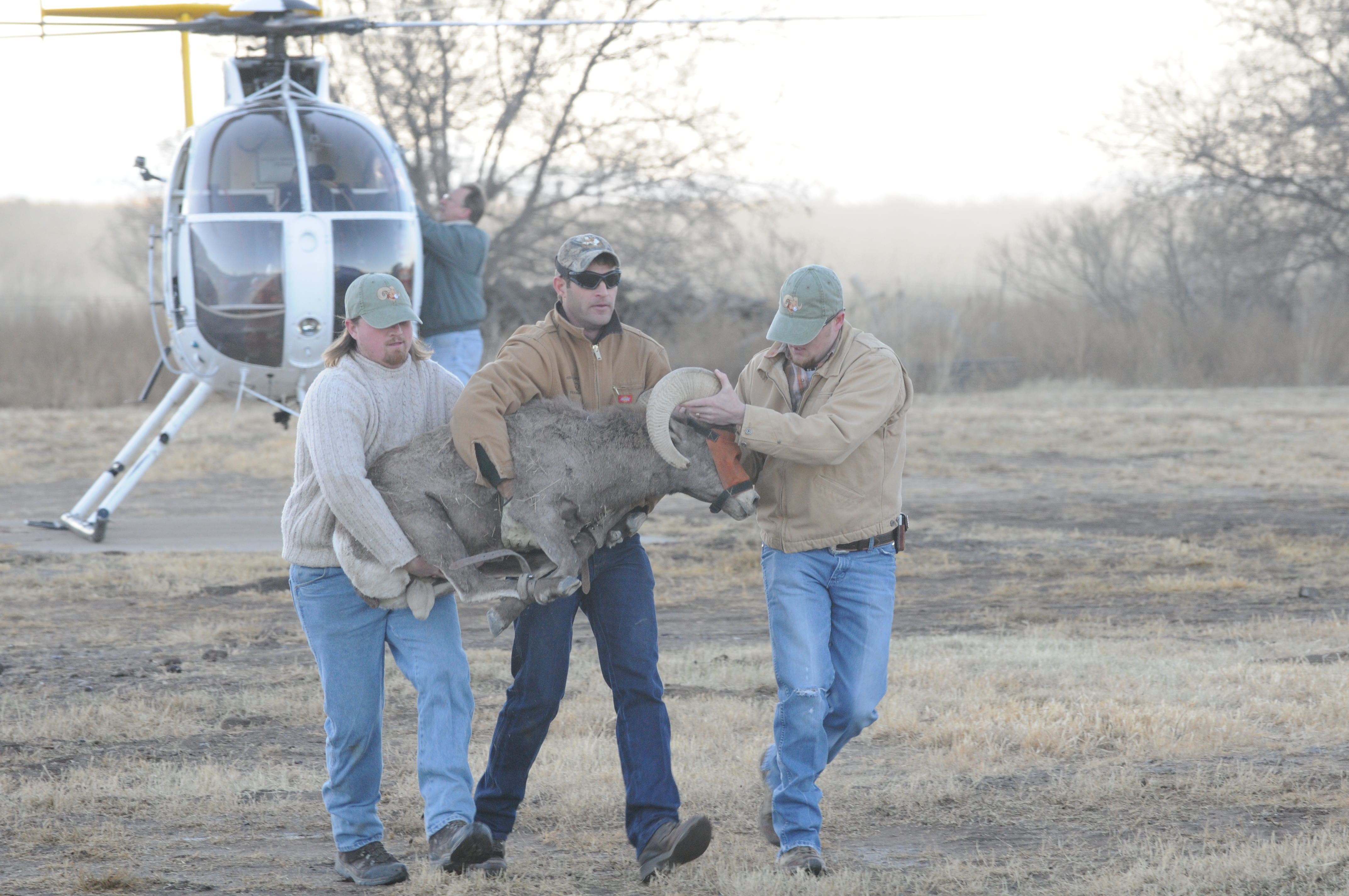
Bighorn Sheep Release at Big Bend Ranch

Bighorn Sheep Release at Big Bend Ranch


This is Passport to Texas

Kenneth Garcia has a name for the kind of hunting he usually does.

08— I called it poor man hunting, because I hunted on state property in New Mexico for mule deer, and some small leases and stuff here in Texas.

The cost of high fence hunting leases offering premium animals are out of reach for most hunters.

07— I look all the time at what they cost nowadays here in Texas, and I go – how can I justify that expenditure –and the answer is I can’t.

Kenneth got a chance to hunt like the “one percent” when in 2010 Texas Parks and Wildlife drew his name to win the grand Slam from Big Time Texas Hunts: four guided hunts for mule deer, white tail, pronghorn and desert bighorn sheep. He’d been spending $10 dollars annually on entries for a dozen years.

06— Oh, okay. So I did it for 12 years; so I put $120 dollars toward that hunt before I won it…whoop-de-doo.

He considers it an investment in habitat conservation, which is how entry fees are used.

17— If you’re a hunter, or a person who enjoys the outdoors, even if you don’t win, it’s being put to good use. And all of us can spare ten bucks—we drop it on useless stuff every day. So putting it on something like this is a whole lot better in the long run.

There are seven premium Big Time Texas Hunts hunt packages, including the grand slam. Online entry is $9 dollars, $10 dollars at license retailers. Deadline to enter is October 15. Find more information the TPW website.

The Wildlife and sport fish restoration program supports our series. For Texas Parks and Wildlife…I’m Cecilia Nasti.

Conservation: Kerr’s August First Friday Tour

Thursday, August 2nd, 2012


This is Passport to Texas

The Kerr Wildlife Management Area is a research and demonstration site for the Edwards Plateau Ecoregion…and August third begins the first of a three-part monthly series called First Friday Tours.

06—Our First Friday Tours are a series of seminars that we offer annually as part of our outreach program.

Wildlife biologist, Ryan Reitz, says the first part of the free series focuses on the basics.

31—We’re starting out with the basics here, on our first part of our three-part series. And we will be discussing those elements of habitat—those things critical in the successful management of any wildlife species: food, water and cover. We’ll be discussing these in detail. We’ll be addressing the diets of native species—and even exotic species. We’ll be discussing how important water is on the landscape. And we’ll be discussing development strategies and cover requirements—how these plants provide both food and cover to our wildlife resources.

It’s free to attend, but Reitz says you need a reservation.

13—We do ask that everyone interested in attending call in for reservations. You can call the Kerr WMA. Our office number is 830-238-4483, and sign up for a spot on our First Friday Tours.

Again, the First Friday is on August 3.

If you’re not in the Edwards plateau ecosystem, go to the TPW website and find your nearest WMA, and programs offered specific to your area.

The Wildlife and sport fish restoration program supports our series and celebrates 75 years of funding diverse conservation projects throughout Texas…

For Texas Parks and Wildlife…I’m Cecilia Nasti.