Archive for the 'Shows' Category

Texas Master Naturalists

Wednesday, March 16th, 2016

 

Become a Texas Master Naturalist, http://txmn.org/

Become a Texas Master Naturalist, http://txmn.org/

This is Passport to Texas

They say you never forget your first love. For writer Sheryl Smith Rogers, her first love had eight legs.

Spiders are my first love, and from there I grew into plants and animals.

Eager to fully understand the natural world around her, Smith Rogers completed Texas Master Naturalist training.

I’m with the Highland lakes chapter, which is based out of Burnet. So you learn about your own ecosystems in your region. I’m learning about the plants that are indigenous to this area. Whereas, if you live on the coast, you’ll be learning about those kinds of plants. So, we’re all learning what’s important to our
area.

Trainees learn about living things in their ecosystem, as well as their region’s geology, hydrology and more. After receiving certification, Smith Rogers says Master Naturalists volunteer in their communities where needed.

Volunteers go to ranches and survey the plant species, and they offer land management advice. In a city, volunteers might go into a city park and create a butterfly garden. For instance, here in Blanco – at Blanco State Park – the Master Naturalists help put on program every May for third graders. They do so
many different things [laughs].

Find details on becoming a master Naturalist on the Texas parks and Wildlife Website.

For Texas Parks and Wildlife … I’m Cecilia Nasti.
White Bass Run = Fishing Fun

Tuesday, March 15th, 2016
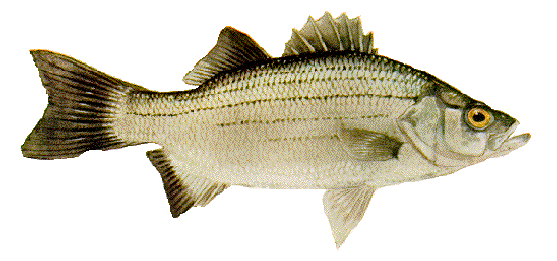
White bass

White bass

This is Passport to Texas

In December and January, while we’re busy with the holidays and staying warm indoors, white bass begin to congregate where rivers and reservoirs meet.

And those fish are getting ready for those environmental cues to happen so they can actually all start migrating and running up river.

Environmental cues like changes in temperature and water flows. Marcos De Jesus is a fisheries biologist. When the time is right, white bass move up river to spawn.

Some of them go up pretty far – as far as they can swim to complete their spawning run. So, they become congregated and create excitement for the anglers, because once they’re congregated they’re really fun to catch.

East and Central Texas offer many white bass fishing opportunities. De Jesus says while they’re active year round, springtime runs practically set up anglers for success.

As we get into the springtime, they congregate towards the mouth of the river waiting for those cues. Right when they’re at the mouth of the river, they’re easy to catch. But, the easiest time to catch them is when they’re running up river spawning in those shallow waters, because you can actually catch them from the bank. Do these fish give you a good fight? Definitely. They’re very great fighters. They become aggressive, and they take on many types of lures and live bait. Once they hook on – they’ll fight pretty hard.

Find out when and where white bass are biting when you log onto the Texas Parks and Wildlife website.

The Sport Fish Restoration program supports our series.

For Texas Parks and Wildlife, I’m Cecilia Nasti.

TPW TV: Hueco Tanks

Friday, March 11th, 2016
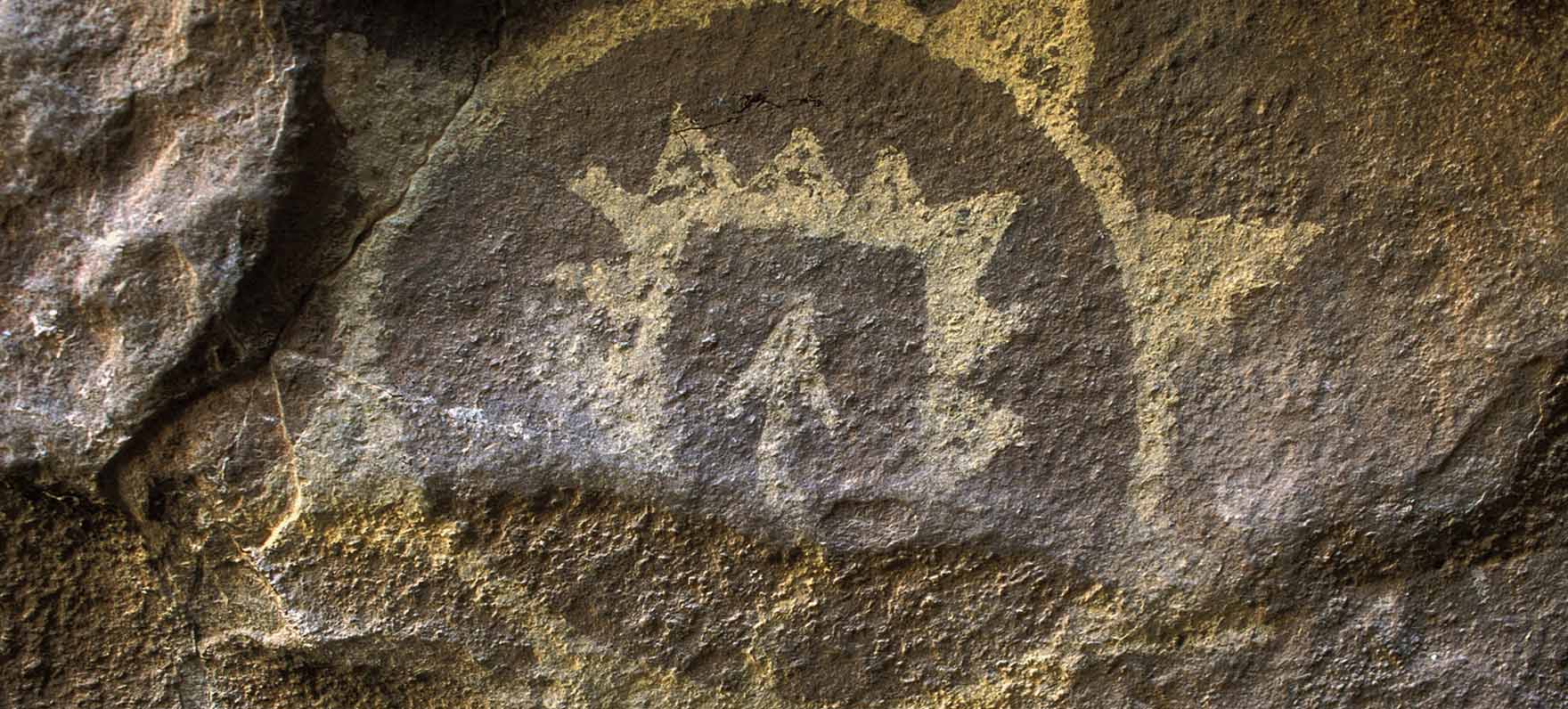
Pictograph at Hueco Tanks State Historic Site

Pictograph at Hueco Tanks State Historic Site


This is Passport to Texas

Hueco Tanks, about 30 miles east of El Paso, is one of the most important pictograph sites in the Southwest, with the largest collection of painted faces in North America.

There really is no other place like Hueco Tanks, in terms of the nature and the number of the pictograph images. And for a tiny place of only eight hundred and sixty acres there’s just an amazing number of separate pictograph sites.

We visit the park next week during a segment of the Texas Parks and Wildlife TV series on PBS.

This mask that we sometimes call starry eyed man has been staring out of his little niche in the rocks for between six hundred and eighteen hundred years. Um, it’s amazing that it’s in such good condition.

Vandals damaged several paintings with graffiti. During the TV segment, we watch as scientists, use high tech devices to restore the pictographs.

This is pre-Colombian, and the graffiti is about fifty years old. We’re using infrared light, and it’s the similar technology that’s used in tattoo removal to take tattoos off, so you can be very precise with the laser. The work is going really well, it’s really difficult for me to stop because it’s really exciting!

Check out the segment about Hueco Tanks next week on the Texas Parks and Wildlife TV Series on PBS. Check your local listings.

That’s our show… Funding provided in part by Ram Trucks. Guts. Glory. Ram

For Texas Parks and Wildlife…I’m Cecilia Nasti.

Rio Grande Turkeys

Thursday, March 10th, 2016
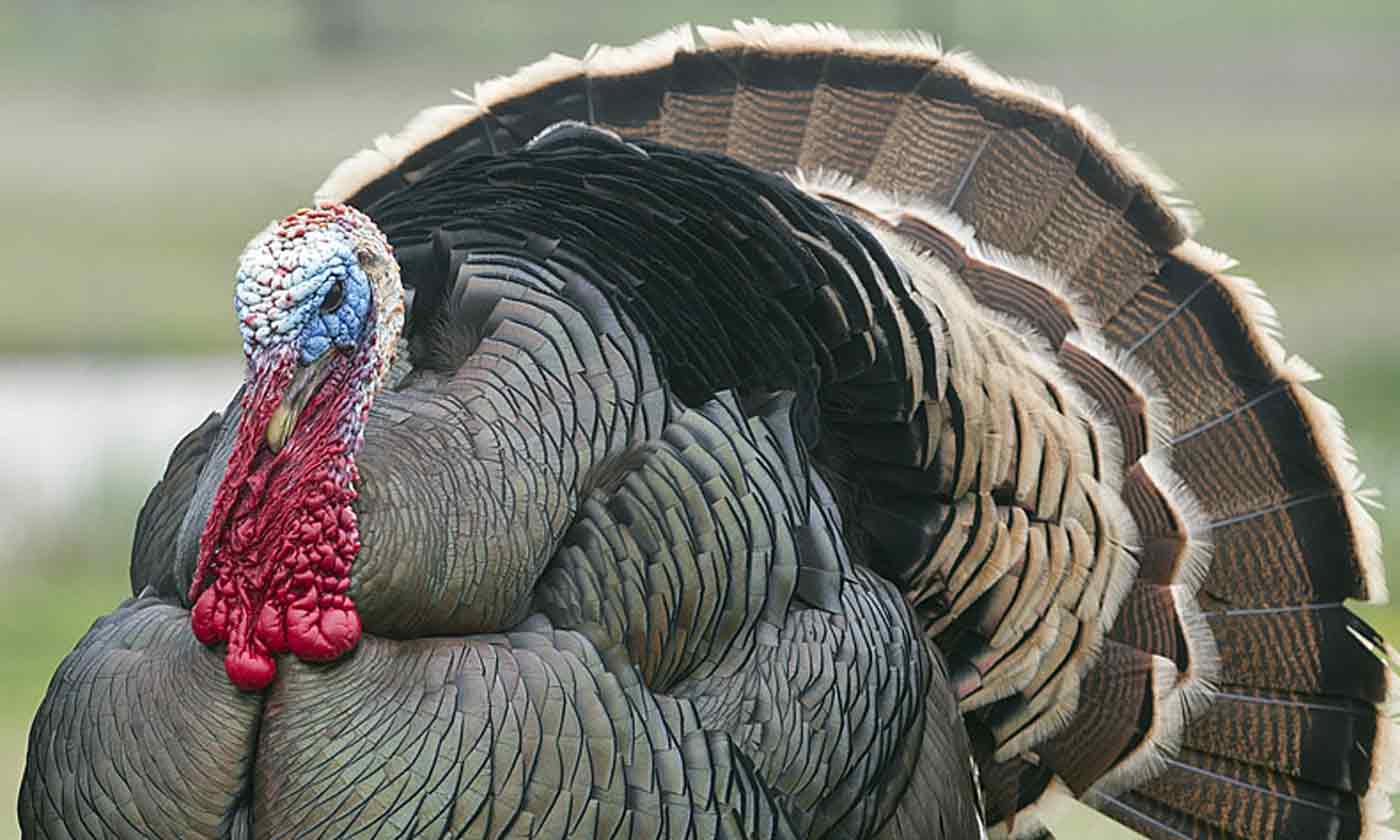
Rio Grande Gobbler

Magnificent Rio Grande Gobbler

This is Passport to Texas

Everything’s big in Texas – including the Rio Grande turkey population.

The Rio Grande is really a neat bird from a Texas standpoint, because Texas has, by far, most of the Rio Grandes in the country. There are Rio Grande turkey populations in Okalahoma and Kansas as well, but they’re very small compared to the Texas population.

Former upland game bird specialist T. Wayne Schwertner currently serves as Assistant Professor of Wildlife, Sustainability, and Ecosystem Sciences at Tarlton State University.

So, the Rio Grande turkey is a uniquely Texas bird. It’s adapted to the arid conditions of the western part of the state, to the brush lands and prairies. Versus the eastern turkey which is much more adapted to the forests of east Texas and the east United States.

Spring Rio Grande season varies by zone, with the South Zone kicking off March 19 and the North April 2. Hunters will find the bulk of the birds west of I-35.

The Rio Grandes occupy the central half of the state, from about I-35 to the Pecos River, and all the way from the Panhandle down to the Rio Grande Valley.

The Wildlife Restoration Program supports our series and works to increase hunting opportunities in Texas.

For Texas Parks and Wildlife…I’m Cecilia Nasti.

Turkey at the Matador

Wednesday, March 9th, 2016
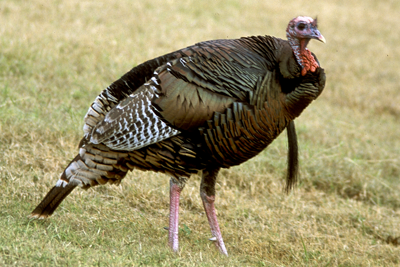
Turkey at the Matador WMA

Turkey at the Matador WMA


This is Passport to Texas

Seven miles north of Paducah… in the Texas Panhandle… the Matador Wildlife Management Area offers about 28-thousand acres of rolling grasslands.

Former assistant area manager, Bill Adams, said it’s open to the public.

It’s open throughout the year for hiking, bird watching, nature tours, horseback riding… We have 76-miles of road on the area, and it will take you through a diversity of landscapes.

The site is off limits to the casual visitor only a few times a year.

We have a few hunts during the year that it’s closed. And those are our gun hunts for feral hogs, and deer and also for our spring turkey hunts.

Adams says turkey hunting is strictly regulated on the Matador.

We’ve got three good roosting sites for those turkeys, but they’re range is limited to those roost sites. We have to regulate the number of hunters we allow to take those Toms. We also have to consider natural mortality of the turkey population in the area. We want to be careful with what we harvest. Regulating that harvest is a way we can provide for public hunting but also provide for betterment of the turkey population on the Matador.

That’s our show… made possible in part by the Wildlife Restoration Program… helping to fund the operations and management of more than 50 wildlife management areas.

For Texas Parks and Wildlife…I’m Cecilia Nasti.