Archive for the 'Shows' Category

TPW TV: The State of Quail

Friday, November 13th, 2015


This is Passport to Texas

Grassland birds throughout North America, including the bobwhite quail, have been in decline.

06—Over the past 20, 30 years—we’ve seen serious declines across its entire range, including Texas.

Robert Perez is upland game bird program manager for Parks and Wildlife. He and others concerned about this enigmatic species’ survival appear in a segment called The State of Quail on the Texas Parks and Wildlife TV series on PBS.

07— Fundamentally, conservationists agree that the root cause is the changes in the quality and quantity of habitat.

During the segment, airing next week, watch conservation groups and private landowners, like Jim Willis, collaborate to improve habitat for quail, by planting native grasses, which provide shelter, seeds and insects for the birds.

19— This is a sample of a native grass. This plant contributes to the health of the land. This is the way you conserve moisture. Man has come in and ripped out a lot of this native grass and planted what we call improved grasses, which is really not improved, they’re invasive species, like Bermuda grass, and Bahia grass, and they don’t give back to the soil. They take from the soil.

The State of Quail airs the week of November 15 on the Texas Parks and Wildlife TV series on PBS. Check your local listings.

For Texas Parks and Wildlife…I’m Cecilia Nasti.

Making Pollinators a Priority

Thursday, November 12th, 2015
Common Eastern Bumblebee

Common Eastern Bubmle Bee (Bombus impatiens) worker in flight
TEXAS: Lamar Co. Camp Maxey National Guard Facility in Paris
27.August.2009 J.C. Abbott


This is Passport to Texas

Honeybees, native bees, bats, butterflies and other insects are pollinators, and are vital to our economy, food security, and environmental health. The Texas Parks and Wildlife Department Landowner Incentive Program, or LIP, can help interested landowners manage their property for pollinators.

09-The LIP program at the moment is prioritizing projects that are directed at pollinators. Pollinators are definitely hot.

Arlene Kalmbach coordinates the program.

33-Pollinators got on the Landowner Incentive priority list based on the funding source. The landowner Incentive Program is funded by the Fish and Wildlife Service–partners for fish and wildlife program. And pollinator projects are a high priority for them, so they are a high priority for us. They would have been a
high priority for us regardless of our funding source. But, it helps that everybody’s on the same page. So, with this next round of projects, we hope to see a lot of pollinator targeted projects.

Something to know about the LIP program is it does not have acreage restrictions.

13-It really just depends on the resources you’re trying to restore or protect. In the history of the program, I’ve seen us work on an urban lot to thousands of acres of West Texas.

Have a project in mind? Find details on the Landowner Incentive Program on the Texas Parks and Wildlife website.

For Texas Parks and Wildlife…I’m Cecilia Nasti.
Helping Landowners do the Right Thing

Wednesday, November 11th, 2015
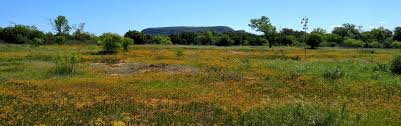
Land well tended.

Land well tended.

This is Passport to Texas

The Texas Landowner Incentive Program (LIP) offers funding opportunities for private landowners wishing to implement natural resource conservation practices on
their lands.

05-I usually send them to their local field biologist to start the relationship.

Arlene Kalmbach [CALM-bock] coordinates the program. After the initial phone call, there’s a site visit to…

11-…get the goals that the landowner has for the property, and maybe get the biologist’s perspective on what’s there and what potential there is for some conservation work. And then they go from there.

LIP efforts focus on projects aimed at creating, restoring, protecting and enhancing habitat for rare or at-risk species throughout the state, as well as activities that positively impact riparian areas and watersheds.

10-Sometimes they may bring in other specialists. Riparian specialists–an invertebrate biologist. It really starts with the landowner’s goals and what that property has to offer.

Through funding partnerships, the program offers cost-sharing with private landowners on LIP projects. Texas Parks and Wildlife covers a percentage of the proposed project costs; landowners, meantime, must contribute a minimum percentage through in-kind labor, materials, or finances, for example.

Find Landowner Incentive Program application details on the Texas Parks and Wildlife website.

For Texas Parks and Wildlife…I’m Cecilia Nasti.
Partners in Conservation

Tuesday, November 10th, 2015
Landowner Incentive Program

Landowner Incentive Program


This is Passport to Texas

The Landowner Incentive Program, or LIP, is a way for private landowners to partner with Texas Parks and Wildlife to achieve conservation goals on their
property…

08-…to meet the goals of the private landowners for their property, as well as conservation goals for species of concern.

Arlene Kalmbach coordinates the LIP program for the agency.

16-When we add the conservation layer of their land management plan, we’re often assisting them with erosion control, invasive species control. In some cases prescribed burns. It really varies because every property’s unique.

As 95% of Texas land is in private hands, landowners play a vital role in maintaining the state’s natural resources. Implementing conservation practices can
enhance a landowner’s management goals.

05-Conservation can often enhance the property’s value for the landowner.

Tomorrow: Getting started with the landowner Incentive program.

For Texas Parks and Wildlife…I’m Cecilia Nasti.
Wildlife Trail Maps

Thursday, November 5th, 2015
Wildlife Trail Maps

Wildlife Trail Maps


This is Passport to Texas

Texas is a big place with lots to do and to see for the wildlife lover; knowing where to start can be a little overwhelming. No worries. Texas Parks and Wildlife has a solution.

04-We have nine distinct maps; each covers a region of Texas.

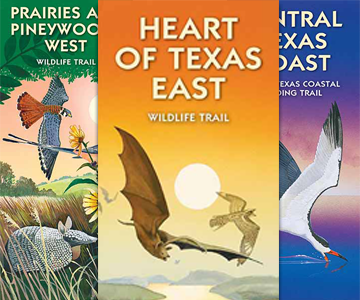
They are the Great Texas Wildlife Trails Maps, and encompass more than 960 sites statewide. Liz Tomberlin works in nature tourism at Parks and Wildlife.

20-And [the maps] cover everything from migratory bird watching spots–to burrowing owls–to the prairie chicken leks in the panhandle plains. The monarch migration–we’ve had some great spots to see monarchs. All the way through to bat-watching, and all sorts of other mammals and birds and amphibians that you can see throughout Texas.

The agency updated the Heart of Texas West and East maps recently to ensure users have access to the most current information–information that goes beyond
where to find native critters.

17-Our maps include information for general tourists. There’s information for convention bureaus and visitors’ centers on there; each of our sites includes GPS coordinates; driving directions from major highways; a short description of the site and what you can expect to see there, and a phone number so you can contact someone.

Find more information about The Great Wildlife Trails Maps, including free, interactive versions of the maps on the Texas Parks and Wildlife website.

For Texas Parks and Wildlife…I’m Cecilia Nasti.
