Archive for the 'Shows' Category

Building a Campfire

Friday, June 12th, 2015
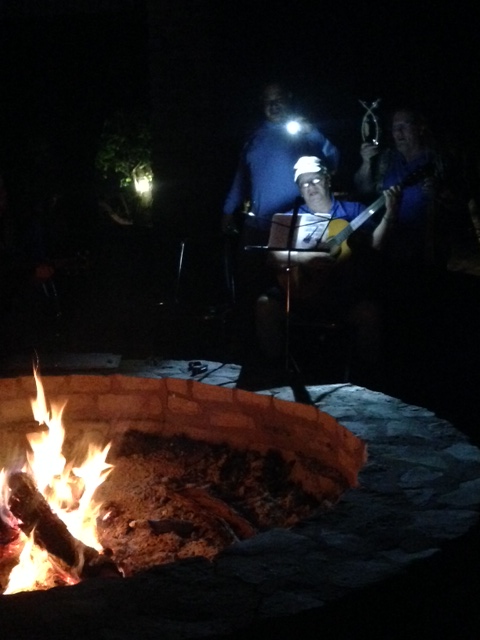
Singing around a campfire.

Singing around a campfire.


This is Passport to Texas

Campfires at state parks enliven your overnight camping experience. Yet, Terry Erwin says before building a blaze–ensure the site is suited for the purpose.

19-When you want to build a fire you certainly have to find a location to build it. You want the ground or the level where you’re going to build the fire to be dry. You clear the leaves away and if possible, gather some rocks to make a fire ring that will contain that fire.

Erwin is and avid outdoorsman and former Hunter Education Coordinator for Parks and Wildlife. Unless authorized by the park manager, he says you may not collect firewood at the park. Therefore, campers must pack in what they need.

23-Start with a bird’s nest of material so if you put your spark in there, gather some cedar bowls or cedar bark and when you spark it, you can blow on the spark and that will enhance the fire. Start with little sticks and graduate to bigger sticks until you add twigs, grass and bark shavings and things like that on the fire to get it started. Then you can add the larger sticks and get it going at that point.

Extinguish your campfire by drenching it with water, and repeat this step until all embers are dead. Alternatively, cover the embers with a thick layer of soil.

That’s our show…Funding provided in part by Ram Trucks. Guts. Glory. Ram

For Texas Parks and Wildlife…I’m Cecilia Nasti.
Conservation Hero: Bessie Cornelius

Thursday, June 11th, 2015
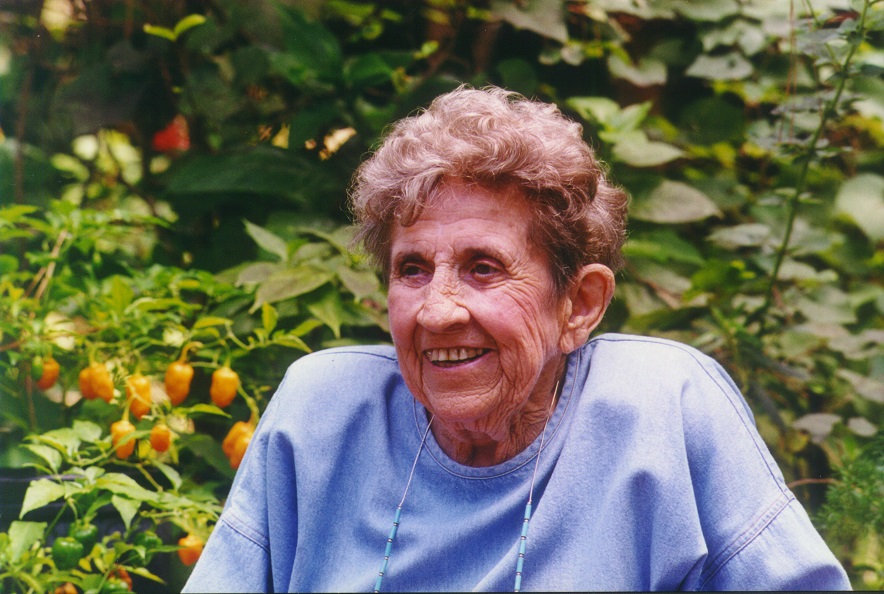
"Miss Bessie" Cornelius

“Miss Bessie” Cornelius. Image courtesy www.texaslegacy.org.


This is Passport to Texas

When she was alive, Bessie Cornelius was an avid birder and staunch conservationist. During an interview with Ms. Cornelius in 1999, she recalled a time when the endangered Brown Pelican was an abundant species along the Gulf Coast.

41-When we first came in fifty-six, you could see the pelicans all lined up on the pilings, right there at the ferry. You could just go anyplace and see them. There were a lot of brown pelicans. They were using DDT then, and before that was banned, brown pelicans began to disappear. And the reason for that, they learned later, was that DDT eventually ran off from the farms into the streams, and streams into the gulf. And the shells of their eggs were very thin and the birds would be killed, you know, before they could hatch.

Cooperation between individuals like Ms. Cornelius, conservation organizations, and government, led to protections being enacted for the Brown Pelican.

During her lifetime Ms. Cornelius helped preserve important bird sanctuaries in the state.

Find more Conservation Heroes at texaslegacy.org.

For Texas Parks and Wildlife…I’m Cecilia Nasti.
TPW TV: Chicken Land

Wednesday, June 10th, 2015
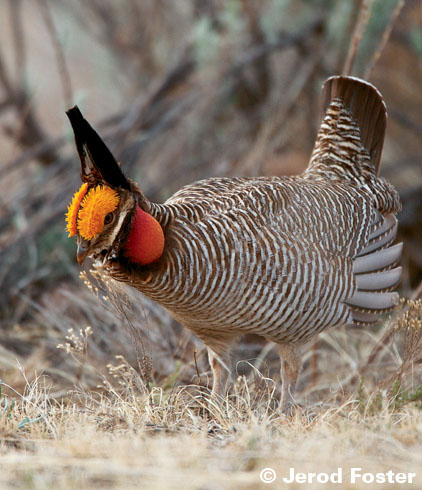
Lesser Prairie Chicken

Lesser Prairie Chicken


This is Passport to Texas

The Lesser Prairie Chicken has declined in Texas. Wildlife biologist Jeff Bonner says the reason: its historic range
has dwindled to almost nothing.

07-Here in Donley County they’re pretty sparse. And, that’s pretty much relative to the quality of the habitat that they have.

Landowners play a crucial role in the restoration of prairie chicken habitat, and hopefully saving the bird; Amarillo Cattleman and landowner, Jay O’Brien.

18- I don’t think you’ll find a cattleman who’s not very interested in the overall ecology of his ranch. That includes wildlife and improving wildlife habitat on his ranch as long as they see that nobody’s going to be dictating exactly how they should do their business.

Landowners may request and receive technical guidance from biologists like Gene Miller, about managing their property for a variety of wildlife.

12-The Hallmark of what we do is providing free, confidential, nonbinding assistance to private landowners. We go where we’re called, and we offer any level of assistance we’re asked to provide.

The future of the Lesser Prairie Chicken is in the hands of private landowners willing to create habitat to keep this iconic species on the landscape for generations to come.

View a segment called Chicken Land, about prairie chicken conservation, on the PBS Texas Parks and Wildlife TV Series the week of June 14. The Wildlife Restoration program supports our series.

For Texas Parks and Wildlife…I’m Cecilia Nasti.
Funding Conservation in Texas

Tuesday, June 9th, 2015
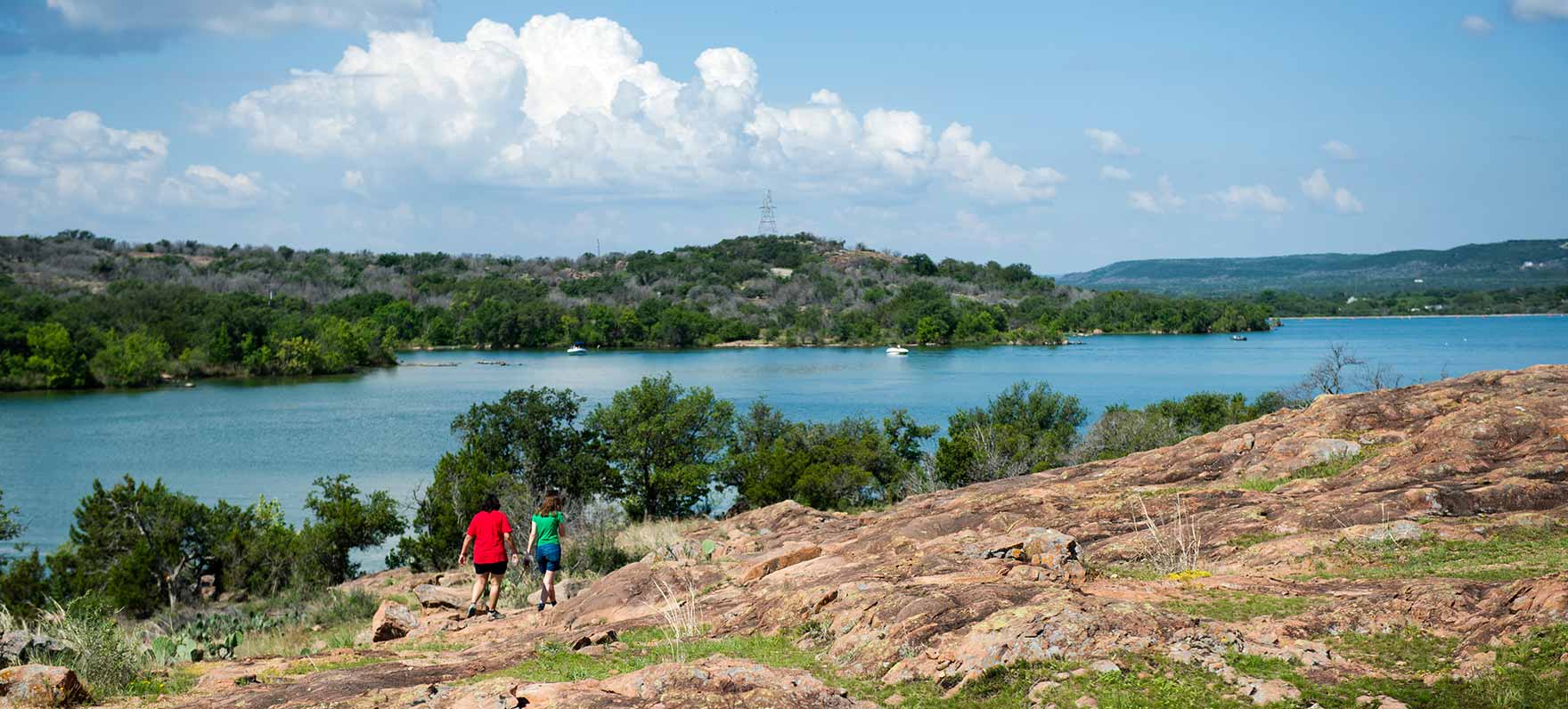
Enjoying the beauty of Texas thanks to funding thoughtful conservation projects.

Enjoying the beauty of Texas thanks to funding thoughtful conservation projects.


This is Passport to Texas

The turn of the 20th century saw the US population begin its migration from farms and ranches into cities.

05- We’ve got almost all the people living in cities [now], and very few people living on the land.

Urban Wildlife biologist, Kelly Simon (SEA-mah) says an unintended consequence of the migration was estrangement from the natural world.

Hunters who maintained a close connection with the land witnessed the outcome of unregulated hunting and lack of habitat conservation first hand. At their urging, Congress enacted the Pittman-Robertson Act of 1937, creating a funding stream for conservation.

07- Through the purchase of hunting license fees and hunting equipment–these things help to fund conservation in the state of Texas.

It’s a new century, and we’re in need of fresh ideas to fund conservation in the 21st Century and beyond. Kelly Simon invites you to take part in the conversation.

12-You can go online, and find Teaming with Wildlife–True to Texas. Texans can get together, just as we did earlier in the last century; we can decide for ourselves in this century how we want to pay for conservation.

The Wildlife Restoration Program supports our series.

For Texas Parks and Wildlife…I’m Cecilia Nasti.

Urban Wildlife Biologists

Monday, June 8th, 2015


This is Passport to Texas

Wildlife biologists, like Kelly Simon (SEA-mah) specialize in–city critters–and their habitat in Central Texas.

09-I’m a wildlife biologist who happens to work in an urban area; just like all of our biologists, I deal with the issues that are important to their counties and their areas.

Like her rural counterparts, Simon meets with landowners to provide technical guidance regarding land use.

12- I also deal with municipal ordinances, and councils of government, and all the different landowners that have a stake in the wildlife and wildlife habitat for their urbanized area.

Outreach and public meetings round out her work.

05- [I] just try to help folks understand, and enhance the wildlife habitat that they have all around them.

This doesn’t mean developing downtown habitat suitable for mountain lions, but it does mean creating a balanced wildlife habitat for appropriate species.

18-So, what I do is I try to help people make decisions that will increase the diversity and balance of wildlife habitat, so that we have things like chickadees and titmice and owls and frogs and toads and lizards–and things that are important for ecological balance and biodiversity–and also appropriate for an urbanized area.

Find your county’s wildlife biologist when you log onto the Texas Parks and Wildlife website. The Wildlife Restoration program supports our series.

For Texas Parks and Wildlife…I’m Cecilia Nasti.