Archive for the 'Shows' Category

Fishing: Winter Trout Stocking, 2

Tuesday, December 23rd, 2014
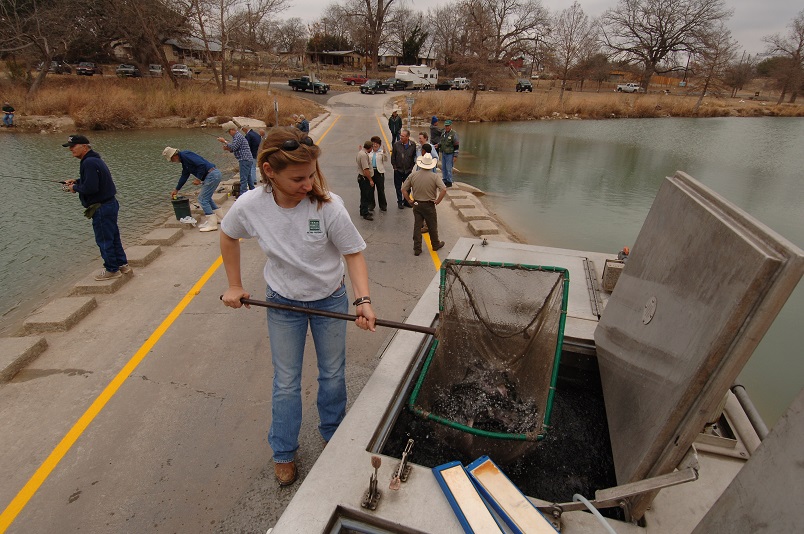
 

Texas Parks and Wildlife technician stocks rainbow trout.

Texas Parks and Wildlife technician stocks rainbow trout.


This is Passport to Texas

If you’re an angler who likes to eat what you catch, then now’s the time to reel in a rainbow trout.

14— We stock them at a catchable and eatable size. They are good fighting fish; they’re relatively easy to catch [and will take nearly any bait]. We usually stock them in smaller bodies of water, so they’re a good fishing, catching opportunity and good eating opportunity as well.

Carl Kittle is a program director for Inland Fisheries, and oversees winter trout stocking in Texas. Distribution began this month and continues through February 2015.

17 – We’ve been stocking [rainbow] trout around Texas for almost 40 years. One interesting note about trout is that we often say there are no established populations of trout in Texas, but actually, way out west in the Davis Mountains there’s a small, tiny stream at high enough elevation that there is a reproducing population of rainbow trout.

It’s just too hot in the rest of the state to sustain rainbow trout populations year round, and so we will stock approximately 290-thousand of the fish in about 140 locations this year…including urban areas. There’s even a new site in Abilene at Grover-Nelson Park Pond

11 – And we have a special program; we actually stock somewhat larger trout in urban areas in our Neighborhood Fishin’ Program. And that’s something that you can specifically look for on our web page.

With the winter holidays here, it’s is a great time go fishing with the kids. Find the stocking schedule and locations at the Texas Parks and Wildlife website.

The Wildlife and sport fish restoration program supports our series and funds rainbow trout stocking in Texas…

For Texas Parks and Wildlife…I’m Cecilia Nasti.
Fishing: Winter Trout Stocking

Monday, December 22nd, 2014


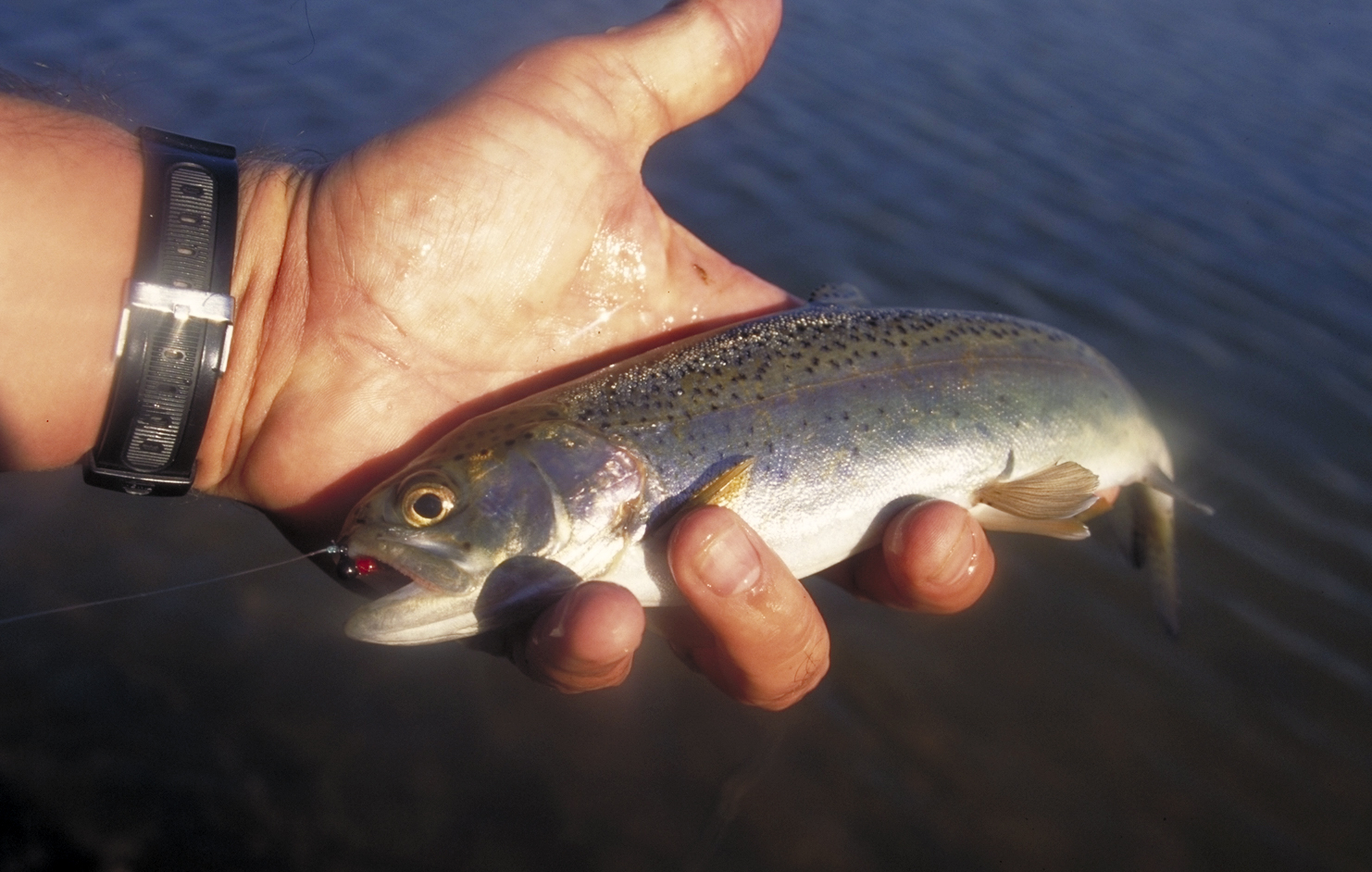
Man holding rainbow trout.

Rainbow trout in hand.


This is Passport to Texas

We’re heading into the holiday season; what better way to celebrate than with rainbows – rainbow trout, that is.

13— We do winter stockings when the water temperatures permit it, to provide an opportunity for anglers to catch trout in Texas. It’s a species of fish that anglers wouldn’t catch otherwise, so we stock them, and we intend them all to be caught out during the season.

Carl Kittle is a program director for Inland Fisheries. Drought had an impact on lake levels statewide over the past two years, but things are looking up in 2014.

13 – This year, things are pretty well back to normal. It’s very dry out west, but it looks like our normal level of stocking with our usual yearly increase. In fact, we expect to stock over 140 sites this year.

Texas Parks and Wildlife plans to distribute approximately 290,000 rainbow trout amongst the various locations, including urban neighborhood fishin’ holes.

07 – We publish a schedule on the Texas parks and Wildlife Department webpage. Look for the winter trout stocking link.

Carl Kittle says we stock rainbows in winter because these fish cannot survive our hot summers. So, when you reel one in this winter, take it home and eat it.

The Wildlife and sport fish restoration program supports our series and helps to fund rainbow trout stocking in Texas…

We record our series at The Block House in Austin, Texas and Joel Block engineers our program.

For Texas Parks and Wildlife…I’m Cecilia Nasti.
TPW Magazine: Exploring Beaumont, Texas

Friday, December 19th, 2014


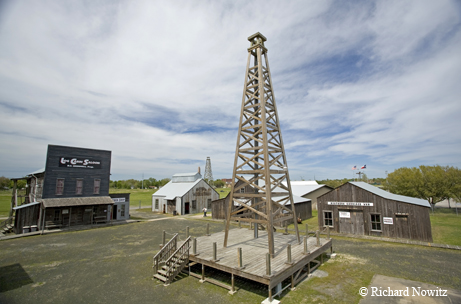
Spindletop-Gladys City Boomtown Museum.

Spindletop-Gladys City Boomtown Museum. Photo by Richard Nowitz.


This is Passport to Texas

Beaumont never seemed like a destination to me. Yet, after reading Sheryl Smith-Rodgers’ article about it in the December issue of TPW Magazine, I’ve reconsidered.

05— I guess I was surprised that there are many museums there.

There’s the Spindletop-Gladys City Boomtown Museum, the Energy Museum, the Fire Museum, the Art Museum of SE Texas, the McFaddin-WardHouse Historic Museum and many others. Plus, there’s good grub.

10 – They have Cajun there since they’re so close to the Louisiana border; Cajun food’s real big there. Seafood – being so close to the Gulf – they have really great seafood.

They have nature, too, and a lot of it, including the Cattail Marsh, a 600-acre manmade wetlands.

30 – It was constructed to treat the effluent from the city’s wastewater treatment plant. But it’s also become a hotspot for birders. They’ve got more than 240 listed bird species there. And, when I was there visiting, just during the course of maybe an hour, it was amazing how many birds that we saw. There’s alligators that have migrated over from the bayou into these wetlands. It’s just a really cool place.

Beaumont. Who knew? Learn more about this town with a little something extra when you read Sheryl Smith-Rodgers Three Days in the Field article called Mixing Oil and Water, in the December issue of Texas Parks and Wildlife magazine.

For Texas Parks and Wildlife…I’m Cecilia Nasti.
Hunt | Food: Doing your Own Processing

Thursday, December 18th, 2014


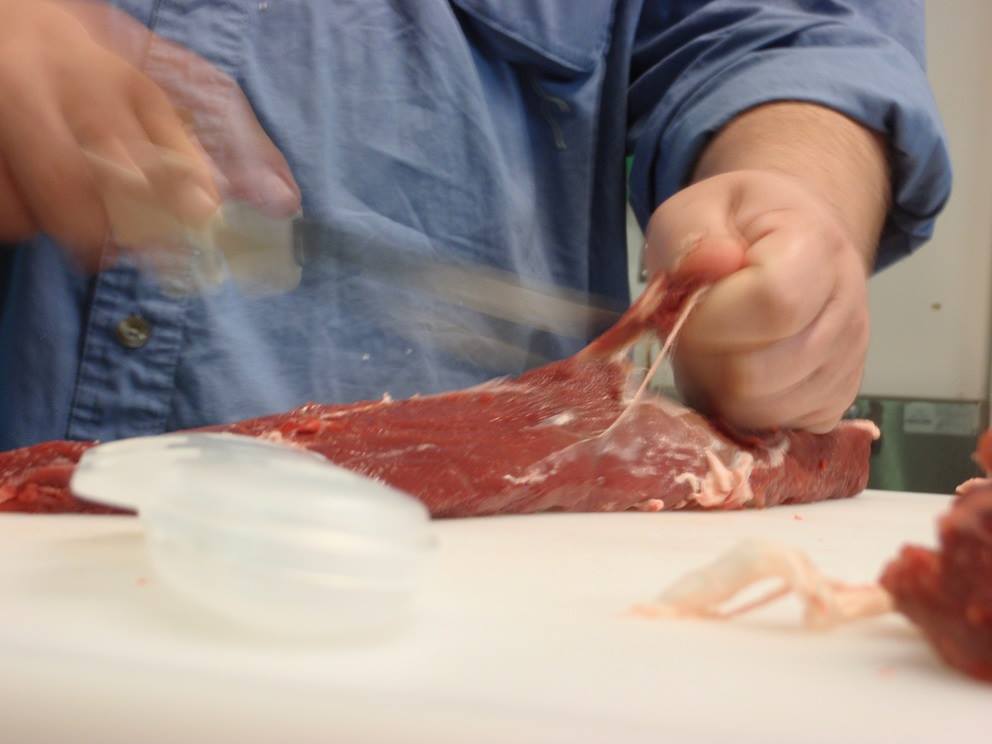
Processing venison at Feral Kitchen

Processing venison.


This is Passport to Texas

Chris Houston of Austin is a hunter and home cook; he butchers and processes what he harvests; but that’s not always been practical.

05—We have a decent sized [kitchen] counter space, but certainly a limited area and limited equipment.

Hunters, says Houston, go to processors because of limited workspace, equipment, and a lack experience. He adds processors are decent folks who provide a good service – but he still wonders what comes back to him.

06—Am I getting back my animal in the sausage? Am I getting all the meat that I had taken in there?

Chris Houston taught himself to butcher and process, and excels at it now. To empower others to do the same, he offers a fully equipped commercial kitchen and his knowledge as Feral Kitchen, a wild food workspace.

23—Butchering and sausage-making tends to feel complicated. However, it can be really simplified. And so, we really want to pass on that education and that confidence to others. We’ve been offering some classes on general game butchering, and some other classes on sausage-making to kind of help people take that step in the learning curve to doing it themselves. And, really, to just try and simplify the entire process.

Learn more about butchering and processing wild game on the Texas Parks and Wildlife website and at feralaustin.com.

The Wildlife and Sport Fish Restoration Program supports our series.

That’s our show… For Texas Parks and Wildlife…I’m Cecilia Nasti.
Survey Results to Guide Parks and Communities

Wednesday, December 17th, 2014


Lost Maples State Natural Area, Photo by Amanda Key

Lost Maples State Natural Area, Photo by Amanda Key


This is Passport to Texas

A survey of Texas’ 95 state parks, historic sites and natural areas by Texas A & M University indicates park visitation brings hundreds of millions of dollars into the state’s economy annually.

08—We collected that data at 29 actual park locations, which we then extrapolated to the rest of the parks in the system.

Kevin Good, with state parks, says the survey looked at where survey respondents were from, how long they were visiting the park, and where they spent their money, among other things.

12—Because the economic impact of a visit to a restaurant, perhaps, might be different than spending dollars at a gas station. So, we wanted to see where their money was being left behind in the community.

The agency will use the data for the betterment of parks, their visitors and the communities they serve.

35—Local park management will be able to use it to educate their community on the value of that site, and how the state’s investment in that park actually pays multiple returns to the local community [including job creation]. It will also be used internally to help us evaluate where some parks may need some additional marketing input, or looking at how parks relate with their local community, and to some extent, where perhaps we may need to invest in additional facilities.

That’s our show…for Texas Parks and Wildlife…I’m Cecilia Nasti.
