Archive for the 'Shows' Category

Fish/Conservation: Artificial Reef Program

Monday, July 22nd, 2013
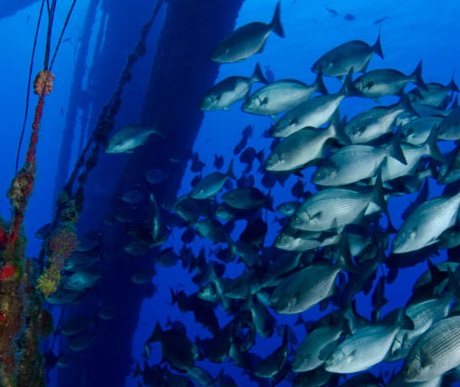
Fish inhabit reefed oil platform.

Fish inhabit reefed oil platform.


This is Passport to Texas

All year long we’re highlighting milestones achieved by Texas Parks and Wildlife during its 50 year history as an agency. Today, we recognize the Artificial Reef Program.

09— The program officially started in 1989 when the Texas Legislature tasked Parks and Wildlife to preserve marine life out in the gulf of Mexico.

Program leader, Dale Shively, says the Artificial Reef program started in earnest following approval of its management plan in1990.

14—An artificial reef is an environment where we take man made materials like concrete and steel, ships and oil platforms…and position those within a reef area to mimic a natural reef environment.

Artificial reefs provide hard substrate otherwise lacking in the gulf. The materials immediately attract marine life.

16—In most cases, marine organisms will attach and create an ecosystem within a few days. In some cases such as oil platforms, those platforms have been out there for thirty some years. So, they’re pretty well covered with marine life before we do anything to them.

Artificial reefing benefits sport fishing and the Texas economy – that’s tomorrow.

The Sport Fish restoration program supports our series and is funded by your purchase of fishing equipment and motorboat fuel.

For Texas Parks and Wildlife…I’m Cecilia Nasti.
Recreation: Nature Tourism

Friday, July 19th, 2013

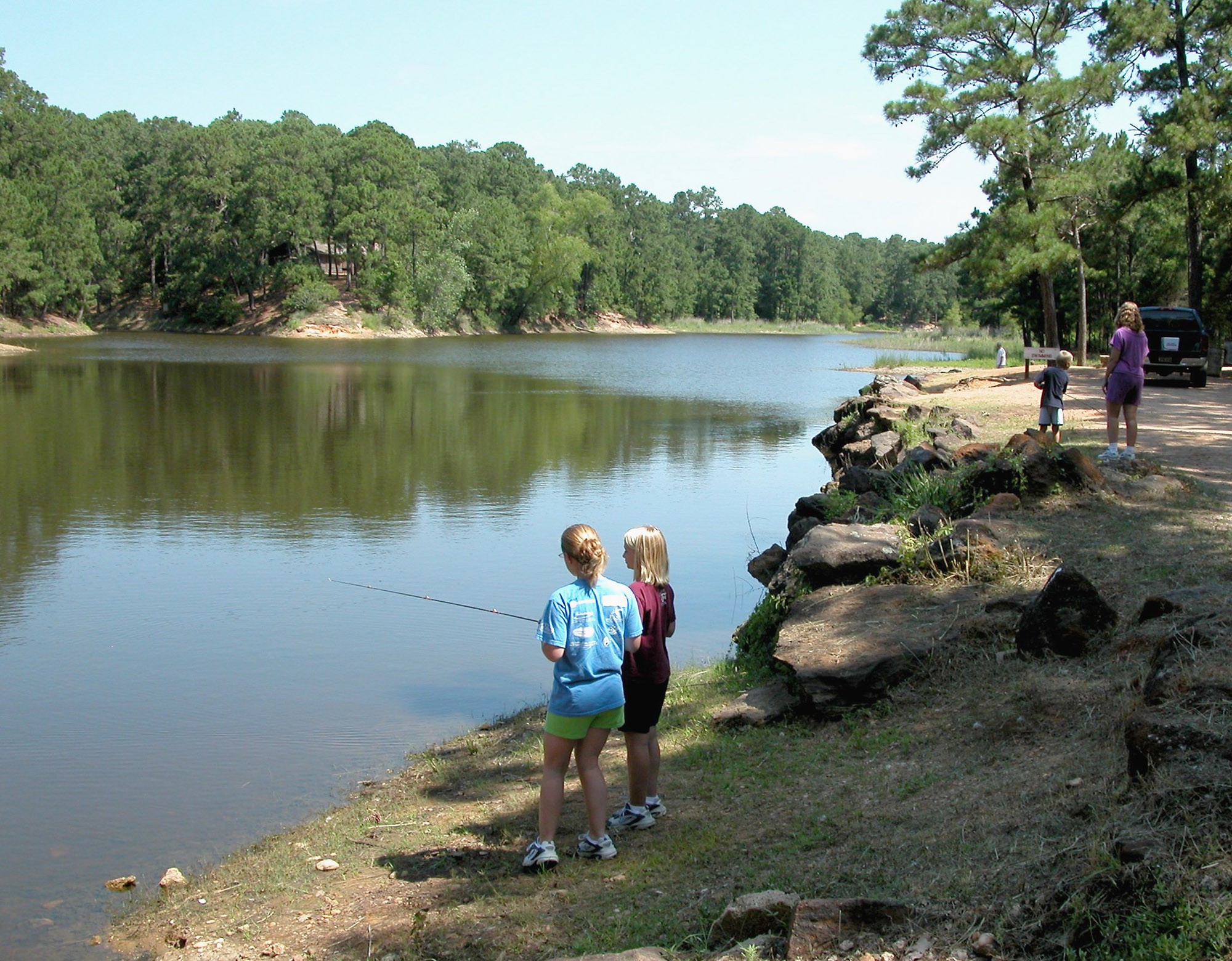
Bastrop State park, Image by Robert McCorkle

Bastrop State Park, Image by Robert McCorkle


This is Passport to Texas

When you engage the outdoors — whether camping, paddling, bird watching, hunting, fishing, or any number of activities – you’re participating in nature tourism.

07— Nature tourism, quite simply, is going out and traveling based on natural resources.

Shelly Plante oversees Nature Tourism for Texas Parks and Wildlife.

16— Nature tourism in Texas is booming. Wildlife viewing has been skyrocketing; people are doing more and more bird watching, people are doing wildlife photography, camping at our state parks, hiking. We’ve become so urban that I feel people are really just looking for a way to reconnect with the outdoors.

Plante says city squirrels, pigeons and community pools just don’t cut it anymore for urban dwellers. That’s good news for people in rural communities.

20— These nature tourism opportunities give rural communities a way to step in, market themselves, make activities available and easy for people to do: everything from paddling trails and wildlife trails, to photography opportunities on private ranches. Texas has it all, and it is definitely great income for private landowners, and great for the income of local businesses.

Find nature tourism opportunities on the Texas Parks and Wildlife website.

That’s our show for today…with funding provided by Chevrolet, supporting outdoor recreation in Texas; because there’s life to be done.

For Texas Parks and Wildlife…I’m Cecilia Nasti.
Foraging: Stalking the Wild Harvest

Thursday, July 18th, 2013

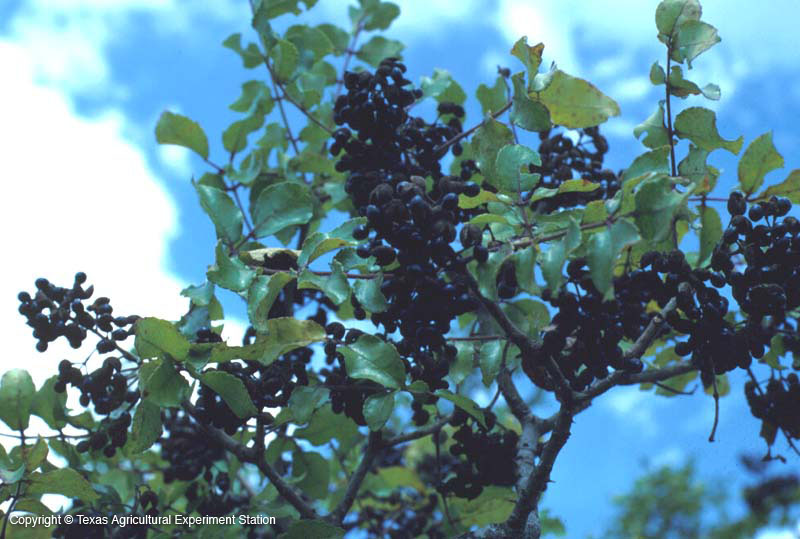
Wild Mustang Grapes, Image Aggie Horticulture

Wild Mustang Grapes, Image Aggie Horticulture


This is Passport to Texas

Before trudging into the woods with dreams of foraging wild persimmons or mustang grapes, remember: leave some for the wildlife.

09—When you’re a gatherer, it’s kind of like being a hunter: you should only take what you think you can use; although, I have been known to get fourteen gallons of wild grapes.

Dyanne Cortez writes about gathering and using wild Texas fruit for the August/September issue of Texas Parks and Wildlife Magazine.

15—Well, a lot of things grow in pretty wild places. So, you need to be aware of snakes; wear boots; be aware of your surroundings. You’re out in the field. There’s going to be sun; there might be poison ivy. You’re really out stalking the wild harvest.

Learn about edible Texas plants before going out; the Native Plant Society of Texas and the Ladybird Johnson Wildflower Center are great resources for that. Cortez, meantime, advises about where to find wild fruit.

24—It is not legal to collect any plant or plant part in a state park or a national park. It can be a challenge because you see this stuff in the parks and it’s very tempting, but you don’t do that. Go for private land; look in your own backyard. Ask your friends. It’s so much fun when it’s all done. It’s just really worth it, and it’s so neat to know what nature has to offer.

Dyanne Cortez’ article about gathering and using wild fruit is in the August/September issue of Texas Parks and Wildlife Magazine.

For Texas Parks and Wildlife…I’m Cecilia Nasti.
Foraging: The Wild Harvest

Wednesday, July 17th, 2013

Foraged feast; image courtesy of Edible Austin, www.edibleaustin.com

Foraged feast; image courtesy of Edible Austin, www.edibleaustin.com


This is Passport to Texas

Before grocery stores, humans acquired their sustenance directly from nature. Hunting was part of that culture.

09— The other side of the culture, which is very ancient, is the gathering side. So, I wanted to do something about gathering and just let people know what’s out there for the taking.

Dyanne Cortez calls herself a gatherer.

14— I started gathering when I was about 19, when I discovered wild mustang grapes. To me, it’s like this stuff is out there, and it’s almost an insult to Mother Nature if I don’t go make use of it.

She wrote an article for the August/September issue of Texas Parks and Wildlife magazine about gathering and using wild Texas fruit.

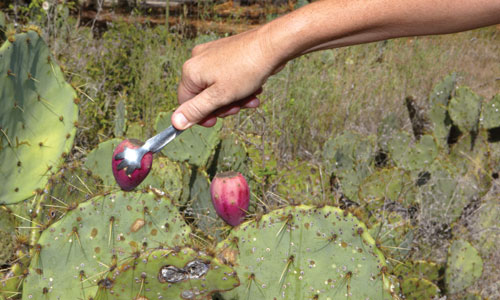
30—Well, the article focuses on persimmons, plums; we also cover prickly pears, agarita berries, and wild grapes. And dewberries – which are the wild blackberries that are found in odd little places. We talk about where to find them, how to harvest them, the best season to harvest, and how to clean and prepare them. And then we’re going to have a web extra that has recipes to get people started.

The dos and don’ts of gathering wild fruit tomorrow; Dyanne Cortez’ article is in the August / September issue of Texas Parks and Wildlife Magazine.

For Texas Parks and Wildlife…I’m Cecilia Nasti.
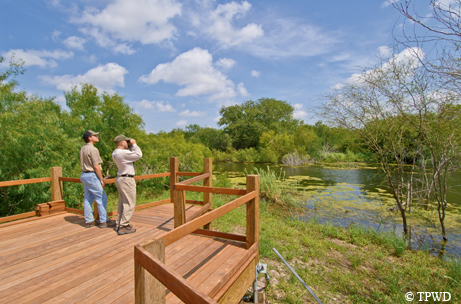
Birding: The Challenges and Rewards

Tuesday, July 16th, 2013

Birding in the Rio Grande Valley

Birding in the Rio Grande Valley


This is Passport to Texas

With enough time and money, dedicated birders can compile “life lists” (of species they’ve observed) numbering in the thousands.

11— Their lists are their life experiences. When they look through the list they can relive the incredible memories they’ve had traveling the world, going to exotic places, and seeing incredible things.

Russell Roe, managing editor of Texas Parks and Wildlife magazine, wrote about “big listers” for the August / September issue. These folks exceeded the 8,000-bird level; only about two dozen people in the world can claim this accomplishment. Why so few? Chasing after the big list affects more than just the birder.

11— You do hear tales of birders who spend months on the road, and miss their family’s birthdays and strain their marriages and everything else.

What motivates these people? Roe says for one subject in his article named David Shackelford, it was a chance encounter with a bird.

23— David Shackelford grew up at Pedernales Falls State Park, and he told the story of having this encounter with a Golden Cheeked Warbler. He was climbing up a cliff to get a closer look at a plant. And he heard a Golden Cheeked Warbler; it landed on his finger. He just had this incredible connection to this bird. To me, he was always trying to relive that connection by going out and trying to find all these birds in the world.

Read this article in the August/September 2013 issue of Texas Parks and Wildlife Magazine.

For Texas Parks and Wildlife…I’m Cecilia Nasti.
