Archive for the 'Shows' Category

Birding: Big List Birders

Monday, July 15th, 2013
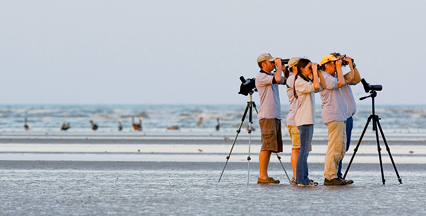
Birders at the beach, image Texas Parks and Wildlife

Birders at the beach, image Texas Parks and Wildlife


This is Passport to Texas

There are birders…and then there are birders.

15— Some birders can spend a lot of time and a lot of money and they’ll see maybe four thousand or five thousand birds in their lifetime. So, seeing eight thousand birds like these two people have, really requires very extensive amounts of travel where you’re going to every single corner of the globe.

The two people are David Shackelford and Phil Rostron. Writer, Russell Roe, penned an article about the men for the August/September issue of Texas Parks and Wildlife Magazine.

He says these men rank among the top ten “big listers” worldwide. They have each seen and listed more than 8-thousand bird species apiece.

08— There are about 10-thousand known species, and once you get up to those certain levels, it gets harder and harder to reach another level.

Reaching new levels is not just harder, it is also more expensive…

12—Phil Rostron says his cost per bird keeps going up Every trip he used to see maybe 200 new species on a trip, and now he’s lucky to see 20 new species on a trip. And he’s spending the same amount of money on the same type of trip.

More on big list birding tomorrow… Find this article in the August/September 2013 issue of Texas Parks and Wildlife Magazine.

Support provided by Ram Trucks. Doing what’s right and good regardless of the degree of difficulty — takes guts. Those are the people who build Ram trucks. RAM.

For Texas Parks and Wildlife…I’m Cecilia Nasti.
Education: Project Wild

Friday, July 12th, 2013

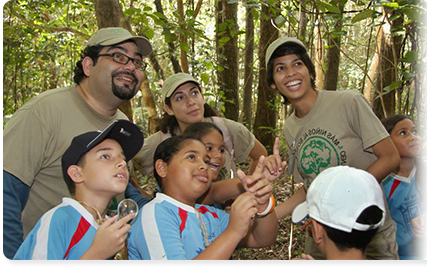
Engaging the Outdoors, Image courtesy www.projectwild.org

Engaging the Outdoors, Image courtesy www.projectwild.org


This is Passport to Texas

Kiki Corry is the Project Wild Coordinator for Texas Parks and Wildlife.

10 – Project Wild is an environmental and conservation education program. It is nationally recognized and distributed internationally. And, Texas Parks and Wildlife is the sponsor here in Texas.

Corry trains the facilitators who make Project Wild training workshops available to teachers.

11 – Some of them are teachers. Some of them work for nature preserves or camps, and they want to be qualified to train their staff. They like to contribute to the environmental literacy of the public.

Not all educators taking the workshops are classroom teachers.

20 – Not necessarily just classroom teachers, but also people at preserves and zoos and museums—people who run summer camps. Because this is a very active curriculum, quite often the activities look like a game, but when they’re done properly, the participants in what looked like a game, come away with a much deeper understanding of different environmental concepts.

Learn how to include Project Wild in your curriculum on the Texas Parks and Wildlife.

The Wildlife and Sport Fish Restoration Program supports our series and is funded by your purchase of fishing and hunting equipment and motor boat fuels.

For Texas Parks and Wildlife…I’m Cecilia Nasti.

Conservation: Texas Water Smart

Thursday, July 11th, 2013

Texas Water Smart

Texas Water Smart


This is Passport to Texas

Despite recent rains in some parts of the state, Texas continues to suffer from withering drought conditions, which could worsen as summer continues.

While we can’t control Mother Nature, we can control our water use by developing water-conscious habits – especially when it comes to our lawns and gardens, where most home water use and waste occurs.

A new effort called Texas Water Smart provides water-conserving guidelines to help Texans reduce their water use.

Texas Water Smart tips include: Water your lawn or garden in the morning when temperatures are cooler to minimize evaporation. Adjust sprinklers so you water only your lawn and not the driveway or street.

Use a broom instead of a hose to clean your driveway and sidewalk. Install a rain sensor on your irrigation system so it won’t run when it’s raining. When necessary, replace ornamental plants with water conscious varieties…and periodically check outdoor faucets, sprinklers and hoses for leaks.

These simple acts can save thousands of gallons of water annually for your household, and for Texas. Plus, it helps keep more money in your pocket…and that’s no drop in the bucket. More tips at texaswatersmart.com.

Support provided by Ram Trucks. Doing what’s right and good regardless of the degree of difficulty — takes guts. Those are the people who build Ram trucks. RAM.

For Texas Parks and Wildlife…I’m Cecilia Nasti.
TPW Magazine: August / September Preview

Wednesday, July 10th, 2013

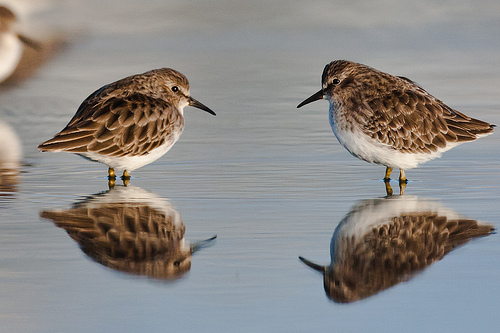
Two Least Sandpipers, Image Creative Commons, Mike Baird

Two Least Sandpipers, Image Creative Commons, Mike Baird


This is Passport to Texas

It may be summer in Texas, but the August/September issue of Texas parks and Wildlife magazine is focused on fall. Editor, Louie Bond.

61— Well, you know, there’s that hint of fall in the air in August nights, and certainly in September, and I think our two features in this fall issue are so appropriate. The first is about two incredible birders. Now, I participated in my first Great Texas Birding Classic this year, and it was very exciting, but it was nowhere near the caliber of these two guys: David Shackelford and Phil Rostron, who have each seen over 8-thousand birds. They are both in the top 10 lists of birders. And Russell Roe, our managing editor, writes a very compelling look at these two very different birders who have achieved this great milestone. And then, our own Dyanne Frye Cortez has taken on what I like to do. I remember when I moved to the country I went out and picked dewberries until my hands were purple and my legs were bleeding scratched. So, she shares with us the best way to harvest agarita, prickly pear, dewberries and Texas persimmons, and all those great wild Texas fruits – and what to do with them after you’ve harvested them. So, I hope you’ll go on a little fall outing with us and read this issue.

Thanks, Louie.

The August/September issue of Texas parks and Wildlife magazine is available on newsstand or by subscription. Learn more at tpwmagazine.com.

For Texas Parks and Wildlife…I’m Cecilia Nasti.
Conservation: The Rules of Frogging

Tuesday, July 9th, 2013

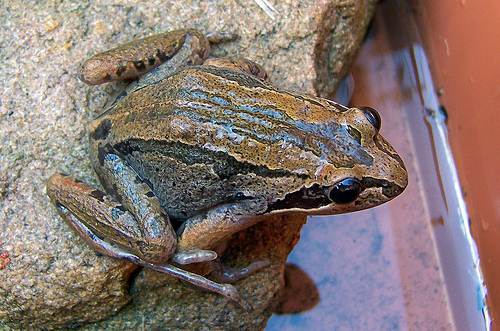
Brown Striped Frog, Image Creative Commons, Brenda Starr

Brown Striped Frog, Image Creative Commons, Brenda Starr


This is Passport to Texas

[Chorus of frogs]

Have you ever been frogging?

06 — It’s what we call when you just get out at night and you start listening for frogs and see what’s living out there around you.

Lee Ann Linam coordinated Texas Amphibian Watch for Parks and Wildlife. Frogging involves volunteers who collect information on amphibian species they hear.

10 — When we suggest that folks do something kind of unusual like that, we like to give them some guidelines to keep them safe, and to keep the frogs safe, and to respect the rules around them. So, that’s what the rules of frogging are for.

Volunteers must obtain permission before accessing privately owned land. Of utmost importance is the safety of the amphibians.

23 — Amphibians are sensitive to things like insect repellents that contain deet, which many of them do. Things like sunscreen and other chemicals that might be on your hands. And so we always say to people, before handling frogs, make sure that you wash your hands, keep your hands moist. And then the other thing we say is to go ahead and wash up afterwards because some frogs have compounds on their skin that protect them from being eaten.

And those compounds can be irritants. We have a link to the complete rules of frogging at passporttotexas.org.

The Wildlife and Sport Fish Restoration program supports our series… and provides funding for diverse conservation project throughout Texas.

For Texas Parks and Wildlife…I’m Cecilia Nasti.