Archive for the 'Shows' Category

New Mandatory Boater Education Requirements

Wednesday, August 3rd, 2011

This is Passport to Texas

A boom in water recreation and accidents prompted passage of a new state law requiring mandatory boater education.

17—What that means is, if you were born on or after Sept. 1, 1993, you will be required to take boater education to operate a boat or a vessel over 15 HP, and a windblown vessel like a sailboat over 14 feet.

Tim Spice manages the boater education program for Texas Parks and Wildlife. Previously, only 13- to 17-year olds had to complete a boating safety course to operate a vessel, such as personal watercraft, without adult supervision.

18—Now to operate a personal watercraft, if you are under 13 you have to have someone 18 years of age or older on board, and they have to be able to legally operate themselves. Used to be you could go out there with someone under 18 if they were certified. But that’s changed also.

Texas’ state-approved boater education course is available online.

16—You can get on there. Take the class. Take the test. And then receive a temporary certification and you can go right out. We have courses offered by volunteers, employees. We list those courses as they’re offered, so you can come to our website if you prefer having an instructor help you out.

The new mandatory boater education law is currently in effect. Tomorrow: What happens if you’re caught without certification.

The Sport Fish and Wildlife Restoration Program supports our series.

For Texas Parks and Wildlife…I’m Cecilia Nasti.

Drawn Hunts at State Parks

Tuesday, August 2nd, 2011

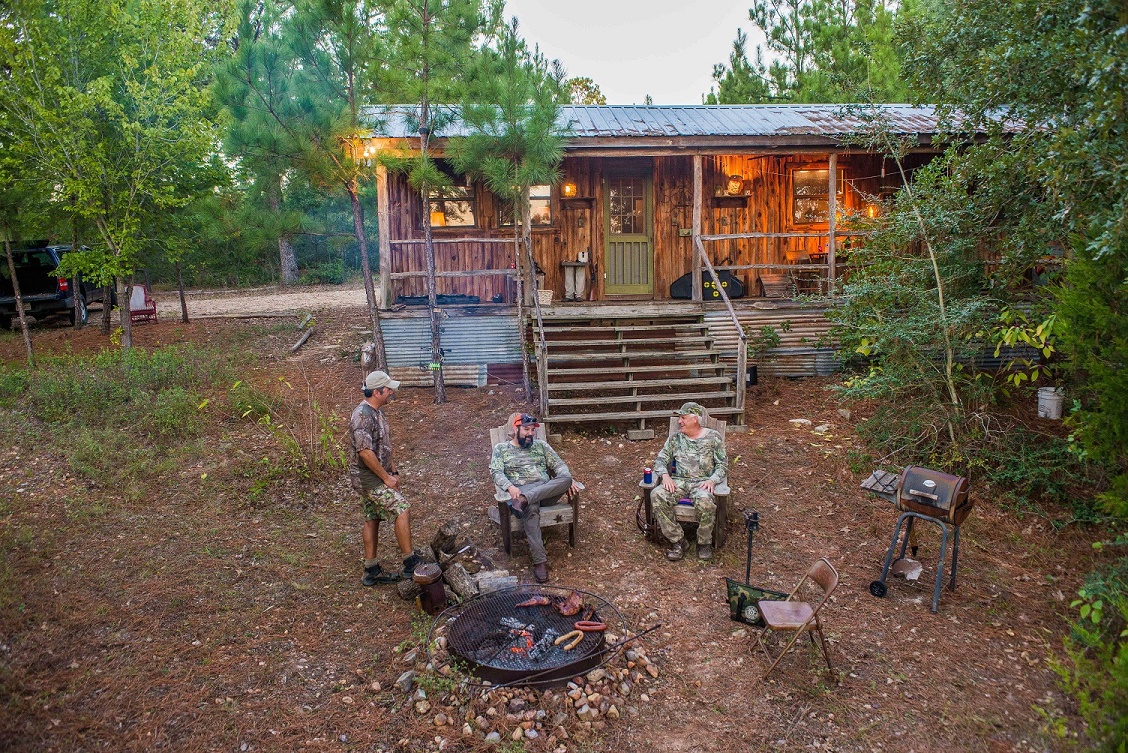
In camp after the hunt

This is Passport to Texas

Hunting is not what most people think about when they pack up the car and head to a state park. However, many Texas State Parks offer diverse hunting opportunities, as our state park guide, Bryan Frazier explains.

There are numerous state parks that offer drawn hunts, and they may draw 25 hunters and only get 200 applicants, so your chances of success are good.

And we’re talking about everything from antlerless deer to javelina to unlimited exotics and feral hogs to either sex deer…and so people need to find that booklet or go online and find that information about getting in on the draws on public lands in state park.

They can specify by park which one they’re interested in. So, I really encourage people to look at the hunting opportunities in state park. Because, it is also a way that we can manage the resource; It is a valuable way for us to make sure that our populations of wildlife are in balance and in check that work well with campers and birdwatchers and everything else that we like. it is a balance, and so this is one way to help manage that.

Find information about drawn hunts when you log onto the Texas Parks and Wildlife website.

That’s our show for today…with funding provided by Chevrolet…building dependable, reliable trucks for more than 90 years.

For Texas Parks and Wildlife…I’m Cecilia Nasti.
Summer Fun in State Parks

Monday, August 1st, 2011

This is Passport to Texas

Each week the Texas Parks and Wildlife PBS television series highlights a different state park or historic site, providing viewers with a glimpse of what to expect during a visit.

Series producer, Don Cash, talks about two state parks today—one that is popular with the masses and another that is popular with the locals.

It is summer and it is time to be camping. And the most popular place in Texas to go camping is, of course, Garner State Park.

Garner is its own little creature within itself. It’s unique compared to any other park.

Yeah, garner is very busy all summer long. Day use is very busy, and there’s obvious reasons. The Frio River is stunningly beautiful and cool and spring fed. They’ve got the dances that go all summer.

We may have 400 people ion that dance floor—it’s a pretty amazing sight.

Halfway between Abilene and Midland is Big Spring State Park. Big Spring SP is known for the fantastic view.

The view here is so beautiful. It looks like you’re really looking over the ocean. It’s the highlight of Big Springs, pretty much.

Big Spring is a day use park. If you happen to be tooling by on the highway, it’s worth your time to get off, go into Big Spring, go up to the park and see the view.

Thanks, Don.

Check your local listings.

For Texas Parks and Wildlife…I’m Cecilia Nasti.

Interpreting Parks

Friday, July 29th, 2011

This is Passport to Texas

There’s no doubt Texans love their state parks. Our state park guide, Bryan Frazier, says for anyone wishing to develop an even deeper appreciation of these specials places—think: interpretive park tours.

You know, the expertise our park interpretive staff has in Texas is second to none. They know the wildlife, the geology, the history, the culture.

And last year we had almost 700-thousand people that enjoyed some sort of interpretive tour in our state parks. Those nature hikes, and birding tours, and history and culture presentations that the park rangers are able to do at the parks. People love that.

That’s why they go there, is to not just to experience and enjoy the outdoors, but to learn about what makes Texas so unique and such a special place for so many people. And those interpretive programs give people that chance. And you can call and set those up and a lot of times, they’re regularly scheduled anyway.

So whether you’re in the Panhandle or the Gulf Coast, there’s so much to know and learn about the beauty and the rich, rich history of our state parks.

Thanks, Bryan.

Go to texasstateparks.org to learn more about interpretive programs at your state parks.

That’s our show for today…with funding provided by Chevrolet…building dependable, reliable trucks for more than 90 years.

For Texas Parks and Wildlife…I’m Cecilia Nasti.

Doing Battle Against a Pest

Thursday, July 28th, 2011

This is Passport to Texas

Prickly pear cacti are economically important to Texas and Mexico. They’re also the larval food of the cactus moth, a voracious nonnative species that’s heading westward toward our state.

07—As of 2009 it’s south of New Orleans. So, it’s just over 200 miles from the Texas border.

Invertebrate biologist Michael Warriner says the larvae of this prolific South American moth species, which is active this time of year, can decimate prickly pear populations. The adult insect is non-descript and difficult to identify, but the larvae is easier to recognize.

26—Looking for the larvae or evidence of feeding damage is the best thing to look for. The caterpillars themselves are a bright orange to red coloration with black bands or spots. The larvae spend most of their time inside of the prickly pear pad, and they basically hollow it out. So the pad, as the larvae feed on it, will become transparent and they’ll eventually just collapse.

Researchers are developing methods of managing the moth. Until then, if you see infested plants…

12—You can still control it by removing the infested pads and that would help. Disposing and burning them. Or simply enclosing them in some kind of plastic bag to heat up the larvae and kill them.

Find links to more information about the cactus moth at passporttotexas.org.

That’s our show for today… For Texas Parks and Wildlife…I’m Cecilia Nasti
______________________________________________________________
Cactus Moth on Wikipedia
Arizona-Sonoran Desert Museum on the Cactus Moth
USDA on the Cactus Moth