Archive for the 'Shows' Category

2017 Texas Pollinator BioBlitz

Tuesday, October 3rd, 2017
#TXPollinators

#TXPollinators

This is Passport to Texas

Love bugs? There’s still time to participate in the Pollinator BioBlitz, which continues through October 8th.

[We have] two goals in mind: to increase awareness about pollinators, and about the habitat that they require.

Johnnie Smith is Conservation Education Manager. Pollinators include bees, butterflies, beetles, moths and other critters that move pollen while foraging.

If you participate in the pollinator bio-blitz, you’re going to have an opportunity to observe pollinators at a site that you visit, like your local zoo or aquarium or nature center. And observe the pollinators that are there. Grab a picture of the pollinators you find, and you can post them onto Instagram. We’re asking all of the participants to use the hashtag #savethepollinators.

Post findings, on iNaturalist.org. Texas Parks and Wildlife’s website, has pages dedicated to the Pollinator Bioblitz.

Where people can learn what pollinators might be in their area. Links to what might be blooming in your area right now—that’s hosted out of the Wildflower center—and then also, to be aware of habitat you have that supports pollinators. And if you don’t have habitat in or near your home, school library… We’re encouraging people to try and get organized in planting pollinator habitat.

The Pollinator BioBlitz began September 23 and runs through October 8th.

The Wildlife restoration program supports our series.

For Texas Parks and Wildlife…I’m Cecilia Nasti.
TPW TV – Paddling the Trails at Port O’Connor

Monday, October 2nd, 2017
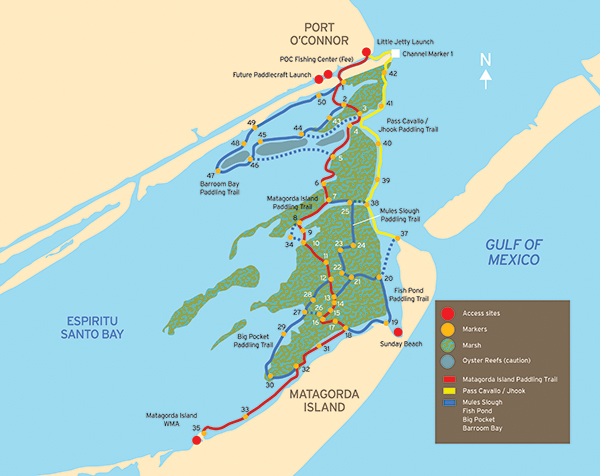
Map of Port O'Connor Paddling Trail

Map of Port O’Connor Paddling Trail

This is Passport to Texas

Port O’Connor offers outdoor enthusiasts an enticing paddling trail opportunity.

We are in Mule Slough in the back bay system of Port O’Connor, Texas. This is an isolated flat, and it is surrounded by black mangrove and cordgrass.

On a segment airing this week on the Texas Parks and Wildlife TV series, we follow Alan Raby with Dolphin Kayaks as he takes Xandra and Jade Alford on a tour of this unique place.

 This is my backyard. My backyard’s always been outdoors with everything. And you get to sit in a kayak and get to see pelicans, seagulls, herons – everything. You get to see it all.

Kayakers experience wildlife up close and personal.

[Alan] So, the Port O’Connor is unique in the way that it’s probably the most vast one on the Texas coast that’s easily accessible. There’s over 40 miles total of paddle trail. [Xandra] Look, Jade. Look at tht look. [Jade] That is just a camera ready loon. [Xandra] He’s getting his fifteen minutes in.

Alan Raby says the Port O’Connor trail, always feels new.

[Alan] It is an adventure almost every time you come. I mean, the saying goes, once you visit here once, you always come back a second time. [Xandra] You know, Port O’Connor has a way of bringing you back. It’s a great place to be.

Discover the Port O’Connor paddling Trail on the Texas Parks and Wildlife TV series on PBS through October seventh. Check your local listings.

The Sport Fish restoration program supports our series.

For Texas Parks and Wildlife…I’m Cecilia Nasti.
Big or Small, WMAs Are Places to Learn

Friday, September 29th, 2017
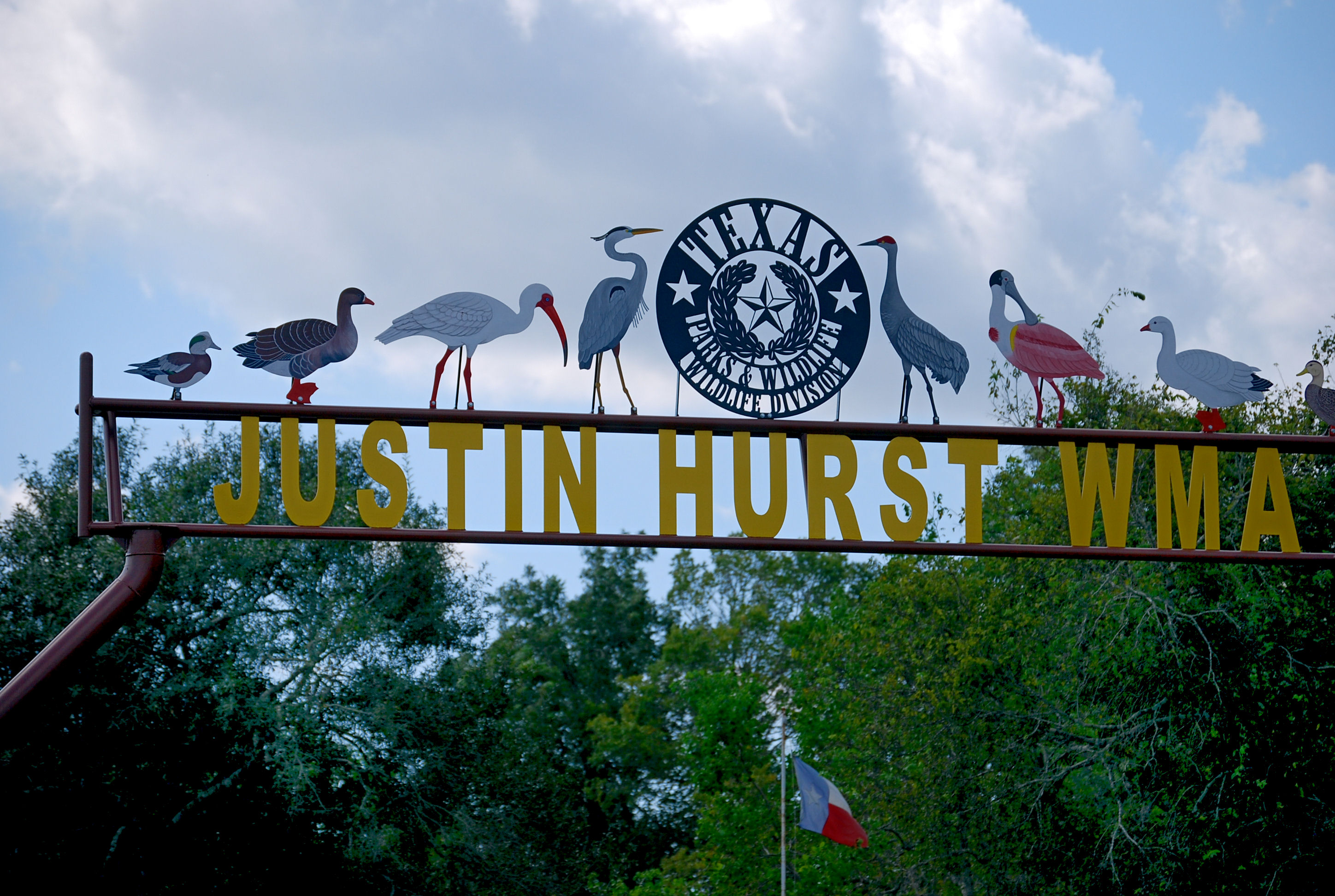
Entrance to Justin Hurst WMA

Entrance to Justin Hurst WMA

This is Passport

Texas Landowners learn how to manage their acreage by emulating wildlife biologists who keep the state’s Wildlife Management Areas in top form.

Wildlife biologists go out on the WMAs and they take a look at what we have; what the baseline is. And then they take a look at historically what has been there in terms of vegetation and wild animals. They’ll determine what it takes to restore that habitat, or to enhance that habitat.

Dennis Gissell is Wildlife Management Area facilities coordinator. Texas Wildlife Management Areas’ encompass about three-quarters of a million acres.

[The] largest WMA is in east Texas – the Sam Houston National Forest, which is actually a US Forest Service Property that we lease/license from them to manage. It’s over 160-thousand acres. The smallest is near Corpus Christi.

And that WMA is only 36 acres! The aim is to have WMAs for teaching and research in each of the state’s 10 ego-regions. Every one provides opportunities for discovery and learning, even when they are small.

These smaller tracts of land have really unique features. In this case – this particular property – has a wetland and a pond that has historically, been very attractive to waterfowl.

Find more information about WMAs on the Texas Parks and Wildlife website.

The Wildlife restoration program supports our series and helps to fund the management of Texas’ 50 Wildlife Management Areas.

For Texas Parks and Wildlife…I’m Cecilia Nasti.
Landowners Learn Conservation on WMAs

Thursday, September 28th, 2017
Texas Wildlife Management Areas provide landowners an opportunity to become better stewards of the land.

Texas Wildlife Management Areas are a training ground for landowners who wish to become better stewards of their land.

This is Passport

Texas landowners are vital to long-term statewide habitat and wildlife conservation strategies.

Something that folks really are not aware of is that the water that they drink, the air tht they breathe, the clothes they wear, and even the fuels that provide energy for their vehicles and power plants, come from private lands in Texas.

Dennis Gissell is Wildlife Management Area facilities coordinator.

Private landowners really are stewarding not only the natural habitat, but they’re providing the resources that we as humans must have to survive.

Texas Parks and Wildlife uses Wildlife Management Areas to educate landowners about conserving wildlife and habitat, including water.

When you’re dealing with either surface water or groundwater, people need to be aware that that surface water is coming through lands that are owned by private landowners, and the extent to which they manage the vegetation and the habitat there, allows that water to be filtered naturally before it arrives at a lake or a river.

Texas landowners take stewardship seriously. Gissell says he hopes this remains true as ownership changes.

The former farms and ranches that were owned by some of the original settlement families in Texas are being sold off and broken up to some degree; we call that habitat fragmentation. As landowners acquire those lands, we think it is very important that they understand the role of stewardship, and managing and conserving wildlife habitat.

The Wildlife restoration program supports our series and helps to fund the management of Texas’ 50 Wildlife Management Areas.

For Texas Parks and Wildlife…I’m Cecilia Nasti.
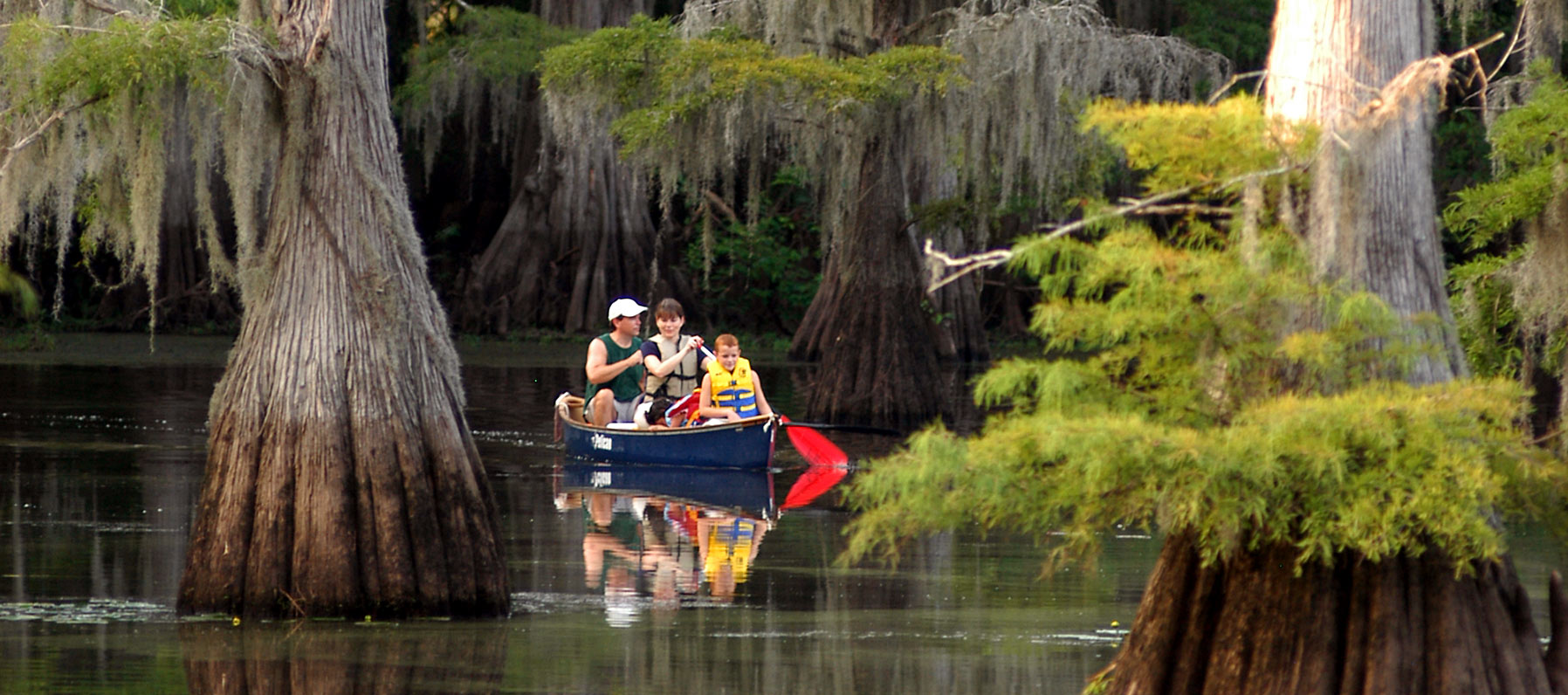
Ethereal Caddo Lake WMA

Tuesday, September 26th, 2017
Paddling on Caddo Lake.

Paddling on Caddo Lake.

This is Passport to Texas

When mist cloaks Caddo Lake it’s easy to understand how the lore and legend about this east Texas water body came to pass.

Native American legend says a giant flood created Caddo Lake. Others say an earthquake was responsible.

Meanwhile, scientists believe the lake formed when floodwaters, blocked by massive log jams on the Red River, backed up into the Cypress Bayou watershed, forming the lake.

One thing that is true: Caddo Lake’s beauty. And visitors to Caddo Lake State Park/WMA not only experience nature at her most beguiling, they also have a plethora of recreational opportunities — from hiking to hunting – to choose from.

With an annual public hunting permit, hunters may harvest deer, eastern wild turkey, and quail during appropriate seasons. Licensed anglers find largemouth bass, catfish and brim plentiful in the lake.

Find more on Caddo Lake SP/WMA at passporttotexas.org.

That’s our show, made possible by the Wildlife and Sportfish Restoration program providing funding for the operations and management of more than 50 wildlife management areas.

For Texas parks and wildlife…I’m Cecilia Nasti.
