Archive for the 'Wildlife' Category

TPW Magazine: Monarch Decline

Monday, March 24th, 2014
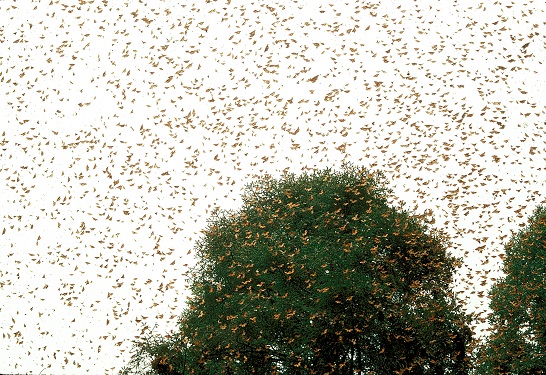
Monarchs at their overwintering site.

Monarchs at their overwintering site.


This is Passport to Texas

Extreme weather and vanishing habitat, have taken a toll on monarch butterflies.

14—To use the oft-worn cliché about a “perfect storm,” that’s sort of what’s happened to the monarchs, unfortunately, and has caused their populations to plummet almost 80% since the winter of 2012.

Rob McCorkle wrote an article about the monarch decline for the March issue of Texas Parks and Wildlife Magazine. Monarchs migrate to Mexico from Canada and the US.

18—The first hit [to the monarchs] was in 2002 when they had a severe freeze in the mountains of Mexico where the population overwinters. Monarchs can take cold weather, but if it rains, or snows and they get wet – they can’t survive. They died off by the millions that year.

Weather is only part of the equation. Habitat loss is the other.

33—That is being propelled by the elimination of grasslands in the Midwest to plant GMO soybean and corn crops, and to plant crops for biofuels. What that’s done, obviously, is to limit the places where the monarchs go to fuel up for their migration. Also, the overwintering forests in the mountains of Central Mexico have been logged heavily and are being impacted by [tourism] people going to see the monarchs that overwinter there in the fir trees.

More on why monarchs are in decline and how to help — that’s tomorrow. For Texas Parks and Wildlife, I’m Cecilia Nasti.
TPW TV: Eye in the Sky

Friday, January 24th, 2014

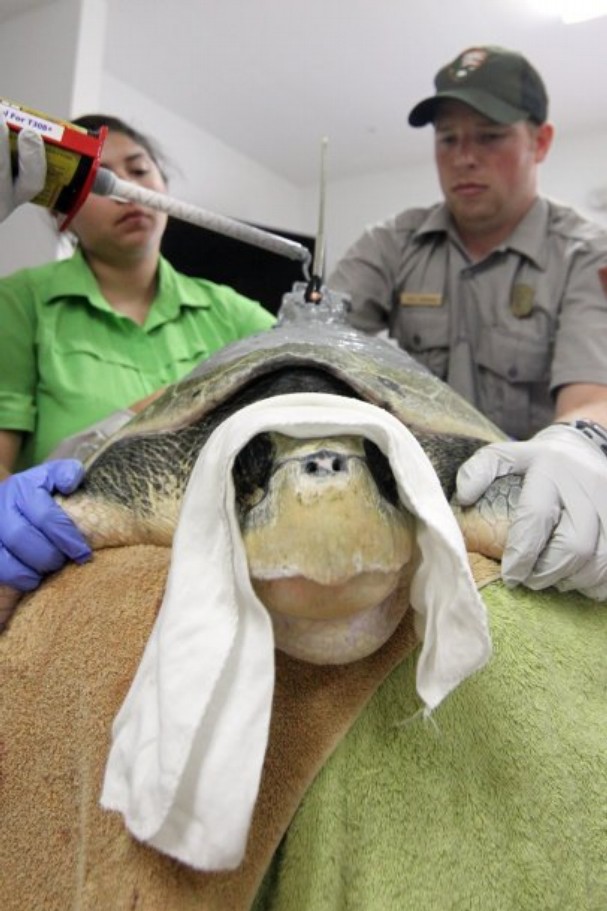
Sea turtle receiving GPS, Image courtesy Corpus Christi Caller Times

Sea turtle receiving GPS, Image courtesy Corpus Christi Caller Times


This is Passport to Texas

Understanding where wildlife goes provides valuable information to help manage species. Dr. Donna Shaver uses the newest GPS technology in tandem with satellites orbiting12-thousand miles above earth, [fade in ocean ambiance] to track endangered Kemp’s Ridley Sea Turtles on the Texas coast.

07— We’re conducting this tracking because we want to get an idea about the habitat usage by these adult females.

Dr. Shaver is with the National Park Service.

13— We want to see where they’re going in the marine environment, which is where they spend the vast majority of their life; where they’re going for migration as well as for foraging when they’re done nesting.

[lab ambiance] It takes Dr. Shaver and her team about three hours to prepare a turtle for tracking.

18 – We have to sand the shell; we put down the first layer of epoxy, then we’ll affix the transmitter. Then when it’s on there solid, we will paint the surface to help prevent barnacles from adhering onto that area where it [the transmitter] has been applied.

See how Dr. Donna Shaver uses GPS and satellite technology to track endangered Kemp’s Ridley Sea Turtles on the TPW PBS TV series during the week of January 26. Check local listings.

08— We’re one step closer towards recovering the species someday so that it can be enjoyed by future generations.

That’s our show…Funding provided in part by Ram Trucks. Guts. Glory. Ram…For Texas Parks and Wildlife…I’m Cecilia Nasti.

Endangered Wildlife: The Ocelot

Thursday, January 23rd, 2014

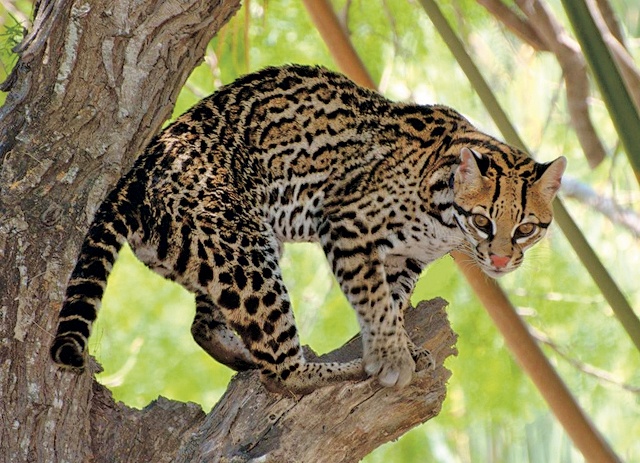
Ocelot image, courtesy Texas Coop Power

Ocelot image, courtesy Texas Coop Power


This is Passport to Texas

Ocelots once roamed throughout Texas, Mexico, and into Arkansas and Louisiana. Jody Mays says today, only a few survive in the thick brush and shelters of the Lower Rio Grande Valley.

:14—As far as we know, there less than 100 ocelots left in the United States. The ocelot’s range has disappeared, and now they only occur in the southern most tip of Texas, and that’s the only place in the whole United States that they occur.

Mays is a Wildlife Biologist with the US Fish and Wildlife Service at Laguna Atascosa Natural Wildlife Refuge. She explains reasons for the population decline.

:41—Usually with an endangered species, you have multiple impacts that they get hit with. For the ocelot, the biggest one was the habitat loss. Some estimates say that over 95% of the native habitat in Texas has been altered. A lot of the thick habitats have been cleared for agriculture, and for development, and for other purposes. Another associated impact with that is habitat fragmentation, and that’s where, you say, have one large piece of thick habitat that gets cut up into smaller pieces that are farther and farther apart. Loss of genetic diversity is another big issue, and that’s as a result of this habitat loss and fragmentation.

That’s our show for today…with support from the Wildlife Restoration Program… helping to fund the operations and management of more than 50 wildlife management areas in Texas.

For Texas Parks and Wildlife…I’m Cecilia Nasti.

Wildlife: Herpetology

Wednesday, January 8th, 2014

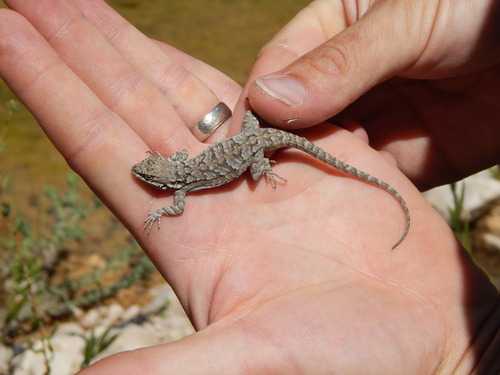
Big Bend Tree Lizard, image by Michael Smith

Big Bend Tree Lizard, image by Michael Smith


This is Passport to Texas

Herpetology is a branch of zoology concerned with amphibians and reptiles.

16—Amphibians are the species that are associated with water in their lifecycle. [They’re] smooth skinned, and usually lay their eggs in water and often have a larval stage such as a tadpole for a frog. So frogs, salamanders, and an interesting creature called the caecilian are amphibians.

Leeann Linam is a biologist who recently retired from Parks and Wildlife. Reptiles are those species with scales that tend to lay hard-shelled eggs on land in dry nests.

13—And so we have several divisions of reptiles as well. We have the turtles, we have the lizards, and we have the snakes… And then there are a few other groups. The crocodilians and some others that are kind of unique.

Linam says scientists agree they need to give reptiles more consideration.

14—Lizards are a group of organisms that scientists have said: “You know, we really haven’t paid much attention to what’s going on with them. They are mostly eating insects in the environment, and so one can perhaps think of them as being sensitive to things like pesticides and habitat loss, as well as
direct persecution, or killing, as areas are changed in terms of their use.”

Before you spray or spread a pesticide on your lawn or garden, think of the lizards.

That’s our show with support from the wildlife restoration program…For Texas Parks and Wildlife…I’m Cecilia Nasti.

Nature: Outdoor Resolutions for the New Year

Wednesday, January 1st, 2014

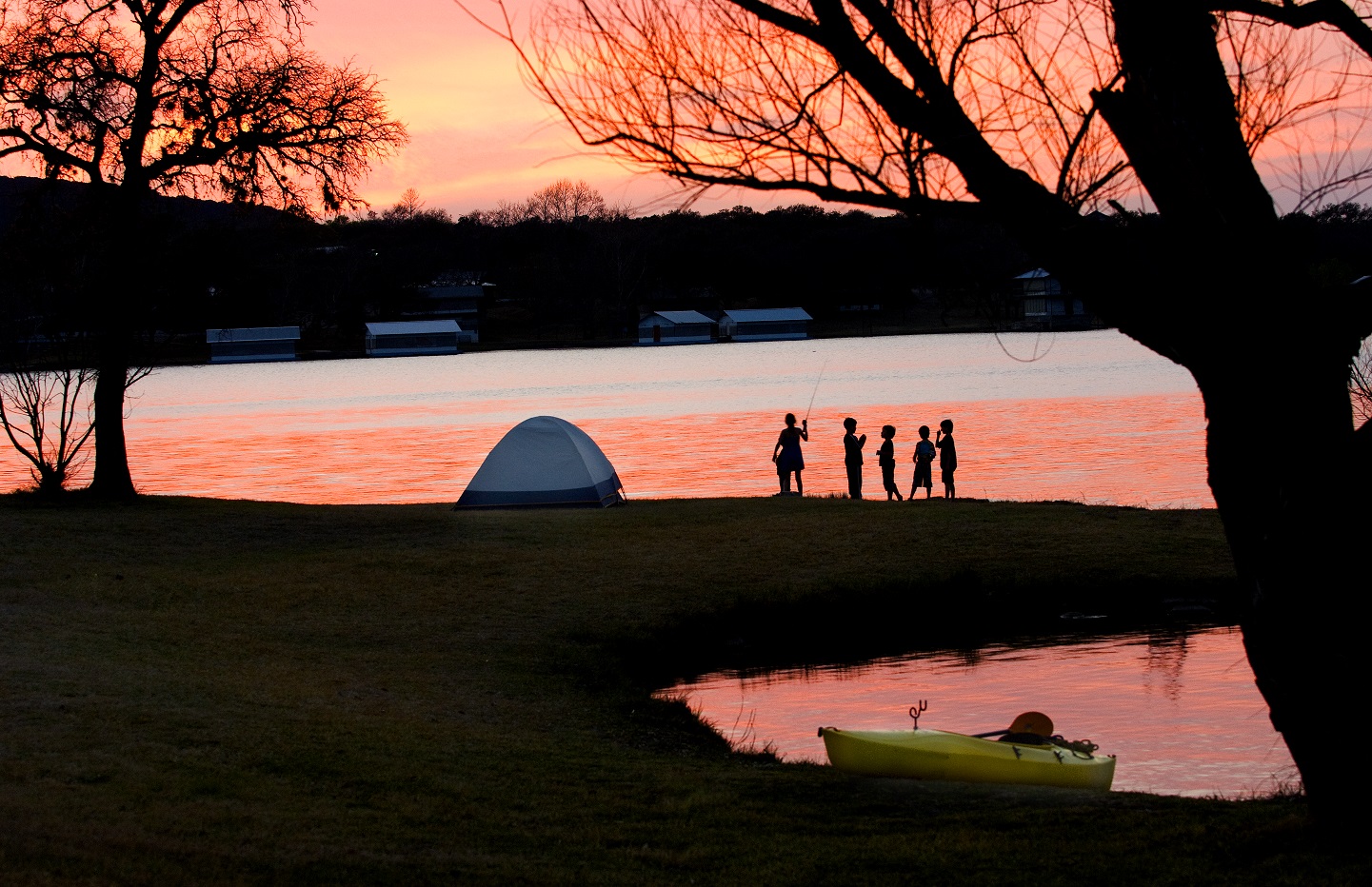
Camping at Inks Lake

Camping at Inks Lake


This is Passport to Texas

Don’t you love the start of a new year? It‘s totally fresh and filled with possibilities. So, take a few minutes to consider how you’re going to make this year better for you and your family.

One way would be to get outside more, because—as we like to say: life’s better outside.

Spending time in the natural world has a way of resetting the brain and giving you a fresh perspective. Researchers have discovered that children who spend time in nature do better on exams, and are less disruptive in the classroom.

Bring a pair of walking shoes to the office, and during your lunch hour, stroll outdoors in the fresh air. Even if you’re in a city, you can still observe the varied wildlife and plant life you see along the way. It’s amazing how much nature you can actually find in a concrete jungle.

Spend time with friends or family at one of our many state parks. Most folks are within 90 minutes of a state park or natural area; many are much closer. Take a nature hike, ride a bike. Pitch a tent and sleep under the stars, or find a park with cabins and rough it indoors.

Commit to learning something new about Texas history by visiting one of the state’s incredible historic sites.

There’s a world of wonder out there, and once you spend more time outdoors, you’ll wonder why you didn’t do it sooner.

That’s our show…Funding provided in part by Ram Trucks. Guts. Glory. Ram…For Texas Parks and Wildlife…I’m Cecilia Nasti