Archive for 2014

Nature: Adaptations

Wednesday, October 8th, 2014
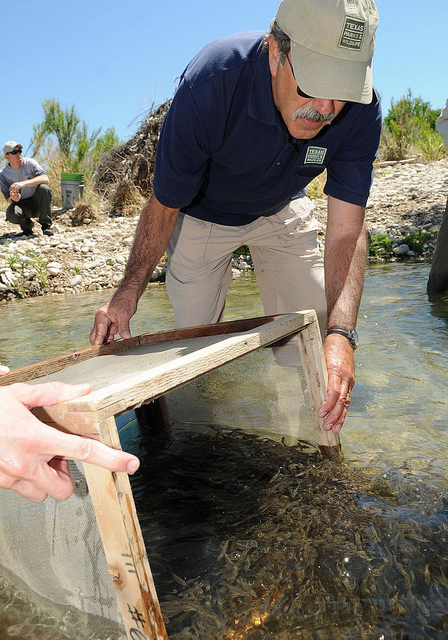
Dr. Gary Garrett

Dr. Gary Garrett


This is Passport to Texas

Some animal and plant species evolve in specific locations – like springs – and only exist there and nowhere else.

25—Typically what happens is you have the ancestral version of the species throughout. Things like head springs, or spring areas, those are special isolated type environments. The temperature doesn’t change; the water chemistry doesn’t change because it’s coming out of the ground. So you’ll have animals that start specializing for that very stable environment. So certainly in springs throughout the state we’ve often seen specialized animals.

Dr. Garry Garret, a fisheries biologist formerly with TPW says biologists work to understand specialization among these species.

27—But the other real useful thing about understanding this is these are called indicator species. They’ve been around for thousands of years…they’ve done just fine…as biologists we monitor their status. When we see their status starting to go down, it tells us that the environment they’re in is going down. Not just them. They’re an indicator of a larger problem. So by watching these animals or plants they tell us in advance of things degrading that ultimately may affect humans. So they’re kind of our early warning system.

And we can all use a little warning when change is afoot.

The Wildlife and Sport Fish Restoration program supports our series and funds diverse research projects throughout Texas

For Texas Parks and Wildlife…I’m Cecilia Nasti.

TPW TV: New Season 2014-2015

Tuesday, October 7th, 2014

Award-winning Texas Parks and Wildlife PBS Television Series

Award-winning Texas Parks and Wildlife PBS TV Series


This is Passport to Texas

Every October for the past 29 years Texas Parks and Wildlife has kicked off a new season of programming on its PBS TV series.

03—Not a lot of states do this kind of television show anymore.

Series producer, Don Cash, says this type of programming reaches diverse populations.

08—Especially when it’s broadcast as many places as this one is, it’s just a great way for people to learn about Texas and the Texas outdoors.

Story topics have remained constant during the show’s tenure, with some fine-tuning for an evolving audience.

16—More and more people are living in the bigger cities, and therefore, fewer people have ready access to parks and hunting opportunities and fishing opportunities. And so, the kind of stories we’re doing tends to focus on nature in urban areas.

The new season of Texas Parks and Wildlife PBS TV series will introduce viewers to Texas’ places, people, outdoor opportunities, and – of course – it’s stunning wildlife.

26—One is on trapping and tracking whooping cranes at Aransas National Wildlife Refuge. We’re going to Caddo Lake as biologists try to restore paddlefish to the area. People may not know this, but there are bobcats in the Dallas area. We’re talking in the city. We’ve got a story on that coming up. And, some of the video on bobcats hanging out in city parks with people is pretty interesting.

The new season of the Texas Parks and Wildlife TV series begins airing on PBS stations statewide this month; check your local listings. The Wildlife and Sport Fish Restoration Program supports our series.

For Texas Parks and Wildlife…I’m Cecilia Nasti.
TPW Magazine: Three Days in the Field

Monday, October 6th, 2014

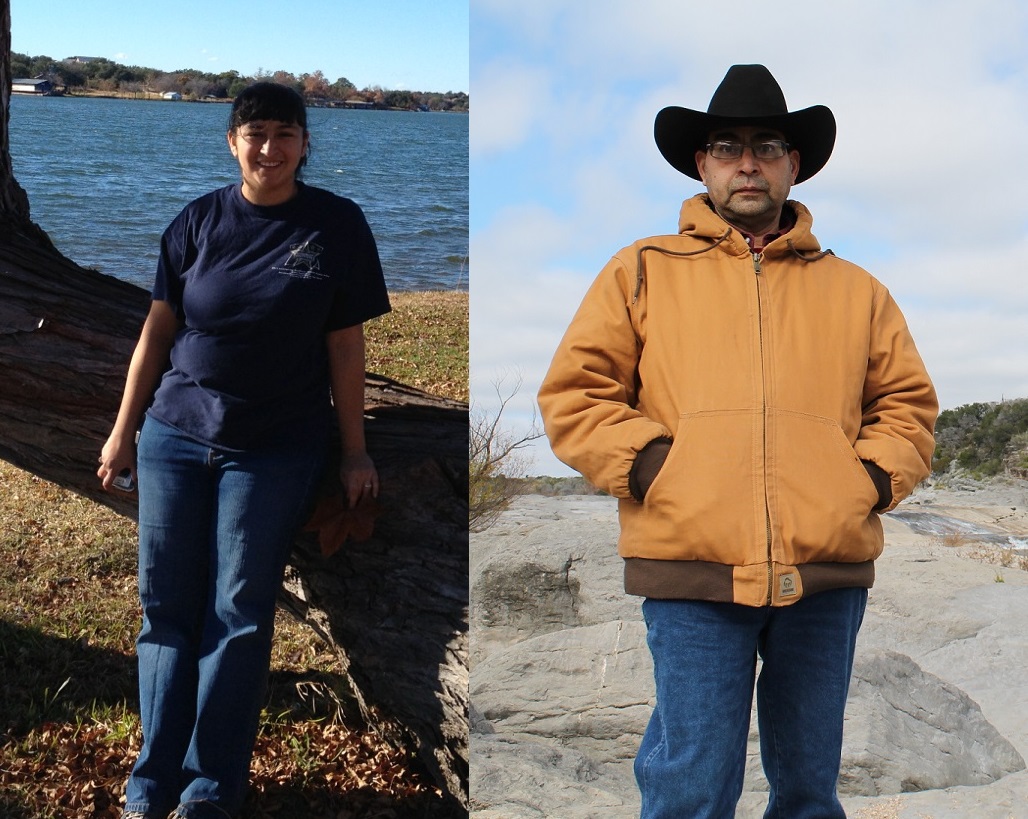
Stephanie Salinas taken at Inks Lake, and her dad at Pedernales Falls.

Stephanie Salinas taken at Inks Lake, and her dad at Pedernales Falls.


This is Passport to Texas

The outdoors helps you recharge and connect with those you love, as Stephanie Salinas discovered when writing a piece for Texas Parks and Wildlife magazine’s Three Days in the Field column.

07— You basically try and create a weekend adventure just to get away, and take a break from the routine.

Her dad was her companion for this Central Texas jaunt.

09—Well, my dad and I are very close, and he’s a big nature buff. He loves going hiking and hunting, and I don’t really get to see him as often since I moved away.

They visited Inks Lake, Longhorn Caverns and Pedernales Falls, all within 30 minutes of one another.

08—We stayed the first two nights at Inks Lake, because Inks Lake and Longhorn Caverns are about five minutes apart. So, it’s really easy to go back and forth. At Inks they stayed in a cabin, fished, cooked on a campfire and the first night took a quarter mile hike to
Devil’s Waterhole.

05—Which is an overlook of the entire park. It was a really short hike that offered great, great views.

Across the road at Longhorn Caverns, the absence of stalactites and stalagmites surprised Salinas and dad.

07—This one was made by a rushing river millions of years ago. It’s completely smooth – the entire top looks like marble.

And Pedernales offered surprises around every turn.

05—The thing about this one is it has a lot of hidden nooks and crannies that you wouldn’t even think of.

Read Stephanie Salinas’ article in the October issue of Texas Parks and Wildlife magazine. Funding provided in part by Ram Trucks. Guts. Glory. Ram.

For Texas Parks and Wildlife…I’m Cecilia

State Parks: Hands-On Ranger Experience

Friday, October 3rd, 2014

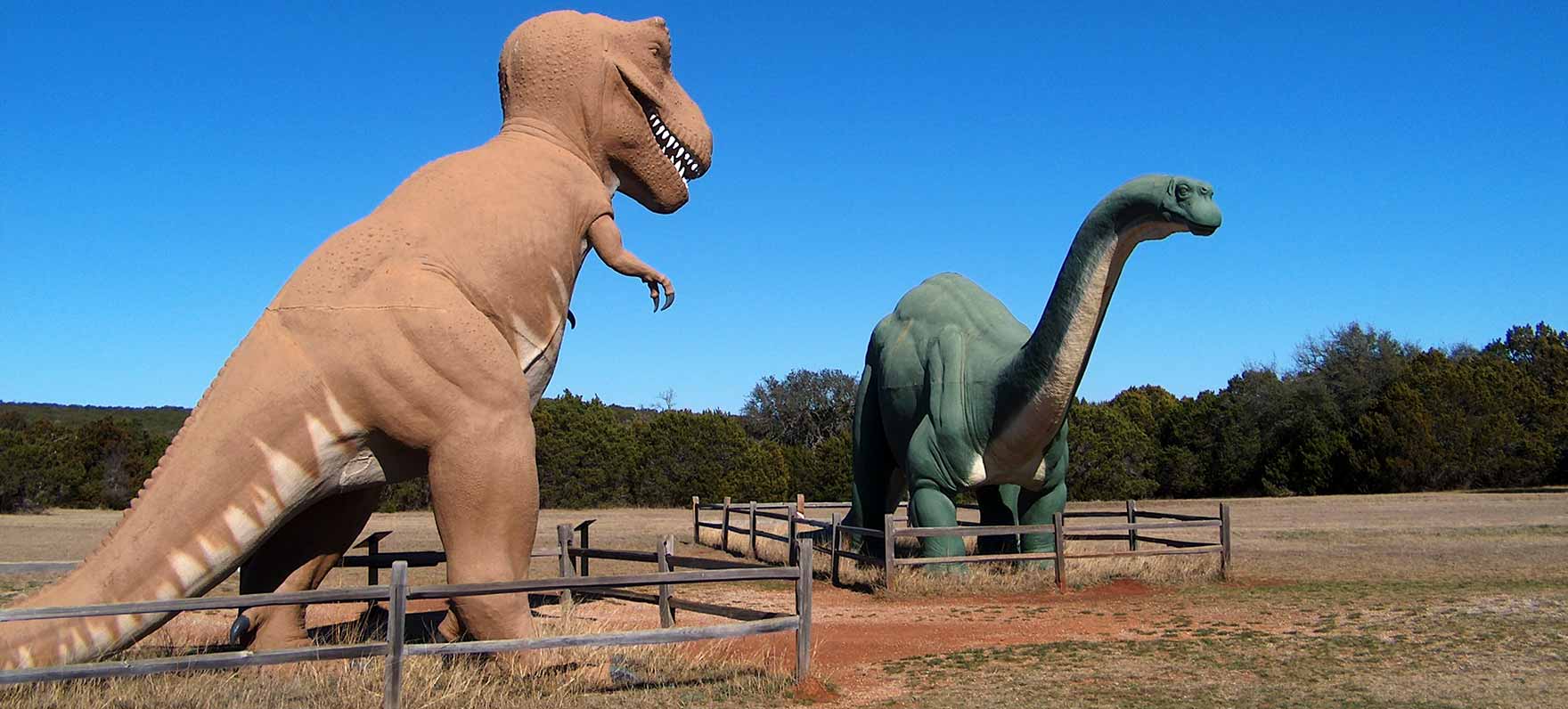
Dinosaur Exhibit at Dinosaur Valley State Park

Dinosaur Exhibit at Dinosaur Valley State Park


This is Passport to Texas

Folks like you are participating in the Citizen’s Park Ranger Academy at Dinosaur Valley SP. They’re learning skills needed to run a state park.

05—We actually go into the field and put those skills to the test.

Tracy Mays, with Park Operations, says participants learn in a classroom what it takes to assume the various park jobs before going into the field.

16—Last year – our search and rescue – we went over what you do when you do find a lost person. We had four different activities set up, and we had different search parties going out to those different activities, and they were able to actually go into the field and rescue somebody.

Cadets range in age from 16 on up and must be physically able to handle the nature of the work.

18—They have to be able to climb; we have some very advanced trails. There’s some lifting. And, they have to be able to withstand heat, because that’s pretty much the part of being in the park and having on the trails and working on stuff. You are out in the elements, so they have to be able to withstand that.

The Citizen’s Park Ranger Academy takes place only at Dinosaur Valley, but other parks may offer it in the future. Meantime, Tracy says participants leave with a deeper appreciation of what it takes to keep their state parks running.

For Texas Parks and Wildlife…I’m Cecilia Nasti.
State Parks: Citizen’s Ranger Academy

Thursday, October 2nd, 2014

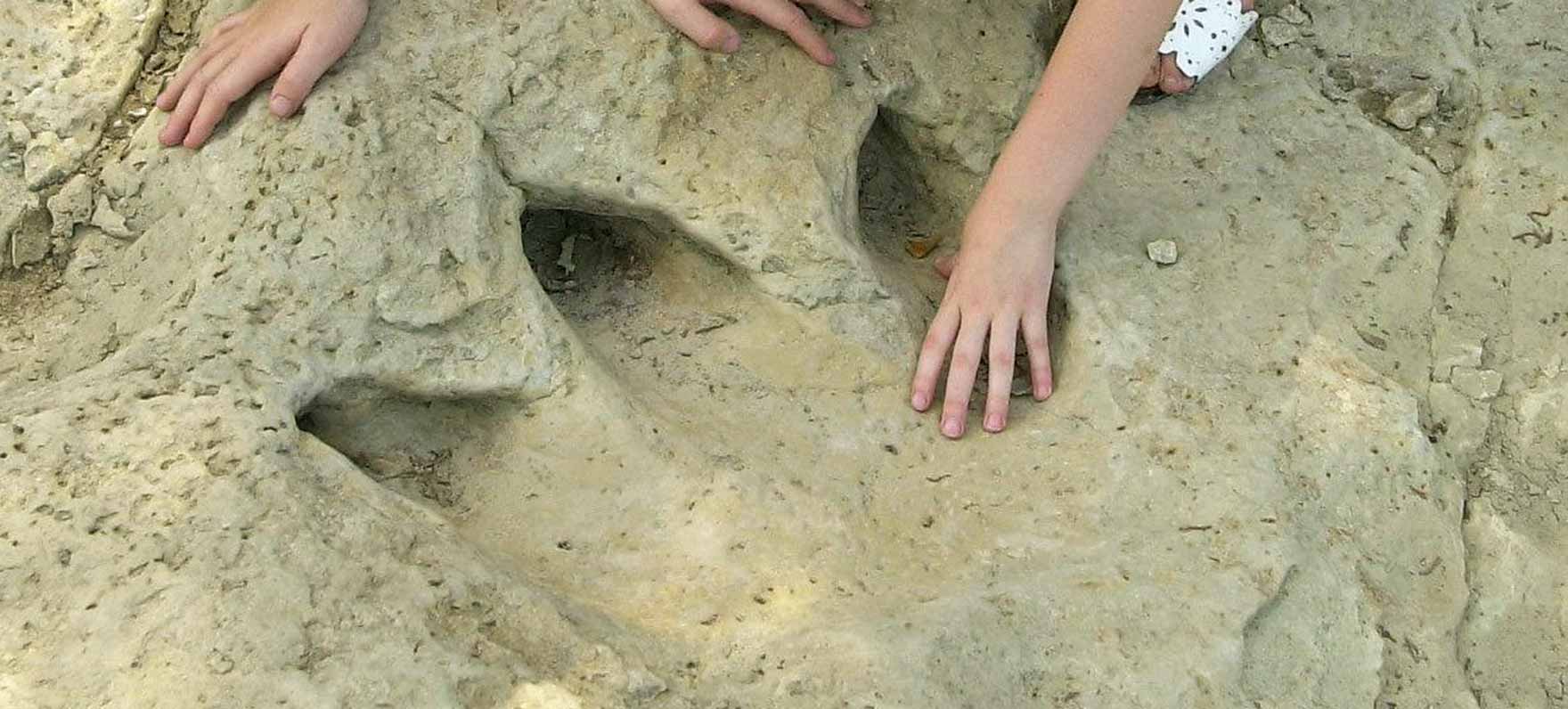
Dinosaur Footprint at Dinosaur Valley State Park

Dinosaur Footprint at Dinosaur Valley State Park


This is Passport to Texas

There’s more to being a park ranger than putting on a uniform. That’s why the Citizen’s Park Ranger Academy exists at Dinosaur Valley State Park.

07— The academy is the brainchild of our then assistant manager Robert Enckhausen.

Tracy Mays is with Park Operations at Dinosaur Valley SP.

19—He came up with this idea so the citizens of the state could come and see firsthand what park rangers do. Not just park rangers, but police, EMTs, the wildland firefighters… and be able to be hands-on with the activities that we do day-to-day.

Tracy says the purpose of the academy is two-fold.

10—The academy basically is to get people intrigued about being a park ranger, and hopefully making more stewards for our future.

Last year was the first year for the academy, and one of the highlights happened after the helicopter landing zone class.

20—The day that they landed the care flight helicopter so that they could see what it was like to land a helicopter inside the park, well, maybe 30 minutes later we got a call that somebody had fallen, and we needed to land the bird again. And three of our Citizen’s Park Ranger Cadets were able to help us actually land the bird, since they had already done it.

I’ll have details about the academy tomorrow.

For Texas Parks and Wildlife…I’m Cecilia Nasti.