Archive for 2014

Birding/Conservation: Bird-Friendly Coffee

Wednesday, November 5th, 2014
Bird Friendly  Coffee Seal

Bird Friendly Coffee Seal


This is Passport to Texas

Coffee is an agricultural crop that thrives in the tropics.

14—These areas oftentimes are coincident with biodiversity hot spots; that is, areas of really high biodiversity, whether in birds, or insects, amphibians—what have you.

Dr. Robert Rice works with the Smithsonian Migratory Bird Center, which certifies coffees “Bird Friendly” when growers meet certain stringent criteria. Studies suggest shade grown coffee offers the greatest benefit as habitat.

15—Where coffee still is managed with a shade cover of the kind that we like to see and have defined with “bird friendly” criteria, then coffee oftentimes is some of the last remaining canopy cover—even though it’s not forest—it’s acting very much like a forest.

With habitat loss from deforestation, shade grown coffee estates serve as refuge for neo-tropical migratory bird species that travel through Texas, including the Black and White Warbler, the Baltimore Oriole, the Cerulean Warbler and others.

15—So, they just hang out there. They might be running around with mixed species flocks, and trying to stay alive and ultimately fatten up before they make the trip back north again. So this quality habitat becomes quite important for them in terms of making the trip back.

So next time you order a cup of coffee, you might ask your server if it’s for the birds.

That’s our show for today… Funding provided in part by Ram Trucks. Guts. Glory. Ram

For Texas Parks and Wildlife…I’m Cecilia Nasti.
Hunt/Food/Charity: Hunters for the Hungry

Tuesday, November 4th, 2014
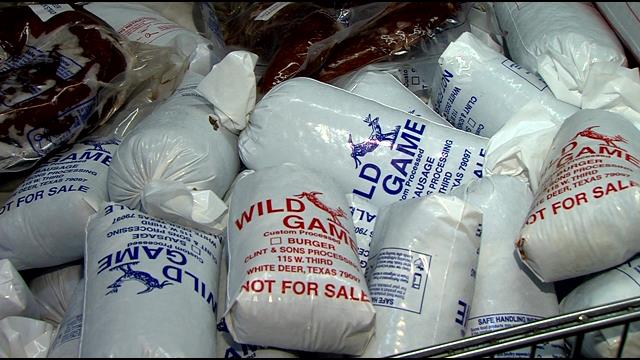
Donated Venison via Hunters for the  Hungry program, Image courtesy of http://www.newschannel10.com/

Donated Venison via Hunters for the Hungry program, Image courtesy of http://www.newschannel10.com/

UPDATE: Since producing this program, The Texas Association of Community Action Agencies, Inc., entered into an agreement with the Texas Food Bank Network, now Feeding Texas, to take over the Texas Hunters for the Hungry program. You can find more information about making a donation or becoming a processor at the Hunters for the Hungry website: http://hfth.tfbn.org/


This is Passport to Texas

Venison is quality protein; and hunters help get it onto the tables of deserving families when they donate deer to Hunters for the Hungry.

09—Once it’s [the deer] donated, the meat is used by food pantries, food banks, and other food assistance providers, which serve their local communities.

Anitra Hendricks oversees the program. Hunters may donate their legally tagged, field-dressed deer by bringing it to participating meat processors. Find a list of processors on the Hunters for the Hungry website.

24—Once they locate a processor, then basically it’s just a matter of harvesting the deer, making sure that they get it cleaned out. The processor will handle everything else. There is a reduced processing fee for those who donate to the program. They pay the fee, they do receive a receipt for a possible tax deduction. The meat processor will grind the meat, package it, and then from there it goes to the food assistance provider.

The Panhandle, far west Texas and the Rio Grande Valley have the fewest donations due to low processor participation. Without nearby participating processors, hunters don’t have an easy way to donate. Anitra is always on the lookout for more processors.

08— The have to be willing to keep some minimal book-keeping as far as tracking donations and reporting that to us at the end of the season.

The Wildlife and Sport Fish restoration program supports our series and works to increase fishing, hunting and the shooting sports in Texas.

For Texas Parks and Wildlife…I’m Cecilia Nasti.
TPW Magazine: The Allure of Antlers

Monday, November 3rd, 2014

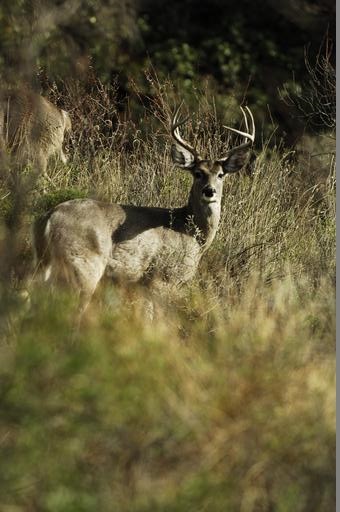
Big antlers on a fine buck.

Big antlers on a fine buck.


This is Passport to Texas

Deer provided sustenance to ancient people who hunted them. Today, deer hunters seek more than a meal.

05— You never see anyone take a picture with a nice backstrap. It’s always the antlers.

What is the allure of antlers? Texas Parks and Wildlife magazine editor, Louie Bond, says they tackle the question in November’s cover story; just in time for deer season.

05—We always like to look at deer hunting stories in different ways than other publications might.

While nourishment was their main reason for hunting deer, like modern hunters, ancient peoples also valued the antlers…but for different reasons.

16—Medicine men from back then believed that you could grind up the antlers and use them to cure all sorts of ailments. As writer Mike Cox says, they were sort of the Home Depot raw materials selection of the day as you made knife handles, and scrapers and all sorts of implements and tools out of them.

Louie Bond says she originally intended the story, The Allure of Antlers, as a photo-essay in Texas Parks and Wildlife magazine.

15—But, then when we began digging into all of the cultural stuff, and Mike Cox is our great historian here at Texas Parks and Wildlife; it was right up his ally. So, he started looking into the cultural references and medicinal aspects, and then we decided there was just too much story here to ignore.

Discover how antlers transitioned from tools to trophies in the November issue of Texas Parks and Wildlife magazine.

The Wildlife and Sport Fish Restoration program supports our series.

For Texas Parks and Wildlife…I’m Cecilia Nasti.
Angling: New Life for Old Catfish

Friday, October 31st, 2014

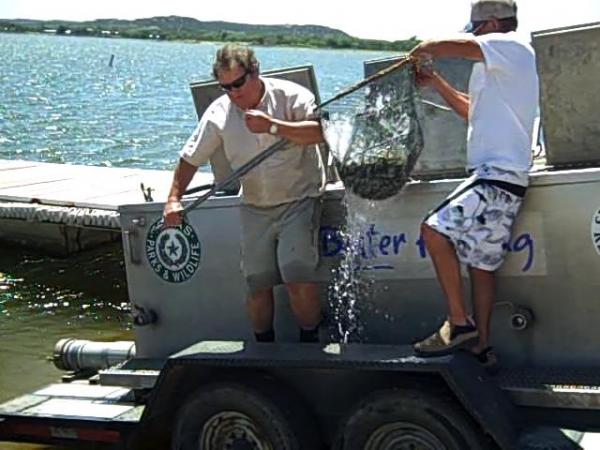
Fisheries biologists and channel catds

Fisheries biologists and channel catds


This is Passport to Texas

What happens when fish hatchery brood stock are past their prime? If they’re channel catfish from the A.E. Wood Fish Hatchery in San Marcos, they find new homes in urban lakes.

08—What we’re trying to do is provide quality fishing opportunities close to home; it’s part of our urban fishing incentive here in Texas.

Fisheries biologist, Marcos De Jesus says Lake Kyle is catch and release only. You might wonder: If anglers are prohibited from taking fish home, and TPWD continues to stock fish in the lake – this includes sunfish and largemouth bass, all of which they call biomass – will the lake be able to support them over time?

26—The ecosystem is designed to sustain a high population. We’re doing intensive management on this system; Lake Kyle will eventually have a network of aeration systems and will also have a network of fish feeders. So, while we are adding a large biomass to this lake, we are also adding infrastructure to support the biomass. The whole objective is to create high numbers of quality size fish for anglers to catch fairly easily.

Find fishing opportunities near you when you log onto the Texas Parks and Wildlife website.

The Wildlife and Sport Fish Restoration Program supports our series and receives funds from your purchase of fishing and hunting equipment and motorboat fuel.

For Texas Parks and Wildlife…I’m Cecilia Nasti.
Angling: Retired Channel Catfish

Thursday, October 30th, 2014

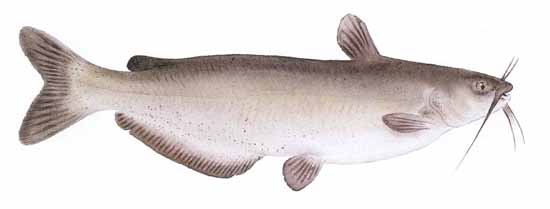
Channel Catfish

Channel Catfish


This is Passport to Texas

Some seniors at the A.E. Wood Fish Hatchery in San Marcos are graduating. These seniors aren’t students, though – they’re mature channel catfish.

11—The fish have served to produce millions of channel catfish babies (fry) that we use to stock urban fisheries. After they serve their purpose, these fish have a chance to be stocked in a lake.

Fisheries biologist, Marcos De Jesus says the most recent graduates ended up in Lake Kyle, just outside of Austin.

14—Lake Kyle is a 12-acre impoundment that opened to the public about two years ago. So, we’re trying to establish a quality urban fishing experience in Central Texas – close to Austin – and these fish will serve that purpose.

Largemouth bass and sunfish also inhabit Lake Kyle. The channel cats average nine pounds each, and offer anglers a good fight. Take a picture, because you can’t keep them.

10—Lake Kyle has a brand new regulation that just started September first – where it’s really a catch and release environment. So, these fish will be protected under a catch and release regulation.

Find fishing regulations and tackle loaner programs near you when you log onto the Texas Parks and Wildlife website.

Our show’s receives support from the Wildlife and Sportfish Restoration Program, which provides funding for the Private Lands and Public Hunting Programs.

For Texas Parks and Wildlife…I’m Cecilia Nasti.
