Archive for the 'Shows' Category

Health: Benefits of Time Spent in Nature

Wednesday, April 15th, 2015
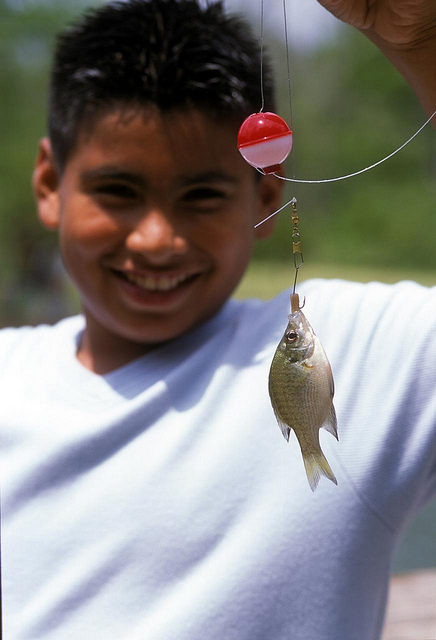
Fishing: Gateway to outdoor obsession.

Fishing: Gateway to outdoor obsession.


This is Passport to Texas

With more than a million acres of public parks and wild spaces in Texas, opportunities to get outside abound, and so do the health benefits of being active outdoors.

Adult men and women should carve out at least 30 minutes a day for some kind of physical activity. For children, that time grows to a full hour. Regular body-moving, heart-pumping movement builds muscle and develops balance and flexibility – among other benefits.

From daytime and guided night hikes, to star gazing, bike and equestrian trails, bird watching, to swimming, rock climbing, paddling, and geocaching – state and local parks offer a chance to get outside no matter your interest or ability. Your imagination is really the only
thing standing between you and what you can do outdoors.

Of course, you can always go to the gym to log your 30 minutes of activity a day, but when nature is your fitness center your workouts will all seem like play. Side stepping puddles, leaping up rocks, and traversing up and down hills exercise your balance and stability in
addition to the cardiovascular system…not to mention what being in the wide open spaces breathing fresh air can do for your peace of mind.

The outdoor alternative is also more affordable than the gym, as many state parks offer low-cost admission. So go ahead and get out, because life’s better outside. Find a park or scenic trail near you at texasstateparks.org.

That’s our show for today… Funding provided in part by Ram Trucks. Guts. Glory. Ram.

For Texas Parks and Wildlife…I’m Cecilia Nasti.
TPW Mag: Sharing Responsibility for Nature

Tuesday, April 14th, 2015
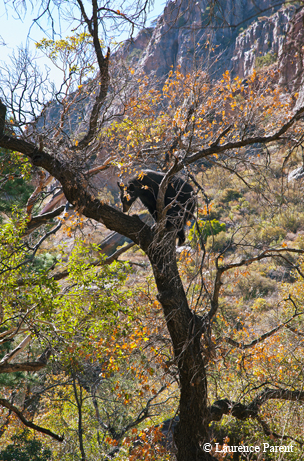
A black bear looks for a beehive in a tree in Big Bend's Chisos Mountains

A black bear looks for a beehive in a tree in Big Bend’s Chisos Mountains


This is Passport to Texas

The Chihuahuan desert ecosystem sprawls across Texas and Mexico, making the conservation of its flora and fauna a shared responsibility between the two nations. However, writer Melissa Gaskill says the conservation philosophies of the countries differ.

21—In this country, we form something like Big Bend National Park, and it’s just for the recreation and the wildlife, and people don’t live there. On the Mexican side, they have more of sort of what we would see as a conservation easement approach. Where an area is protected, but there are still homes and ranches and villages—life goes on—but they behave a little differently toward nature.

Gaskill wrote the article Nature Without Borders for the April issue of Texas Parks and Wildlife magazine. Although the US and Mexico share conservation challenges, they also share the successes.

31—One of the successes is black bears. They disappeared on this side back in the 1950s, but given the remoteness of the country on the Mexican side, they remained there, and once they started protecting them actively in Mexico, and we started having all these protected lands on this side that provided good habitat, the bears on their own, crossed the river and repopulated in the Big Bend area. And, they’re doing pretty well; they have the potential to spread elsewhere within Texas where there’s good habitat.

Learn more about the flora and fauna of this area of Texas when you read Melissa Gaskill’s article Nature Without Borders in the April issue of Texas Parks and Wildlife magazine.

The Wildlife and Sport Fish Restoration program supports our series.

For Texas Parks and Wildlife…I’m Cecilia Nasti.
TPW Mag: Nature Without Borders

Monday, April 13th, 2015

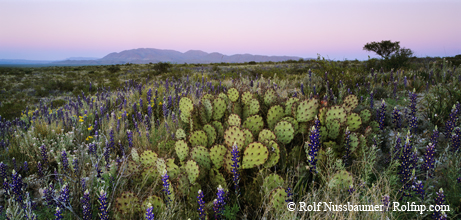
Desert in bloom with Big Bend Bluebonnet and Prickly pear cactus

This is Passport to Texas

Men create borders which nature ignores.

07—Down in the Big Bend area there’s a heck of a lot of nature and there’s a border running right through it and the animals and plants just don’t care.

Nature Without Borders is an article by writer Melissa Gaskill for the April issue of Texas Parks and Wildlife magazine. She explores how the US and Mexico coordinate their efforts to preserve our shared flora and fauna.

20—They’ve actually been collaborating for a really long time in trying to work together. This is really one big ecosystem – the Chihuahuan desert. The way to protect it and effectively manage it, you really have to do that by cooperating on both sides. One side can’t be doing half the job and the other side doing a completely different half the job. It just wouldn’t work that well.

One of the biggest challenges both sides face is the shear vastness of the area in question, but that’s not all.

20—We’re talking about three million acres all told, and that’s a lot of ground to cover for anybody. The fact that there’s an international border in the middle of it—even when you can cross—it just complicates things. You have two governments; two very different approaches to conservation between the two countries; you have a language issue. And then there are the specific challenges in terms of the types of animals out there.

We’ll hear about those tomorrow. The April issue of Texas Parks and Wildlife magazine is available on newsstands and for download on the new Magazine APP. Find download information at tpwmagazine.com.

The Wildlife Restoration program supports our series.

For Texas Parks and Wildlife…I’m Cecilia Nasti.
Gardening with Native Plants

Friday, April 10th, 2015
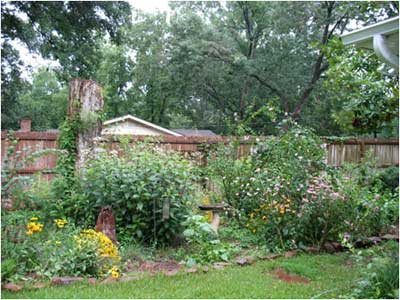
A backyard wildscape with native plants.

A backyard wildscape with native plants.


This is Passport to Texas

Everyone loves instant color when planting flowers and shrubs, but plants provide more than just visual appeal.

06—Usually they are producing fruits or nectar, some kind of food source that’s desirable.

Botanist, Dana Price, says our choice of plants can affect Texas wildlife that depends on them.

16—A lot of them are host plants for our native butterflies and monarchs; some of them are good hummingbird nectar sources. Many of them have berries that are good for birds. Native trees are hosts for all kinds of insects that are in turn food for our native birds.

Native plants also serve us by providing low-maintenance upkeep, even in the harshest conditions—such as the seemingly ever present
heat and drought that afflicts Texas.

07—Our native plants are very well adapted to the climate in Texas, which yes is very extreme a lot of times.We call planting and maintaining native vegetation for wildlife: Wildscaping. The goal: to provide places for birds, small mammals, and other wildlife to feed
and drink, and to escape from predators, as well as raise their young.

Find wildscaping information on the Texas Parks and Wildlife website.

That’s our show for today… Funding provided in part by Ram Trucks. Guts. Glory. Ram

For Texas Parks and Wildlife, I’m Cecilia Nasti.

Fish | Cook: Learning to Cook Seafood

Thursday, April 9th, 2015


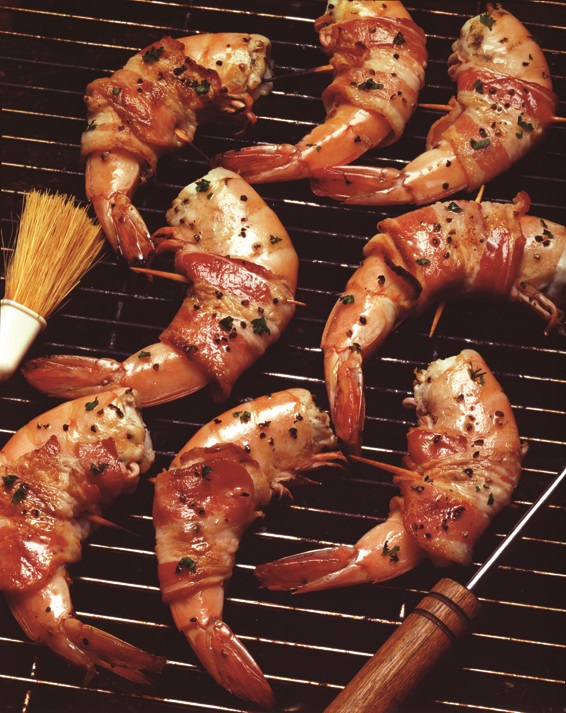
Grilled Shrimp

Grilled Shrimp

This is Passport to Texas

We love seafood, but when it comes to cooking it—most of us leave that to the professionals.

06— Because a lot of people are intimidated [by] seafood. They have this impression that it’s hard to cook.

But it’s not, says Rhonda Cummins with Texas AgriLife and Texas Sea Grant. Whether you harvest it yourself or pick up fresh fish from a local market, seafood is easier to prepare than you realize.

06— If you can master just a couple of quick easy [techniques] in the kitchen, you can cook seafood at home

The FREE monthly Cooking with Seafood classes Rhonda coordinates provide attendees the skills they need to prepare fresh seafood at home. Volunteer cooks teach demos, while fisheries biologists and others talk about the resource.

11— Sometimes I have to put the meal on hold because they’re still asking questions to the presenter. They’re coming to learn. I actually believe that it’s become more about interesting topics than about the food.

But there is food. The next FREE Cooking with Seafood class is Monday April 13 at the Calhoun County Fairgrounds outside Port Lavaca, and will include some combination of oysters, crabs, shrimp and fish.

14—The basic concept of the evening is going to be, you’ve harvested it, or you have bought it in its almost natural state at the fish market—what do you do with it next? So, we want to teach them some basic cleaning techniques and then cooking techniques.

Find out how you can attend at passporttotexas.org (see below).

The Sport Fish Restoration program supports our series. For Texas Parks and Wildlife…I’m Cecilia Nasti.
______________________________________________

If you want to attend the April 13, 2015 FREE Cooking with Seafood Demo, RSVP with Rhonda Cummins:

Cooking with Seafood
Free cooking demonstrations and samples using fresh, local seafood.
Calhoun County Fairgrounds, Bauer Exhibit Building
6 p.m.
RSVP to Rhonda Cummins: (361) 552-9747
Email: rcummins@tamu.edu
