Archive for the 'Wildlife' Category

Wildlife: Return of the Bats

Monday, April 20th, 2015
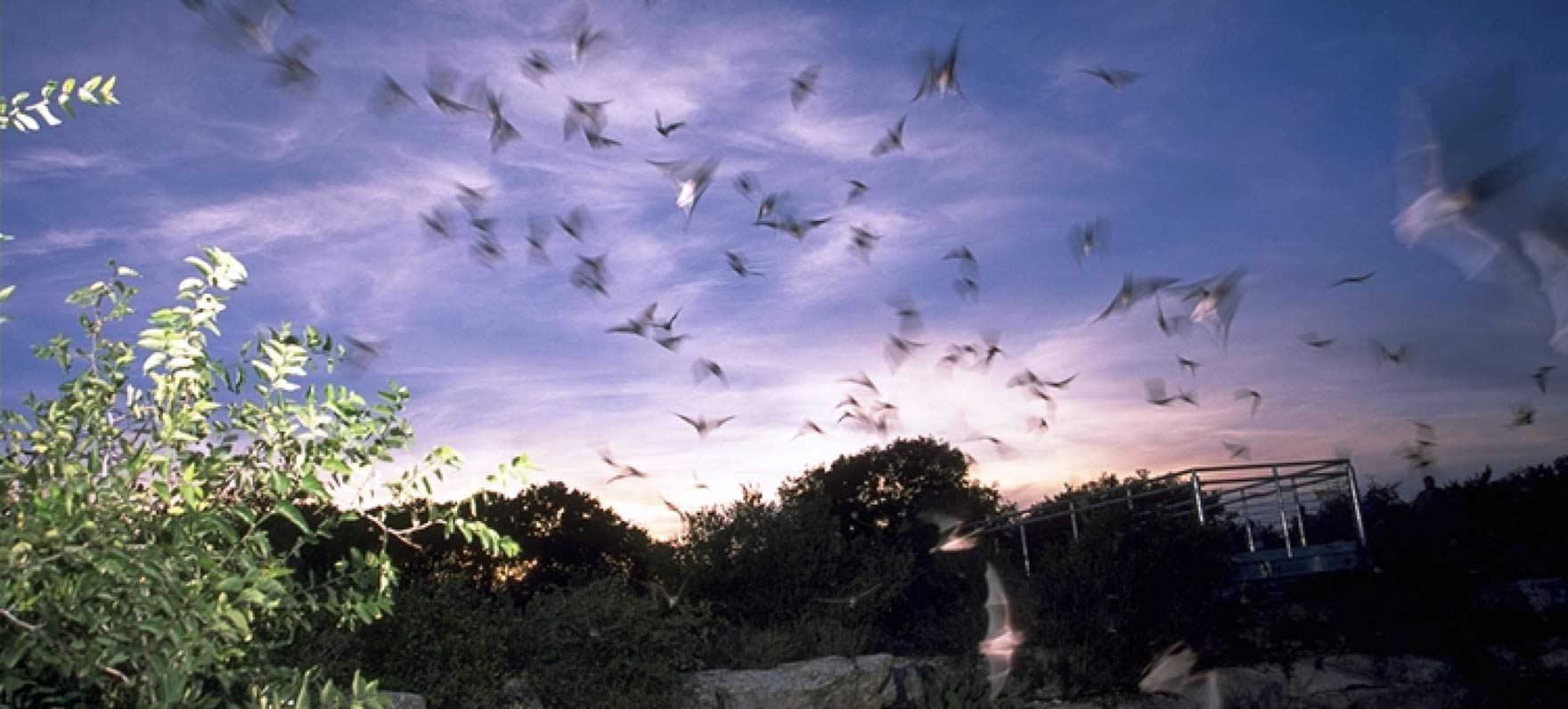
Mexican free-tailed bats emerging from Devil's Sinkhole.

Mexican free-tailed bats emerging from Devil’s Sinkhole.


This is Passport to Texas

Millions of Mexican Free-tailed bats are returning to Texas where they will bear their young and eat tons of pesky insects. And that makes farmers happy.

05—The Mexican free-tailed bat in particular is really valuable for agricultural purposes.

Meg Goodman is a bat biologist.

13—Current research has shown that these bats can save farmers up to two sprays of pesticides per year because of all the insect pests that they’re eating. They’re eating things like the corn earworm moth and the cotton boll worm moth, among other crop pest species.

In addition to eating their weight in insects pests each evening, their nightly flights from inside caves and under bridges has become tourist attractions statewide.

14—Just their numbers and nightly emergences bring in a lot of tourist dollars to a lot of small communities and big communities like Austin. It’s one of our top tourist destinations right here in Austin. But they do provide a lot of dollars through nature tourism through a lot of our smaller communities throughout the state.

Bridges, like the Ann Richards Congress Avenue Bridge in Austin, boasts more than 1.5 million visiting Mexican free-tailed. And tomorrow we meet a man who builds bridges with bats in mind.

07—I would say that they type of bridges we build that would accommodate bats, we probably build about 30 of those statewide every year.

The Wildlife and Sport Fish Restoration program supports our series and funds diverse conservation projects in Texas.

Texas Parks and Wildlife…I’m Cecilia Nasti.
TPW TV: Whoopers

Friday, April 17th, 2015
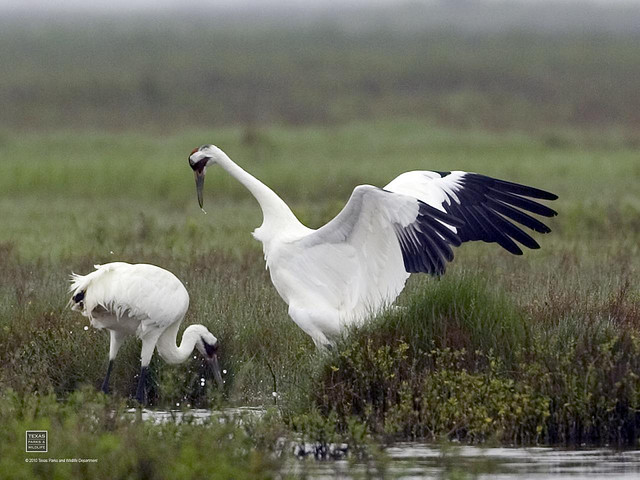
Whooping crane pair at Aransas National Wildlife Refuge

Whooping crane pair at Aransas National Wildlife Refuge

This is Passport to Texas

The endangered Whooping Crane, one of the rarest birds in North America, makes its home at the Aransas National Wildlife Refuge along the shallow bays of the Texas Gulf.

10— This is a species that almost went extinct. I mean, it was almost gone forever from the face of the earth.

Dr. Felipe Chavez-Ramirez is Director of Conservation Programs at the Gulf Coast Bird Observatory. The species has been making a slow comeback from 16 birds in 1941 to 300 today. Watch Dr. Chavez-Ramirez and his colleagues trap adult Whoopers and fit them with GPS tracking devices during a segment of the PBS Texas Parks and Wildlife TV Series. Wade Harrell, with the U.S. Fish and Wildlife Service, is also on the show.

11—We’re going to learn a lot in terms of new places that they use that we didn’t know about before. So, I think there’s going to be a real paradigm shift in how we manage and conserve whooping cranes going forward.

It’s no easy task trapping these big birds, yet, once fit with trackers, team members, like Veterinarian Barry Hartup, believe the data returned to them will be eye-opening.

14— What we’re doing with capturing adult birds on the Aransas Refuge has never been done before. So, we’re learning a lot about these birds in terms of their movements, their survival, their overall health – what we can do to further their protection and conservation into the future.

Watch the segment on Whooping Cranes on the PBS Texas Parks and Wildlife TV series next week. Check your local listings.

The Wildlife and Sport Fish Restoration Program supports our series and funds diverse conservation projects in Texas.

For Texas Parks and Wildlife…I’m Cecilia Nasti.
TPW Mag: Sharing Responsibility for Nature

Tuesday, April 14th, 2015
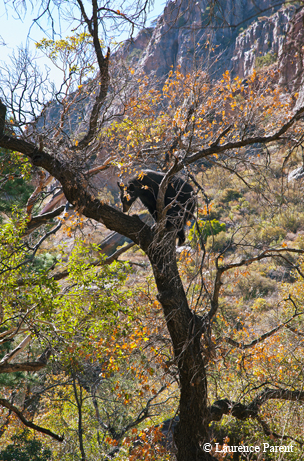
A black bear looks for a beehive in a tree in Big Bend's Chisos Mountains

A black bear looks for a beehive in a tree in Big Bend’s Chisos Mountains


This is Passport to Texas

The Chihuahuan desert ecosystem sprawls across Texas and Mexico, making the conservation of its flora and fauna a shared responsibility between the two nations. However, writer Melissa Gaskill says the conservation philosophies of the countries differ.

21—In this country, we form something like Big Bend National Park, and it’s just for the recreation and the wildlife, and people don’t live there. On the Mexican side, they have more of sort of what we would see as a conservation easement approach. Where an area is protected, but there are still homes and ranches and villages—life goes on—but they behave a little differently toward nature.

Gaskill wrote the article Nature Without Borders for the April issue of Texas Parks and Wildlife magazine. Although the US and Mexico share conservation challenges, they also share the successes.

31—One of the successes is black bears. They disappeared on this side back in the 1950s, but given the remoteness of the country on the Mexican side, they remained there, and once they started protecting them actively in Mexico, and we started having all these protected lands on this side that provided good habitat, the bears on their own, crossed the river and repopulated in the Big Bend area. And, they’re doing pretty well; they have the potential to spread elsewhere within Texas where there’s good habitat.

Learn more about the flora and fauna of this area of Texas when you read Melissa Gaskill’s article Nature Without Borders in the April issue of Texas Parks and Wildlife magazine.

The Wildlife and Sport Fish Restoration program supports our series.

For Texas Parks and Wildlife…I’m Cecilia Nasti.
TPW Mag: Nature Without Borders

Monday, April 13th, 2015

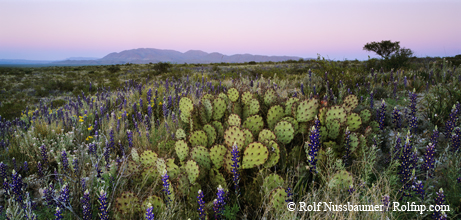
Desert in bloom with Big Bend Bluebonnet and Prickly pear cactus

This is Passport to Texas

Men create borders which nature ignores.

07—Down in the Big Bend area there’s a heck of a lot of nature and there’s a border running right through it and the animals and plants just don’t care.

Nature Without Borders is an article by writer Melissa Gaskill for the April issue of Texas Parks and Wildlife magazine. She explores how the US and Mexico coordinate their efforts to preserve our shared flora and fauna.

20—They’ve actually been collaborating for a really long time in trying to work together. This is really one big ecosystem – the Chihuahuan desert. The way to protect it and effectively manage it, you really have to do that by cooperating on both sides. One side can’t be doing half the job and the other side doing a completely different half the job. It just wouldn’t work that well.

One of the biggest challenges both sides face is the shear vastness of the area in question, but that’s not all.

20—We’re talking about three million acres all told, and that’s a lot of ground to cover for anybody. The fact that there’s an international border in the middle of it—even when you can cross—it just complicates things. You have two governments; two very different approaches to conservation between the two countries; you have a language issue. And then there are the specific challenges in terms of the types of animals out there.

We’ll hear about those tomorrow. The April issue of Texas Parks and Wildlife magazine is available on newsstands and for download on the new Magazine APP. Find download information at tpwmagazine.com.

The Wildlife Restoration program supports our series.

For Texas Parks and Wildlife…I’m Cecilia Nasti.
Wildlife | Event: Learning from Owls

Monday, April 6th, 2015
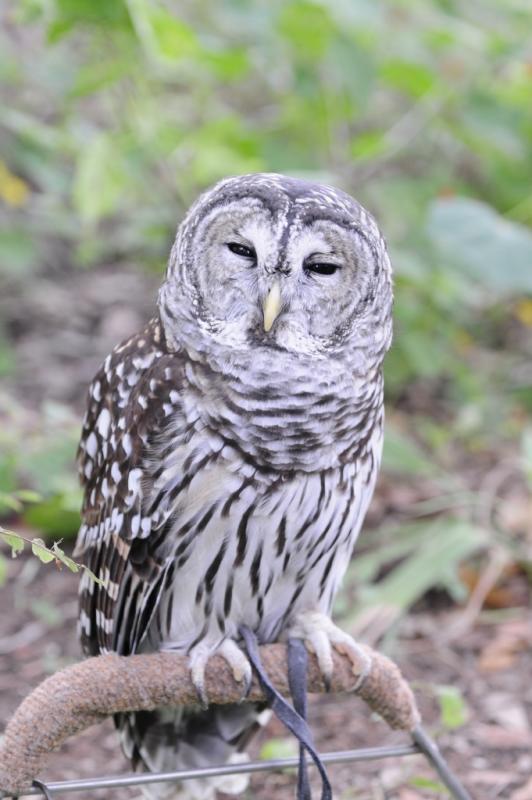
Wise little owl.

Wise little owl.


This is Passport to Texas

Owls symbolize wisdom – and we can learn much from them when pick their… pellets.

09— It’s more dignified than digging through poo because you’ll be digging through vomit.

Amy Kocurek and I have different ideas about what’s dignified, but this interpretive ranger at Martin Dies Jr. State Park, in East TX does know how to keep visitors engaged.

10—The kids especially, they love it. Little furry, tin foiled wrapped up presents, that they get to unwrap and see what sort of mysterious surprises await inside.

Wrapped in foil? Yes, because you can order them online.

11— Most of them are from barn owls that people will collect from in their barns where owls just hack up these pellets; they’ll collect them and sanitize them and sell them for teachers, mostly.

Whether pellets are fresh or sanitized for your protection, those small, furry capsules have secrets to reveal.

33— Because it contains these almost perfectly preserved pieces of bones and beaks and different things the owl ate, researchers can see what their main food source is in the area that they’re living, if that food source is changing seasonally…. But also, if you’re doing population studies on small mammals, that will allow you to see how many different types of mammals are being eaten by owls. So, it can give you an all-round general idea of the population of animals in that ecosystem.

Dissect owl pellets with Amy Kocurek April 11at Martin Dies Jr. SP; details on the calendar at texasstateparks.org.

The Wildlife and Sport Fish Restoration program supports our series.

For Texas Parks and Wildlife…I’m Cecilia Nasti.
