July 13th, 2017
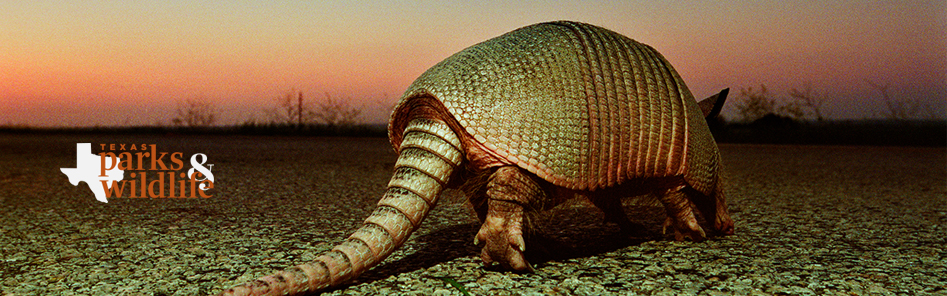
Some things never change.
This is Passport to Texas
There’s a provocative article in the July issue of Texas Parks and Wildlife magazine I want to tell you about. In it, author Russell Roe essentially explores evolution.
He writes that the mix of plants and animals you see around you is not what people saw 100 years ago, and it won’t be what people will see 100 years from now. He asks us to consider that “99.99 percent of all species that have lived on Earth have gone extinct.”
This thought-provoking article explains how humans are accelerating ecological change by removing established species, introducing new species, and by diverting the flow of water, among other things. He writes that by doing so, humans are rapidly changing the playing field for life in Texas.
In the article The New Natives [changed to New in Town] in the July issue of Texas Parks and Wildlife Magazine, Russell Roe tells readers it’s difficult to untangle the web of cause-and-effect that led to the mix of species we see today, adding that iconic species that once defined the character of natural regions have been lost not only from the landscape, but also from the collective memory of generations of Texans.
He closes the article by putting the spotlight on three of Texas’ iconic species to illustrate how they have changed and adapted over time.
Find The New Natives in the July issue of Texas Parks and Wildlife magazine is on newsstands now.
For Texas Parks and Wildlife, I’m Cecilia Nasti.
Posted in TPW Mag | Comments Off on TPW Magazine — The New Natives
July 12th, 2017
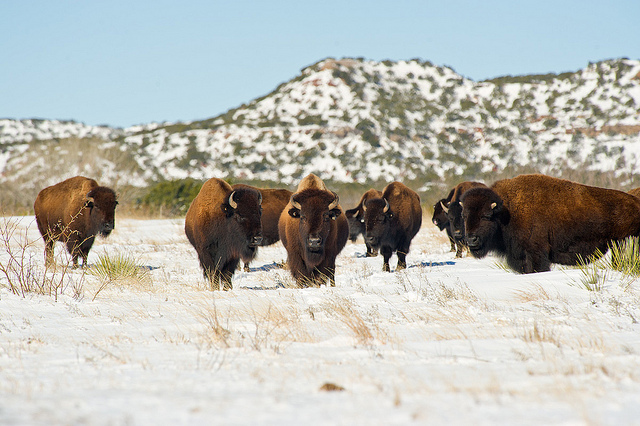
Bison at Caprock Canyons State Park
This is Passport to Texas
When you visit Caprock Canyons State Park you may come face-to-face with one or more of the over 150 bison roaming freely within on the park.
You do want to give them respect.
The animals make up the official Texas State Bison herd. Donald Beard is park superintendent, and says when on the grounds, remain aware of your surroundings – which is true even if there weren’t one ton animals ambling about.
They are a wild animal and they are capable of running very fast. So, you want to give them at least a 50 yard buffer. Of course, they don’t have to follow that rule, so they could come right up to you. And if that’s the case, then what you want to do is just stand still; no sudden movements. And wait for them, they’ll just pass right on by.
As tempting as it might be: do not approach the bison, and do not feed them.
This goes for all wildlife. Every one of these. You don’t approach the wildlife. This is their territory. You have to respect that you’re in their house. So, you just give them the right of way and let them do their thing.
And you can do your thing Saturday September 23 at the Annual Texas State Bison Music Fest in Quitaque. Money raised from ticket sales funds bison research and conservation. Find the music lineup and ticket information at bisonfest.com.
That’s our show for today… For Texas Parks and Wildlife…I’m Cecilia Nasti
Posted in bison, State Parks | Comments Off on Face Time with Bison
July 11th, 2017
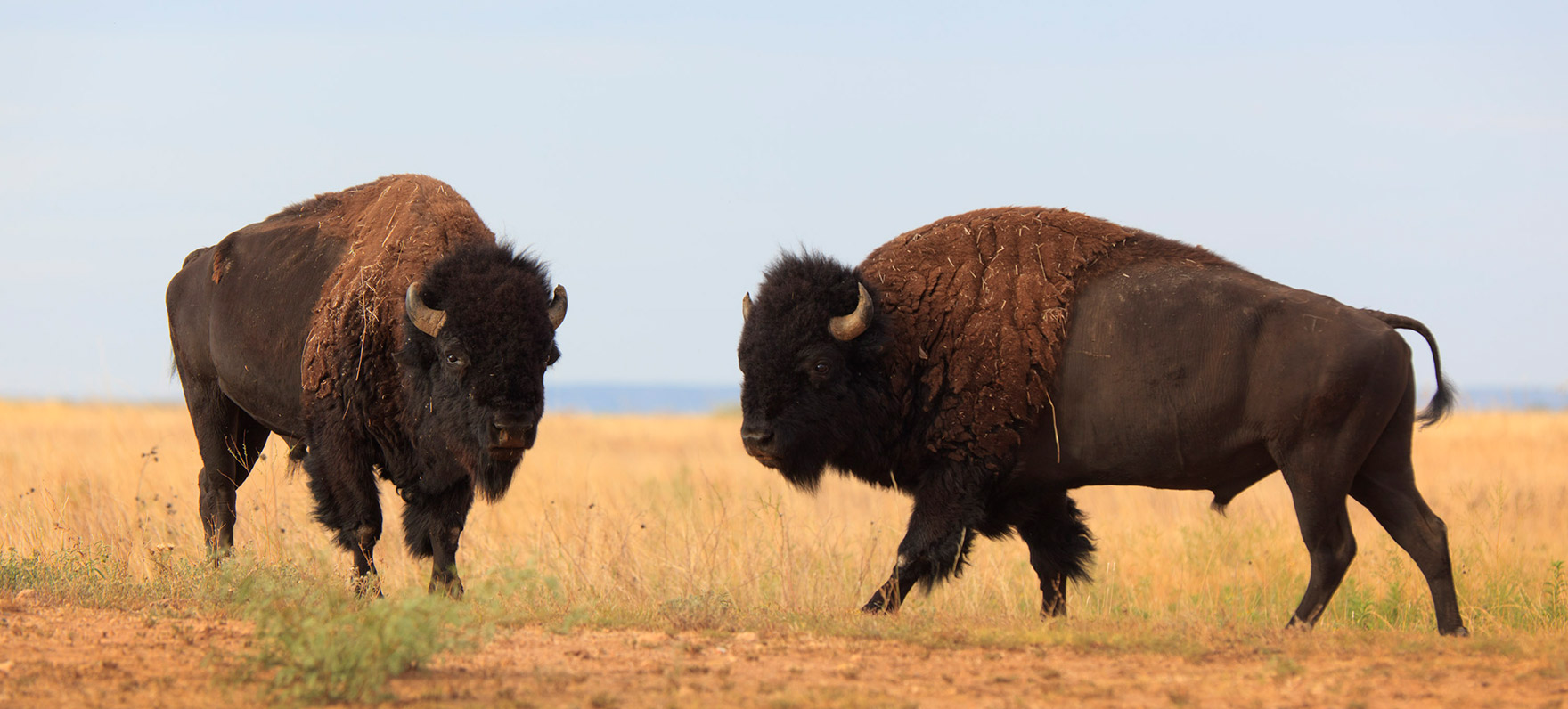
Members of the Texas State Bison Herd at Caprock Canyons State Park
This is Passport to Texas
History walks on four legs at Caprock Canyons State Park. It’s where descendants of southern plains bison, from a herd started by rancher Charles Goodnight, roam free.
It’s the official bison herd of the State of Texas. It’s a herd started by Charles Goodnight back in 1878; these animals are direct descendants of those that he captured in the wild right here in this area.
Donald Beard is park superintendent.
These are the last true remaining example of the southern plains bison. Animals that were captured by him [Goodnight] in these canyons. Kept in these canyons and never had any influence from any other animals [bison] outside of this area. So, their genetics are basically the same as they were back in the 1870s.
No fences separate visitors to Caprock Canyons State Park from the approximately 150-plus bison on site.
Awe, it’s amazing. You have to wait for them to cross the road. They can wander through your campsite. Go down to the lake while you’re fishing and take a drink. They’re just like any other wild animal in the park. You can experience them as they were – not behind a fence in an exhibition.
September 23 the 7th Texas State Bison Music Fest takes place in Quitaque. Find the music lineup and ticket information at bisonfest.com. Money raised funds bison research and conservation.
That’s our show for today… For Texas Parks and Wildlife…I’m Cecilia Nasti
Posted in bison, Conservation, History, State Parks | Comments Off on Historic Bison at Caprock Canyons State Park
July 10th, 2017
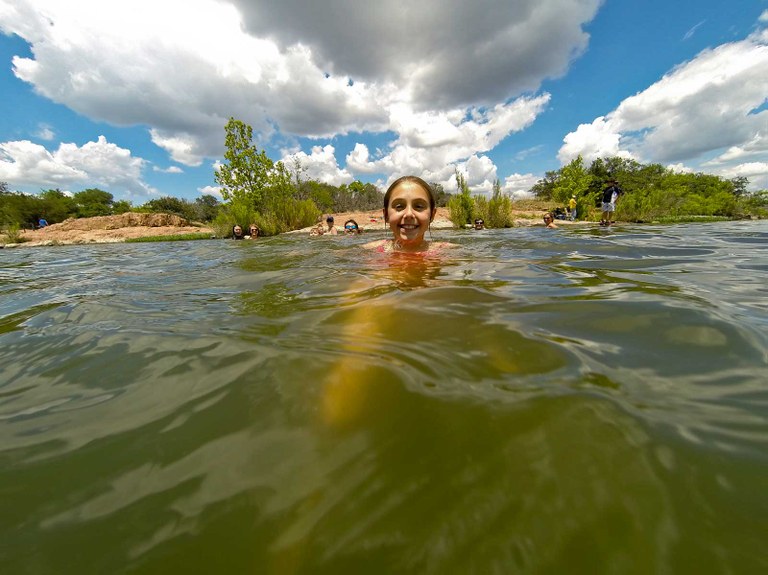
From spring-fed rivers to Texas-sized lakes, open ocean swims to diving in a pool, Texas State Parks offer a full range of swimming options
This is Passport to Texas
Summer is hot…but you don’t have to be. Many of your Texas State Parks offer visitors a refreshing alternative to air-conditioned cabin fever with their swimming opportunities.
Public swimming pools can be fun, but if you prefer a more natural setting, float your cares away at Blanco State Park, 40 miles north of San Antonio. Here you’ll find cool, clear, spring-fed swimming for anyone seeking refuge from the long Texas summer.
Deep in the heart of the East Texas Pineywoods Martin Dies, JR State Park is on the northern edge of the Big Thicket, and at the forks of the Angelina and Neches rivers. The water is flowing and just right for swimming fun. Just keep an eye out for paddlers.
About one hour from Fort Worth, Dinosaur Valley State Park allows visitors to swim in the same Paluxy River where dinosaurs roamed 113-million years ago.
Garner State Park near Uvalde is home to 10 acres of Frio riverfront, giving visitors plenty of space to swim the clear water, scoot the rapids in inner tubes, or even rent pedal boats. Just arrive early so you can get in.
Find listings of state park swimming opportunities, and safety tips, when you log onto texasstateparks.org.
That’s our show for today… Funding provided in part by Ram Trucks. Guts. Glory. Ram
For Texas Parks and Wildlife, I’m Cecilia Nasti.
Posted in State Parks, Swimming | Comments Off on State Park Swimming Holes
July 7th, 2017
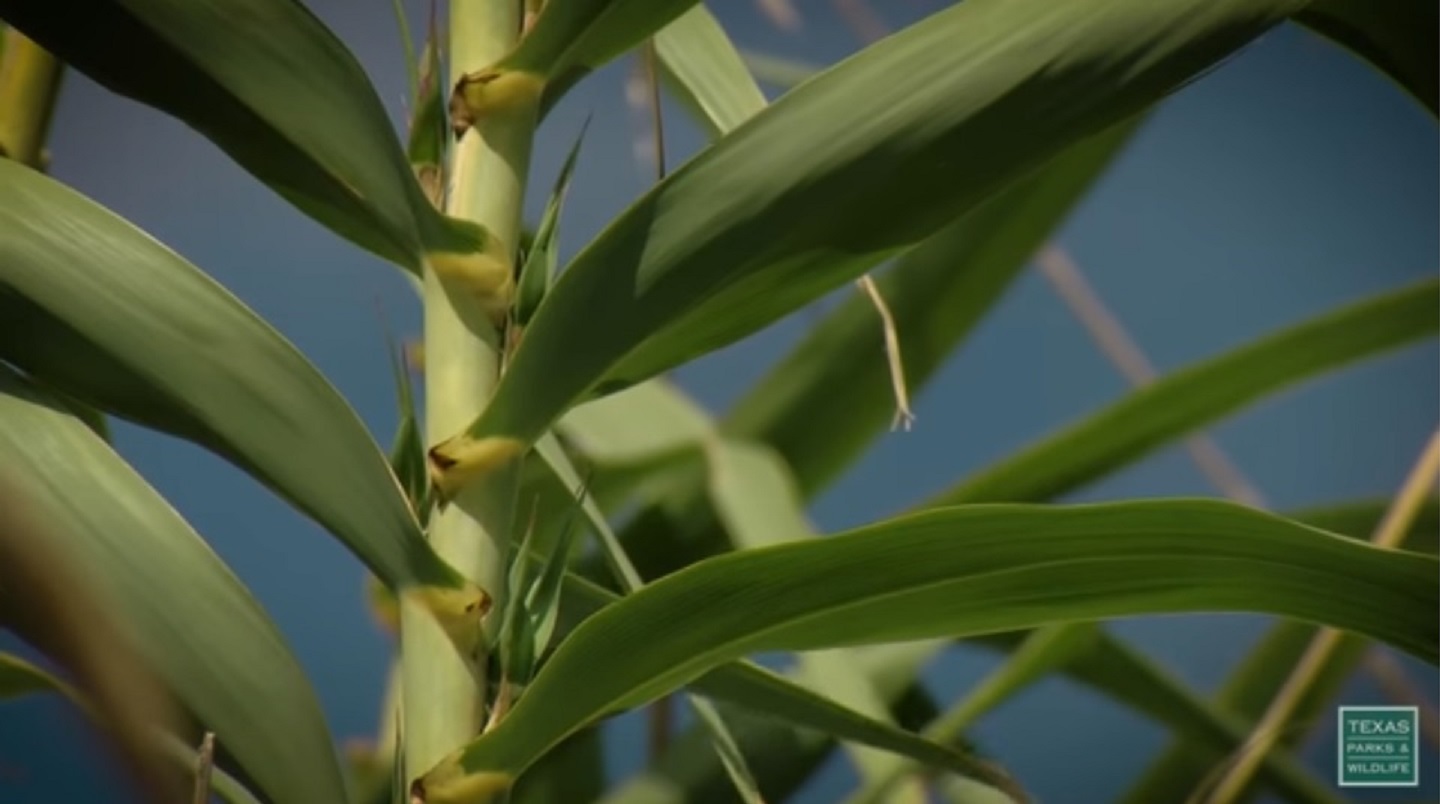
Arrundo Donax is ready for its close-up.
This is Passport to Texas
Mike Eckert lives just outside of Fredericksburg. He’s battling with an invasive plant called Giant Reed, or Arrundo Donax that’s taking over a creek on his property.
As best as I understand, it’s doesn’t spread from seeds. It spreads from pieces washing out and lodging somewhere, and then starting to grow again.
Next week on the Texas Parks and Wildlife TV series watch a segment called Razing Cane that explores the impact of this invader that threatens nearly every river system in Texas.
We’re almost to the Pedernales. Another half mile and you’ll hit the Pedernales down here. And they’ve got this stuff in the Pedernales, too. And it’s spreading pretty quick. And it’s all over. Everywhere you go, it’s there. It’s going to take a massive effort to wipe it out. And I’m not sure they’ll ever wipe it out.
Texas Parks and Wildlife Aquatic invasive species specialist, Monica McGarrity and a team of biologists is fighting back. They’re using an herbicide that will hopefully kill this introduced invasive weed.
Arrundo is a grass, but it’s a grass on steroids. It grows 30 to 40 feet tall. Huge, dense canes. So dense that wildlife can’t even get through it. And so this is a really aggressive plant, and it’s important to take equally aggressive action to manage it.
View the Texas Parks and Wildlife TV segment Razing Cane next week on PBS. Check your local listings.
The Wildlife and Sport Fish Restoration program supports our series.
For Texas Parks and Wildlife…I’m Cecilia Nasti.
Posted in Arundo Donax, Texas Invasives, TPWD TV | Comments Off on TPW TV — Razing Cane


 Passport to Texas is a
  Passport to Texas is made available by: