Road Tripping for the Birds

April 6th, 2017
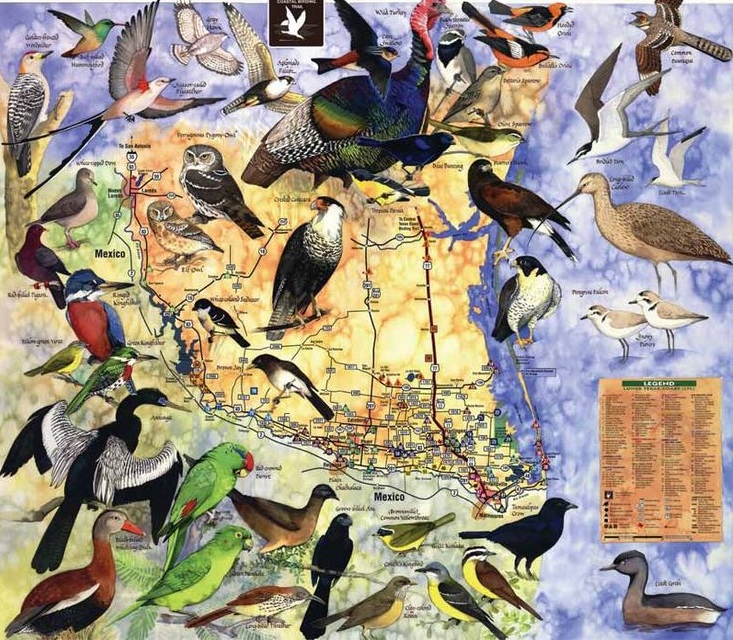
Birds one might see in the coastal region of Texas.

Birds one might see in the coastal region of Texas.

This is Passport to Texas

Twenty years ago, Bill Baker and two teammates began a journey of discovery during the very first Great Texas Birding Classic.

It was like the greatest scavenger hunt of all time—for birds! Being with your friends. Driving at a frantic pace. Covering habitat. Looking for different species. And learning. Our learning curve was so great.

As total rookies, their performance was uncompetitive, at best, but since they had fun, they’ve returned year after year. Members of the current team, called the NRG Eco Eagles, bring with them specific skillsets.

I can hear very well, even at my age. Tom—his vision is incredible. And Andy, the third member of our team now, has been a hunter most of his life. And he catches movement. He is really, really good at finding things. He can see movement, and has a skillset that really helps us as well. It is truly a team event in our case.

During the classic, teams try to identify the most birds they can. The NRG Eco Eagles participates in the week-long tournament, which puts them on the road.

That’s what makes it so much fun for us. And it’s very grueling. I’ll give you an example—on day one—we end up driving about 750 miles. And we walk about 8 and a half to nine miles that first day.

They sleep four hours and repeat…for an entire week. More with Bill Baker tomorrow. The Great Texas Birding Classic gets underway April 15. Keep up with the action at birdingclassic.org.

For Texas Parks and Wildlife…I’m Cecilia Nasti.
Growing as a Birder with the Birding Classic

April 5th, 2017
On the lookout for birds during the Great Texas Birding Classic.

On the lookout for birds during the Great Texas Birding Classic.

This is Passport to Texas

Neither Bill Baker nor his teammates were birders 20 years ago when they participated in the very first Great Texas Birding Classic.

We were so bad the first year, the Parks and Wildlife department staff felt sorry for us. And they gave us an award for being rookies of the year so we might think about coming back the next year.

Back then he worked for Houston Lighting and Power managing a program called Environmental Partners.

And the goal of that program was to leverage money to enhance wildlife and fishery habitat here in Texas. So, when I saw the Texas Birding Classic advertisement, I thought we could participate in the classic with the Parks and Wildlife Department. If, perchance, we would happen to win, we could leverage our company money with any winnings to enhance a project here in Texas.

Bill may have been overly optimistic about his team’s prospects that first year, but he said it opened his eyes to what they needed to do to become competitive.

So, that was the goal after year one. And it drove us to come back. It was like, ‘Okay. We were embarrassed the first year. So let’s see what we can do to close the gap.

More with Bill Baker tomorrow. Meanwhile, The Great Texas Birding Classic gets underway April 15. Winning teams help decide the distribution of habitat restoration funds. Keep up with the action at birdingclassic.org.

For Texas Parks and Wildlife…I’m Cecilia Nasti.
TPW TV — Hike Across Texas

April 4th, 2017
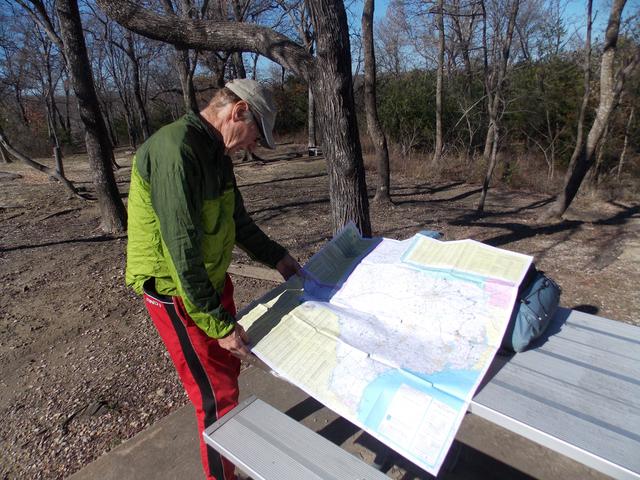
Eisenhower State Park gets visit from 72-year-pld Dave Roberts,  walking across Texas - Image: Herald Democrat - Sherman, TX

Eisenhower State Park gets visit from 72-year-old Dave Roberts, walking across Texas – Image: Herald Democrat – Sherman, TX

This is Passport to Texas

For septuagenarian, Dave Roberts, an adventure that took him across Texas on foot, started a little more than two decades ago with a dream…

In my dream, I died and I went to heaven. St. Peter looks at me and he looks down at his book and he looks at me again and says, ‘Why didn’t you take advantage of what they had to offer down there?’ End of dream.

A retired math teacher and computer programmer from Maryland, Dave soon quit his job to become a full-time volunteer, taking time off for adventures.

I don’t want to just sit at home and play card games on the computer and raid the refrigerator every ten minutes and get fat and lazy. I want to be outdoors, I want to breathe unfiltered air, I want the weather to affect me, I want to meet people I’ve never met, I want to go places I’ve never been, and that’s the lifestyle that I’ve chosen for myself.

That’s how Dave Roberts ended up walking across Texas, visiting close to 30 state parks along the way.

Visiting state parks has made my trip much more interesting. I made a spreadsheet: at 15 miles a day, how many state parks can I do? And I came out to 23 state parks. When I got to Tyler, I was like a week and a half ahead of schedule. I was doing 23 miles a day, not 15.

Join Dave Roberts on his walk across Texas, and find out how it all started, this week on the award-winning Texas Parks and Wildlife TV series on PBS. Check your local listings.

For Texas Parks and Wildlife…I’m Cecilia Nasti.
Campstravaganza

April 3rd, 2017
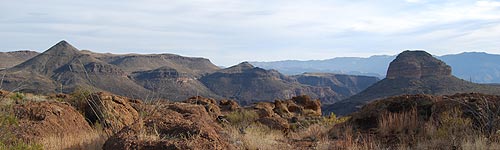
Guale #2 at Big Bend Ranch State Park

Guale #2 at Big Bend Ranch State Park

This is Passport to Texas

The Texas State Park system has close to 8,000 campsites. In the April issue of Texas Parks and Wildlife magazine, father and son—Russell and Luke Roe—highlight the available prime “real estate”.

You know the places: great views, near water, or shaded by an ancient oak; spacious—or, perhaps, secluded.

In the section, the Roes reveal site and shelter numbers of these coveted spots: such as Guale #2 at Big Bend Ranch State Park in West Texas; this remote site, only accessible by four-wheeler, offers visitors spectacular views of sunsets that will change your life.

Site #65 at Caprock Canyons State Park in the Panhandle, offers solitude, the beauty of the shimmering red-rock Canyonlands, a covered picnic shelter, and a stunning view of Little Red River.

Site #92 at Inks Lake State Park  in the Hill Country is everything you want a camping getaway to be, with the perfect balance of shade, convenience, privacy, scenery and lake access. Boaters can moor their boats at the site, and the sunsets will take your breath away.

The special section of Texas Parks and Wildlife magazine has an illustrated Native American story you can tell around the campfire, tips on setting up the perfect campsite, and eight new s’mores recipes!

That’s our show for today… Funding provided in part by Ram Trucks. Guts. Glory. Ram

For Texas Parks and Wildlife, I’m Cecilia Nasti.

Your Own Backyard Offers Birding Opportunities

March 31st, 2017
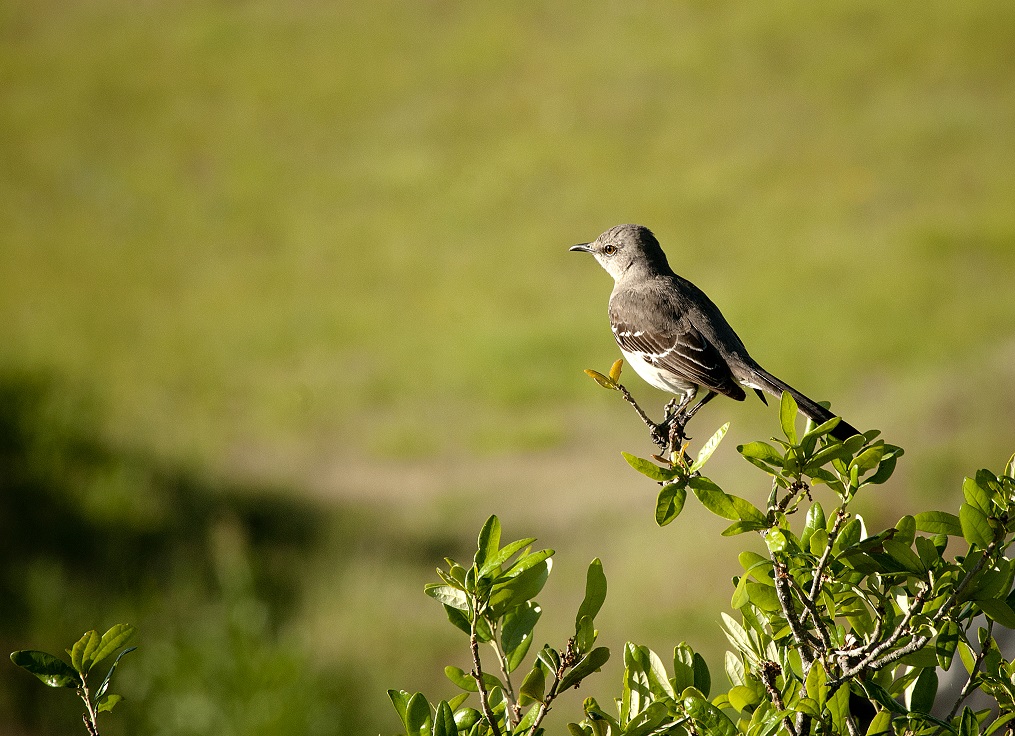
Mockingbird photgraph taken from the roof of TPWD HQ building.

Mockingbird photgraph taken from the roof of TPWD HQ building.

This is Passport to Texas

The Texas coast attracts a wide variety of species of birds during spring migration. But what if you live inland and don’t have plans to visit the coast?

Folks that are inland can probably scout and look for big groves of trees and watch the weather.

Cliff Shackelford is Parks and Wildlife’s non-game ornithologist.

I’m here in Nacogdoches, and we have a place in town called Pecan Park – it’s right next to Stephen F. Austin State University – and it is a migrant trap. So what I do is I look at the weather; if it rained the night before during a window of time when I know birds are passing through, that would be late April, early May, I would immediately get out there at eight in the morning and see what’s there.

Inclement weather grounds birds as it does some aircraft. Shackelford said a location with large trees and an open understory is ideal for birders to glimpse migrants high above in the canopy. Of course, if you want to encourage migrants to visit your backyard…

Provide a wildscape; that’s landscaping for wildlife. And in that you’ll start to see that ‘hey if I want berry-eating birds like tanagers and grosbeaks and buntings, I should put some of these berry-giving shrubs and trees out. If you’re wanting to attract fly-catching birds, then just having a wildscape means you’re going to have a lot of insect fauna – flies and bees and things like that – that a lot of birds feed on.

Find wildscaping and birding information on the Texas Parks and Wildlife website. The Wildlife Restoration program supports our series.

For Texas Parks and Wildlife…I’m Cecilia Nasti.