Benefit of Bats to Agriculture

March 16th, 2017
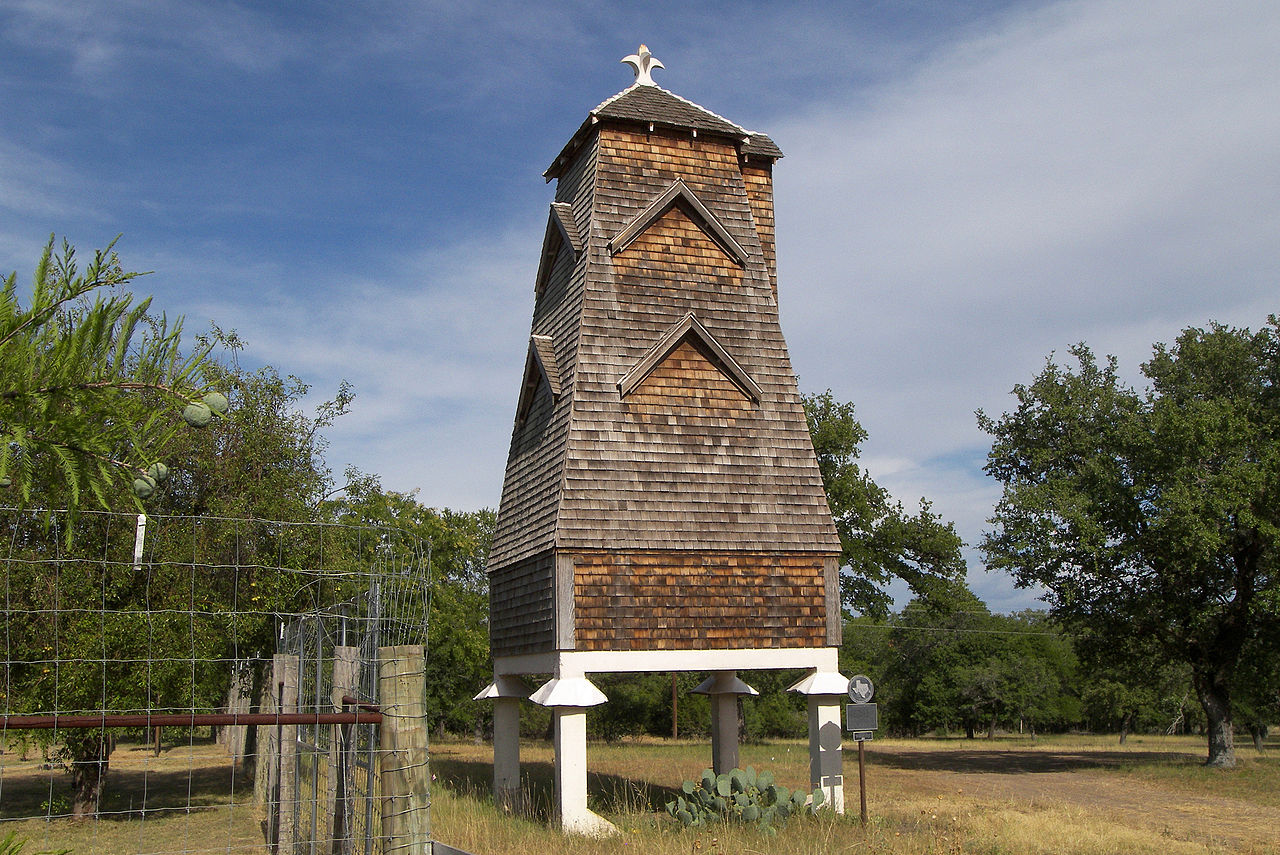
A Hygieostatic Bat Roost located off Farm to Market Road 473 east of Comfort, Texas, United States was built in 1918. The roost was designated a Recorded Texas Historic Landmark in 1981 and listed on the National Register of Historic Places on March 28, 1983.

A Hygieostatic Bat Roost located off Farm to Market Road 473 east of Comfort, Texas, United States was built in 1918. The roost was designated a Recorded Texas Historic Landmark in 1981 and listed on the National Register of Historic Places on March 28, 1983.

This is Passport to Texas

Farmers know how costly it can be to spray crops with insecticides to prevent pest damage. What some may not know is…bats can be partners in pest eradication.

The Mexican free tail bat, in particular, is really valuable for agricultural purposes.

Meg Goodman is a former Parks and Wildlife’s bat biologist.

Current research has shows that these bats can save farmers up to two sprays of pesticides per year because of all the insect pests that they’re eating, like the corn earworm moth and the cotton boll worm moth, among other crop pest species.

In the early 20th century, San Antonio physician Charles A. Campbell designed and tested artificial roosts to attract bats to eat mosquitoes blamed for the spread of malaria. Eventually Campbell developed a bat tower, which he installed at Mitchell Lake, south of the city, which attracted hundreds of thousands of the flying mammals. The spectacle of the bats’ nightly emergence drew spectators in the 1920s…as it does today, wherever bats roost.

Their numbers and nightly emergences bring in a lot of tourist dollars to a lot of smaller communities—and big communities like Austin… It’s one of our top tourist destinations. But they do provide a lot of tourist dollars through nature tourism through a lot of our smaller communities throughout the state.

Learn how to attract bats at passporttotexas.org. That’s our show…we receive support from the Wildlife Restoration program.

For Texas Parks and Wildlife…I’m Cecilia Nasti.
Don’t Fear Bats

March 15th, 2017
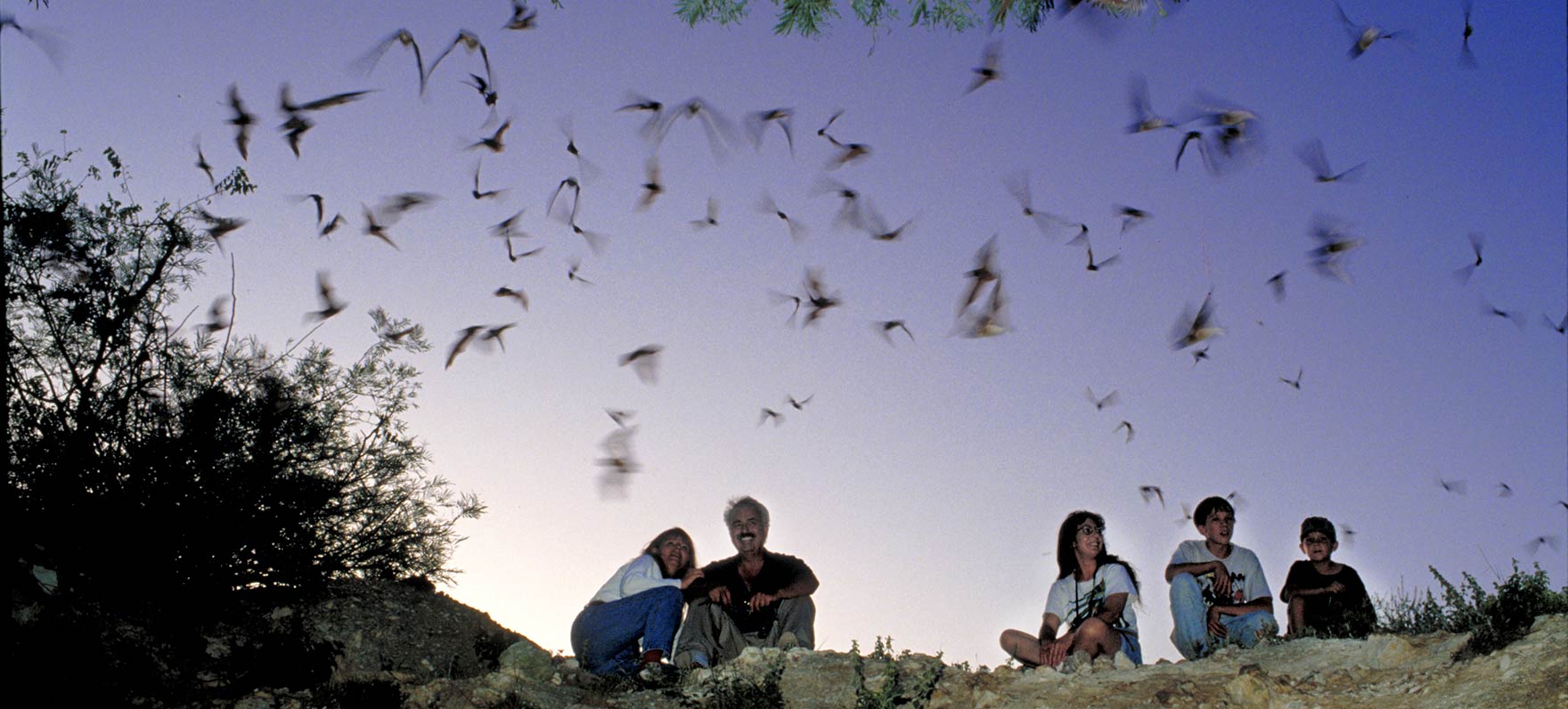
Bats emerge from their roost at Kickapoo Cavern State Park

Bats emerge from their roost at Kickapoo Cavern State Park

This is Passport to Texas

Despite improved public relations, people remain—if not terrified—then at least apprehensive of bats.

A lot of people fear bats because of a lot of myths and superstitions associated with them.

Meg Goodman, former Parks and Wildlife’s bat biologist, says bats will not purposely entangle themselves in your hair, nor will they attempt to suck your blood.

We do a lot of work to get the message across that bats are actually very, very beneficial for us, and they’re very gentle creatures and very interesting to learn about and learn from.

With education, more people are beginning to appreciate bats than fear them. In fact, we’ve even started looking forward to seeing certain bats—such as Mexican free-tails—that winter in Mexico and summer in Texas.

The Mexican free-tailed bat is probably one of our most common bats in the state, and people know it because it lives in such large numbers in places such as bridges and caves and makes nightly emergences that many people can come out and watch.

Tomorrow: the benefits of bats.

The Mexican free-tailed bat, in particular, is really valuable for agricultural purposes.

That’s our show for today… we receive support from the Wildlife Restoration Program…working to restore wildlife habitat in Texas…we record our series at the Production Block Studios in Austin…Joel Block engineers our program…

For Texas Parks and Wildlife…I’m Cecilia Nasti.
Baby Bird Rehab

March 14th, 2017
Rescuing baby bird from fallen nest.

Rescuing baby bird from fallen nest.

This is Passport to Texas

Spring is in the air and so are some baby birds as they prematurely exit their nests. If you find one grounded in your yard, resist rescue. The parents may be nearby.

Mom and dad know how to raise baby birds a lot better than we do.

If the bird is a featherless nestling, return it to the nest, says ornithologist Cliff Shackelford. If it is a feathered, yet flightless fledgling, it may be under mom and dad’s supervision. But if parents are absent, call a rehabilitator.

You would work with that person on trying to get the bird to them. Keep in mind the rehabilitator’s busy 24/7 tending to the wildlife they have – so don’t expect them to come all the way to you. So you should probably make the point of, ‘Okay. I’m committed to this; I’m going to see it through. So, I’m going to drive the bird even though it’s an hour away to the rehabilitator.

Rehabilitators are not evenly distributed, and the nearest one might be a two hour drive away, and Cliff says rescuers need to be prepared for that.

And we have on the Parks and Wildlife website, a list of the licensed rehabilitators in the state. That is something that has to be permitted. You have to have state and federal permits to be a rehabilitator. You don’t just take it down the road to grandma and hope that she can do it, because the reason they’re permitted is they have to go through training, and they have to have the right facilities to be successful.

Find that list of wildlife rehabilitators listed by county on the Texas Parks and Wildlife website. The Wildlife Restoration program supports our series.

For Texas Parks and Wildlife…I’m Cecilia Nasti.
Oops! Baby Bird Out of the Nest

March 13th, 2017
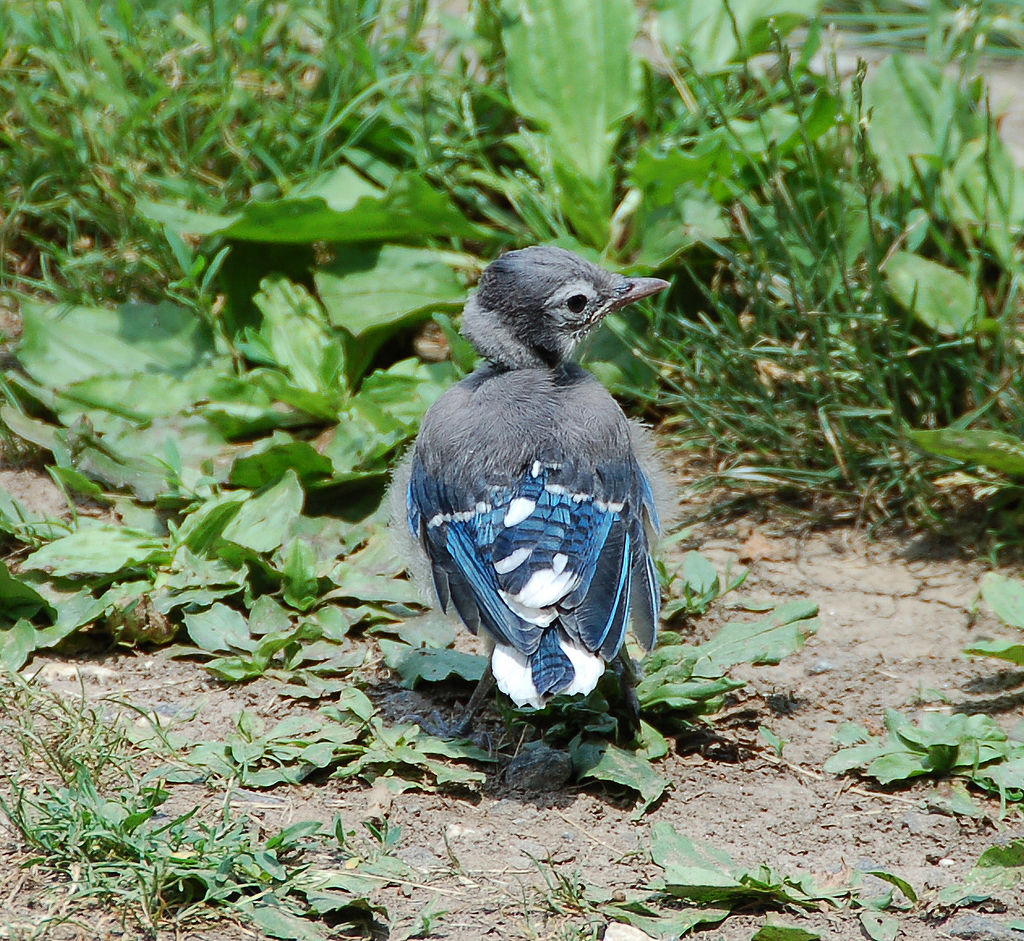
Fledgling Blue Jay, Photo by and (c)2009 Derek Ramsey (Ram-Man)

Fledgling Blue Jay, Photo by and (c)2009 Derek Ramsey (Ram-Man)

This is Passport to Texas

As spring approaches it’s good to know what to do if you find a baby bird out of its nest. And the babies most likely to try and get a jump on spring are blue jays.

I don’t know what happens. They just jump the nest a couple days early, and the problem is they’re in the backyard where the dogs and cats and kids are. So you really have to focus on not trying to pick up the bird.

Cliff Shackelford, Parks and Wildlife’s non-game ornithologist, says the baby is not abandoned; mom and dad are nearby.

The better thing to do would be to pull the cats, dogs and kids in for that day or two and let the baby blue jay make it on its own with mom and dad. Because the fate is not the same if you pick it up and try to rehabilitate it. Mom and dad know how to raise baby birds a lot better than we do.

Even so, it‘s good to be prepared if you do find a baby bird that is vulnerable and unattended.

On your refrigerator, where you have the numbers of 9-1-1 and poison control, you should have [the number for] your local rehabilitator on your refrigerator ahead of time. Once you do get that baby bird — you don’t have a lot of time.

Find a list of wildlife rehabilitators by county on the Texas Parks and Wildlife website. That’s our show for today… Funding provided in part by Ram Trucks. Guts. Glory. Ram

For Texas Parks and Wildlife…I’m Cecilia Nasti.
Plight of the Bumblebee

March 10th, 2017
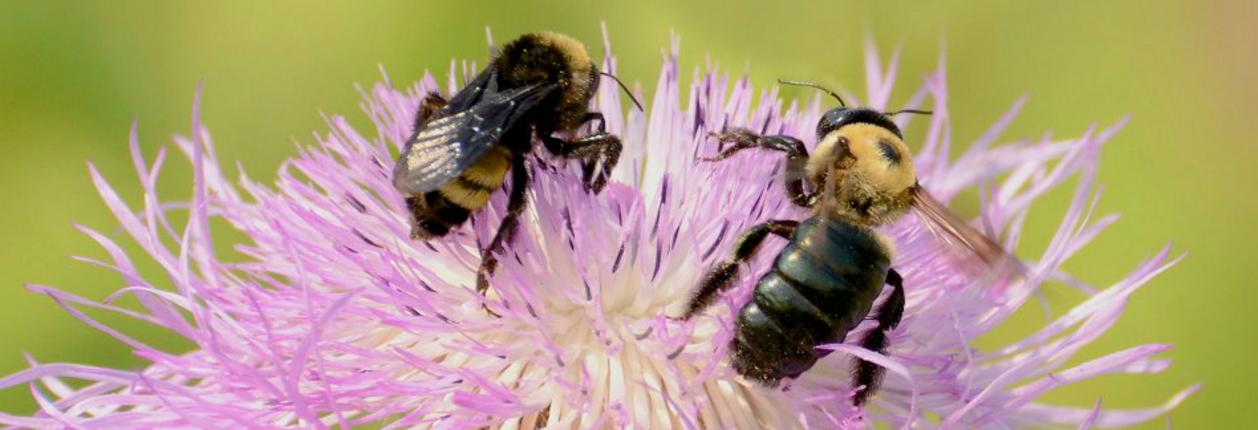
American bumble bee (left) and eastern carpenter bee (right). Courtesy of Jessica Womack.

American bumble bee (left) and eastern carpenter bee (right). Courtesy of Jessica Womack.

This is Passport to Texas

Texas has nine native bumblebee species. Loss of habitat to agriculture, use of pesticides, as well as European honeybees competing for food, threatens these important pollinators.

And so if we have a reduction in bumblebees, that spells trouble for our ecosystems.

Michael Warriner, an invertebrate biologist, says because Texas bumblebees have evolved with native flora as pollinators, fewer native bees would eventually translate to fewer native plants, which would impact other living things…

The birds and the mammals and other insects that depend on plants for fruit, or seeds, or just the functioning ecosystem.

While we give non-native European honeybees credit for pollinating our food crops, in some instances, bumblebees outperform them.

14—Bumblebees, although they aren’t talked about a lot as important pollinators, they’re much better and more efficient than honeybees. They’re the best pollinators for things like tomatoes, blueberries, cranberries, melons, and those sorts of crops.

You can find more bumblebee on the Texas Parks and Wildlife website.

11—And if you’re interested in being a bumblebee watcher, check out the website, and if you see any bumblebees in your garden, just send in photos. We’re really trying to learn how bumblebees are doing.

That’s our show for today…the Wildlife Restoration program supports our series…For Texas Parks and Wildlife, I’m Cecilia Nasti
