We all know about colony collapse disorder whereby colonies of European honeybees seem to vanish.
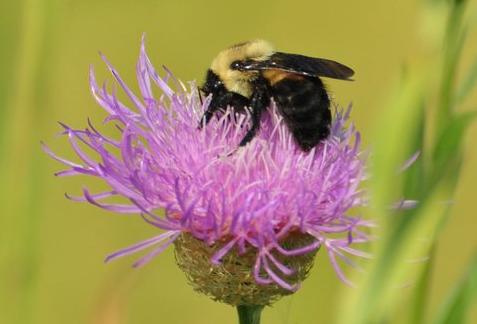
Less well known are the threats facing a lot of our native bumblebees.
Michael Warriner is an invertebrate biologist with a soft spot for native bumblebees. Like other native wildlife species in Texas, habitat loss is taking its toll on native bumblebees.
Bumblebees need open, flower-rich habitat—like grasslands. And, a lot of that habitat’s been converted to agriculture.
Warriner says pesticide use is another concern, but the threats to these big black and yellow insects doesn’t stop there.
And also, there’s been the importation of bumblebees from Europe into this country which has brought in parasites and diseases that may be impacting them. So, there’s a lot of concern how they’re faring in North America.
One of the threats to Texas bumblebees might actually be honeybees, which have colonies in the tens of thousands compared to the hundreds of insects in a bumblebee colony.
Honeybees have these tens of thousands of workers, and so they can go out and monopolize a flower resource—like nectar or pollen—and that reduces what’s available for our native bees. And there’s some research that suggests that the presence of honeybees in natural sites can reduce native bees.
We’ll have the potential impact from bumblebee decline tomorrow.
That’s our show for today…The Wildlife Restoration program supports our series…For Texas Parks and Wildlife, I’m Cecilia Nasti
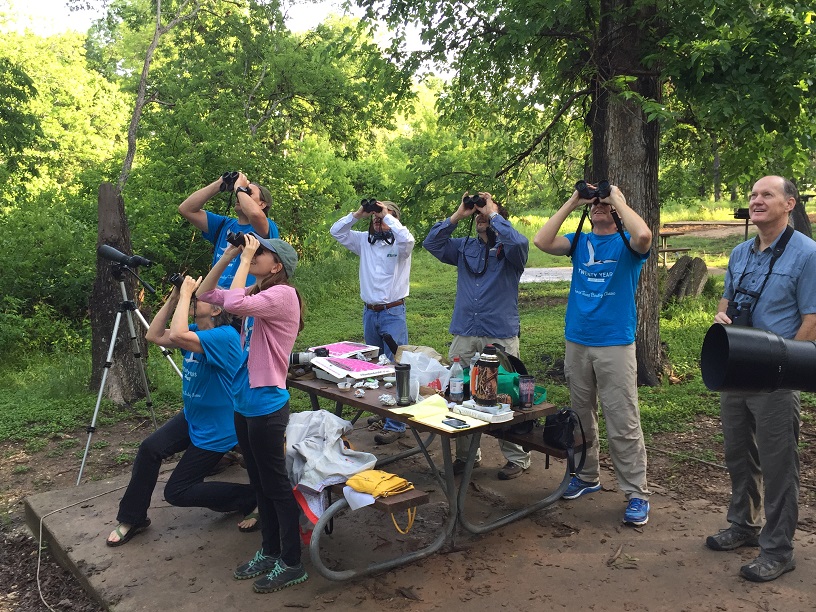
During The Great Texas Birding Classic, birding teams raise money for conservation while they compete for bragging rights against other teams…if there are other teams.
If you wanted to know where I really feel like people need a challenge, I think the Panhandle. They want some competition up there.
Shelly Plante is Nature Tourism Manager for Texas Parks and Wildlife. While the coast hosts a multitude of birding teams during the classic, regions like the Panhandle barely have any, and they aren’t alone.
Far west Texas—they want some competition. The DFW area only has a couple of teams participating. They could use some great competition. It would be wonderful to see those areas grow by leaps and bounds this year, and to see a real shift in people seeing birdwatching as an activity that they can do with their friends and family in spring as the Birding Classic.
There are tournaments suitable for nearly every experience level. So, c’mon Panhandle, Far West Texasand DFW Metroplex, step up to the challenge and put together a team. You other regions, too. I’m not trying to bird-shame anyone, but you can all do so much better.
When you register, the fee you pay supports conservation, and you’ll have fun outdoors with friends and family. Doesn’t that sound better than watching The Real Housewives of wherever?
The Birding Classic is April 15 through May 15, and the registration deadline is April 1. Do it for the birds.
That’s our show for today…For Texas Parks and Wildlife, I’m Cecilia Nasti.
The Great Texas Birding Classic continues to attract seasoned and beginning birders to its flock.
It’s really crazy. We keep seeing amazing growth. I keep wondering when we might plateau, and it hasn’t happened yet.
Shelly Plante is Nature Tourism Manager for Texas Parks and Wildlife. The tournament had a growth spurt beginning in 2013 after it became statewide.
We had the largest participation in over ten years in that first year that we were statewide. And that was 58 teams. Since then, we’ve grown every single year; last year in 2016, for our 20th anniversary, we had 113 teams.
The money raised funds conservation grants. Birders have fun doing it, when they participate in various tournaments. One of the most popular is the Big Sit.
And it is what it sounds like. You are sitting in a 17-foot diameter circle for 24 hours (or parts of 24-hours), to see how many birds come through that area. In 2016 of the 113 teams that were registered for the Birding Classic, 40 of those teams were Big Sit teams. And they took place in every region of the state.
The Texas Parks and Wildlife Foundation supports our series and helps keep Texas wild with support of proud members across the state. Find out more at tpwf.org
Twenty seventeen marks the 21st anniversary of the Great Texas Birding Classic.
I’ve been involved for 20 of those 21 years.
Shelly Plante is Nature Tourism Manager for Texas Parks and Wildlife. In the beginning, Plante says the majority of participants were “hard core” birders. Since becoming a statewide event, she says it’s evolved into a tournament for everyone.
We have a lot of different categories. There are categories for beginners; categories for kids who are just getting started; categories families can take part in—or bird clubs can take part in. And so, I’ve seen this really huge growth in the generalist, which I think is fantastic. That’s who we would love to connect with nature. They may not have a connection. So, we’re hopefully making that connection for them with an event.
The Great Texas Birding Classic is April 15 through May 15; registration deadline is April 1st. Money raised through fees and sponsorship goes toward conservation grants.
The more money we raise through registration fees and sponsorship, the more money we are able to award to conservation grant projects throughout the state. So last year, we gave out $36-thousand dollars worth of grants. And, some of the winning teams got to pick which projects received that funding. So, it’s really a fun way to take part in conservation, and maybe even get to choose who gets those conservation dollars.
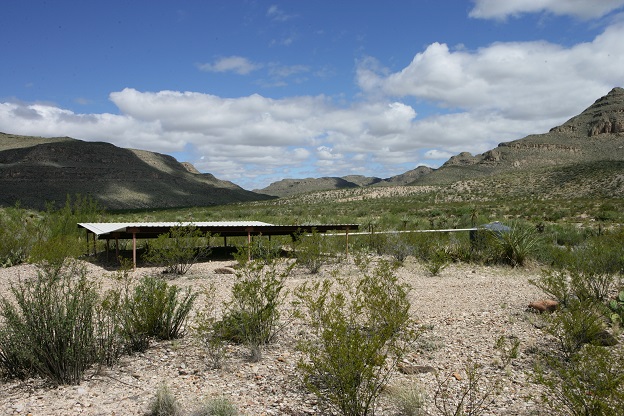
So this catchment consist of R-Panel in 12 foot lengths, which is connected to these 6 inch C-Purlins by…
Let’s stop there. Will’s going to tell us about purlins and pitch threads and storage tanks; it’s not sexy stuff. But it’s necessary when building guzzlers at Black Gap. And, so are wildlife cameras.
On these game cameras it’s triggered by motion. Usually that’s going to be wildlife coming in to get water from the guzzlers here.
Which means their efforts are successful. See the segment on Guzzlers next week on the Texas Parks and Wildlife TV Series on PBS. The Wildlife Restoration Program supports our series.


 Passport to Texas is a
  Passport to Texas is made available by: