2017 Crab Trap Cleanup

February 2nd, 2017
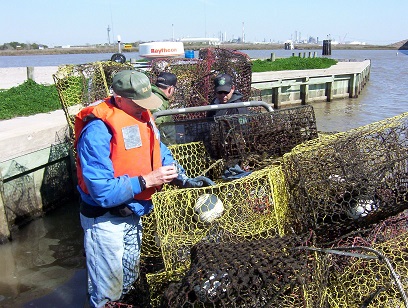
Derelict crab traps collected from Chocolate Bayou.

Derelict crab traps collected from Chocolate Bayou.

This is Passport to Texas

Commercial crab fishermen use baited wire traps to lure their prey. Sometimes traps end up missing due to storms, or they are simply discarded.

These traps continue ghost fishing for months or years—capturing fish and other marine creatures, including endangered species—taking an environmental and economic toll on gulf fisheries.

In February of 2002, Texas Parks and Wildlife conducted the first abandoned crab trap removal program; and 2017 marks the 15th cleanup. During a 10-day period this month, volunteers like you, will join Texas Parks and Wildlife staff and partners, in removing derelict traps.

This year’s cleanup is February 17th through the 26th. The big cleanup “push” is Saturday, February 18 from 10 to noon. This is the only time citizens may remove these traps from gulf waters.

More than 32,000 derelict crab traps have been removed from the gulf since 2002, saving tens of thousands of marine organisms.

Texas Parks and Wildlife and partners facilitate roughly 20 sites coast wide and provide disposal facilities, and supply volunteers with tarps, gloves, crab trap hooks and other items.

To volunteer for this year’s program visit the Abandoned Crab Trap Removal page on the Texas Parks and Wildlife website.

The Sport Fish restoration Program supports our series.

For Texas Parks and Wildlife, I’m Cecilia Nasti.
A New Hunter Gets a Shot at Success

February 1st, 2017
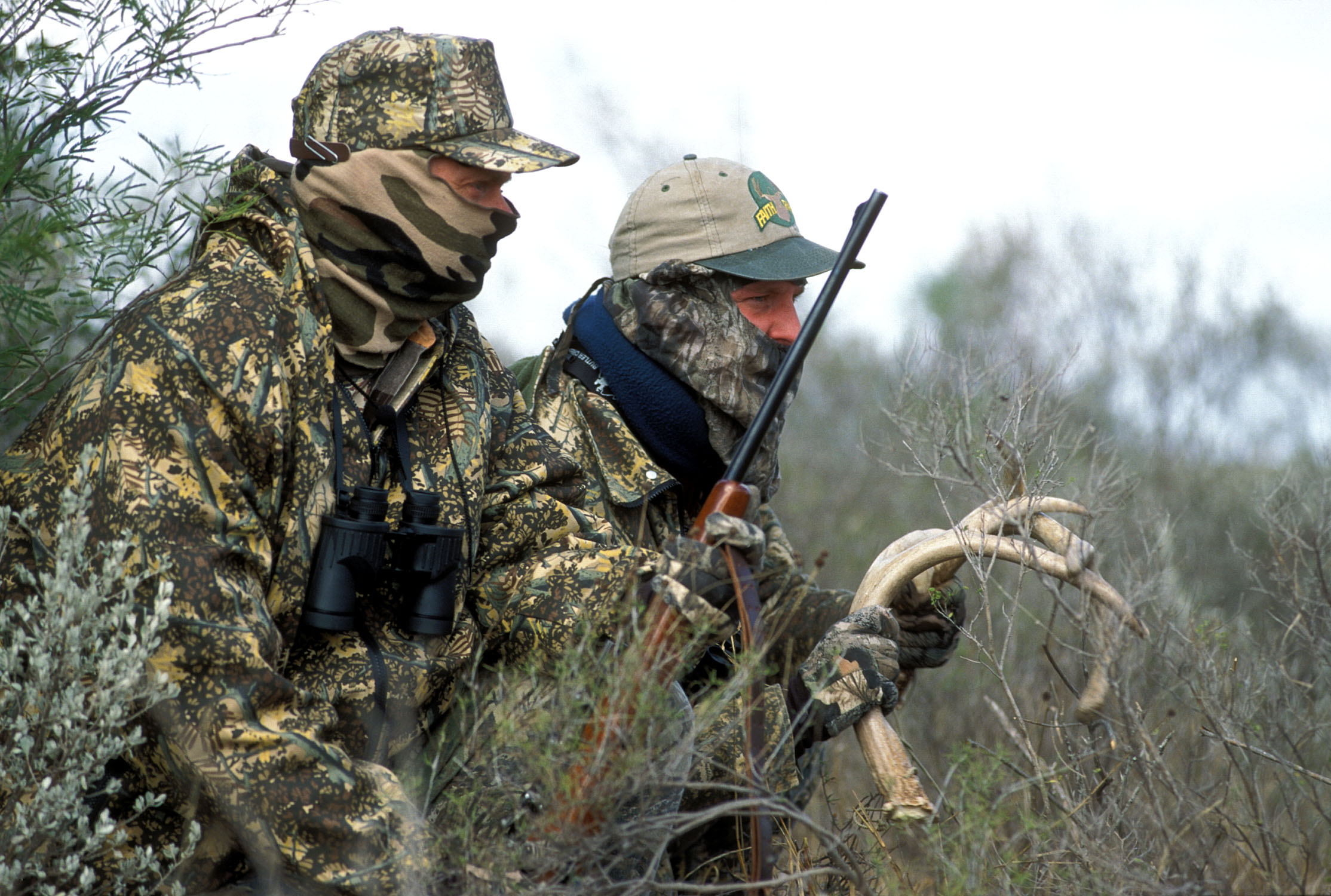
Hunting for white-tailed deer.

Hunters attempting to attract deer to a clearing for a good shot.

This is Passport to Texas

Adults with little exposure to hunting are expressing interest in the activity. So, in December, Texas Parks and Wildlife offered a mentored deer hunt for adult novices at Inks Lake State Park. Chris Hall was hunt coordinator.

[We did it] to give a total turn-key experience—start to finish—of ethics, proper care and maintenance. As well as the hunting experience, itself.

Barham Richard, an environmental attorney from Austin, was among the group participating in the mentored hunt. He’d been squirrel hunting as a kid, but that was years ago. He sought guidance for big game, and found it.

From the first day, everybody’s been so helpful, and they’ve taken a lot of time to figure out what they wanted to do here. You can tell they took a lot of pride in putting this all together. So, I can’t tell them how much I appreciate all of it.

Barham and his cohorts spent the first morning of the 3-day mentored hunt in the classroom, and that afternoon at a shooting range. On day two, it was off to the blinds. Preparation paid off for Barham.

Got my first doe. You say this is your first doe. First deer? Yes. First deer ever. We got it late at night. We were about to pack up, and there it was. So, we took it, and I’m really happy. So, how did you feel as you were pulling that trigger? I tried to stay calm. Well, I had a misfire. So, we had to
unload it [the rifle], reload it. By that point it was pretty easy to stay calm. [laughter]

More adult novice mentored hunts are being developed.

The Wildlife Restoration program supports our series.

For Texas Parks and Wildlife, I’m Cecilia Nasti.
Using Baits and Lures to Your Advantage

January 31st, 2017
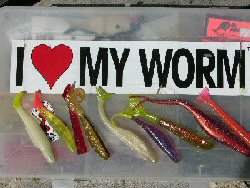
Baits and lures are an angler's friend.

Baits and lures are an angler’s friend.

This is Passport to Texas

Nothing beats live bait for catching fish. Yet, manmade lures have been around a long time—because they work.

For example, take the spinner bait. The spinning blades are designed to catch a fish’s attention as they move through the water. The flashing silver looks just like a tasty minnow.

Steve Campbell worked in Outreach and Education at Texas Parks and Wildlife, specializing in angler education.

Another popular lure is the top water lure. Because it floats on top of the water, it works best in calm waters where it is visible to fish below. To use a top water…cast…wait for the bait to settle, and then pop your rod tip; repeat until you get a strike.

The crankbait is a fun lure to work with. It has a kind lip that extends from the front of the lure.

This lip causes the bait to dive down through the water as you crank on the reel. As soon as you cast your crankbait, turn the reel quickly a couple of times so the lip will catch the water and pull down. Stop reeling, and the lure begins to float back up. Your goal is to imitate an injured fish darting through the water.

Lures come in all shapes and sizes, and your tackle dealer can help you select the right lures for your next fishing trip.

And remember: while natural bait is best, it’s always a good idea to keep a couple of lures on hand when you get tired of feeding—I mean catching—the fish.

The Sport Fish restoration program supports our series.

For Texas Parks and Wildlife…I’m Cecilia Nasti.

Baits and Lures

January 30th, 2017
Making baits and lures work for you.

Making baits and lures work for you.

This is Passport to Texas

If you plan to go fishing, you’ll need to bring along live bait, man-made lures—or both.

Let’s talk baits first.

Steve Campbell worked in Outreach and Education at Texas Parks and Wildlife, specializing in angler education.

Nothing beats natural bait for catching fish. Some good, all around freshwater baits are: kernel corn, hot dogs and live critters, such as worms, minnows and crawfish.

If you’re on the coast, can hardly go wrong with using live shrimp. Whether you’re a freshwater or saltwater angler, you need to keep your bait alive.

You’ve got to keep bait alive for it to be effective. Make sure you keep your bait cool and moist and out of direct sunlight.

Most anglers keep live bait in their coolers. Just don’t get it mixed up with the tuna sandwich you packed for lunch. And if your bait came from a bait shop or another body of water, do not release the unused bait into the waters you are fishing.

It can interfere with the plants and animals that live there naturally. Dump the bait in a trash can or on land, away from the water.

Tomorrow we learn about several lures and how to use them to your best advantage.

We record our show in Austin at the Block House. Joel Block engineers our program.

The Sport Fish Restoration program supports our series.

For Texas Parks and Wildlife…I’m Cecilia Nasti.

Tips for Hunting Squirrels

January 27th, 2017

This is Passport to Texas

Mention hunting to a Texan and most think: deer.

That’s just the way it’s always been. But it doesn’t mean that for everyone.

For some people, hunting includes small game like squirrel, says Hunter Education specialist Heidi Rao.

I think we need to get outside of the box and pursue these opportunities that we have here in Texas. There’s such an abundance of wildlife.

We may legally hunt fox and gray squirrels in Texas.

A .22 is usually the best choice of rifle to use to hunt squirrel. They’re found statewide, and you do need your hunting license. And if you’re required to take hunter education, you must have that as well.

Heidi says it’s best to have a strategy before going squirrel hunting, such as the one she employs when hunting with her kids.

So, our strategy was what you call still hunting. And what that meant is that we moved very slowly through an area. We remained in a straight line, and we kept a good distance from each other. And we slowly moved throughout area looking for squirrel. You’re listening to the rustling of the leaves that the squirrels may be foraging in looking for acorns and food. You can hear them chattering between themselves, among themselves. And you can look into those different calls to see where they may be located.

After that, it takes patience, a keen eye and steady hand. Find season information and hunting regulations in the Texas Outdoor Annual.

The Wildlife Restoration program supports our series.

For Texas Parks and Wildlife…I’m Cecilia Nasti.