Some Changes in the Toyota Sharelunker Program

January 12th, 2017
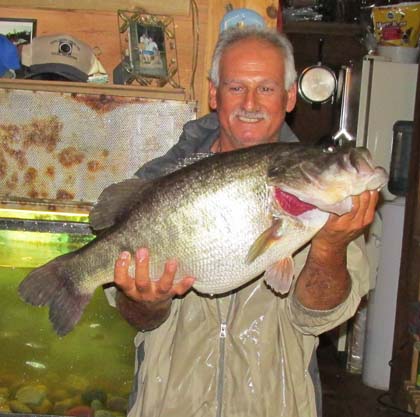
ShareLunker No. 564 Caught by Roy Euper of Lufkin, TX November 2, 2015 in Sam Rayburn 30 feet of water 13.2 pounds, length 25.5 inches, girth 22 inches

ShareLunker No. 564 |Caught by Roy Euper, Lufkin, TX | November 2, 2015 | Sam Rayburn 13.2 pounds | length 25.5 inches | girth 22 inches

This is Passport to Texas

Largemouth bass weighing 13 or more pounds are eligible for the Toyota Sharelunker program, which runs October 1 through April 30.

It has to be legally caught in Texas waters.

And weighed on a certified scale. Kyle Brookshear coordinates the program, and taught me something new about ShareLunkers.

The males typically don’t get that large. So, they’re normally all female.

Something new this year is only the 13+ pound largemouth caught during the “spawning window of January 1st through March 31st are eligible to participate in the selective breeding program.

So, if an angler catches a fish outside of that window. We’ll come to them with a certified weight, and enter them into the program, and then release that fish back into the lake.

Brookshear says they anticipate improved efficiencies and outcomes as a result of the change.

Through our analysis of our spawning results over the past 30 seasons, and 30 years of the program, we’ve determined January through March provides us with the greatest opportunity to attain good candidates for spawning…meaning that most of those fish that come in are healthy and capable and ready to spawn.

Find information about the Toyota Sharelunker program on the TPW website. The Sport Fish Restoration program supports our series and helps fund the operation of the TFFC in Athens.

For Texas Parks and Wildlife…I’m Cecilia Nasti.
Toyota Sharelunker Program

January 11th, 2017
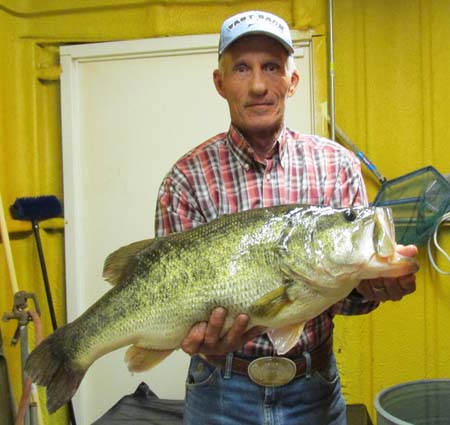
ShareLunker No. 565 Caught by Bruce Butler of Canyon, TX April 13, 2016 in Alan Henry 13.13 pounds, length 26 inches, girth 21 inches

ShareLunker No. 565 | Caught by Bruce Butler of Canyon, TX | April 13, 2016 in Alan Henry | 13.13 pounds | length 26 inches | girth 21 inches

This is Passport to Texas

The Toyota Sharelunker program is in full swing.

It’s an angler recognition program and it’s a selective breeding program.

Kyle Brookshear coordinates the program for Texas Parks and Wildlife. For the past 30 years, anglers who reeled in 13-pound or bigger largemouth bass, caught legally in Texas waters, could donate their fish to the program.

We bring that fish back to the Texas freshwater Fisheries center in Athens and then attempt to spawn that fish. Once the fish is successfully spawned, we return the fish to the angler. The angler releases the fish back to the reservoir [where it was caught]. We will raise those fry up, and then stock them back into the public waters of Texas.

By breeding the big bass Texas Parks and Wildlife creates a better bass fishery in Texas with more potential for trophy fish. New this season, only largemouth bass caught between January and March may be entered into the breeding program.

Through our analysis, we’ve determined that not only do we get more candidates during that time, but those candidates actually do spawn successfully.

Brookshear says fish caught outside this window may still be certified as a sharelunker, and then released back into the reservoir. Anglers who have lunkers accepted into the Toyota Sharelunker program receive a fiberglass replica of their fish.

The Sport Fish Restoration program supports our series and helps fund the operation of the Texas Freshwater Fisheries Center in Athens.

For Texas Parks and Wildlife…I’m Cecilia Nasti.
Celebrating 75 Years of TPW Magazine

January 10th, 2017
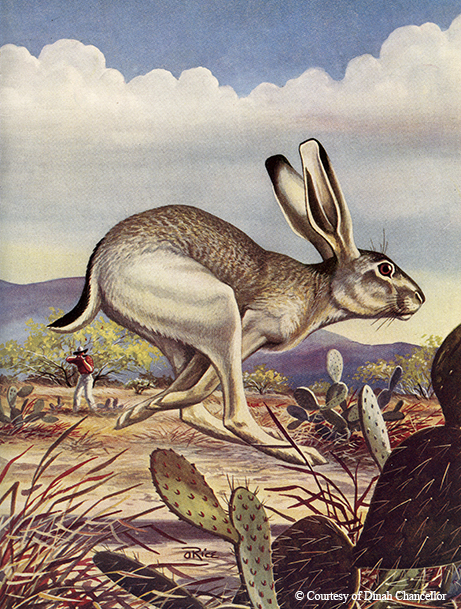
Orville Rice’s iconic artwork graced covers of Texas Game and Fish for a decade (1945-1955). Scanned from Family Archives, Dinah Chancellor

Orville Rice’s iconic artwork graced covers of Texas Game and Fish for a decade (1945-1955). Scanned from Family Archives, Dinah Chancellor

This is Passport to Texas

All year long Texas Parks and Wildlife magazine plans to make room in its issues to celebrate its 75th anniversary.

The biggest celebrations will be in January and December [2017]. The issue we’re just putting to bed for January/February will contain a history of the magazine and a feature on Orville Rice. And both of those are written by longtime staffers who have now retired.

I spoke with Magazine Editor Louie Bond in November of last year about this year’s issues.

Throughout the year, we’re going to do some scrapbooks of different decades and some of the funny things. We’ve picked out our special favorites, and we’re going to be sharing those with readers every month.

But you’ll have to keep tabs on the magazine to find out just what those funny things might be.

And then December is kind of a secret. We’re going to do something we’ve never done in 75 years. And, we’re going to really save it as a surprise. But we’ll be doing the entire issue in a different way that we’ve never done before. So, I’m just going to hang that out there, and you y’all need to hang around ‘til December to see what kind of special fun we have for the actual month of the anniversary.

With as fast as these years are going, December will be here before you know it. The January/February issue of Texas Parks and Wildlife magazine is on newsstands now.

For Texas Parks and Wildlife…I’m Cecilia Nasti.
Celebrating 75 Years of Stories of the Outdoors

January 9th, 2017
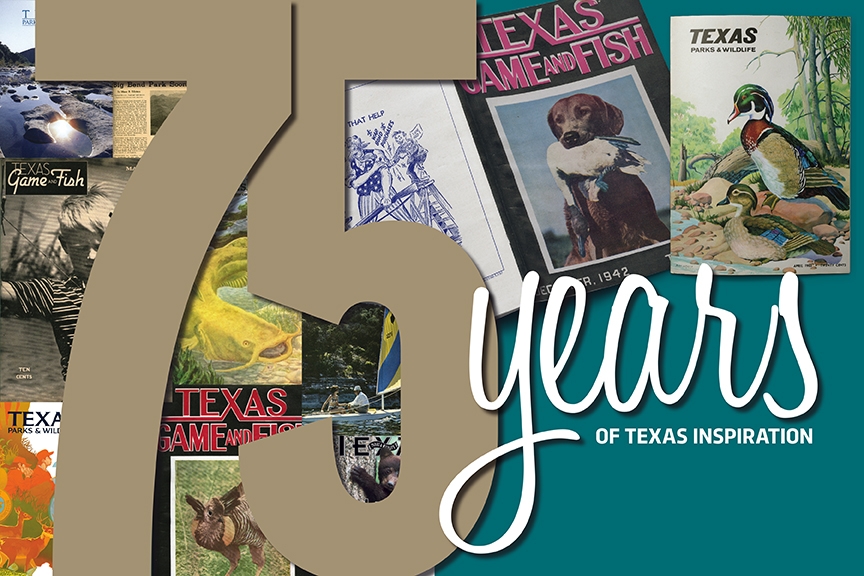
Texas Parks and Wildlife Magazine Celebrates 75 Years if Bringing the Texas Outdoors to you.

TPW Magazine celebrates 75 years if bringing the Texas outdoors to you.

This is Passport to Texas

When it went to press 75 years ago, Texas Parks and Wildlife magazine had a different name.

It started out as Texas Game and Fish, and then when the agency changed, the name of the magazine changed as well to reflect the addition of more state park content.

For the past 10 years, Louie Bond has been the editor of this outdoor magazine of Texas.

We’re so lucky to be at the helm of this magazine. Here we just walk in, and we’re just the current custodians. But it feels great to be part of such a longstanding, excellent tradition.

Originally, Texas Parks and Wildlife magazine was more of a hook and bullet publication.

We were more traditionally hunting and fishing at the beginning, and now have added in through the years: hiking and biking and visiting state parks…bird watching and photography, and all those wonderful pursuits that our readers have.

Louie says the magazine experienced “pop culture” shifts over the years as well, such as not publishing recipes for certain critters.

Um, perhaps large rats, and things like that. Back in the day, people cooked whatever game was in their yard. You can think of those folks as locavores as we have locavores today.

The magazine celebrates its 75th anniversary all year long, and we tell you how they plan to do that tomorrow.

That’s our show for today… Funding provided in part by Ram Trucks. Guts. Glory. Ram

For Texas Parks and Wildlife…I’m Cecilia Nasti.
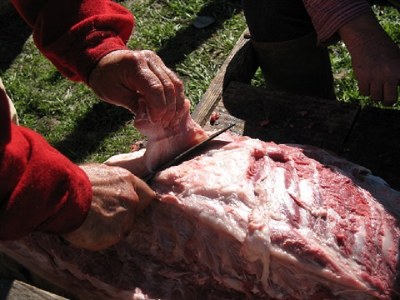
Barrington Living History Farm Goes Whole Hog

January 6th, 2017
Butchering and curing workshop at Barrington Living History Farm.

Butchering and curing workshop at Barrington Living History Farm.

This is Passport to Texas

They’re going whole hog at Barrington Living History Farm January 14 & 15. That’s when they’ll present a hog butchering and curing program to the public.

Butchering is just one part of many things that we do seasonally throughout the year.

Barb King is a park interpreter at the farm, located at Washington-on-the-Brazos State Historic Site. The program takes place outdoors in January just as would have happened in 1850s rural Texas.

So, all the meat that will be produced, and the sausage and the fat that we will save for soap or cooking all needs to be at a constant temperature, which is cold—like your fridge. So that we can start the curing process without worrying about it spoiling.

Staff will dispatch a heritage breed hog before visitors arrive. Barb says the rest of the process is for public view, which is mostly a demonstration…

People are able to do a tiny bit if they choose—like helping us scrape the hogs. But cutting up the carcass into specific portions of meat is only done by staff. A lot of people come right at 10, and we normally have a big group waiting. And then on Sunday, we focus on more of the preservation aspect.

Visitors who return Sunday will observe how staff cures the meat for storage. The butchering and curing program at Barrington Living History Farm is January 14 & 15, from 10am – 4pm both days. Admission fees apply. Find complete details at texasstateparks.org.

For Texas Parks and Wildlife…I’m Cecilia Nasti.
